
How a small park in Andhra Pradesh earned global recognition for transforming marginalized communities through thoughtful urban design
A small park in Andhra Pradesh earned global recognition at the UIA 2030 Award, under Category 5: Access to Green and Public Space, aligned with UN Sustainable Development Goal (SDG) 11.7. surprising even its architects. Community Plug—designed on a ₹1.63 crore budget in a constrained urban corridor—competes against international practices and flagship projects. Yet its commendation reflects a growing shift: meaningful urban transformation isn’t determined by scale or budget, but by contextual understanding and rigorous attention to how spaces are actually used.
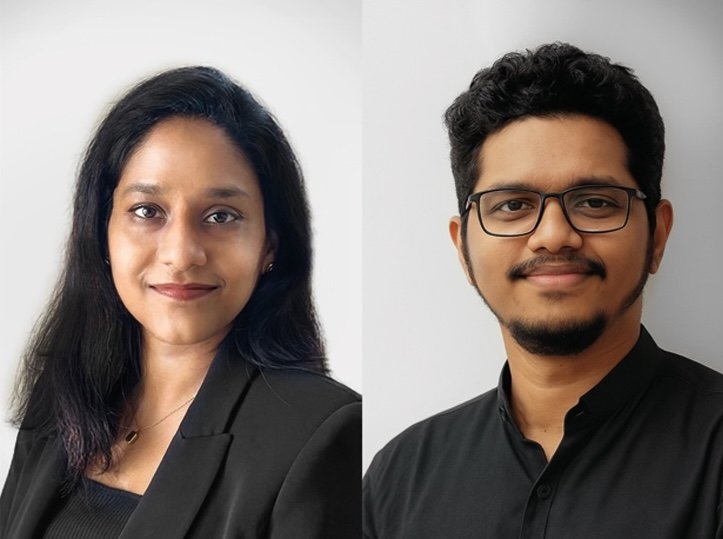
In this exclusive conversation with TheAPN, principals Ar. & Urban Designer Bella Ullas and Ar. & Urban Designer Thejus Augustine of Studio Aranya discuss designing public spaces in India’s smaller cities, navigating workmanship challenges, and why a park now welcoming three times its anticipated users became a global case study.
TheAPN: Congratulations on receiving commendation in the UIA 2030 Award. What was your initial reaction when you learned that Community Plug had been recognized on this global platform?
SA: We were genuinely surprised. In our category, there were major practices and other large-scale projects. Our project is small, executed on a tight budget, and constrained by local construction limitations. Aesthetically, it doesn’t match the polished finishes of larger projects.
But what this recognition tells us is important: size and budget don’t determine impact. The change you create for people’s everyday lives does. It’s encouraging validation that small, meaningful interventions matter. This is also significant recognition for the municipal corporation of a smaller town in Andhra Pradesh. Compared to larger cities like Vijayawada and Nellore, they are a small municipality—yet they are passionate about revamping their city through smart city funds. This award reflects their commitment as much as ours.
TheAPN: How did Community Plug originate? Was it government-initiated, or did you identify the need?
SA: The project was initiated by the municipal corporation. They identified the land and set the direction. Our role was to understand their brief and then engage with the surrounding community to clarify who we were designing for.
The main client was the Chief Secretary of Andhra Pradesh at that time, who also served as the Collector. We were selected because our previous projects—particularly the Kochi Marine Drive Walkway and Kunnara Park—were published in the NIUA’s 75 Public Spaces compendium. That visibility led to the tender opportunity.
TheAPN: What was the core challenge you identified when you first visited the site?
SA: When we first visited, the site was essentially a waste dumping yard. The municipal corporation didn’t have a clear direction. We suggested that because the town lacks a coherent master plan and network of open spaces, this land should become a public gathering place. This isn’t part of the national Smart Cities Mission. It’s a state-level initiative by the previous Chief Minister of Andhra Pradesh, who allocated substantial funds for public space development. The municipality was eager to act but lacked design expertise. That’s where we came in.
TheAPN: Can you explain the vision behind Community Plug and how it contributes to the UN Sustainable Development Goals?
SA: We designed for SDG 11: Sustainable Cities and Communities, specifically SDG 11.7—to provide access to safe, inclusive, and accessible green and public space.
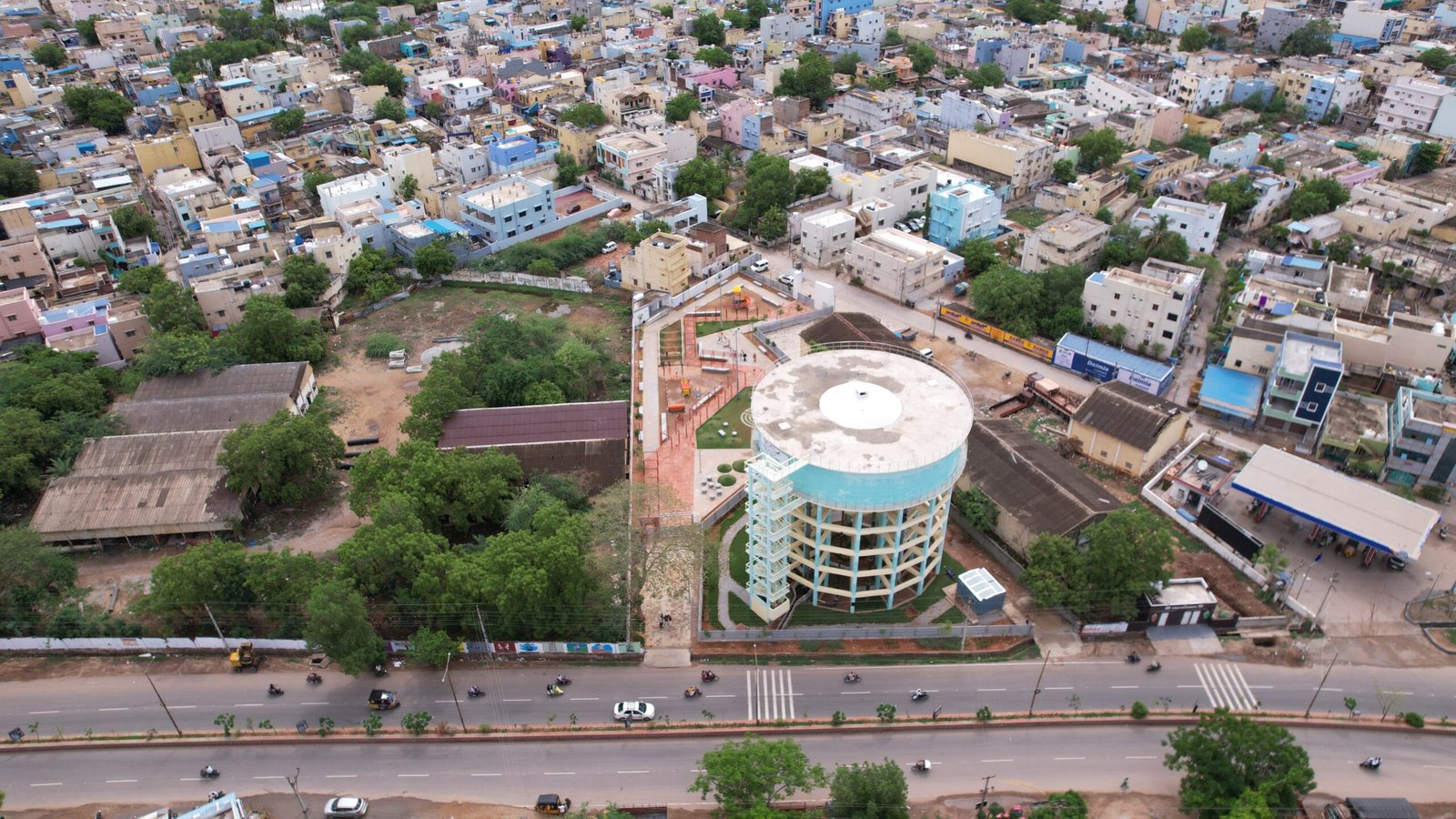
The physical challenge was significant. The site is in a constrained urban corridor: on one side, there’s an elevated highway; on another, the water authority owns land; abandoned warehouses occupy adjacent space; and the community frontage was limited. We had to be inventive about edge conditions.
Initially, the allocated space was small. But as construction progressed and we saw community adoption accelerating, the municipality expanded the project to include space beneath the highway and adjacent to the warehouse, creating parking areas and vendor spaces. This organic expansion showed that once a space becomes active, people and authority both recognize its value.
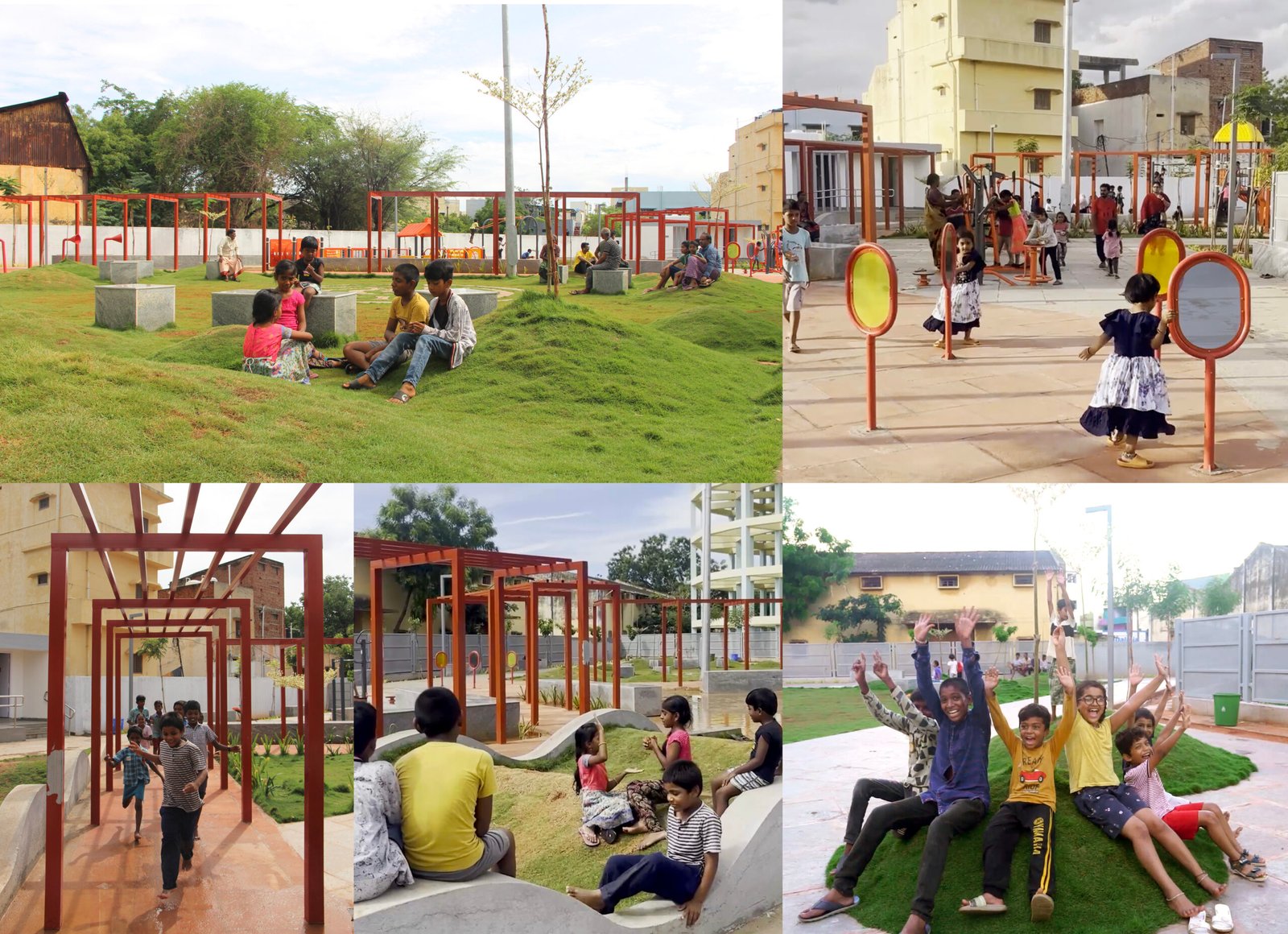
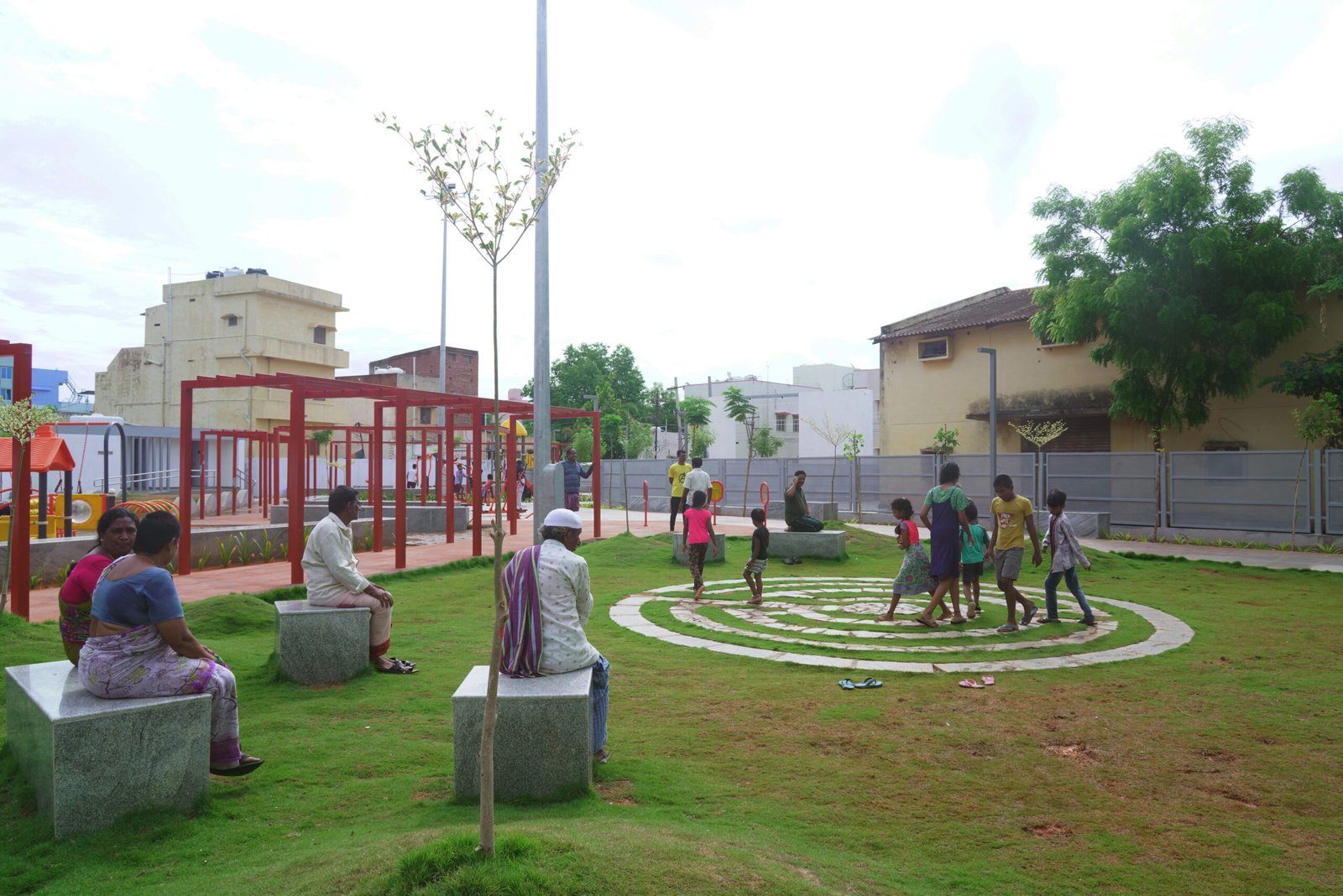
Rather than design exclusively for children, we asked: How can we create a space where everyone—across all age groups—wants to spend time together?
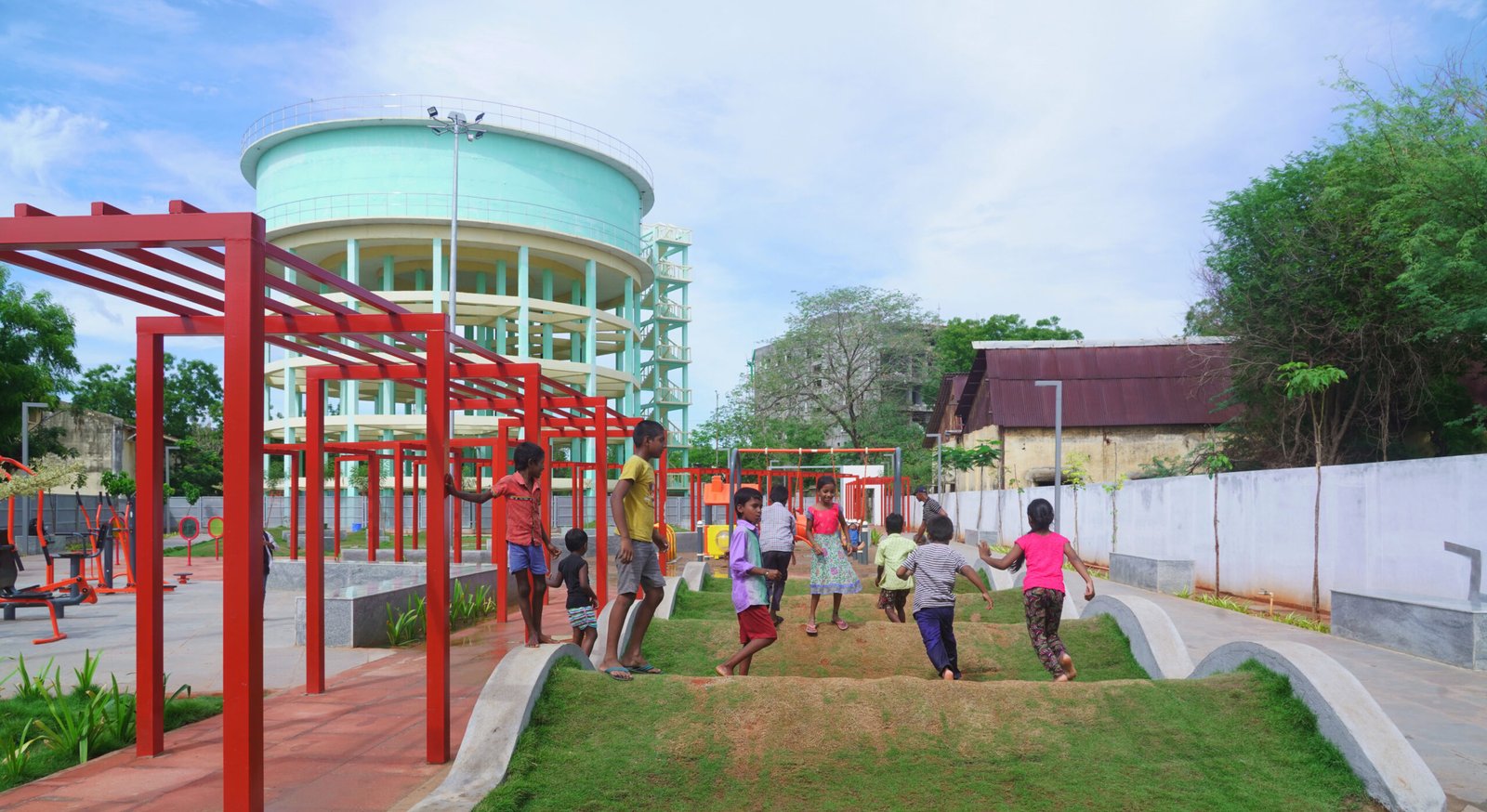
We conducted extensive research on children’s behavioural psychology and play types. We introduced: Multiple play typologies, Age-segregated but interconnected play zones, Seating diversity, Open gym facilities, A landscape mound, Shade and cooling, misting systems.
This was also the first project in India where we introduced inclusive play equipment for children with disabilities, using Ariana products designed specifically for diverse abilities. This was new territory for us and for the region.
Every design decision was intentional. The staggered, undulating park form—those mounds and wave-like topography you observed—emerged from this holistic approach.
TheAPN: What were the toughest on-ground realities that shaped the design?
SA: Construction and workmanship were our biggest challenges. Local contractors aren’t accustomed to modern materials or innovative detailing. They work within standardized schedules of rates. When we proposed perforated compound walls—new to them—there was significant resistance. They struggled with fabrication, joinery, and finishing. We had to restrict usage to strategic areas initially, but once they saw the aesthetic and functional result, they expanded it throughout. Before design finalization, we visited completed project sites to assess local workmanship standards. This informed our material and detailing choices. We selected locally available, low-maintenance materials: good soil for landscaping, local stone, and simple, durable finishes. The project cost was ₹1.63 crores—a tight budget for the scope. We used expensive materials selectively and economical solutions elsewhere.
TheAPN: How did you engage with the community? Did local residents contribute to planning and design?
SA: We didn’t conduct formal focus group discussions. Instead, we walked the adjacent streets and had informal conversations with residents to understand their needs and preferences.
One municipal corporation member whose house faced the community entrance became invaluable. He helped us understand local demographics and what activities people actually wanted—not what they could articulate formally, but what they genuinely needed.
The community’s actual needs differed from our initial assumptions. They weren’t seeking an aesthetically sophisticated park. They wanted a safe, accessible open space where they could gather regardless of weather—rain, sun, or heat. Many residents are from marginalized communities who previously had to travel 30+ minutes to access public gathering spaces. Suddenly, they had a walking-distance alternative.
We don’t speak Telugu. So, our engagement was gestural and observational rather than conversational.
TheAPN: Was design or construction implementation more challenging?
SA: Construction was far more difficult. Design constraints emerged directly from construction realities.
For instance, we couldn’t use curved pathways—ideal for how children naturally move because contractors couldn’t execute precise curves. We had to resign ourselves to acute angles, which is geometrically less elegant but constructionally feasible.
However, some constraints became creative opportunities. The perforated compound wall, initially resisted as expensive and complex, became iconic. Once contractors saw it working, they embraced the innovation and expanded its use. Similarly, the stone sculptures suggested by local aesthetics became sculptural elements that elevate the design.
TheAPN: What impacts have you observed since completion?
SA: The usage exceeds our projections by 3x. We expected moderate foot traffic; instead, the park is perpetually active. Play equipment manufacturers reported needing to reinforce equipment due to intensive use. Within two months, wear required design modifications and stronger locking mechanisms. This is a positive problem—it indicates genuine community appropriation.
TheAPN: What was the biggest risk, and was there ever doubt about success?
SA: Our biggest assumption—that usage would be moderate—proved false. The park is now occupied at triple the capacity we anticipated.
We also didn’t anticipate certain creative appropriations. For example, the cylindrical seating pieces became jumping platforms; children reinvented them as play equipment. The landscape mound, designed for elderly contemplation, became a social hub for all ages.
TheAPN: Which aspects contributed most to the UIA 2030 Award recognition?
SA: The award aligns directly with our alignment to SDG 11.7—providing safe, inclusive green public space. Our Category 5 submission emphasized this goal-based approach.
We also submitted strong evidence of community response: video documentation of real usage, stakeholder testimonials, and demonstrated social impact. The jury witnessed tangible change—not theoretical design intentions, but lived impacts.
TheAPN: What advice would you give to young architects interested in public-space design?
SA: Start small. Public projects require patience, collaboration, and a deep understanding of how government systems work. Young professionals should gain experience, collaborate with established firms, and gradually build credibility.
Many smaller municipalities are actively looking for design expertise and can provide valuable opportunities for emerging practitioners.
Public-space design may not always be the most financially rewarding field, but it offers immense satisfaction because you can directly see how your work improves people’s lives.
TheAPN: Can practitioners actually earn a livelihood from public space projects?
SA: Yes, but it’s complex. We earn from public projects, but not substantially compared to private development. The effort-to-remuneration ratio is unfavorable.
TheAPN: Is Community Plug primarily an urban design or landscape project?
SA: It’s both, and that distinction matters less than the outcome. Strategic decisions about site positioning, entry hierarchies (city entrance vs. community entrance), scale, integration within urban context, and how the space represents the city’s identity—these are fundamentally urban design concerns. Paving plans, planting strategies, drainage details, material specifications, sensory qualities, and horticultural maintenance—these are landscape design domain.Additional layers we integrated: Product design, Craft and artisanship.
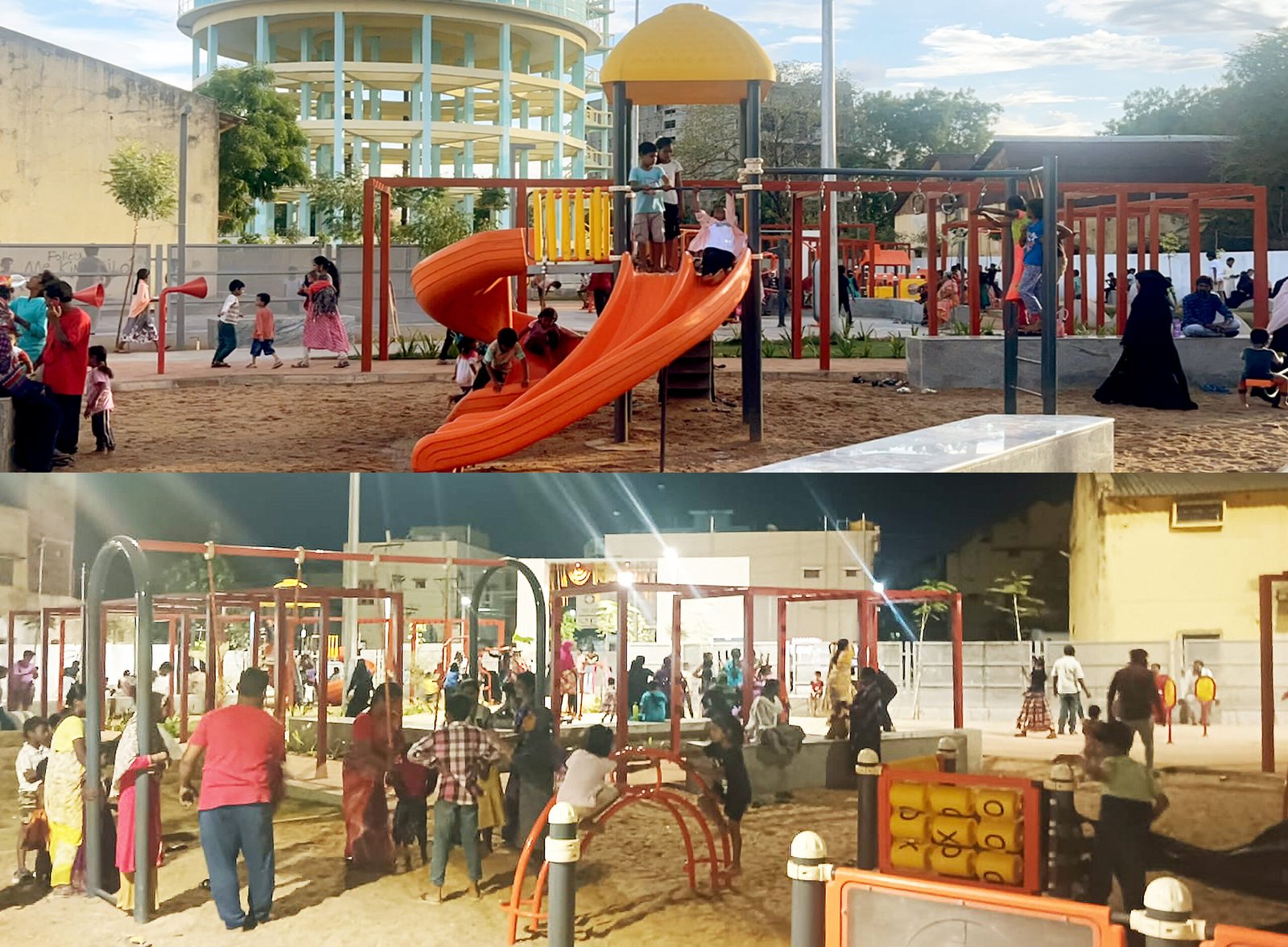
All Images Credit : STUDIO ARANYA
Closing Note
Community Plug illustrates the transformative power of placemaking at the neighborhood scale. By converting a neglected urban fragment into an inclusive and active public destination, Studio Aranya has demonstrated how thoughtful design can strengthen social connections, improve quality of life, and advance the goals of sustainable urban development. The project stands as a compelling example for Indian cities seeking to create impactful public spaces through modest yet strategic interventions
This interview by TheAPN is part of its ongoing eff ort to foster dialogue and knowledge exchange on sustainable urban development. We sincerely thank the interviewee for their time and insights.
Also Read: UIA 2030 Award – Winners of the Third Cycle Announced at the World Urban Forum in Baku
Join our WhatsApp Channel for fastest updates: Join now