

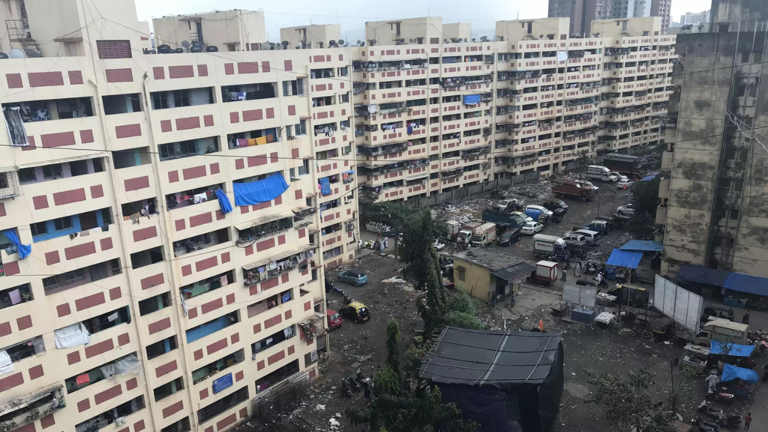
Every morning before Delhi fully awakens, lakhs of workers quietly begin shaping the city. Construction labourers prepare new skylines, domestic workers travel across neighbourhoods, sanitation workers clean streets, street vendors open their stalls, and drivers, electricians, plumbers, security guards, factory workers and delivery personnel set the capital in motion. Yet, when the city celebrates its modern expressways, metro corridors, smart infrastructure and premium real estate, it often overlooks where many of these workers return each evening—a small dwelling in a Jhuggi-Jhopri (JJ) cluster.
The irony is difficult to ignore. Those who build and sustain India’s capital frequently remain excluded from the formal city they help create.
Delhi’s informal settlements are therefore not merely a housing issue; they represent a complex intersection of migration, employment, affordability, urban planning, environmental governance and social justice. Behind every cluster is a story of aspiration, survival and resilience. At the same time, these settlements also expose decades of policy gaps that have struggled to keep pace with rapid urbanisation.
The Delhi Slum and JJ Cluster Rehabilitation and Relocation Policy, 2026 (Yet to be notified) arrives at a crucial moment. The policy promises housing security for nearly four lakh families and introduces a renewed emphasis on in-situ rehabilitation wherever feasible. However, before evaluating the policy, it is important to understand why Delhi’s informal settlements continue to exist despite more than seven decades of planning interventions.
The Making of an Informal City
Delhi’s informal settlements are not accidental. They are products of history, economics and planning decisions.
The city’s first large-scale housing challenge emerged after Independence in 1947, when Partition displaced hundreds of thousands of refugees. Temporary camps gradually evolved into permanent settlements as the city expanded beyond its planned limits.
In the decades that followed, Delhi became one of India’s largest destinations for migrants seeking employment. Workers arrived from Uttar Pradesh, Bihar, Rajasthan, Madhya Pradesh, West Bengal, Odisha, Haryana and several other states, attracted by opportunities in construction, manufacturing, transport, domestic services and the informal economy.
While employment opportunities increased, affordable housing did not.
The mismatch between urban growth and housing supply widened steadily. Formal housing remained beyond the financial reach of low-income households, while rental accommodation near workplaces was scarce. Consequently, many workers settled on vacant public land, along railway corridors, drains, industrial areas and peripheral lands, giving rise to what later became known as JJ clusters.
These settlements emerged not because people preferred informality, but because the formal city offered them few realistic alternatives.
Housing Shortage: The Numbers Behind the Crisis
India’s urban housing shortage has historically been concentrated among Economically Weaker Sections (EWS) and Low-Income Groups (LIG). According to the Ministry of Housing and Urban Affairs and earlier Technical Group estimates, over 95 percent of India’s urban housing shortage affects these two income categories.
Delhi reflects this national trend.
Despite significant investments in urban infrastructure, the supply of affordable housing has remained insufficient relative to demand. Rising land prices, escalating construction costs and limited rental housing have widened the affordability gap.
Government agencies estimate that Delhi has around 675 JJ clusters, accommodating nearly three lakh households, or approximately four lakh families, depending on eligibility criteria adopted under successive rehabilitation programmes. These settlements house a substantial segment of the city’s informal workforce, making them integral to Delhi’s economy rather than peripheral to it.
The challenge therefore extends beyond housing statistics. It concerns whether the city can continue to function without providing secure shelter to those who keep its economy running.
Why Slums Continue to Exist
A common misconception is that slums persist because governments have ignored them. The reality is considerably more complex.
Over several decades, multiple rehabilitation schemes have been introduced by different governments. Thousands of housing units have been constructed, relocation colonies developed and rehabilitation policies revised.
Yet informal settlements continue to expand.
Several structural factors explain this pattern.
First, urban migration has consistently outpaced affordable housing creation.
Second, relocation sites have often been located far from employment centres. Families moved to peripheral colonies frequently experienced increased commuting costs, loss of informal employment and disruption of social support networks.
Third, many rehabilitation projects focused primarily on housing construction without simultaneously addressing livelihoods, public transport, schools, healthcare and community facilities.
Fourth, eligibility criteria based on documentation and cut-off dates excluded many deserving households despite years of residence.
Finally, land in Delhi has become an increasingly valuable economic resource. Competing demands for infrastructure, commercial development, environmental protection and public institutions have complicated decisions regarding rehabilitation.
Consequently, slum redevelopment has remained one of the city’s most contested planning issues.
The Human Face of Informality
Urban debates often reduce informal settlements to maps, encroachments or land parcels. Yet every JJ cluster represents a living neighbourhood.
Children attend nearby government schools. Women organise informal savings groups. Small businesses operate from narrow lanes. Religious institutions, community organisations and social networks provide support during crises.
Many residents have lived in these settlements for decades. Some families represent second or third generations born and raised within Delhi.
For these households, rehabilitation is not merely about receiving an apartment.
It involves preserving livelihoods, maintaining access to education, retaining social connections and ensuring that relocation does not increase poverty.
Urban planning therefore cannot be evaluated solely by the number of dwelling units constructed. Success must also be measured by whether communities remain socially and economically resilient after redevelopment.
Development Versus Displacement
One of the defining challenges confronting Delhi today is balancing infrastructure expansion with social inclusion.
The city requires metro corridors, highways, public institutions, green spaces and environmental restoration. Simultaneously, it must ensure that development does not marginalise those who have historically supported its growth.
This tension has become particularly visible in ecologically sensitive locations such as the Yamuna floodplain, forest areas and drainage corridors, where informal settlements raise legitimate environmental concerns.
Courts, planning authorities and environmental institutions have repeatedly emphasised that environmentally fragile lands cannot continue to accommodate permanent habitation.
However, environmental restoration cannot be viewed independently of rehabilitation.
Removing settlements without providing viable alternatives merely transfers vulnerability from one location to another.
Conversely, rehabilitation that ignores environmental constraints may create future risks associated with flooding, pollution and ecological degradation.
The challenge therefore lies in reconciling environmental sustainability with social justice rather than treating them as competing objectives.
A Constitutional Question
Housing has increasingly come to be understood not merely as a welfare measure but as an essential component of the right to live with dignity under Article 21 of the Constitution of India, as interpreted through a series of judicial decisions.
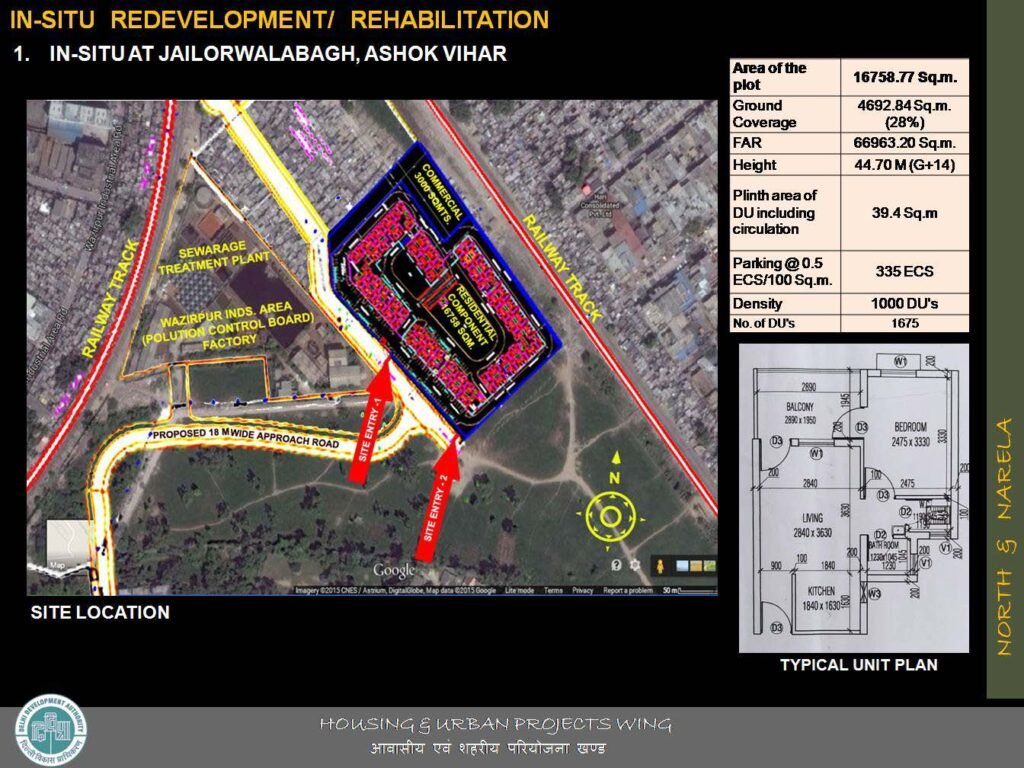
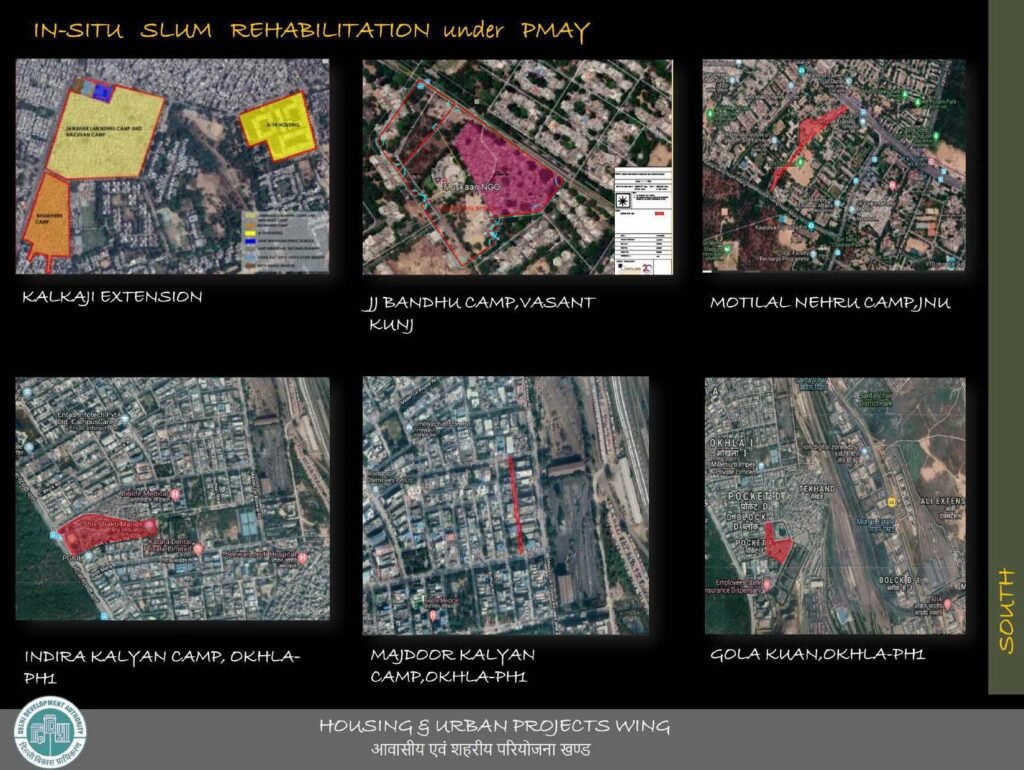
This understanding has gradually shifted policy discussions away from slum clearance towards rehabilitation and in-situ redevelopment.
The philosophy underpinning initiatives such as “Jahan Jhuggi Wahan Makan” reflects this evolution. Rather than perceiving informal settlements solely as illegal occupations, the approach recognises that residents are also workers, taxpayers, service providers and long-term contributors to the city’s economy.
The challenge for policymakers is to balance constitutional rights with lawful land management, environmental protection and planned urban growth.
A Defining Moment
The year 2026 may prove to be a turning point in Delhi’s urban history.
The announcement of the Delhi Slum and JJ Cluster Rehabilitation and Relocation Policy, 2026, the city appears poised to move beyond piecemeal interventions towards a more comprehensive rehabilitation framework. The policy introduces updated eligibility criteria, expanded public-private participation and an ambitious implementation strategy intended to address one of the capital’s most persistent urban challenges.
However, the announcement should not be mistaken for implementation. At the time of writing, the policy is yet to be formally notified. While the Government has out lined its vision through official statements—including plans for public-private partnership (PPP)-based rehabilitation, revised eligibility norms and accelerated project execution—the legal, administrative and operational framework will become clear only after the notification is issued. It is the notified policy, rather than the announcement itself, that will ultimately define Delhi’s rehabilitation roadmap.
Previous policies also promised transformation. Some succeeded, many stalled, and several exposed gaps between policy intent and implementation. The true test of the 2026 policy will not be measured by the number of tenders issued or housing units sanctioned. It will be determined by whether Delhi succeeds in creating neighbourhoods where families can live securely, children can access opportunity, livelihoods remain protected and the city itself becomes more inclusive. The future of Delhi’s informal settlements is therefore not only about housing. It is about defining what kind of city the national capital aspires to become.
(To be continued in Part II: Inside the Delhi Slum and JJ Cluster Rehabilitation and Relocation Policy, 2026—PPP, Governance and the Road Ahead.)
References
- Ministry of Housing and Urban Affairs (MoHUA). Pradhan Mantri Awas Yojana (Urban) Mission Guidelines.
- Government of India. Press Information Bureau. “Delhi Slum & JJ Cluster Rehabilitation and Relocation Policy, 2026.” June 2026.
- Delhi Development Authority (DDA). In-Situ Slum Rehabilitation Policy under PMAY (Urban).
- Delhi Urban Shelter Improvement Board (DUSIB). Delhi Slum & JJ Rehabilitation and Relocation Policy, 2015.
- Census of India 2011. Houses, Household Amenities and Slum Housing Statistics.
- National Urban Housing and Habitat Policy, Government of India.
- UN-Habitat. World Cities Report (2022).
- World Bank. Cities, Poverty and Inclusive Urbanisation.
- National Capital Territory of Delhi, Economic Survey (latest available edition).
Join our WhatsApp Channel for fastest updates: Join now