

As India’s cities continue to expand at an unprecedented pace, the debate is no longer confined to how much we build, but how we build. Rising skylines, expanding infrastructure, and smart city initiatives have transformed the urban landscape, yet they have also raised pressing questions about sustainability, inclusivity, climate resilience, and the quality of public life.
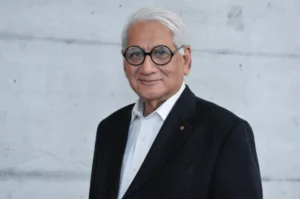
Long before these concerns became central to global urban discourse, one architect had already articulated a distinctly Indian vision for urbanism—one that embraced climate, culture, community, and human dignity. That architect was Charles Correa (1930–2015), whose work continues to influence architects, planners, policymakers, and urban thinkers around the world.
Correa did not view architecture as the creation of isolated buildings. He believed architecture and urban planning were inseparable from the lives of people. For him, cities were living organisms where public spaces, housing, mobility, climate, and culture had to work together to improve everyday life. His ideas remain remarkably relevant as India moves toward a future shaped by rapid urbanization and climate change.
Designing Cities for People
At a time when India’s cities are swelling vertically, with glass facades and imported urban models, the deeper challenge is how to build in ways that are humane, climate-sensitive, and culturally grounded. Decades before these concerns became mainstream, Charles Correa had already articulated a vision for cities that placed people, climate, and culture at the center. Born in Secunderabad in 1930, Correa came of age as India was shaping its post-colonial identity. He studied architecture at the University of Michigan and then at MIT, but unlike many of his peers, he chose to return home. In 1958, he established his practice in Mumbai, embarking on a career that spanned over five decades. From the beginning, Correa resisted transplanting Western models onto Indian soil. He saw that India’s climate and social fabric demanded something different. Courtyards, verandahs, shaded streets, public plazas, these weren’t nostalgic gestures. They were practical responses that supported comfort, community, and continuity. In his essays, especially The New Landscape, Correa argued that third-world cities needed models attuned to their own conditions, not copied blueprints. He wrote that architecture is not a question of building, but of creating places for human life, a line that still reads like a manifesto.That philosophy set the stage for the remarkable body of work that followed.
Landmark Projects and the Making of a Human-Centered Vision
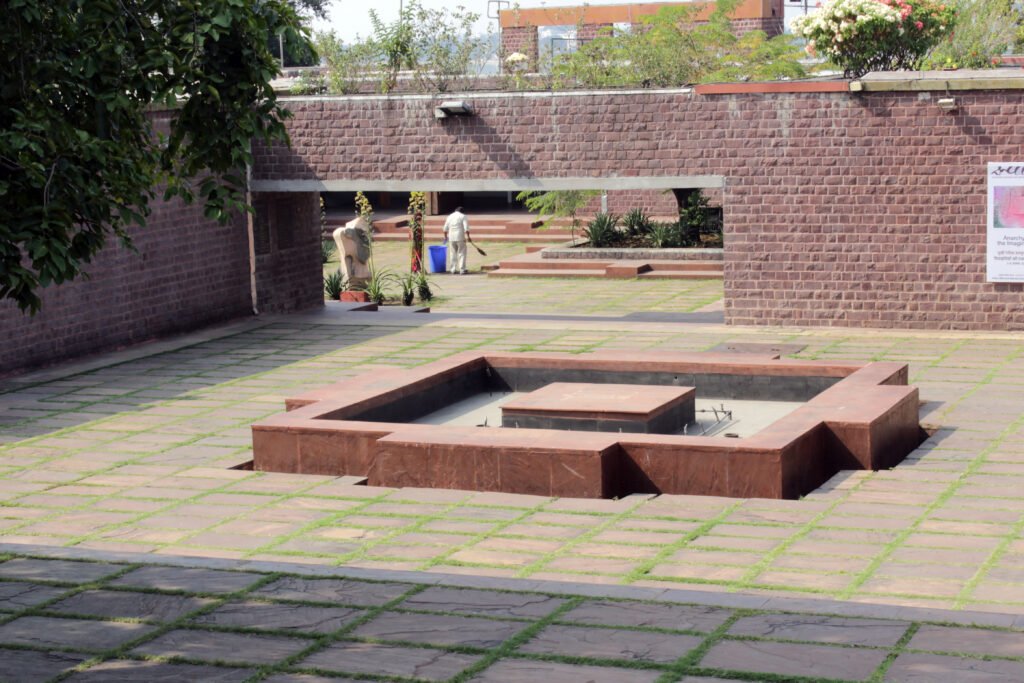
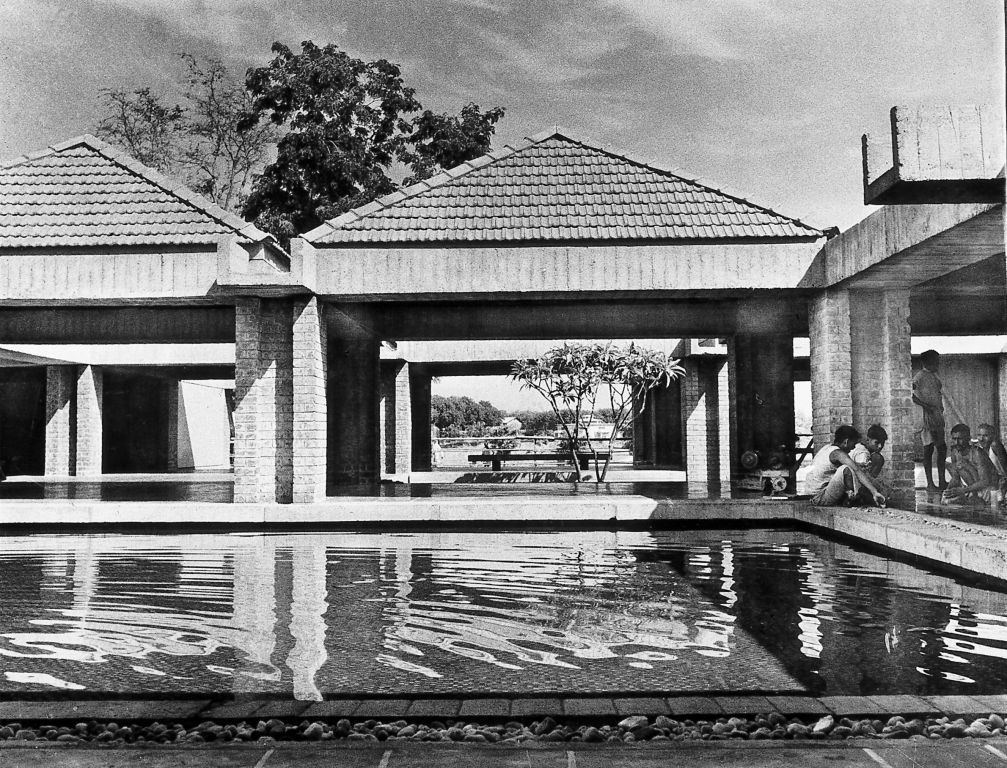
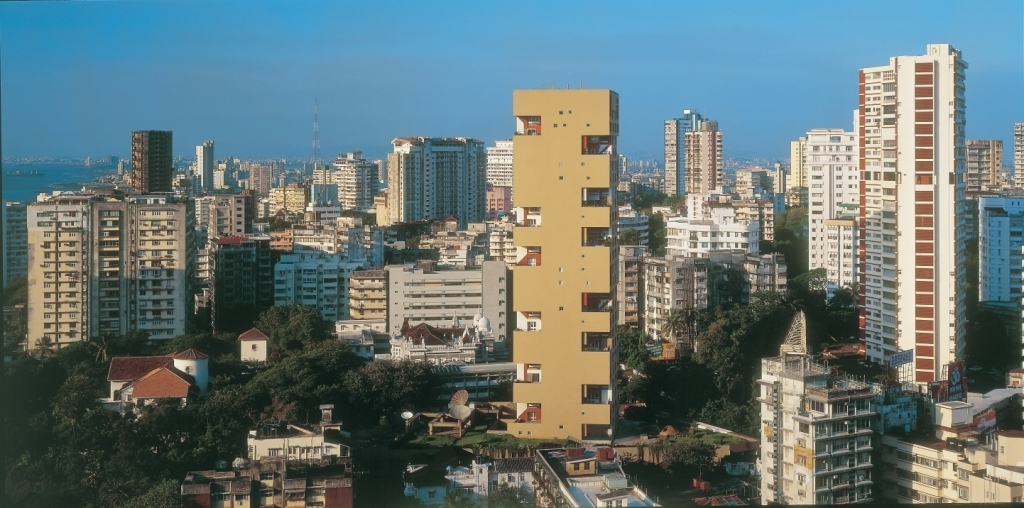
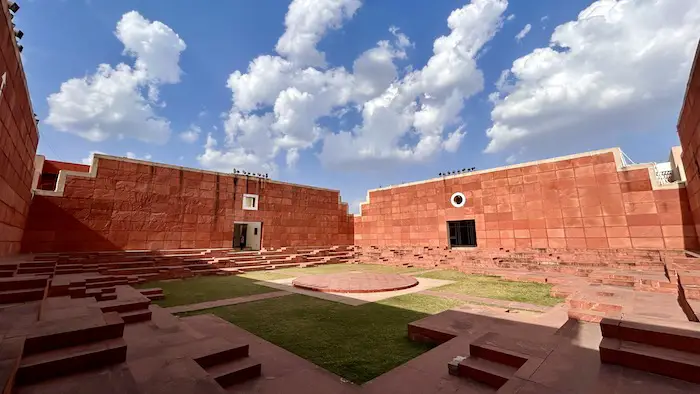
Correa’s buildings were never just about form. They were experiments in how people inhabit space. The Gandhi Smarak Sangrahalaya in Ahmedabad, completed in the early 1960s, is a masterclass in restraint: modular pavilions, shaded courts, natural light, reflecting Gandhi’s values without monumental excess. It signaled his lifelong belief that simplicity, properly understood, can be deeply modern. The Kanchanjunga Apartments in Mumbai, finished in 1983, challenged the sealed glass tower model. Double-height terraces and cross-ventilation reduced heat gain and gave residents semi-open outdoor rooms. It was a vertical city that still breathed. In Belapur Housing, Navi Mumbai, Correa reimagined affordable housing as low-rise high density… with courtyard clusters that could grow incrementally. This wasn’t charity; it was a different model of city-making that treated residents as active participants, not passive recipients. Jawahar Kala Kendra in Jaipur revealed how deeply he could engage with tradition without pastiche, drawing from the historic Jaipur grid and Vastu Purusha Mandala, yet translating it into a contemporary public institution. Just as significant was work beyond individual buildings. As a key planner for Navi Mumbai, Correa promoted a polycentric structure, self-contained nodes linked by transport. rather than a single overloaded core. That vision still influences sustainable metropolitan planning today. Through all these works, a consistent thread emerges. Architecture as social responsibility, shaping not just skylines but everyday life.
Charles Correa’s influence extended well beyond his buildings
Through books, lectures, and policy work, he shaped national conversations on urbanization. He argued that cities must be engines of opportunity, not just growth machines, and that planning must reflect the aspirations of ordinary citizens. His leadership roles—as Chief Architect for Navi Mumbai and Chairman of the National Commission on Urbanization—positioned him to influence policy as well as practice. Internationally, honors including the RIBA Royal Gold Medal, UIA Gold Medal, and India’s Padma Vibhushan recognized that impact. But perhaps more telling is how often his ideas resurface in today’s debates. Affordable housing, transit-oriented development, climate resilience, inclusive public space—Correa anticipated these long before they entered mainstream policy. For students, planners, and policymakers, his legacy is both a guide and a challenge. Build cities that breathe, include, and evolve with people. As India charts its urban future, Charles Correa’s work stands as a reminder: Architecture matters because it shapes everyday life.
Timeline at a glance: born1930, Secunderabad; practice established 1958; major works span 1960s to 2000s; Chief Architect for Navi Mumbai; chaired National Commission on Urbanization; passed away2015.
References: Correa’s The New Landscape (1985); Charles Correa Foundation; RIBA Journal retrospective; MIT News obituary; Praemium Imperiale; Holcim Foundation.
Also Read: B.V. Doshi: Designing India Through People, Place and Possibility
Join our WhatsApp Channel for fastest updates: Join now