
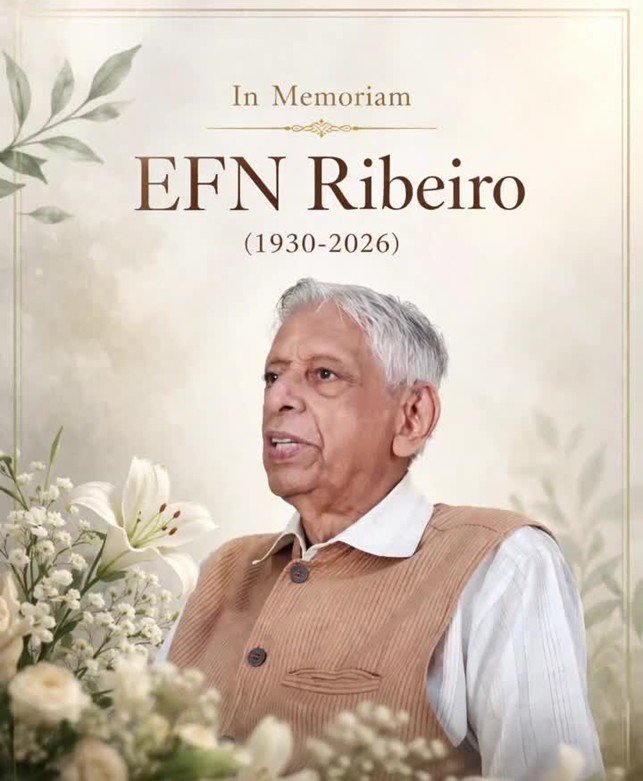
Edgar F. N. Ribeiro’s life stands as a powerful example of how architecture and planning can truly serve society. More than just a professional, he was a thinker, teacher, and public servant who believed that cities should be designed for people, not just for growth. With his passing, India has lost one of its most respected planners, but his ideas and values will continue to guide the future of urban development.
Born in 1930 in Poona (now Pune), Ribeiro grew up during a time when India was still under British rule and slowly moving towards independence. These early years had a deep impact on his thinking. He saw how cities were shaped by systems that often ignored local needs, and this inspired him to pursue a path where he could contribute to building a better and more inclusive environment. From a young age, he showed interest in how spaces function and how they affect everyday life.
He studied architecture at the Sir J. J. College of Architecture in Mumbai, one of the leading institutions in the country. His education gave him a strong foundation in design, structure, and planning principles. Wanting to deepen his understanding, he later went to the University of Manchester in the United Kingdom to study town and country planning. This international exposure played an important role in shaping his professional approach, giving him insights into organized urban systems and governance.
Ribeiro began his career in the United Kingdom, where he worked with local planning authorities. This early experience helped him understand how cities could be planned in a structured and systematic way. However, his real contribution began when he returned to India in 1962. He joined the Town and Country Planning Organisation (TCPO), marking the start of a long and impactful career in public service.
One of his earliest major roles was in Goa, Daman and Diu between 1964 and 1967. At that time, these regions had recently become part of India and needed proper planning systems. Ribeiro played a key role in setting up the Town Planning Department there. His work during this period laid the foundation for organized development while respecting the natural and cultural character of the region.
Over the years, Ribeiro took on several important positions that allowed him to influence urban planning at a national level. In the 1970s, he contributed to urban design guidelines for Delhi, helping shape the city’s growth in a more structured way. He later served as Commissioner (Planning) at the Delhi Development Authority (DDA) from 1979 to 1983. During this time, he promoted a holistic approach to planning—bringing together land use, transport, housing, and public services instead of treating them separately.
His career continued to grow as he became the Chief Town Planner of India and later an advisor to the Planning Commission. In these roles, he worked on policies and strategies that affected cities across the country. He also contributed to education as the Director of the School of Planning and Architecture (SPA), New Delhi. Here, he influenced a whole generation of young architects and planners, encouraging them to think beyond buildings and focus on society, environment, and long-term impact.
Among his many contributions, his work in Goa remains one of the most significant. He was closely involved in the preparation of the Regional Plan 2021, which introduced the concept of eco-sensitive zones. This plan aimed to protect large areas of Goa’s natural landscape, including forests, fields, and water bodies, from uncontrolled development. His efforts are widely credited with helping preserve Goa’s environmental balance at a time when rapid urbanization was putting pressure on its resources.
What made Ribeiro truly different was his way of thinking. He believed that planning should not be limited to maps and regulations. For him, it was about understanding people’s lives, protecting nature, and creating spaces that are both functional and meaningful. He often spoke about the importance of open spaces, walkability, and community life. He believed that cities should grow in a balanced way, without losing their identity or harming the environment.
Even after retiring from official positions, Ribeiro remained active and engaged. He continued to advise planners, support environmental initiatives, and participate in discussions on urban issues. He was especially concerned about unplanned growth, environmental damage, and the need for responsible decision-making. His voice remained clear and relevant, always reminding professionals to think long-term.
On a personal level, Ribeiro was known for his simplicity and humility. He lived a quiet life, away from unnecessary attention. He was a thoughtful listener, a patient mentor, and someone who always encouraged meaningful discussions. Many professionals remember him not just for his knowledge, but for his kindness and willingness to guide others.
Throughout his life, Ribeiro earned deep respect rather than public recognition. His achievements were not about awards or fame, but about the lasting impact of his work. He helped build systems, shape policies, and protect environments that continue to benefit people today.
Edgar F. N. Ribeiro’s legacy is a reminder that true development is not about rapid construction, but about thoughtful planning. His life teaches us that cities must be designed with care—for people, for nature, and for the future. As India continues to grow and urbanize, his ideas remain more relevant than ever.
He may no longer be with us, but his vision will continue to guide generations of architects and planners who believe in building responsibly and meaningfully.
Also Read: In Memoriam: Prof. Vijay Garg and Ecologist Madhav Gadgil
Join our WhatsApp Channel for fastest updates: Join now