

Introduction to Mandvi’s Maritime Legacy
The Semester 4 students of SAL School of Architecture, Ahmedabad recently undertook an academic visit to the historic coastal town of Mandvi in the Kutch region of Gujarat to study and document the enduring tradition of wooden boat construction. Known for its rich maritime heritage, Mandvi once flourished as a prominent trading port within the Indian Ocean network. Even today, the town preserves a remarkable shipbuilding tradition that has continued for over four centuries, making it one of the few places where large wooden vessels are still crafted using traditional knowledge and manual techniques.
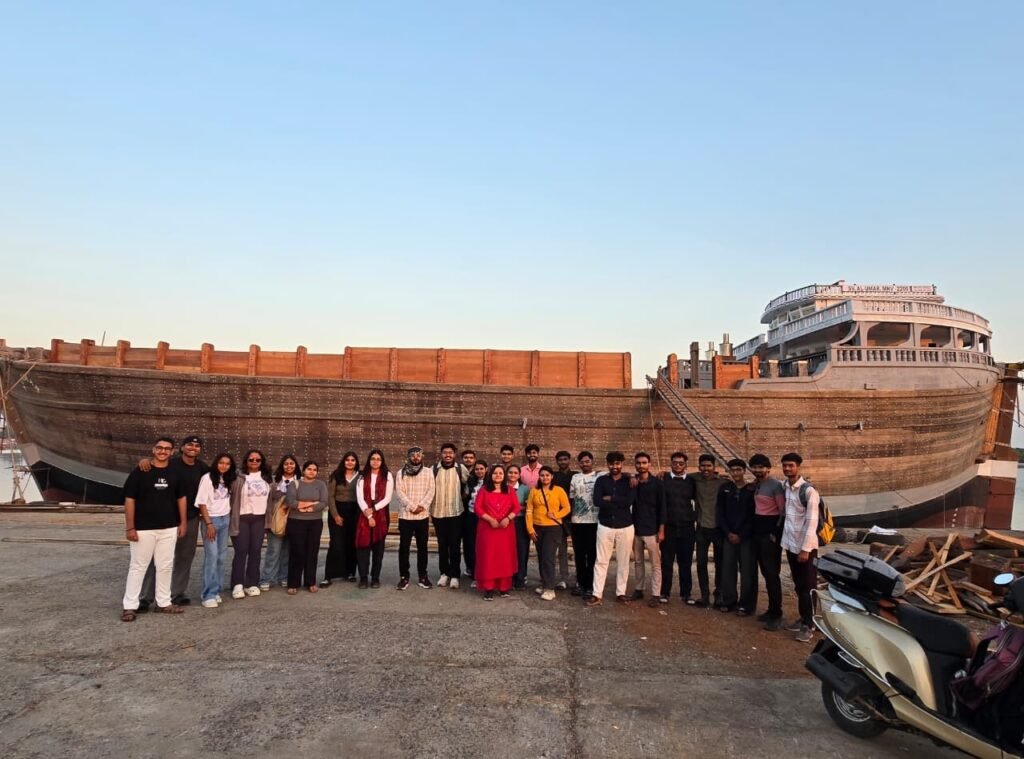
Historically, Mandvi served as a vital maritime gateway connecting western India with ports across East Africa, the Arabian Peninsula, and the Persian Gulf. Merchants from the region built robust wooden vessels, commonly referred to as dhows, to transport spices, textiles, timber, and other commodities across long-distance sea routes. While modern shipbuilding technologies have replaced many traditional methods elsewhere, Mandvi continues to sustain this artisanal craft through the dedication of local boat-building communities who have inherited and preserved their knowledge across generations.
Academic Vision Behind the Initiative
The academic visit was undertaken under the leadership and vision of Dr. Ramanjyot Shrivastava, Principal of SAL School of Architecture. The initiative aimed to expose students to traditional knowledge systems that extend beyond the boundaries of conventional architectural education.
According to Dr. Shrivastava, architectural learning must engage with diverse forms of built environments and craft traditions that demonstrate structural intelligence, material understanding, and cultural continuity. The wooden boat-building tradition of Mandvi represents a remarkable example of indigenous engineering and craftsmanship, where knowledge has evolved through generations of experiential learning rather than formal academic systems. By encouraging students to study this practice firsthand, the institution sought to broaden their understanding of structure, design logic, and material behaviour while fostering an appreciation for traditional craft communities that continue to sustain these living traditions.
SAL School of Architecture’s Academic Initiative
Recognising the architectural, cultural, and technological significance embedded within this craft tradition, SAL School of Architecture organized this field visit to offer students an opportunity to engage directly with an indigenous system of marine construction. The initiative reflects the institution’s progressive academic approach and positions it among the first architecture colleges in Gujarat to introduce students to the domain of naval architecture through experiential learning and field documentation.
Coordination and Academic Facilitation
The visit was coordinated by Asst. Prof. Zaeem Qureshi and Asst. Prof. Vaishali Daraniya who guided students throughout the field study and documentation process. As the academic coordinator, he played a key role in planning the visit, facilitating interactions with the local boat-building community, and helping students interpret the construction techniques and spatial organisation of the boatyards.
Through on-site discussions and observation-based learning, students were encouraged to analyse the relationship between traditional craftsmanship and architectural understanding. The coordination ensured that the visit functioned not merely as a tour but as a structured academic exercise integrating field research with studio learning.
Understanding Traditional Marine Architecture
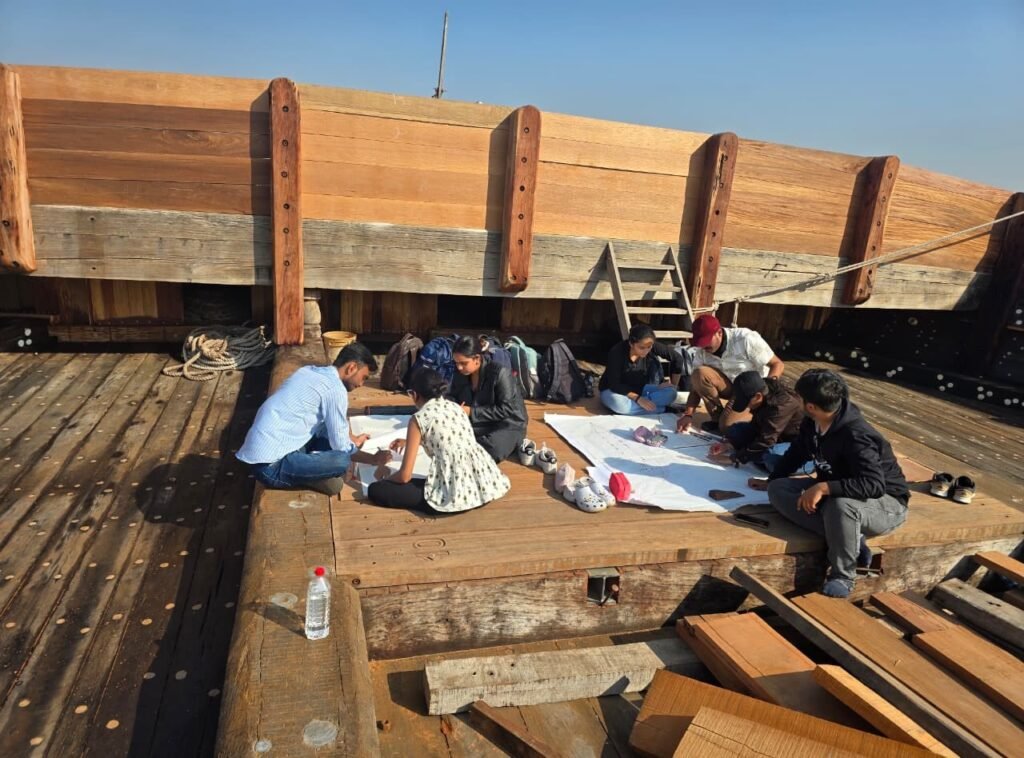
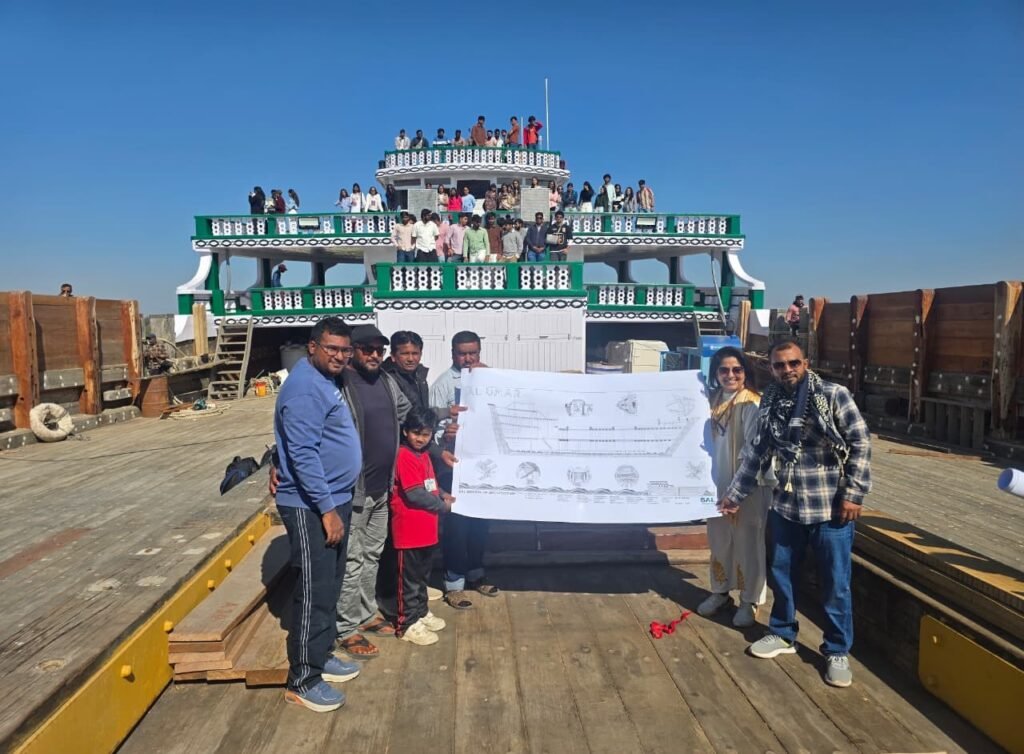
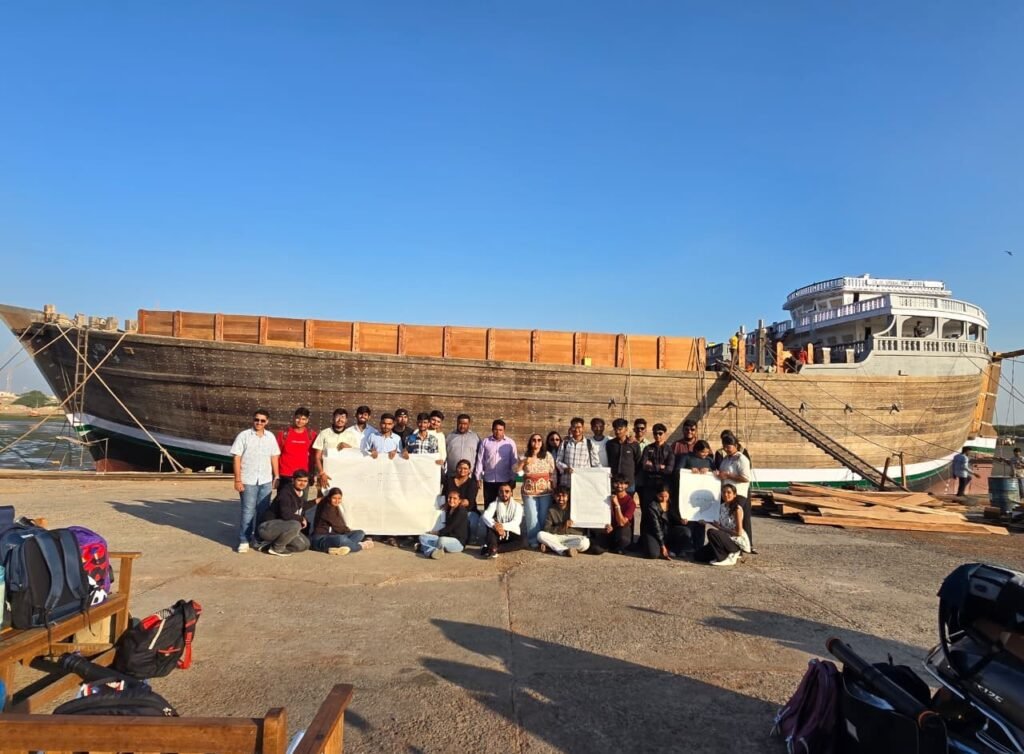
During their visit to Mandvi’s historic boatyards, students closely observed the complex process through which large wooden vessels gradually take shape. Unlike modern industrial shipyards, these construction sites operate in open riverfront landscapes where boats are built manually with minimal machinery. Students documented the stages of hull construction, structural framing, and surface finishing, gaining insights into the structural logic and craftsmanship involved in traditional shipbuilding.
Materials, Joinery, and Craft Techniques
One of the most fascinating aspects of the visit was understanding the careful selection and use of materials. Timber plays a central role in boat construction, with craftsmen selecting hardwood varieties known for their durability and resistance to marine conditions. Students observed how wooden planks are shaped, aligned, and joined using intricate manual joinery techniques. This process reflects a deep understanding of structural stability, buoyancy, and hydrodynamic performance knowledge refined through centuries of practical experience.
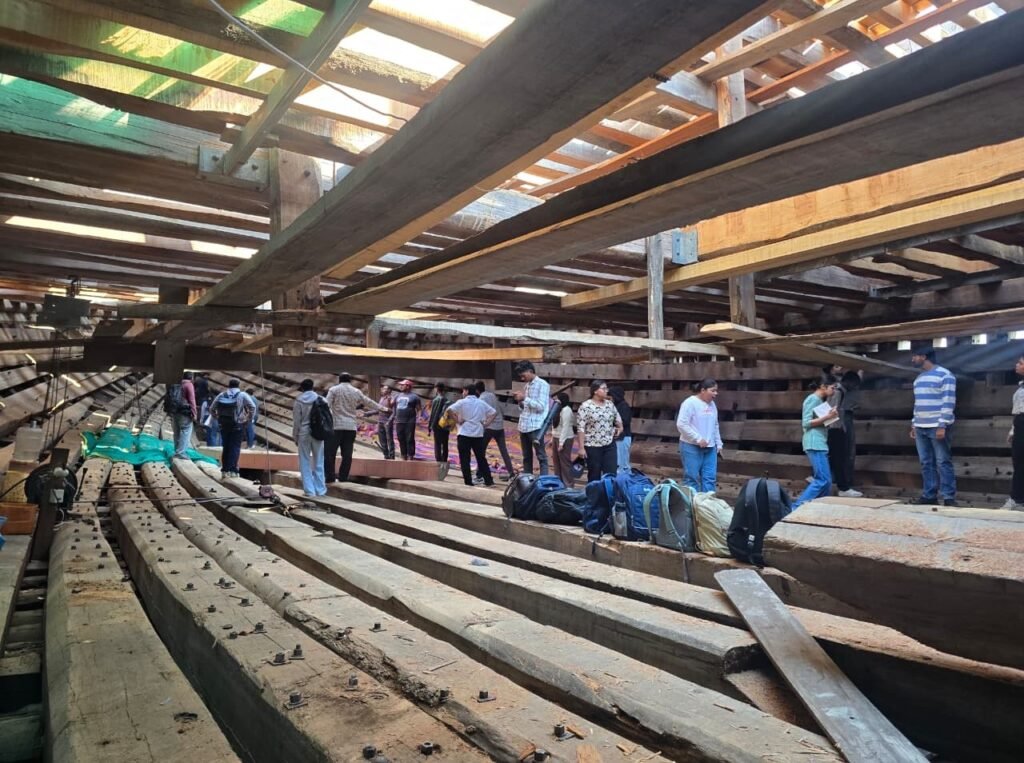
Spatial Organization of Mandvi’s Boatyards
Equally significant was the spatial arrangement of Mandvi’s boatyards. The riverfront acts as an active working landscape where construction, repair, and storage activities occur simultaneously. Large vessels are assembled on sloping grounds facing the water, allowing them to be gradually launched once completed. Surrounding areas are used for timber storage, tool preparation, and smaller repair tasks. Students studied how these working environments evolve organically in response to environmental conditions, tidal patterns, and the functional needs of the craft.
Community, Craft, and Maritime Culture
The visit also highlighted the strong relationship between craft traditions and community life in Mandvi. Many boat-building families live and work within the same neighbourhoods, creating a close-knit social network centred around the craft. Through direct interaction with craftsmen, students gained insight into how knowledge is passed down informally through generations. This living tradition demonstrates how livelihood, cultural identity, and local heritage remain deeply interconnected.
Learning Through Field Documentation
Field documentation formed a crucial component of the study visit. Students engaged in sketching, photographing, measuring, and recording various elements of the boatyards and vessels. These exercises helped them analyse construction systems, proportions, and structural arrangements while contributing to a broader academic archive that captures the architectural and cultural significance of Mandvi’s shipbuilding heritage.
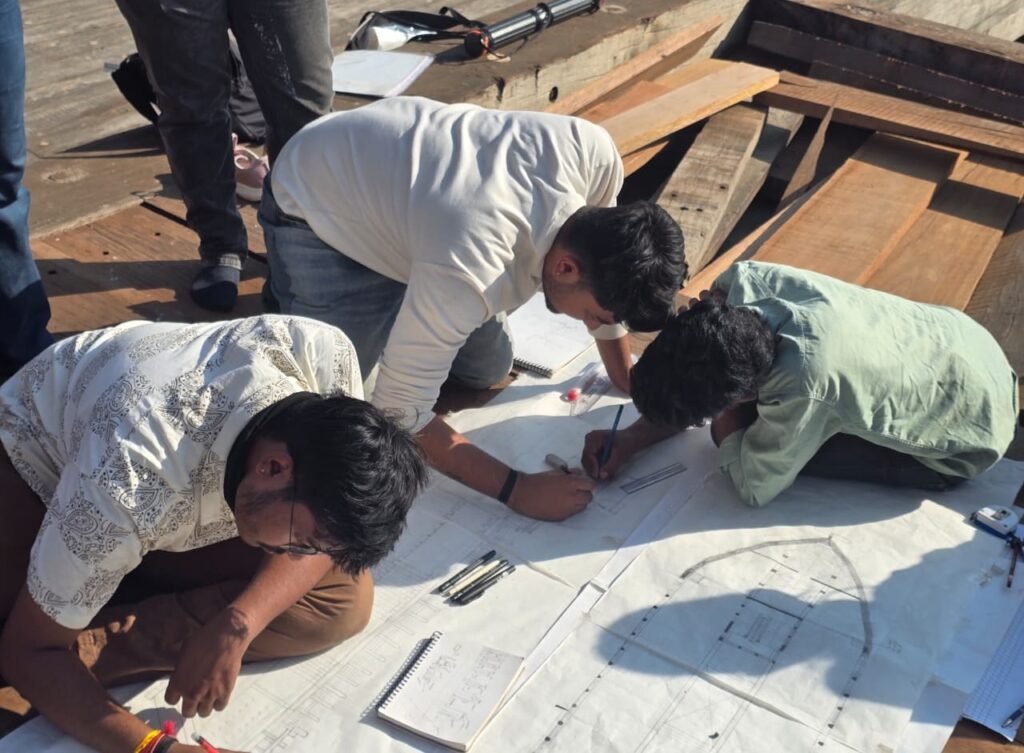
Studio Exploration and Development of a Detailed Boat Model
The learning experience continued on campus, where students translated their field observations into a highly detailed physical model of a traditional wooden vessel. Based on the documentation carried out at the boatyards of Mandvi, the model carefully reconstructs the structural framework, hull form, and joinery techniques observed during the study. Students analysed construction sequences, structural proportions, and component assemblies to recreate the vessel’s internal framing system, rib structures, and planking arrangement. The model demonstrates not only the external form of the boat but also the intricate structural logic that governs its stability and performance at sea.
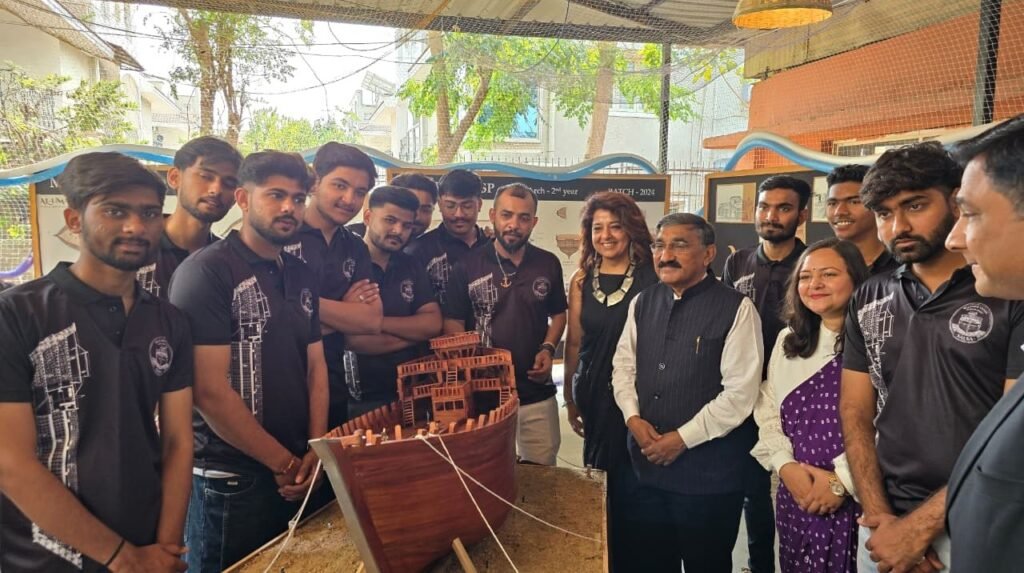
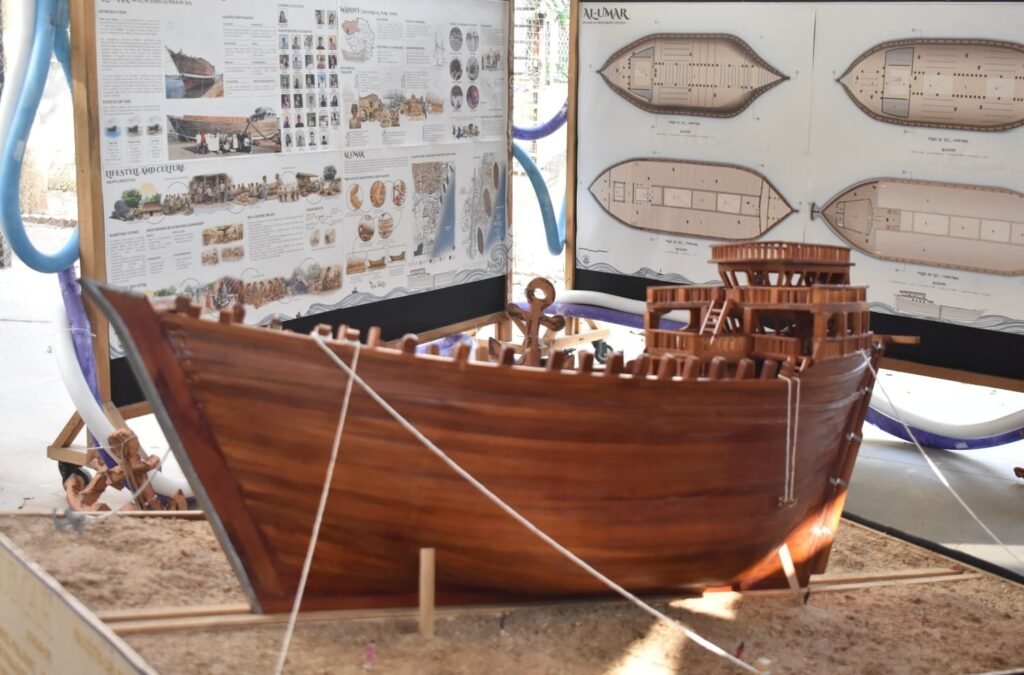
Recognising the academic and research value of this work, SAL School of Architecture has initiated a copyright application for the model and its documentation. The model represents one of the most comprehensive academic reconstructions of Mandvi’s traditional boat-building system produced within an architectural institution. To the best of current knowledge, such a detailed documentation-driven model of a traditional wooden vessel has not previously been undertaken by any school of architecture in India.
Reflections and Academic Outcomes
For architecture students, the visit offered a valuable opportunity to broaden their understanding of structure, materials, and craftsmanship beyond conventional building typologies. Observing boat construction revealed parallels with architectural systems, particularly in terms of load distribution, structural framing, and the careful assembly of components. More importantly, the experience highlighted how design knowledge can emerge from hands-on practice and centuries-old craft traditions.
As global industrialisation continues to reshape traditional industries, practices like wooden boat construction face increasing challenges. Academic initiatives such as this visit play an important role in recognising and documenting these living knowledge systems. The experience ultimately served as a bridge between architecture, craftsmanship, and maritime history—offering students a rare opportunity to learn from one of India’s most enduring coastal traditions while contributing to the preservation of a remarkable cultural heritage.
Also Read: Architecture Matters–XI: Reclaiming Craft as Intelligence in Contemporary Architecture
Join our WhatsApp Channel for fastest updates: Join now