

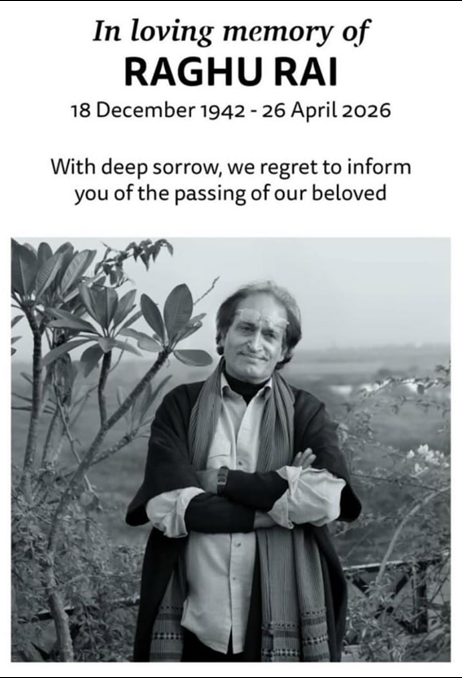
The passing of Raghu Rai on 26 April 2026 marks the end of an extraordinary chapter in the visual documentation of India. Born on 18 December 1942, Rai was not merely a photographer—he was a storyteller, a chronicler of human emotion, and a silent observer who transformed everyday moments into powerful narratives. His demise is not only a loss to the world of photography but to the cultural and historical memory of India itself.
Raghu Rai’s journey into photography began in the 1960s, and over the decades, he emerged as one of India’s most celebrated visual artists. He joined The Statesman early in his career, where his work quickly gained attention for its depth and sensitivity. However, it was his association with Magnum Photos, one of the most prestigious photographic collectives in the world, that brought him global recognition. Personally invited by the legendary photographer Henri Cartier-Bresson, Rai became a member of Magnum Photos, placing him among the most respected photographers internationally.
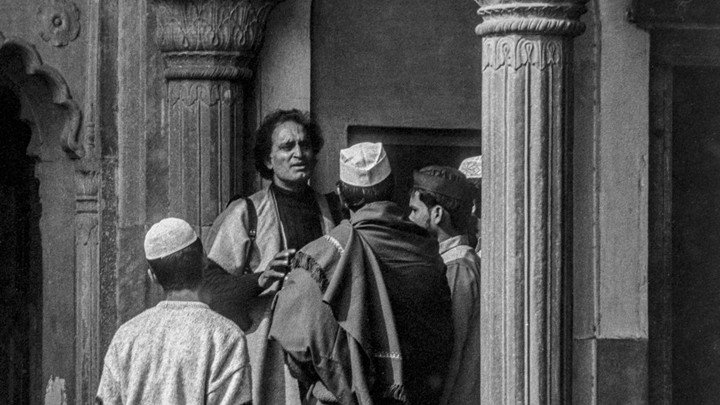
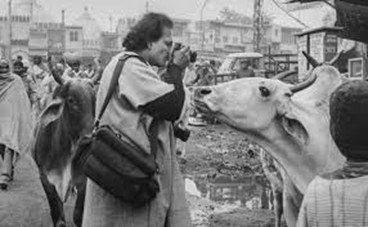
Over a career spanning more than five decades, Raghu Rai produced an extensive body of work that captured the diversity, complexity, and contradictions of India. From the bustling streets of Delhi to the spiritual aura of Varanasi, from political corridors to rural landscapes, his photographs documented the many layers of Indian life. One of his most defining works remains his coverage of the Bhopal Gas Tragedy, where his haunting images brought global attention to one of the worst industrial disasters in history. These photographs were not just records of an event—they were deeply human portrayals of suffering, resilience, and injustice.
Rai’s work extended beyond photojournalism into books and long-term visual studies. He published over 40 photography books, covering themes such as Indian culture, spirituality, environment, and urban life. His iconic works on Delhi, the Ganges, Mother Teresa, and Indian democracy remain timeless visual archives. His ability to find meaning in ordinary scenes and present them with extraordinary clarity made his work both accessible and profound.
Throughout his career, Raghu Rai received numerous accolades, including the prestigious Padma Shri, one of India’s highest civilian awards, recognizing his immense contribution to the arts. His photographs have been exhibited worldwide, and his work continues to influence generations of photographers, journalists, and visual storytellers. Despite his fame, he remained deeply rooted in his craft, often emphasizing patience, observation, and emotional connection as the core of photography.
What set Raghu Rai apart was his unique vision—he did not merely take photographs; he captured moments of truth. His images were often layered with emotion, irony, and narrative depth, reflecting both the beauty and contradictions of Indian society. He had an uncanny ability to blend the aesthetic with the documentary, making his work both artistic and historically significant.
Even in his later years, Rai remained active, continuing to document life with the same passion and curiosity that defined his early career. His legacy is not confined to galleries or books; it lives on in the collective memory of a nation that saw itself through his lens.
The final farewell held on 26 April 2026 at Lodhi Road Cremation Ground, New Delhi, marked the end of a life dedicated to capturing the essence of humanity. Yet, his work ensures that he is far from gone. Every photograph he took continues to speak, to question, and to inspire.
Raghu Rai’s passing is a profound loss, but his legacy remains immortal. He gave India a visual identity, a mirror to reflect upon itself, and a timeless archive of its journey through decades of change.
May his soul rest in peace.
References
- Rai, R. (2010). Raghu Rai’s India: Reflections in Colour. New Delhi: Roli Books.
- Rai, R. (2005). Delhi. New Delhi: Lustre Press / Roli Books.
- Rai, R. (1996). Mother Teresa. New Delhi: Lustre Press.
- The Statesman. (n.d.). Archives and historical records of contributors.
- Encyclopaedia Britannica. (n.d.). Raghu Rai – Indian photographer.
- Getty Images. (n.d.). Raghu Rai photography collections and archives.
- UNESCO. (n.d.). Cultural documentation and photography in heritage preservation.
Also Read: Veteran Architect Shri Shireesh Atmaram Deshpande Passes Away at 91
Join our WhatsApp Channel for fastest updates: Join now