

Curated by K.T. Ravindran | Organized by The Raza Foundation, India Habitat Centre, New Delhi
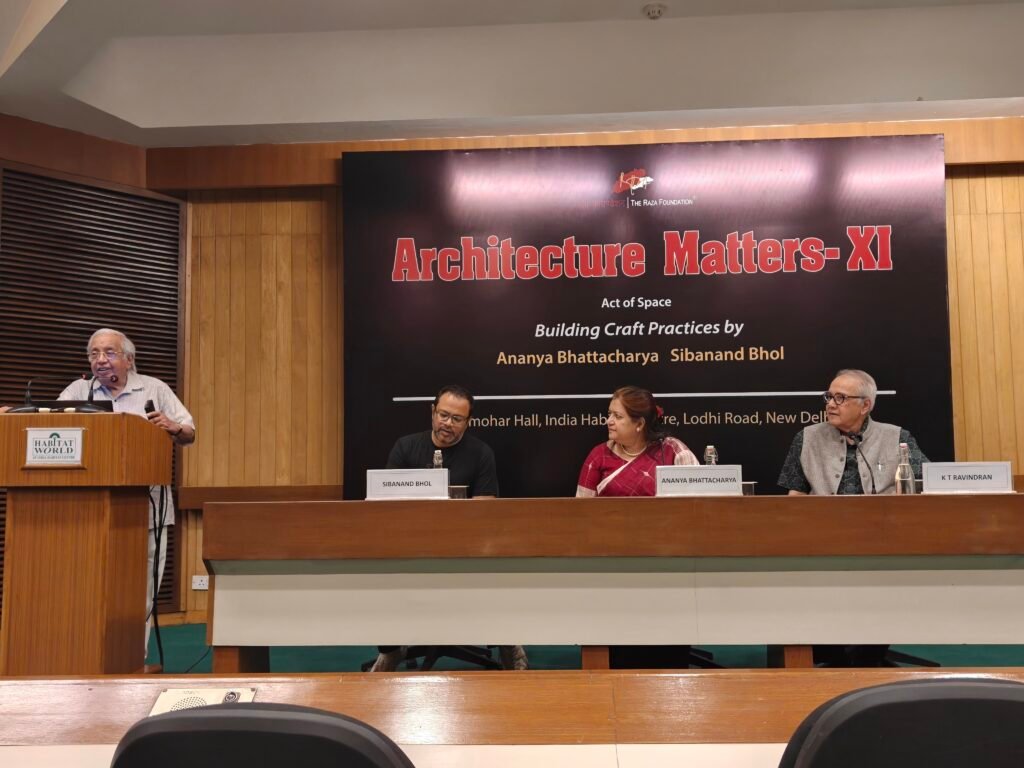
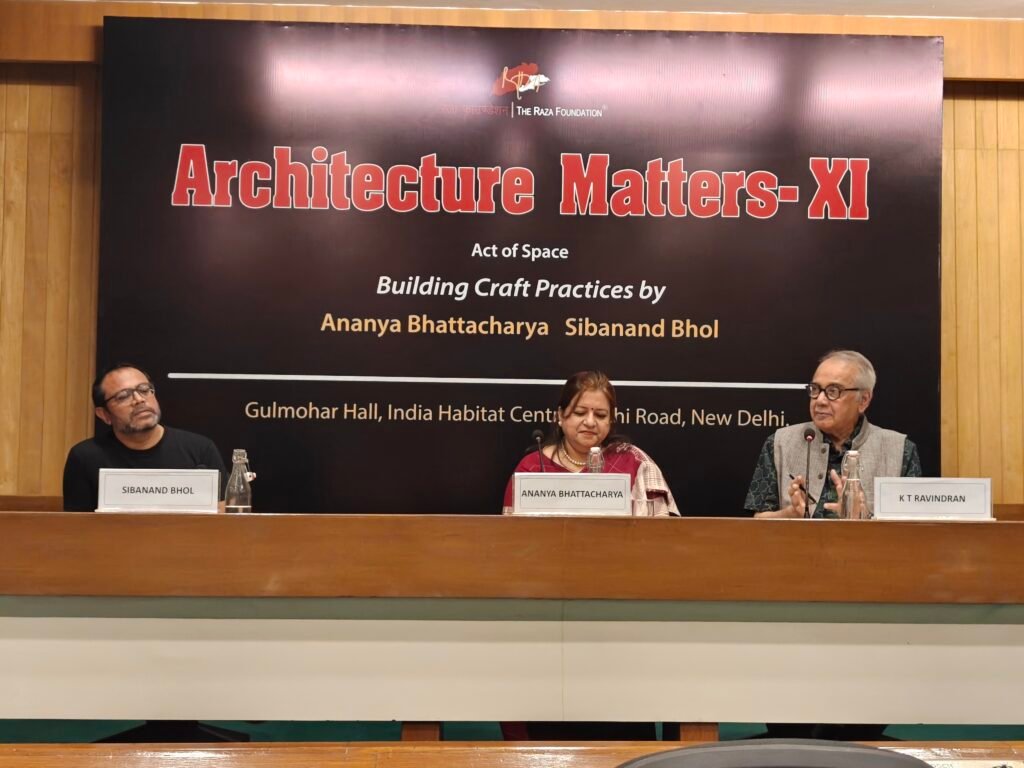
The eleventh session of the Architecture Matters series, organized by The Raza Foundation at the India Habitat Centre, brought into focus the critical role of craft in shaping meaningful architectural practice. Curated by Prof. K.T. Ravindran, the panel titled “Act of Space: Building Craft Practices” featured Ananya Bhattacharya and Sibanand Bhol, who collectively argued for a fundamental rethinking of how craft is positioned within contemporary architecture. Opening the evening, Ashok Vajpeyi situated the series within the Foundation’s broader cultural agenda, while architect Kabir Bajpai framed the discussion through a compelling anecdote from Odisha, where a locally crafted bamboo structure demonstrated how indigenous knowledge systems offer efficient, sustainable, and context-responsive solutions—far beyond what industrial methods often achieve.
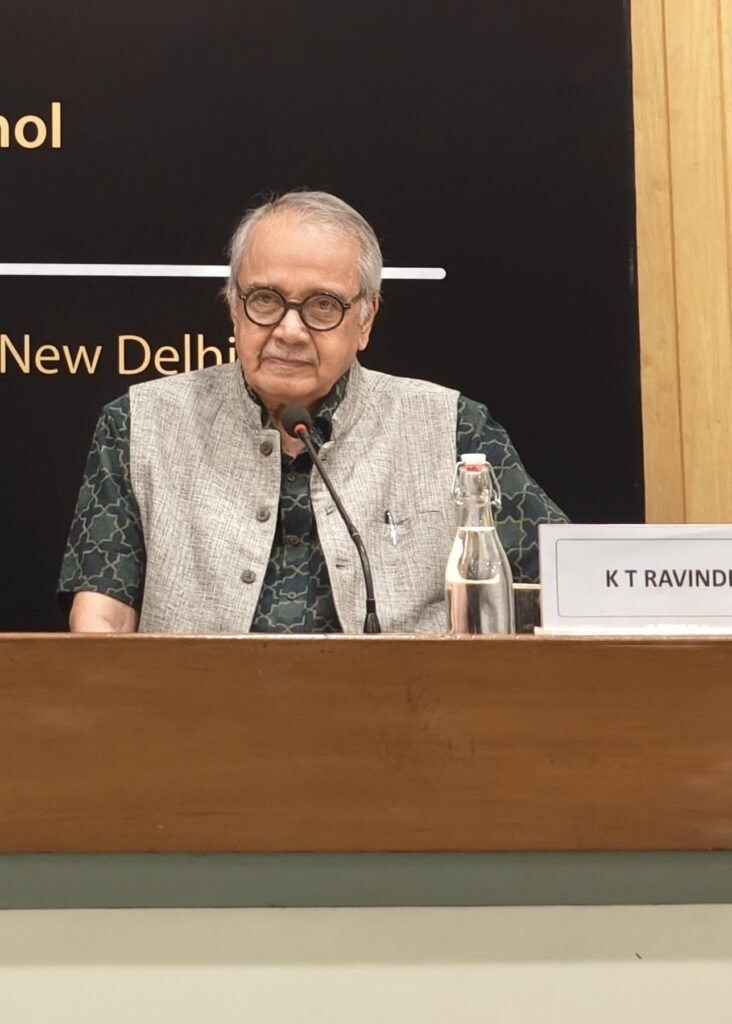
“There is an inherent conflict when craft is removed from its original context and applied elsewhere.”
He emphasized that craft is rooted in collective knowledge:
“Craft is co-production—shared intelligence shaping form and space.”
Introducing the idea of evolution, he added:
“It is not just co-production, but transcreation—the reinvention of craft across scales and contexts.”
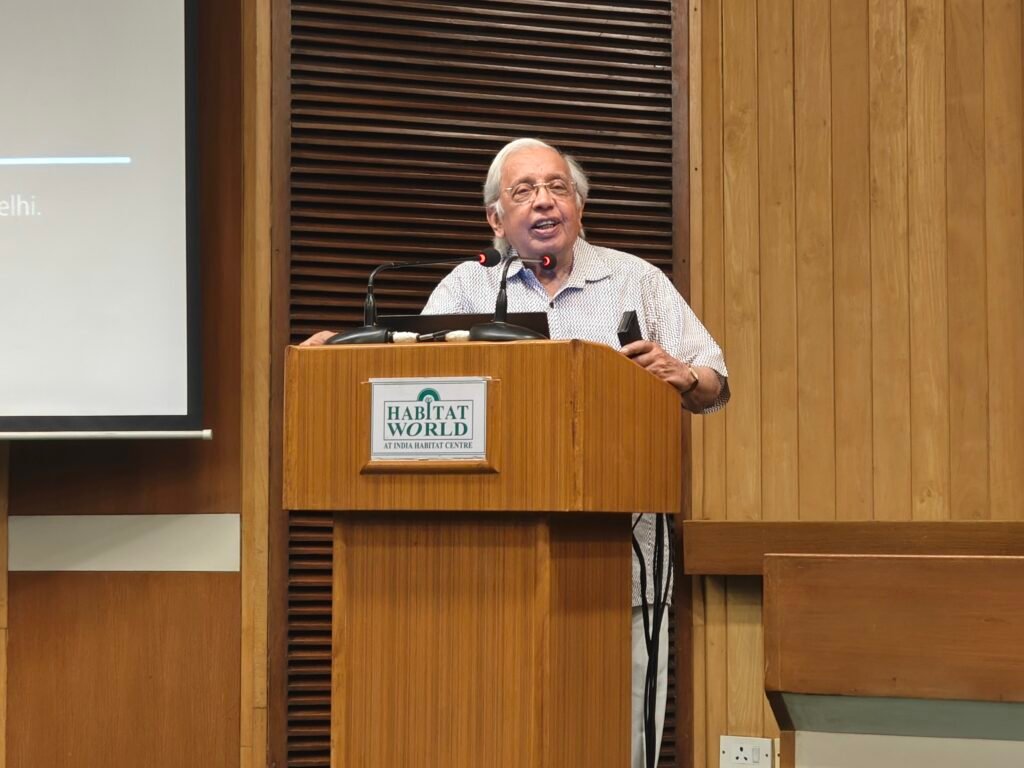
Founder, Raza Foundation
“Craft is not just about objects or aesthetics—it reflects the larger ecosystem of ideas, culture, and creative practices that shape our built environment.”
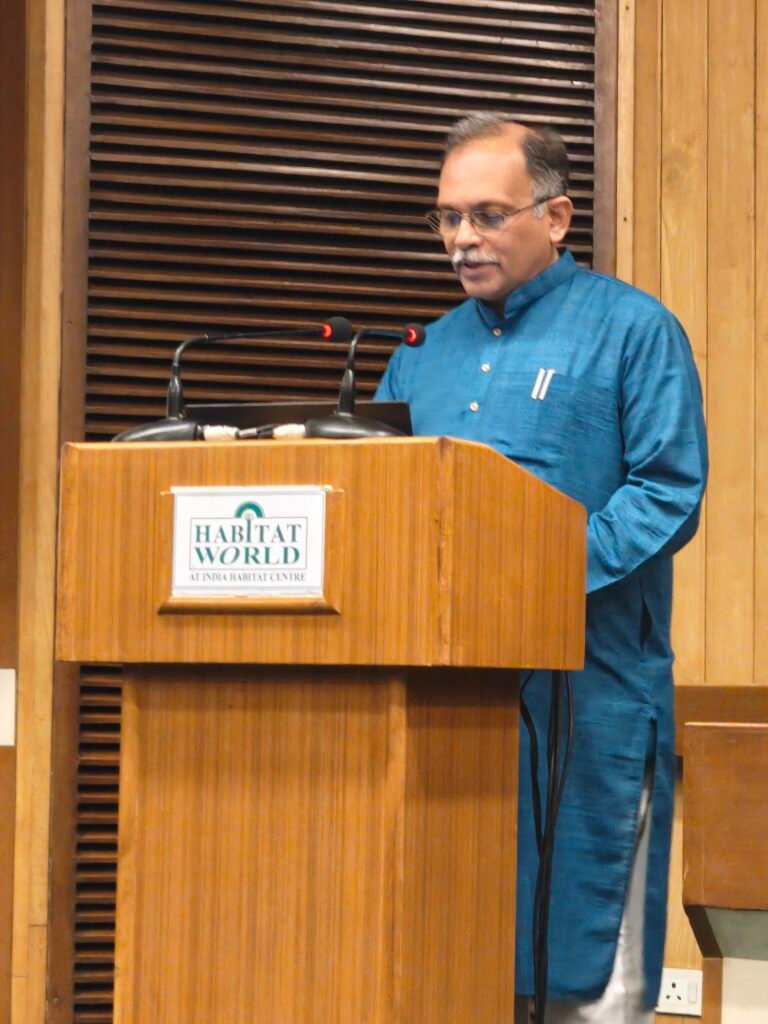
Architect & Session Introducer
“Craft is not decoration—it embodies intelligence, wisdom, and a way of thinking that connects people, materials, and place.”
Ananya Bhattacharya’s presentation foregrounded craft as a living, evolving knowledge system embedded within communities rather than a static decorative practice. Drawing from her extensive work across rural India, she emphasized that vernacular architecture is deeply responsive to climate, material availability, and social structures. Buildings made of bamboo, stone, or earth are not merely shelters but embodiments of collective intelligence, where material properties, environmental conditions, and cultural practices converge. She highlighted how elements like hearths, storage systems, and stilted structures are designed with an intrinsic understanding of daily life and ecological balance. Craft, in this sense, becomes a medium through which relationships—between people, place, and memory—are continuously negotiated. However, she cautioned that contemporary architecture often reduces craft to surface aesthetics, extracting motifs without engaging with the deeper intelligence that informs them, leading to a disconnect between built form and lived experience.
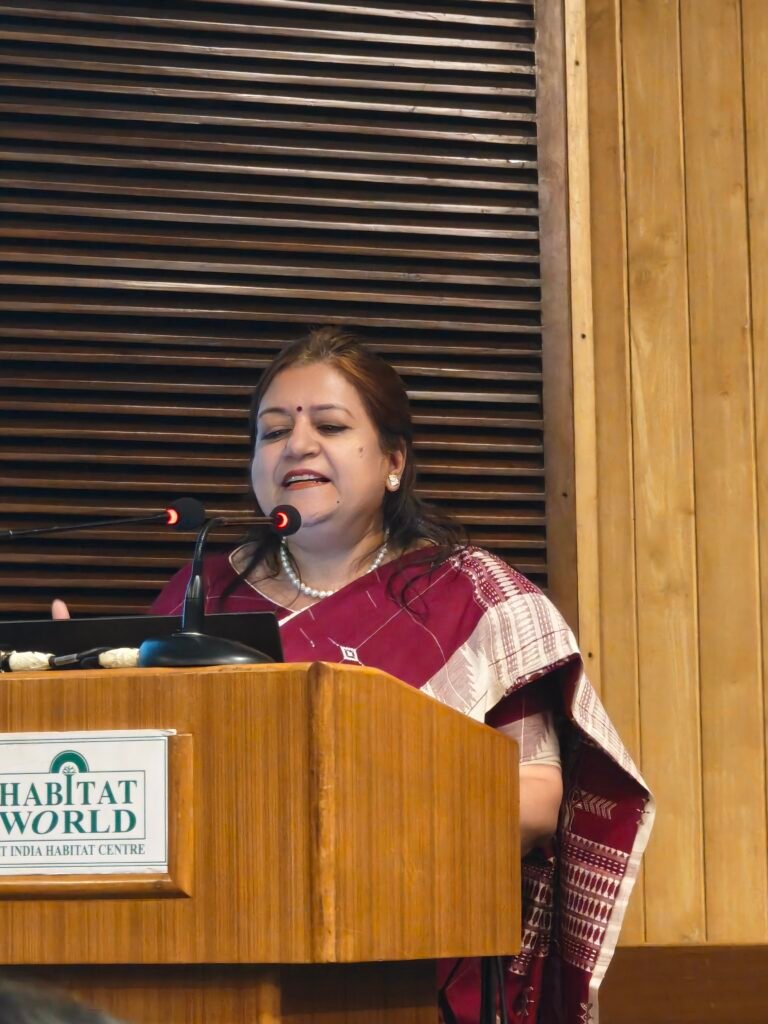
Co-founder, banglanatak.com
“Craft is not an object—it is a process, a system of local knowledge, and a reflection of relationships between people and their environment.”
The discussion further addressed the rapid erosion of traditional building knowledge due to policy frameworks and changing aspirations. Bhattacharya pointed out that standardized housing schemes frequently override local practices, imposing uniform designs that fail to respond to regional needs. As a result, many such structures remain underutilized, while vernacular techniques—once adaptive and community-driven—are gradually disappearing. This loss, she argued, is not only cultural but also ecological and economic, as it disrupts sustainable building practices and marginalizes artisan communities.
Also Read: Architecture Matters X: Where Shastra Meets Science Rethinking Heritage Conservation in India
Sibanand Bhol extended the conversation into the realm of architectural implementation, critically examining the systemic challenges of integrating craft into large-scale projects. He noted that craft is often introduced as an afterthought, once architectural decisions are already finalized, limiting its role to ornamentation. Through detailed project examples such as Krishi Bhavan and IIT Bhilai, he demonstrated how meaningful integration requires early collaboration with artisans, allowing craft to inform design intent, material selection, and spatial experience. These projects illustrated how craft can embed narratives—such as agricultural cycles or local cultural motifs—directly into the architecture, transforming buildings into repositories of collective memory.
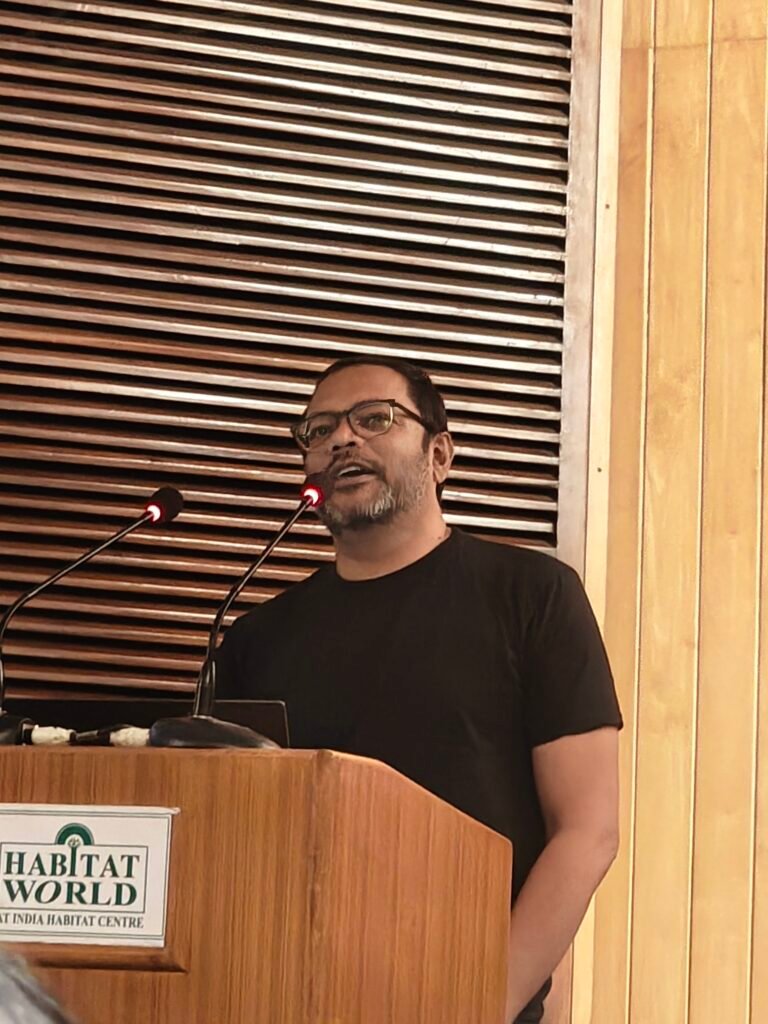
Architect & Craft Integration Specialist
“Craft is often introduced as ornament—an afterthought—when in reality, it should be embedded from the very beginning of architectural design.”
At the same time, Bhol highlighted the practical constraints that complicate this integration, including difficulties in quantifying craft processes, adapting traditional skills to architectural scales, and reconciling slower craft-based workflows with rigid construction timelines. Issues of material variability, health risks for artisans, and the lack of standardized maintenance frameworks further underscore the complexity of embedding craft within modern construction systems. Despite these challenges, he advocated for hybrid approaches that combine traditional craftsmanship with contemporary technologies, ensuring both efficiency and authenticity.
A key conceptual thread that emerged from the session was the idea of “transcreation,” which refers to adapting craft traditions to new contexts while retaining their core values and intelligence. Rather than replicating traditional forms, transcreation allows craft to evolve in response to contemporary needs, bridging the gap between heritage and modernity. This approach recognizes that while the contexts of production may change, the underlying principles of craft—material sensitivity, community knowledge, and cultural expression—remain highly relevant.
The session ultimately challenged the modern disciplinary separation between architecture, art, and craft, arguing that these were historically unified practices. Reintegrating them requires not only changes in design approaches but also shifts in education, policy, and economic structures. The discussion called for collaborative, community-led design processes, greater institutional support for artisans, and policy frameworks that recognize craft as an integral component of sustainable development.
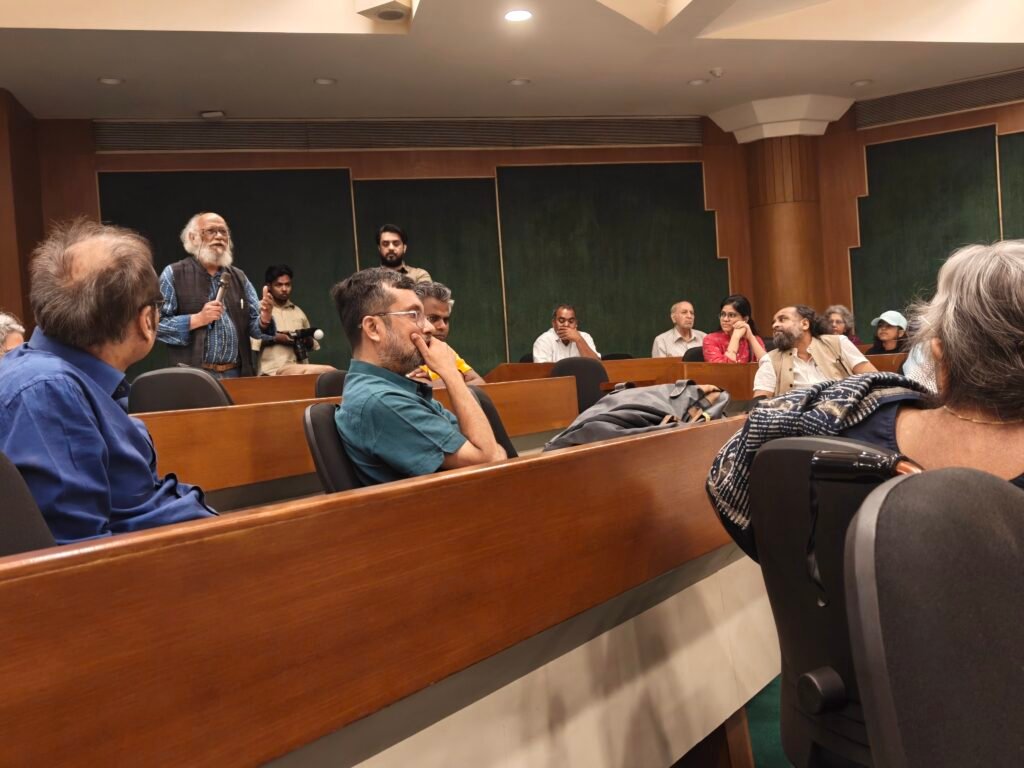
Architecture Matters–XI offered a compelling argument for repositioning craft at the center of architectural discourse. It highlighted that craft is not merely a cultural artifact of the past but a dynamic and intelligent system capable of addressing contemporary challenges. By engaging deeply with craft traditions, architects can create built environments that are not only functional and efficient but also culturally resonant, socially inclusive, and environmentally responsive.
TheAPN attended this event in person. The coverage distils the principal ideas and deliberations for the benefit of a wider public audience.
Also Read: Architecture Matters IX: Exploring the City Through Words, Horizons, and Human Experience


Thanks for the wonderful reporting