

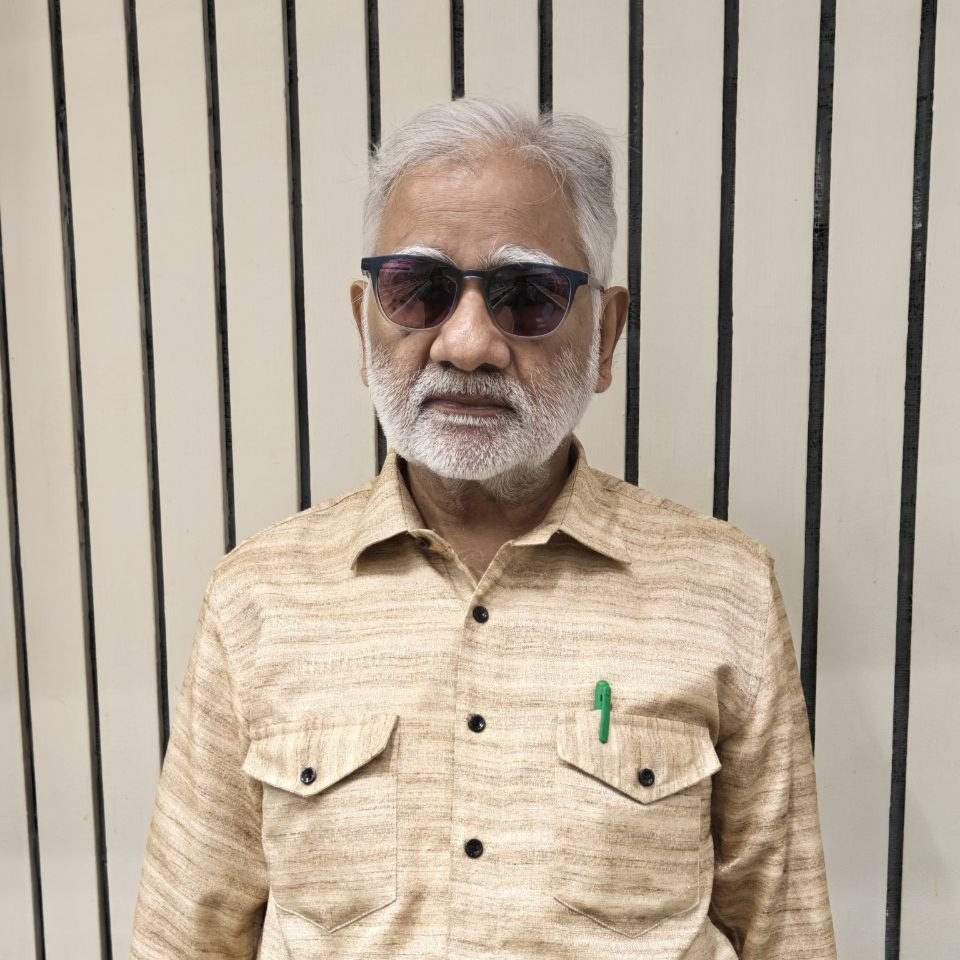
Opinion | Guest Viewpoint – Based on a conversation with Ar. Ashok Goel is a Delhi-based architect, author and professional voice.
India’s architecture profession is facing several challenges that require serious attention, ranging from the regulation of professional practice and the quality of architectural education to faculty remuneration, employment opportunities for young architects and the accountability of professional institutions. While regulatory bodies and professional associations have defined responsibilities, questions remain about how effectively these responsibilities are being fulfilled.
In a conversation with The Architecture and Planning News (TheAPN), Architect Ashok Goel shared his views on these concerns, raising questions about the functioning of the Council of Architecture (COA), the Indian Institute of Architects (IIA) and architecture institutions. He believes that the profession needs stronger institutional accountability, transparency and a renewed focus on the issues affecting architects, students and educators.
Regulation Must Address the Entire Profession
According to Goel, the responsibility of the Council of Architecture should extend beyond protecting the professional title of an architect. It should address the broader regulation of the profession and ensure that the public can distinguish qualified professionals from those practising without appropriate qualifications.
He argues that ordinary citizens may not have the knowledge or resources to determine whether someone offering architectural services is registered or professionally qualified. When people encounter unqualified practitioners, their experience can influence their perception of the entire profession, including qualified architects.
Drawing an analogy with the sale of counterfeit medicines, Goel questions why regulatory mechanisms should depend primarily on complaints rather than taking proactive steps to identify violations. He believes that the Council should strengthen its monitoring and inspection mechanisms and take appropriate action against unauthorised practice.
He has also questioned the Council’s response to complaints and its willingness to engage with stakeholders. In his view, professional regulation requires continuous monitoring, transparency and accountability rather than merely responding to representations.
Accountability of Professional Institutions
Goel has expressed concerns about the priorities and functioning of professional institutions, particularly the Council of Architecture and the Indian Institute of Architects. He questions whether these organisations are giving sufficient attention to the fundamental problems confronting the profession.
He does not consider seminars, workshops, professional visits and meetings sufficient indicators of institutional performance. While such activities may have their own value, he believes they should contribute to meaningful professional development and address pressing concerns.
He has questioned the effectiveness of short-duration workshops that claim to teach complex subjects such as Building Information Modelling (BIM), parametric architecture and other specialised skills within a few days. He also asks whether the certificates awarded through such programmes provide any substantial professional benefit to participants.
According to Goel, professional associations should become platforms for constructive discussion, where members raise questions, examine institutional decisions and demand action on unresolved matters. He believes that meetings should encourage dialogue rather than remain limited to presentations of past activities and future plans.
Architectural Education and the Need for Relevant Learning Resources
Another important concern raised by Goel is the quality of architectural education and the availability of appropriate learning resources.
He recalls discussions about creating a panel of authors to prepare books according to the architecture curriculum. However, he questions how effectively such initiatives have translated into useful academic publications.
In his opinion, architecture students require affordable, subject-specific books that support their five-year academic journey. Educational publications should address the subjects taught at different stages of the course and provide practical academic value.
He has also criticised the high prices of certain publications, questioning whether expensive, visually elaborate books necessarily contribute to students’ learning. He believes institutions should encourage authors, support publishers and facilitate the development of accessible books covering fundamental subjects such as architectural design, site planning and other core areas.
For Goel, the purpose of academic publications should be to strengthen architectural knowledge and assist students in developing professional competence, rather than merely producing expensive publications.
Faculty Qualifications and Quality of Teaching
Goel has raised concerns about faculty recruitment and the qualifications of teaching professionals in architecture institutions, including the School of Planning and Architecture (SPA), Delhi.
He refers to representations and information sought through the Right to Information (RTI) mechanism regarding the qualifications of faculty members and the recruitment requirements for academic positions.
His central concern is whether institutions consistently follow the prescribed qualification criteria while making appointments. He argues that the academic qualifications of faculty members are particularly important in professional education, where students depend on teachers for specialised knowledge, technical understanding and research guidance.
He believes that institutions must maintain transparency in recruitment and ensure that faculty appointments comply with the applicable academic and regulatory requirements.
These concerns, according to Goel, should be examined through official recruitment documents, qualification requirements and institutional records rather than being left unresolved.
Faculty Remuneration and Working Conditions
The working conditions and remuneration of architecture faculty members form another significant part of Goel’s concerns.
He claims to have received complaints regarding delayed or incomplete salary payments to teaching faculty in certain private architecture colleges. According to him, some faculty members reportedly face delays of several months in receiving their salaries.
He questions why prescribed salary norms are not being implemented effectively and argues that regulatory oversight should examine actual payment records rather than focusing exclusively on the physical infrastructure of institutions.
Goel suggests that relevant authorities should examine colleges’ financial records and verify whether faculty members are receiving the remuneration applicable to their positions.
He also questions the emphasis placed on infrastructure during institutional inspections. In his view, classrooms, laboratories, equipment and buildings are important, but they cannot independently guarantee educational quality.
Human resources remain central to education. A well-equipped institution cannot provide quality education without qualified, adequately remunerated and professionally supported teachers.
Employment Opportunities and the Future of Young Architects
Goel believes that employment opportunities for young architects require urgent attention. He points out that students invest five years in architectural education and subsequently undertake internships as part of their professional training.
However, he raises concerns about the financial difficulties students may face during internships, particularly when they continue to bear educational expenses without receiving adequate remuneration for their work.
He argues that young architects should at least receive sufficient compensation to meet their basic expenses during professional training.
He also highlights the employment potential in smaller building projects, including buildings of a few hundred to a few thousand square metres. According to him, such projects can provide meaningful professional opportunities for young architects, particularly those who may not immediately secure higher-paying positions.
Goel connects the declining interest in architecture education with concerns about employment prospects and the financial sustainability of pursuing the profession. He refers to architecture colleges closing and seats remaining vacant as indicators that deserve attention.
He believes that professional institutions and educational regulators should work towards improving career opportunities, strengthening professional practice and ensuring that architectural education leads to meaningful employment.
Concerns Regarding Proposed Entry Pathways into the Profession
Goel has also raised questions about a proposal that he understands could introduce examination-based pathways into the architecture profession, referred to in the conversation as Examinations A, B and C.
He questions whether individuals who have not undergone conventional architectural education can acquire the necessary professional competence through such examinations alone.
According to him, architecture is a specialised discipline involving design, technical knowledge, structural understanding and several other subjects developed through a structured academic programme.
He has therefore called for greater transparency regarding the proposal, its provisions and its implications for the profession. He also questions the justification for associating such a proposal with the National Education Policy.
For Goel, any changes to professional entry requirements must be discussed openly, with due consideration given to academic standards, professional competence and the future of architectural practice.
Transparency and the Use of RTI
A significant part of Goel’s efforts involves writing representations, filing RTI applications and sharing official documents through social media.
He believes that citizens and professionals should make greater use of publicly available information to question institutional decisions and seek accountability.
He refers to instances where responses to information requests have been incomplete or where applicants have been directed to visit offices to examine records. He questions such practices and argues that transparency mechanisms should function in a manner that genuinely facilitates public access to information.
According to him, official websites, meeting minutes, correspondence and RTI responses provide important material for understanding how institutions function and what actions they have taken.
He encourages architects, students and other stakeholders to examine these records independently and raise questions with the concerned authorities.
He also emphasises that if information shared publicly is incorrect, institutions should respond with relevant documents and factual clarification.
Professional Associations Must Become More Responsive
Goel believes that professional associations should actively represent the concerns of architects rather than limiting their activities to meetings and administrative programmes.
He has questioned whether issues such as professional registration, faculty remuneration, recruitment standards, employment opportunities and regulatory shortcomings receive sufficient attention during association meetings.
He argues that members should use these platforms to raise substantive questions, seek explanations and follow up on decisions.
He also points out that meaningful institutional engagement does not necessarily require substantial financial resources. Writing letters, submitting representations and seeking information through established procedures can be undertaken without elaborate arrangements.
In his view, the effectiveness of a professional organisation should ultimately be reflected in its contribution to the profession and its ability to address the concerns of its members.
The Role of Digital Media and Public Engagement
Goel also highlights the changing role of communication in the professional world. Having written for newspapers and magazines over several years, he believes that the way people consume information has changed considerably.
He encourages professionals and institutions to use social media, podcasts, videos and other digital platforms alongside print publications.
He believes that shorter video segments from longer discussions can help communicate specific issues to wider audiences. Sharing documents and supporting information alongside such content can also help readers understand the basis of an argument.
He sees artificial intelligence as another useful tool for accessing information and understanding complex subjects, including legal and administrative provisions. However, the information obtained through such tools should be checked against original documents.
For Goel, greater access to information creates an opportunity for professionals to participate more actively in discussions concerning their discipline.
Towards a More Accountable Profession
The concerns raised by Ashok Goel point towards a broader discussion about the future of architecture in India. Professional regulation, academic quality, faculty welfare, employment opportunities and institutional accountability are interconnected issues that influence the strength and credibility of the profession.
His central argument is that professional institutions must focus on their fundamental responsibilities and demonstrate measurable outcomes. Regulatory mechanisms should address unauthorised practice, educational institutions should maintain academic standards, teachers should receive fair remuneration, and young architects should have meaningful opportunities to enter professional practice.
He also encourages individual professionals to become more proactive by examining official information, raising questions and using available institutional mechanisms.
Ultimately, the future of the architecture profession depends not only on the existence of regulatory bodies and professional associations but also on how effectively they serve the profession, its practitioners, students and society.
About the viewpoint: Ashok Goel shared these views during a conversation with The Architecture and Planning News (TheAPN).
Editorial Disclaimer: The views, opinions, observations and allegations expressed in this article are solely those of Ashok Goel, based on the interview conversation, and do not necessarily reflect the views or editorial position of The Architecture and Planning News (TheAPN). References to institutional practices, figures, proposals and legal matters represent the interviewee’s statements and have not been independently verified by TheAPN.
Also Read: A.K. Jain on Delhi’s Future, Urban Planning, Technology & Reform
Join our WhatsApp Channel for fastest updates: Join now