

Mons, Belgium | Architect: Santiago Calatrava
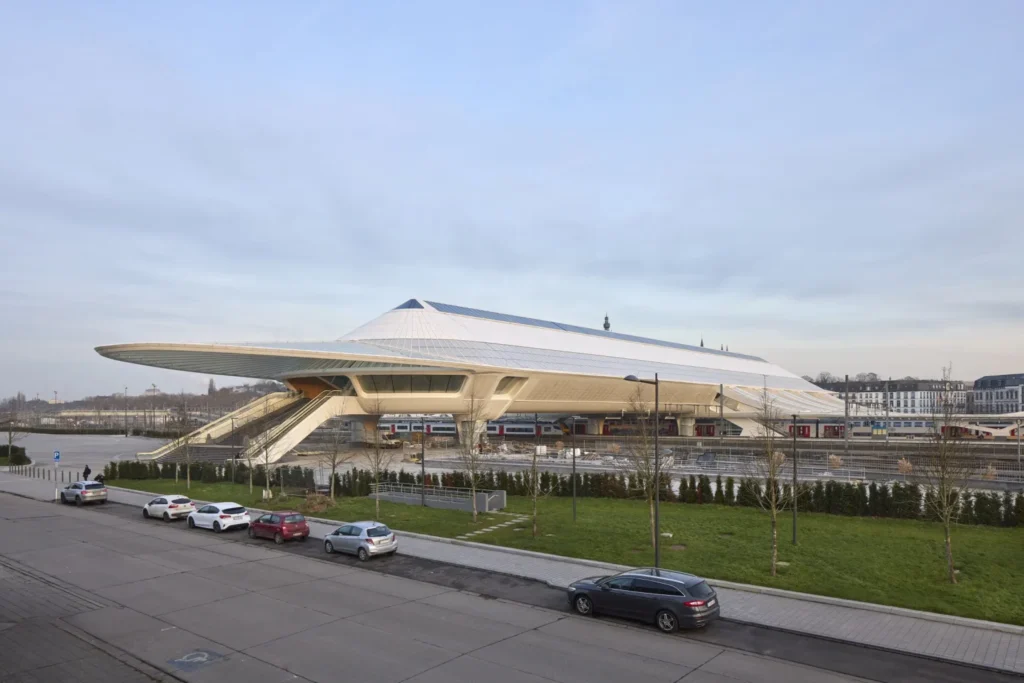
A railway station is usually understood as infrastructure for departure and arrival. Trains stop, passengers change platforms, commuters cross concourses and the city continues beyond the station. Yet some stations become more than transport facilities. They become gateways, public spaces and architectural statements about the future of a city. The new Gare de Mons in Belgium, designed by Spanish architect Santiago Calatrava, belongs to this more ambitious category. Rather than simply replacing an existing railway facility, the project attempts to reshape the relationship between mobility, public space and the historic city. Its significance therefore lies not only in its striking structural form, but in the larger question it poses: how can contemporary architecture enter a historic city without either imitating its past or overwhelming it?
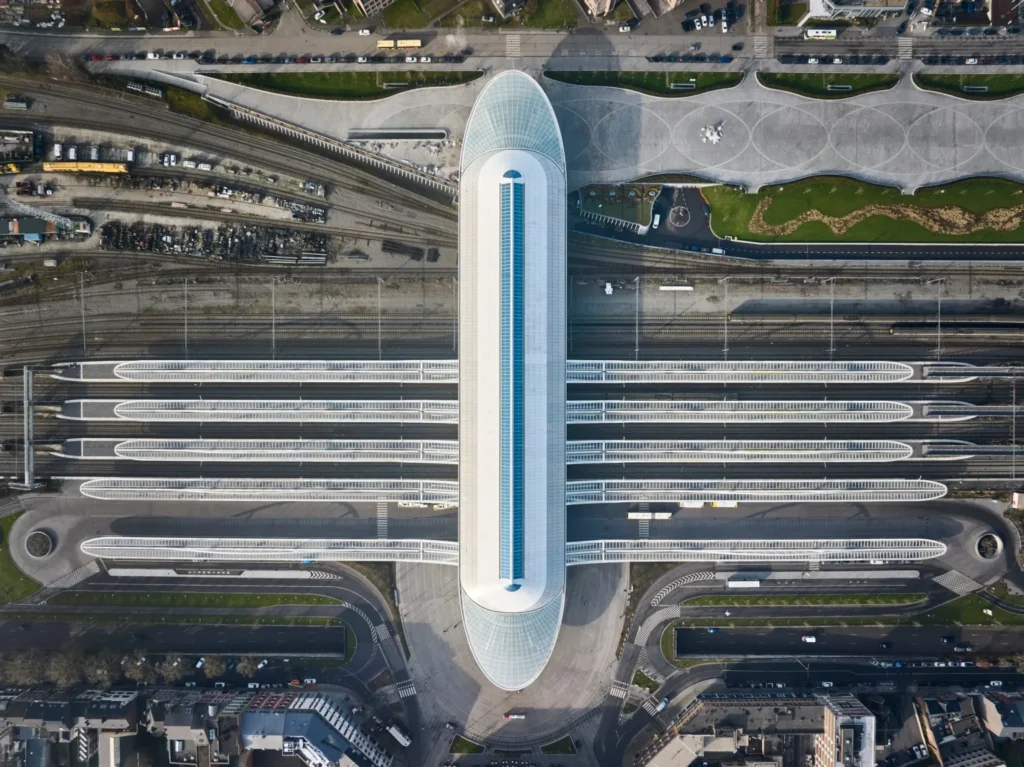
Mons carries centuries of history within its urban fabric. Its historic buildings and streets represent a long architectural evolution, making the introduction of a major contemporary structure an inherently sensitive intervention. Calatrava has chosen not to respond through imitation. The new station does not reproduce the architectural language of historic Mons; its sweeping structural elements, extensive glazing and elongated pedestrian connection are distinctly contemporary. This difference is deliberate. Contextual architecture does not necessarily mean copying surrounding buildings. It can also mean understanding how people move, how spaces connect and how infrastructure influences urban life. At Mons, the strongest contextual response is therefore spatial rather than stylistic.
The project has also been shaped by an unusually long development process. Calatrava was selected following an international competition in 2006, while the completed station entered service in December 2024. The nearly two-decade journey reflects the complexity of large public infrastructure. Such projects must negotiate architecture, engineering, railway operations, public investment, planning and changing urban priorities. The finished station should consequently be seen not simply as an expression of Calatrava’s architectural language, but as the outcome of a lengthy urban and institutional process.
Also Read: Heydar Aliyev Center: The Fluid Landmark That Redefined Contemporary Architecture
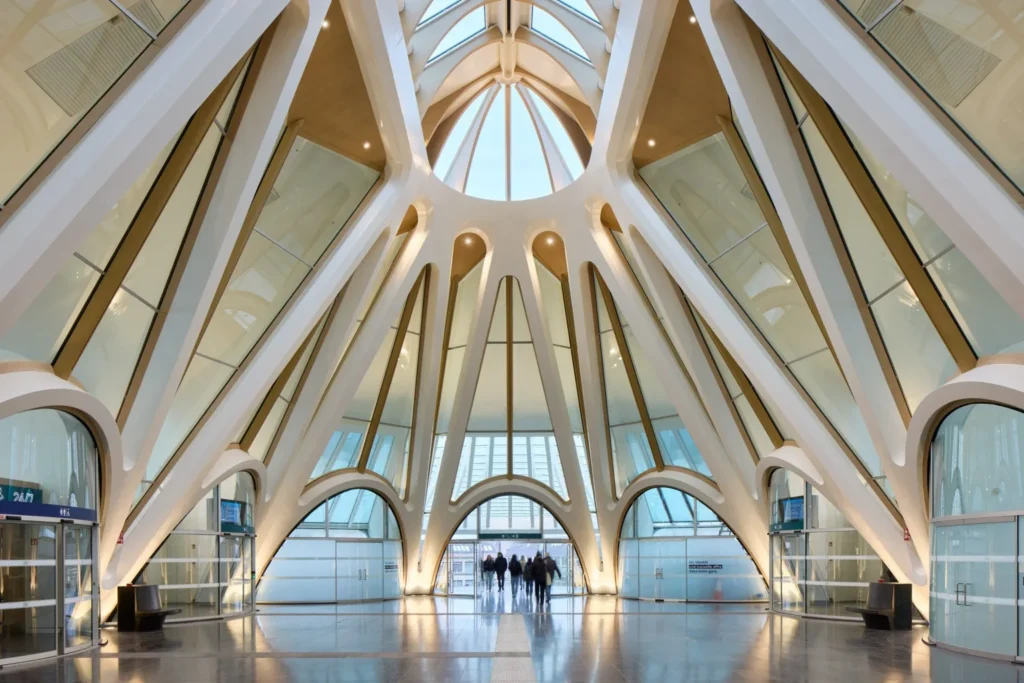
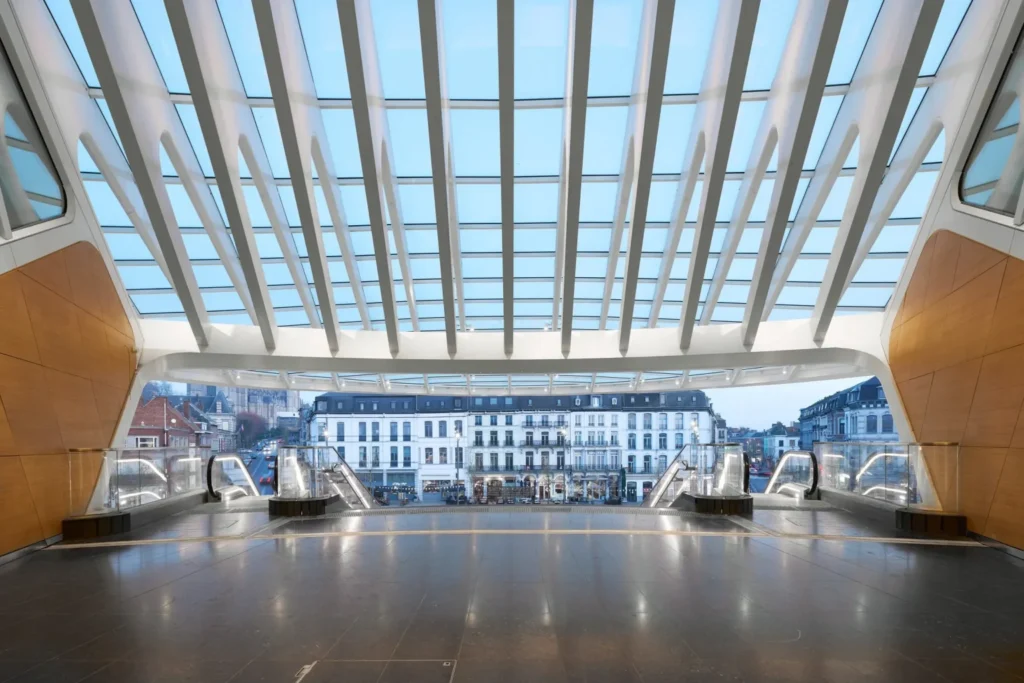
The central architectural idea is the creation of a major pedestrian connection conceived as a monumental bridge. This is perhaps the most important aspect of the project. Railway tracks frequently divide cities, creating physical barriers between neighbourhoods and limiting pedestrian connections. At Mons, the station attempts to reverse this condition. Instead of treating the railway as an obstacle around which the city must organise itself, the project turns the crossing into an architectural experience. The passenger moves through the station while simultaneously moving across the railway landscape. In this sense, the building is not simply a terminal; it becomes a connector.
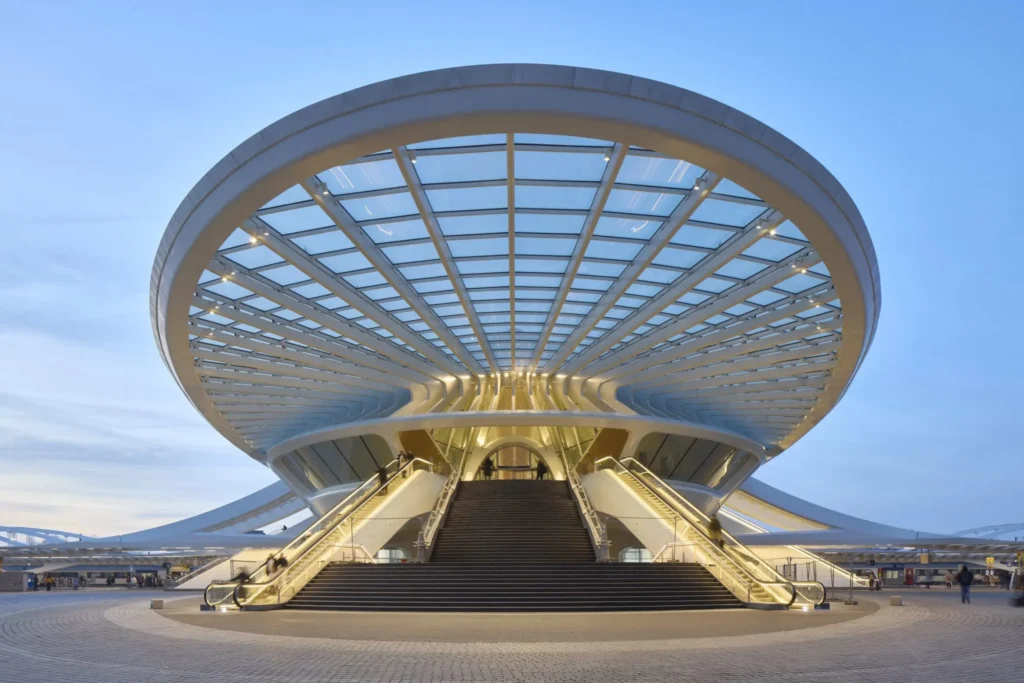
This idea fits naturally within Calatrava’s long-standing interest in movement and structural expression. His architecture frequently explores the relationship between static structures and the impression of motion. Repetition, curvature and exposed structural elements create a visual sense of forces acting upon the building. At Mons, the approach is particularly appropriate because movement is the very purpose of the building. The architecture appears to echo the movement of trains and passengers, giving a physical language to the activity taking place inside.
But the visual drama of the structure should not be mistaken for architectural success in itself. A railway station is ultimately used by ordinary people, often under pressure. Passengers carry luggage, search for platforms, rush to trains, travel with children and negotiate different accessibility requirements. For them, the success of the station depends on clarity, comfort and ease of movement as much as on its appearance. This is where the project deserves to be judged critically. Architecture must perform before it can impress.
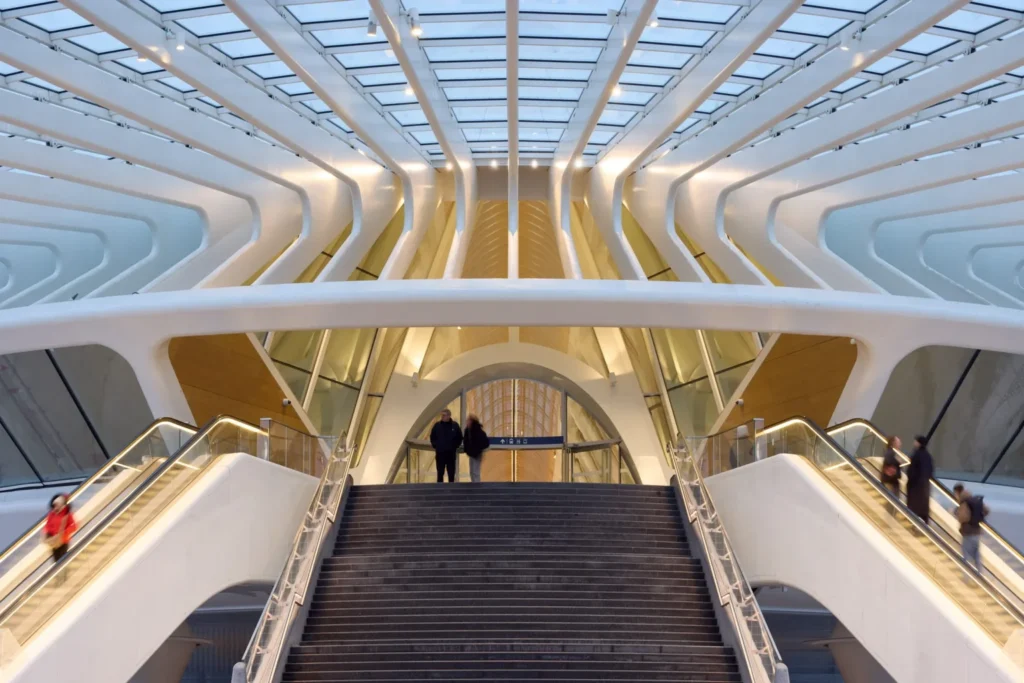
Gare de Mons is compelling because circulation is not treated merely as a technical requirement. It becomes central to the spatial experience. As passengers move through the station, they remain visually connected to the railway environment and the city beyond. The building gives movement a sense of continuity and direction. This offers an important lesson for contemporary infrastructure: connectivity itself can become architecture.
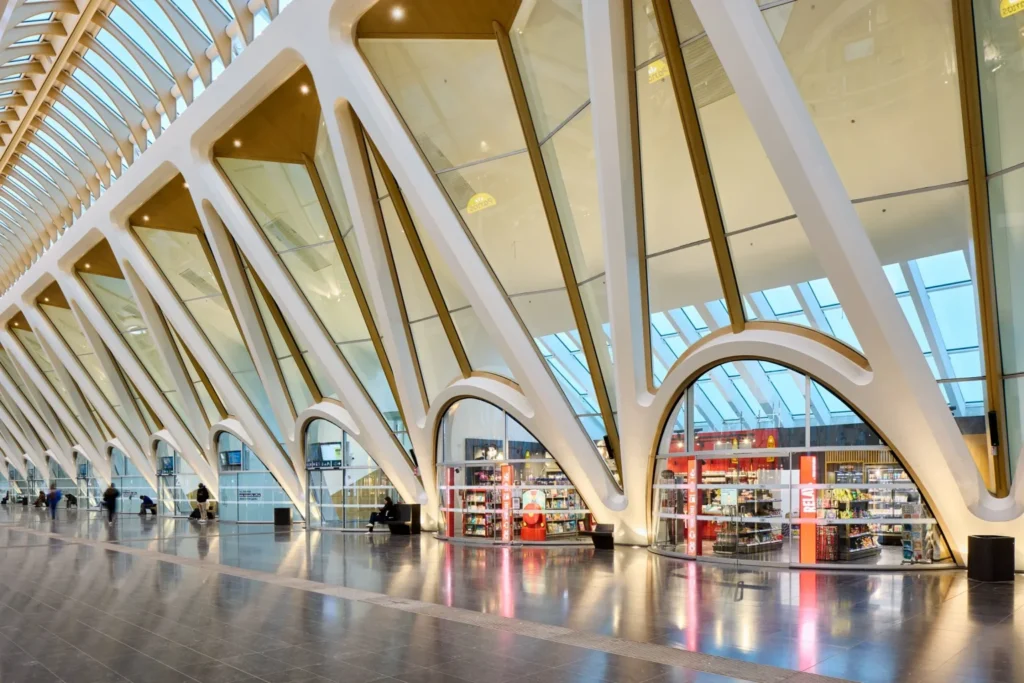
The lesson extends beyond Mons. Across many cities, railways, highways and other infrastructure have divided urban districts. Engineering projects often succeed in moving vehicles while failing to create equally effective pedestrian connections. Gare de Mons attempts to bridge this gap by giving the pedestrian route architectural importance. Its potential contribution is therefore greater than the creation of a landmark; it lies in repairing an urban relationship.
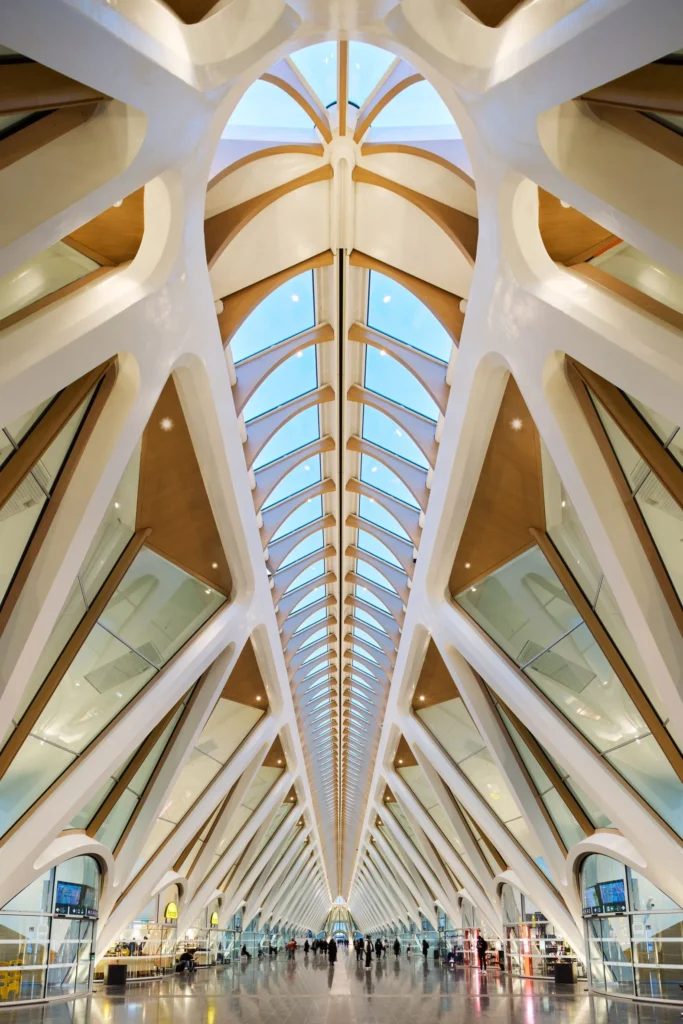
Light plays an equally important role. Extensive glazing brings daylight into the station and establishes visual connections between the interior, platforms and surrounding city. In a transport building, transparency has a practical value. Passengers can understand their position and direction more easily when spaces remain visually legible. Natural light also changes the character of the building throughout the day. The same structural forms appear different under morning sunlight, an overcast Belgian afternoon or evening illumination. The architecture consequently becomes a changing experience rather than a fixed object.
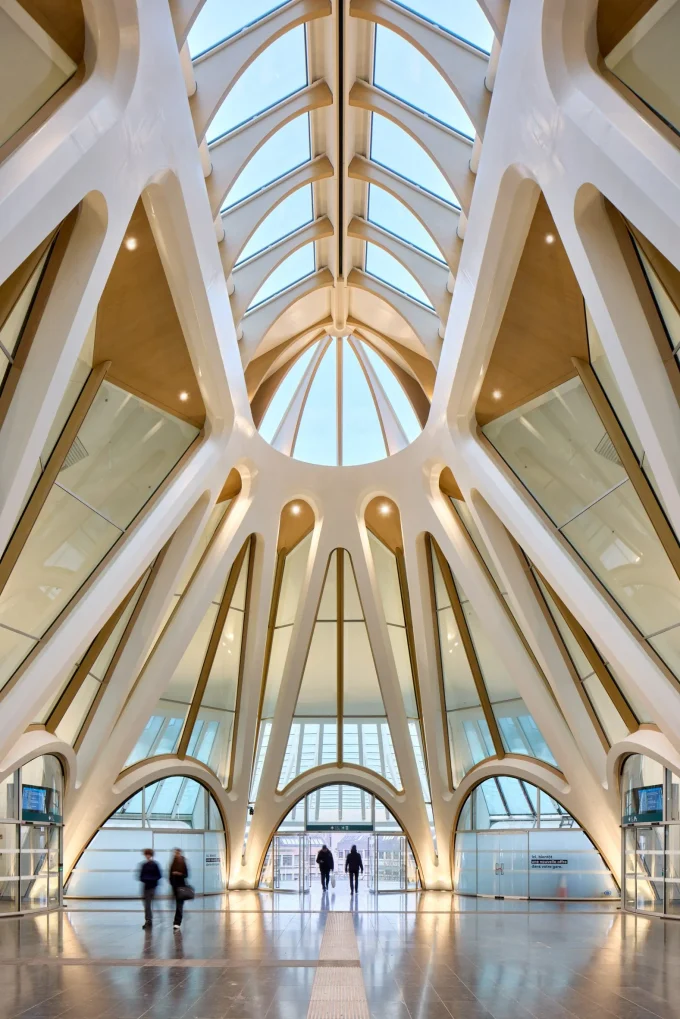
One of the project’s strongest qualities is its refusal to conceal its engineering. The structure is not simply a hidden technical system supporting a decorative façade. It establishes the visual identity of the station. Calatrava’s approach places engineering and architecture in direct conversation, continuing his long exploration of structures that are simultaneously functional and sculptural. In an era when architectural surfaces can sometimes become detached from the construction beneath them, this structural clarity has considerable appeal.
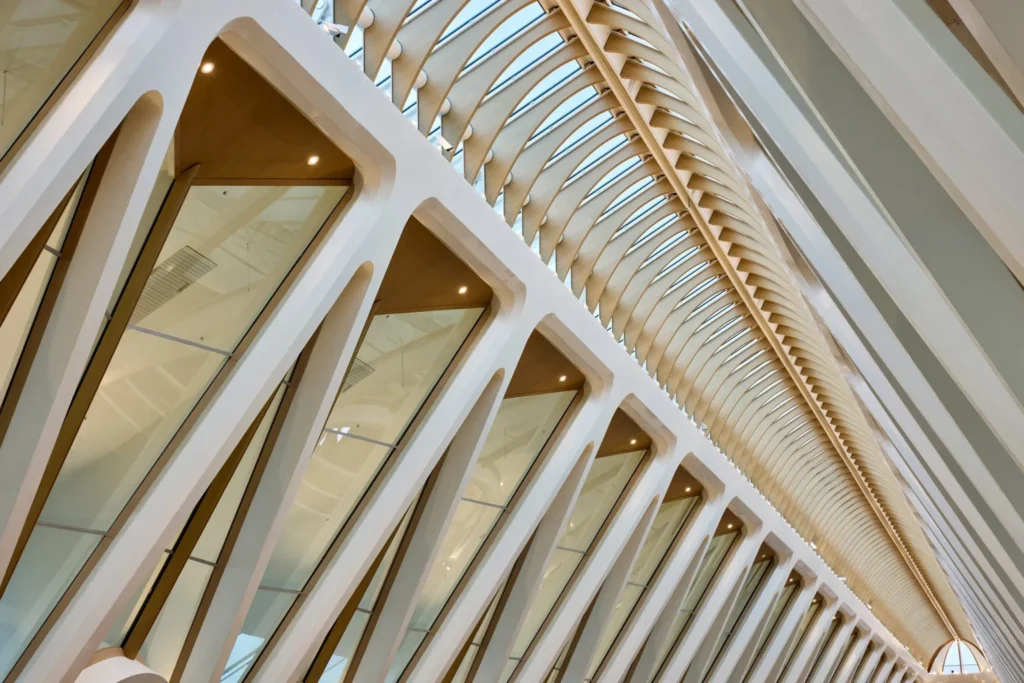
Yet it also raises questions. Expressive structures can involve considerable technical complexity, cost and maintenance requirements. Calatrava’s projects have often been debated in precisely these terms. A critical assessment of Gare de Mons therefore needs to move beyond the excitement of its visual identity. The issue is not whether public architecture should be ambitious—it should—but whether architectural ambition creates sufficient long-term public value to justify the complexity required to achieve it.
This is especially significant because Gare de Mons is public infrastructure. Its architectural quality cannot be separated from accessibility, safety, durability, maintenance and operational efficiency. The true test of the building will not be its first photographs or its reception at opening, but its performance after years of everyday use. Public architecture has a longer life than architectural publicity.
Also Read: “A Building That Feels Like a City: The Astonishing Scale of Surat Diamond Bourse”
The station’s monumentality creates another productive tension. Its scale and structural expression give Mons a new contemporary landmark, potentially strengthening civic identity and changing the way visitors perceive the city. Yet a railway station cannot become so concerned with being a monument that it forgets its passengers. The challenge is to make a building memorable without making it intimidating, and monumental without losing the human scale.
The relationship with historic Mons is consequently one of the project’s most delicate achievements. Calatrava does not attempt to make the station disappear into the existing city. Instead, he introduces a clearly contemporary structure while strengthening physical connections within the urban environment. This suggests that preservation and contemporary architecture do not necessarily have to be opposites. Historic cities are living environments, not museum pieces. They inevitably acquire new buildings, technologies and forms of movement. The responsibility is to ensure that new interventions add to the city’s accumulated identity rather than diminish it.
Gare de Mons can therefore be understood as an architecture of thresholds. It stands between railway and city, between arrival and departure, and between historic identity and contemporary ambition. For visitors, it becomes a gateway into Mons. For residents, it becomes part of the everyday city. For commuters, it becomes a familiar route repeated over and over again. Each group experiences the same architecture differently, and that difference is part of what makes public architecture meaningful.
The project is ultimately more interesting when examined critically than when presented simply as another Calatrava landmark. Its significance lies in the convergence of structure, mobility and urban repair. It demonstrates that infrastructure can possess civic ambition, but it also reminds us that architectural spectacle must eventually answer to everyday performance.
Mons has centuries of history behind it, but the city cannot remain frozen in the past. Gare de Mons introduces a new contemporary layer into that history, using mobility as the mechanism for architectural and urban transformation. Its greatest achievement may not be its dramatic structural silhouette, but the way it turns a railway crossing into a civic connection.
Whether the station ultimately becomes a model of durable public architecture will depend on years of use. If its architectural ambition remains matched by accessibility, efficiency, durability and meaningful urban integration, its monumental form will have found a deeper justification. If it succeeds, Gare de Mons will demonstrate that infrastructure can be more than a technical necessity. It can become an instrument through which a city reconnects with itself and expresses its future.
A station is architecture experienced in motion. At Mons, Santiago Calatrava has made that simple condition the defining idea of the building.
References
- Santiago Calatrava – Architects & Engineers.
- ArchDaily.
- SNCB – Belgian National Railway Company.
- Santiago Calatrava – Architects & Engineers.
- Santiago Calatrava – Architects & Engineers.
Also Read: The Whale, Andenes — Where Architecture Becomes Landscape
Join our WhatsApp Channel for fastest updates: Join now