

India’s highway infrastructure is undergoing a significant transformation—not just in terms of expansion, but also in safety innovation. The Ministry of Road Transport and Highways (MoRTH) is increasingly integrating advanced technologies to protect both road users and on-site workers. A recent initiative highlights the deployment of Truck Mounted Attenuators (TMAs), a globally recognized safety intervention, across key highway stretches.
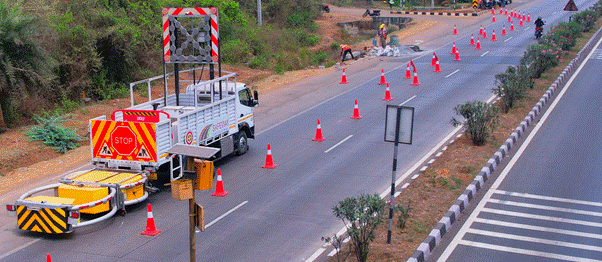
According to the official release , these systems are being actively installed across multiple National Highway projects, marking a shift toward performance-driven safety infrastructure. The focus is clear: as highways become faster and wider, safety mechanisms must evolve simultaneously to mitigate risk.
Enhancing Worker Safety in High-Risk Zones
Highway construction and maintenance zones are inherently hazardous, particularly on high-speed corridors where visibility is often compromised. Workers operating in these environments face constant exposure to moving traffic. TMAs act as a protective barrier by absorbing the impact of errant vehicles, thereby reducing the severity of collisions.
Installed at the rear of maintenance vehicles, these systems are designed to dissipate kinetic energy during crashes. This significantly lowers the risk of fatal injuries for both workers and motorists, effectively acting as a buffer between active traffic and vulnerable work zones.
Intelligent Warning Systems for Accident Prevention
One of the most critical features of these TMAs is the integration of high-intensity “wig-wag” warning lights. These flashing signals create directional guidance for approaching drivers, particularly useful during night operations or in low-visibility conditions such as fog.
By offering early visual cues, these systems help in proactive accident prevention—reducing sudden braking, confusion, and rear-end collisions in construction zones.
Deployment Scale and Technical Standards
The scale of implementation reflects a serious commitment to safety. Across nine National Highway projects spanning approximately 681 kilometres in Andhra Pradesh and Gujarat, authorities have deployed:
- 33 Truck Mounted Attenuators (TMAs)
- 15 Towable Truck Mounted Attenuators (TTMAs)
All units comply with internationally recognized safety benchmarks, including MASH TL-3 and NCHRP 350 standards. These systems are engineered to withstand impacts at speeds up to 100 km/h, ensuring reliability under real-world highway conditions .
Moving Toward Safer Infrastructure
This initiative represents a broader shift in India’s infrastructure philosophy—from speed-centric development to safety-integrated planning. The deployment of TMAs demonstrates how global best practices are being localized to address India’s unique road safety challenges.
As highway networks continue to expand, such interventions will play a critical role in reducing accident severity, protecting lives, and improving overall traffic management. The integration of safety technology is no longer optional—it is becoming a defining parameter of modern infrastructure development.
Also Read: Barabanki–Bahraich Highway Set to Boost India–Nepal Trade and Regional Economy
Join our WhatsApp Channel for fastest updates: Join now