

The Government of India has approved the construction of a 4-lane access-controlled highway between Barabanki and Bahraich along National Highway-927, a move expected to significantly strengthen cross-border trade with Nepal and enhance regional economic development. The project, announced by the Ministry of Road Transport & Highways, is being positioned as a critical infrastructure upgrade in one of South Asia’s most active trade corridors.
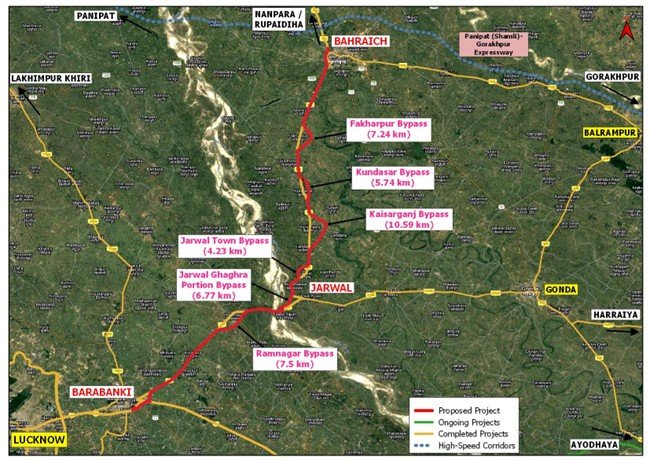
India remains the largest trading partner of Nepal, contributing over 60% of its total trade volume. The new highway will improve connectivity to the strategically important Rupaidiha Land Port and Nepalgunj, facilitating smoother and faster movement of goods between the two countries. This corridor already handles a significant share of exports from India to Nepal, and improved infrastructure is expected to further increase trade volumes.
A major benefit of the project will be the reduction in travel time between Barabanki and Bahraich by nearly 50%, from approximately 150 minutes to 75 minutes. Vehicle speeds are expected to double from 40 kmph to 80 kmph, improving efficiency in goods transportation. This is particularly crucial for agricultural trade, as perishable commodities such as vegetables, dairy products, and grains will reach markets faster, reducing spoilage and increasing profitability for farmers and traders.
The highway will also ensure a more reliable supply chain for essential goods such as medicines and consumer products. Past disruptions in cross-border transport have led to significant economic losses and supply shortages. With improved road infrastructure, delays are expected to reduce substantially, ensuring uninterrupted movement of goods and lowering logistics costs.
Additionally, the project is likely to catalyze logistics growth in the region. Increased truck movement through the Rupaidiha corridor is expected to generate demand for warehousing, transport services, and allied infrastructure. This will open new avenues for investment and employment in logistics and supply chain sectors.
The impact of the highway will be especially transformative for border communities in districts like Bahraich. Local economies, heavily dependent on cross-border trade, are expected to benefit from increased business activity, job creation, and improved access to services such as healthcare and education. Small traders, transport workers, and service providers are likely to see enhanced income opportunities as connectivity improves.
Overall, the Barabanki–Bahraich highway project represents a strategic infrastructure investment aimed at strengthening bilateral trade, improving regional connectivity, and driving socio-economic development across border regions.
Also Read: NHAI Workshop on Litigation Management to Boost National Highway Project Efficiency