

New Delhi | The Ministry of Panchayati Raj has released a comprehensive national study highlighting the reasons behind low public participation in Gram Sabha meetings across India, while proposing evidence-based reforms to strengthen grassroots democratic institutions. The two-volume report, titled “Low Participation in Gram Sabha across States and Union Territories,” was released in New Delhi by Dr. R. Balasubramaniam, Member, NITI Aayog, in the presence of Shri Vivek Bharadwaj, Secretary, Ministry of Panchayati Raj, senior ministry officials, academicians, researchers and Panchayati Raj stakeholders.
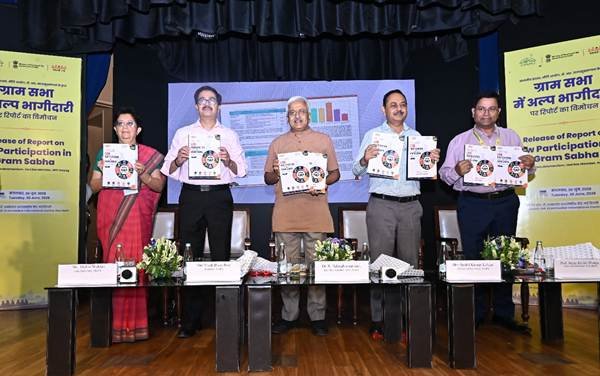
Prepared by the National Institute of Rural Development and Panchayati Raj (NIRD&PR) for the Ministry, the report examines factors influencing public participation in Gram Sabha meetings and outlines policy measures to encourage greater citizen engagement. It provides State and Union Territory-wise analyses, identifies barriers to participation, and documents best practices from ten states that have successfully improved public involvement.
Addressing the gathering, Dr. Balasubramaniam described Gram Sabhas as the truest expression of grassroots democracy and emphasized that meaningful citizen participation is essential for ensuring governance reaches the last mile. He noted that the study offers practical, evidence-based recommendations to strengthen institutional mechanisms and encourage citizens to actively participate in local development.
Secretary Shri Vivek Bharadwaj said the findings would help governments design targeted interventions, particularly to improve participation among women, youth and marginalized communities. He added that the Ministry would work closely with States and Union Territories to make Gram Sabhas more inclusive, participatory and outcome-oriented.
The study represents one of India’s largest field-based assessments of Gram Sabha participation, covering nearly 7,800 respondents, around 400 Gram Panchayats, 213 districts, and 26 States and Union Territories, including PESA and Women-Friendly Gram Panchayats. The report identifies major barriers such as livelihood and time constraints, low awareness, governance and institutional challenges, and inadequate accessibility and infrastructure. It also recommends measures including nationwide awareness campaigns, citizen rights handbooks, mandatory pre-Gram Sabha mobilisation, technology-enabled communication, greater transparency and strengthened accountability mechanisms. The recommendations aim to improve participation, reinforce democratic governance and support India’s vision of Viksit Bharat 2047.
Also Read: NCR to Get Four Greenfield Namo Cities Under Regional Plan 2041
Join our WhatsApp Channel for fastest updates: Join now