

The recent fire incidents in Delhi, particularly the tragic cases linked to air-conditioner malfunctions and electrical short circuits, have once again exposed the growing safety crisis inside residential buildings across the capital. These incidents are no longer limited to old industrial areas or congested commercial markets. Increasingly, fires are occurring inside middle-class apartments and builder floors where modern lifestyles, heavy electrical consumption, and unsafe construction practices are creating highly vulnerable living conditions. The issue is not merely about faulty appliances; it reflects a deeper problem in the way homes are being designed, constructed, furnished, and sold in rapidly urbanizing cities like Delhi.
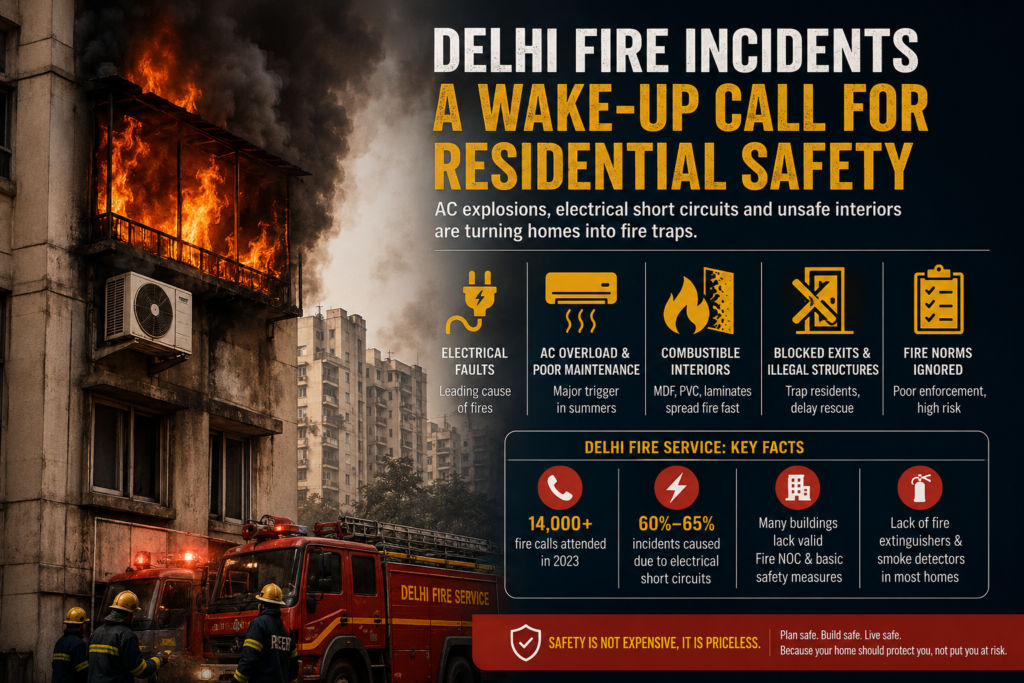
According to Delhi Fire Service data, electrical short circuits remain one of the leading causes of fire incidents in the city every year, especially during the summer season when electricity demand reaches its peak. Fire officials have repeatedly warned that overheating of wires, overloaded circuits, poor-quality electrical fittings, and continuous use of air-conditioners place enormous stress on residential electrical systems. Many buildings in Delhi were originally designed decades ago for limited electrical loads, but today a typical middle-class household may run multiple air-conditioners, geysers, microwaves, refrigerators, induction systems, decorative lighting, and other heavy appliances simultaneously. Unfortunately, the electrical infrastructure inside many homes has not evolved accordingly.
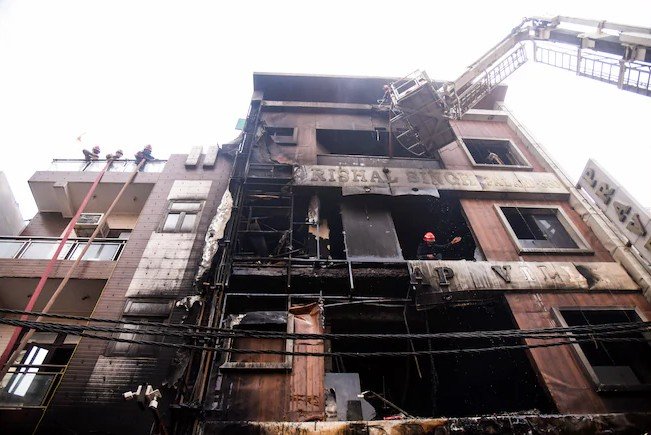
One of the most concerning aspects of this growing problem is the role of unregulated construction and interior practices. In many builder floors and small residential projects, cost-cutting becomes the primary objective. Small builders and even some interior designers often compromise on electrical wiring quality, cable specifications, safety devices, and load planning in order to increase profit margins. Since most homeowners are unaware of technical aspects such as electrical load calculation, wire capacity, circuit distribution, earthing systems, and fire-resistant materials, they tend to rely completely on the builder or designer. Buyers are frequently attracted by premium-looking interiors, imported finishes, modular kitchens, decorative ceilings, and luxurious aesthetics without realizing that the concealed infrastructure behind the walls may be unsafe.
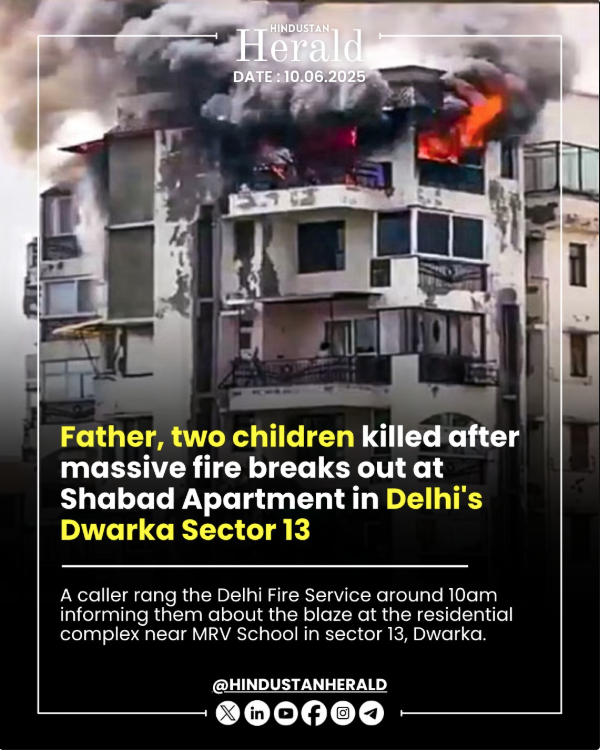
This blind preference for aesthetics over safety is becoming one of the hidden dangers of modern urban housing. Today’s interior design trends heavily promote materials such as MDF boards, plywood paneling, PVC laminates, foam insulation, synthetic wall finishes, false ceilings, and decorative lighting systems. While these elements create visually attractive interiors, many of them are highly combustible and can rapidly spread fire once ignition occurs. Fire officials have often observed that in enclosed apartments, smoke generated from such materials becomes more dangerous than the flames themselves. Toxic smoke spreads quickly through compact spaces, reducing visibility and causing suffocation within minutes. In several recent incidents, residents reportedly became trapped because balconies were permanently enclosed with iron grills and escape routes were blocked by furniture or storage.
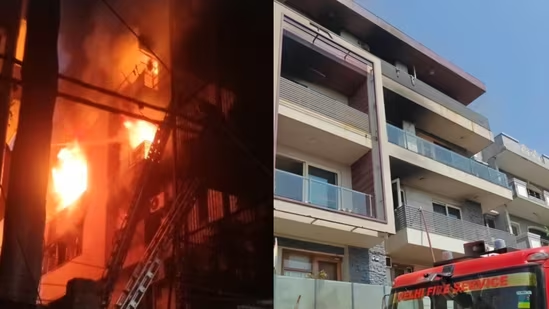
The problem becomes more serious in unauthorized constructions and densely packed colonies where buildings are often extended vertically without proper structural or fire safety approvals. Additional floors are constructed without recalculating electrical loads, staircases are narrowed to maximize saleable area, and ventilation shafts are reduced or blocked. In many residential buildings, there are no fire extinguishers, smoke detectors, or emergency evacuation systems despite housing multiple families. Fire department officials have repeatedly highlighted that a large number of residential buildings do not follow even basic fire prevention practices. In several emergencies, firefighters face difficulty accessing narrow lanes and congested neighborhoods where illegal parking and encroachments delay rescue operations.
Also Read: Delhi Master Plan 2041 and NCR Regional Plan 2041 Likely to Be Notified Soon
Another major issue is the misunderstanding surrounding so-called “AC blasts.” In reality, an air-conditioner rarely explodes on its own. Most incidents are caused by overheating due to overloaded wiring, loose electrical connections, faulty compressors, poor maintenance, low-quality installation work, or continuous operation under extreme temperatures. However, because these technical failures occur inside concealed walls or false ceilings, residents often remain unaware until the situation becomes catastrophic. Many households continue using old wiring systems for years without any professional inspection, even after adding multiple high-load appliances.
As architects and planners, there is an urgent need to rethink the current approach toward residential design and construction. Fire safety cannot remain a secondary technical formality addressed only during approval stages. It must become an essential part of architectural thinking from the very beginning. During the design stage, proper electrical load assessment, ventilation planning, emergency exits, fire-resistant materials, and accessible circulation spaces should be integrated carefully. Buildings must be designed not only for appearance and market value but also for safety, resilience, and emergency evacuation. Architects and interior designers must take ethical responsibility for the materials and systems they specify rather than focusing only on visual trends.
At the construction level, builders should strictly follow electrical safety standards, use certified wiring materials, provide proper earthing systems, and install reliable MCB and RCCB protection devices. Homeowners must also become more aware and cautious before purchasing or renovating homes. Instead of judging a property only by modular finishes or luxury interiors, buyers should ask technical questions regarding electrical load capacity, wire quality, fire safety provisions, ventilation, and structural approvals. Periodic electrical audits, annual AC servicing, proper maintenance of circuits, and installation of basic firefighting equipment such as ABC fire extinguishers should become standard practice in every household.
The recent fire tragedies in Delhi are a warning that urban housing is becoming increasingly vulnerable due to the dangerous combination of consumer-driven aesthetics, weak enforcement, technical ignorance, and profit-oriented construction practices. A beautiful interior cannot compensate for unsafe infrastructure hidden behind walls and ceilings. In architecture, the true success of a building is not only measured by how modern it looks, but by how safely it protects human life during emergencies. Delhi now urgently needs stricter implementation of fire norms, better public awareness, responsible design practices, and a cultural shift where safety is valued as much as aesthetics.
References
- Delhi Fire Service data and summer fire incident reports published by The Times of India
- Fire safety observations and AC-related fire precautions reported by The Indian Express
- Residential fire incident coverage and emergency response reports by NDTV
- Reports on illegal constructions, fire norm violations, and urban safety concerns published by The New Indian Express
- National Building Code (NBC) of India – Fire and Life Safety Guidelines by Bureau of Indian Standards (BIS)
- Delhi Fire Service official guidelines and fire safety advisories by Delhi Fire Service
Join our WhatsApp Channel for fastest updates: Join now