

Nestled within the green expanse of Lutyens’ Delhi, the Delhi Gymkhana Club stands as one of India’s most significant colonial-era institutions. Established in 1913 as the Imperial Delhi Gymkhana Club, it was originally intended as a recreational and social hub for British military officers, civil servants, and members of the colonial administration. The club’s establishment coincided with the British decision to shift the capital of India from Calcutta to Delhi in 1911, making it an integral part of the emerging imperial capital. In 1928, the institution was allotted approximately 27 acres of land in what would become the prestigious diplomatic and administrative heart of New Delhi. Following India’s independence in 1947, the word “Imperial” was dropped, and the institution was renamed the Delhi Gymkhana Club.
The present clubhouse was designed in the early 1930s by renowned British architect Robert Tor Russell, whose work also includes landmarks such as Connaught Place and Teen Murti Bhavan. The architecture of the Delhi Gymkhana Club exemplifies the restrained elegance of British colonial design adapted to Indian climatic conditions. Unlike grand imperial monuments, the clubhouse was conceived as a low-rise, functional structure that blended seamlessly into its landscape. Long verandahs, high ceilings, thick masonry walls, and large openings ensured natural ventilation and thermal comfort during Delhi’s extreme summers. The building’s white façade, symmetrical composition, and understated detailing reflect the architectural language that characterized many institutional structures of the period.
One of the most distinctive aspects of the club’s design is its integration with the surrounding landscape. Expansive lawns, mature trees, sports facilities, and open spaces form an essential part of the overall architectural experience. The clubhouse does not dominate the site; instead, it sits comfortably within a garden setting, reflecting the planning principles of New Delhi envisioned by Sir Edwin Lutyens and his contemporaries. Over the decades, facilities such as tennis courts, squash courts, dining halls, bars, guest rooms, libraries, and swimming amenities were added, making the club one of the capital’s most prestigious social and recreational institutions.
Beyond its architectural significance, the Delhi Gymkhana Club has played an important role in India’s social history. After independence, it evolved into a gathering place for senior bureaucrats, military officers, diplomats, judges, business leaders, and prominent Delhi families. Membership became highly coveted, often involving waiting periods stretching across several decades. For many, the club represented continuity between colonial and post-colonial India, serving as a venue where generations of influential Indians built social and professional networks.
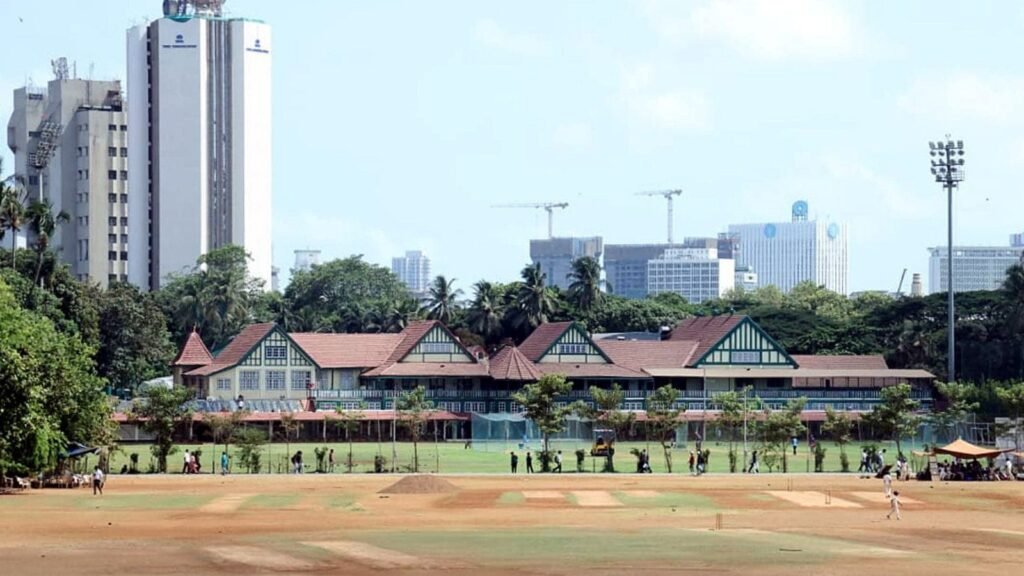
The influence of the Delhi Gymkhana Club extended far beyond the national capital and helped shape the development of elite recreational clubs across India. During the colonial period, gymkhanas were established in major cities such as Mumbai, Kolkata, Chennai, Bengaluru, Hyderabad, Lucknow, and Pune, often following a similar model of exclusive membership, sporting facilities, and social networking. These institutions became centres of social and administrative life for British officials and later for India’s political, bureaucratic, and business elite. The recent controversy surrounding the Delhi Gymkhana Club has reignited discussions about similar institutions elsewhere, particularly in Mumbai, where several historic gymkhanas occupy extensive public land in one of the world’s most space-constrained cities. According to a recent report, gymkhanas and elite clubs in Mumbai collectively occupy nearly 664 acres of public land, accounting for almost one-fifth of the city’s open spaces. As Maharashtra considers a comprehensive gymkhana policy, questions are being raised about public access, land use, heritage conservation, and the continued relevance of exclusive membership-based institutions in contemporary urban India. The Delhi Gymkhana case has therefore become a national reference point in examining how colonial-era clubs evolved after Independence and how governments should balance heritage preservation with broader public interest.
Today, however, the Delhi Gymkhana Club finds itself at the centre of a major controversy. In recent years, questions have been raised regarding its governance, membership policies, and management practices. The issue escalated in 2026 when the Government of India directed the club to vacate its historic premises near the Prime Minister’s residence, citing security considerations and the strategic importance of the surrounding area. The move triggered widespread debate among heritage conservationists, urban planners, former members, and public policy experts. Supporters of the club argue that the institution is an irreplaceable part of Delhi’s architectural and cultural heritage and should be preserved. Critics, on the other hand, contend that such a large tract of public land should be utilized for broader public purposes rather than serving an exclusive membership-based institution.
As legal proceedings and administrative discussions continue, the future of the Delhi Gymkhana Club remains uncertain. Regardless of the outcome, the club occupies a unique place in India’s urban and architectural history. Its story reflects the evolution of New Delhi itself—from a planned imperial capital to a modern democratic metropolis grappling with questions of heritage conservation, public land use, institutional privilege, and urban transformation. Whether preserved in its current form or repurposed for a new role, the Delhi Gymkhana Club will continue to be remembered as one of the most significant architectural and social landmarks of the national capital.
Also Read: 1,692 km of National Highways Set for Monetisation in FY27
Join our WhatsApp Channel for fastest updates: Join now