

The Ministry of Rural Development (MoRD) has said that it does not maintain specific data on migration-prone areas or migration trends, but the Government is implementing a multi-dimensional strategy to address issues associated with the migration of rural populations.
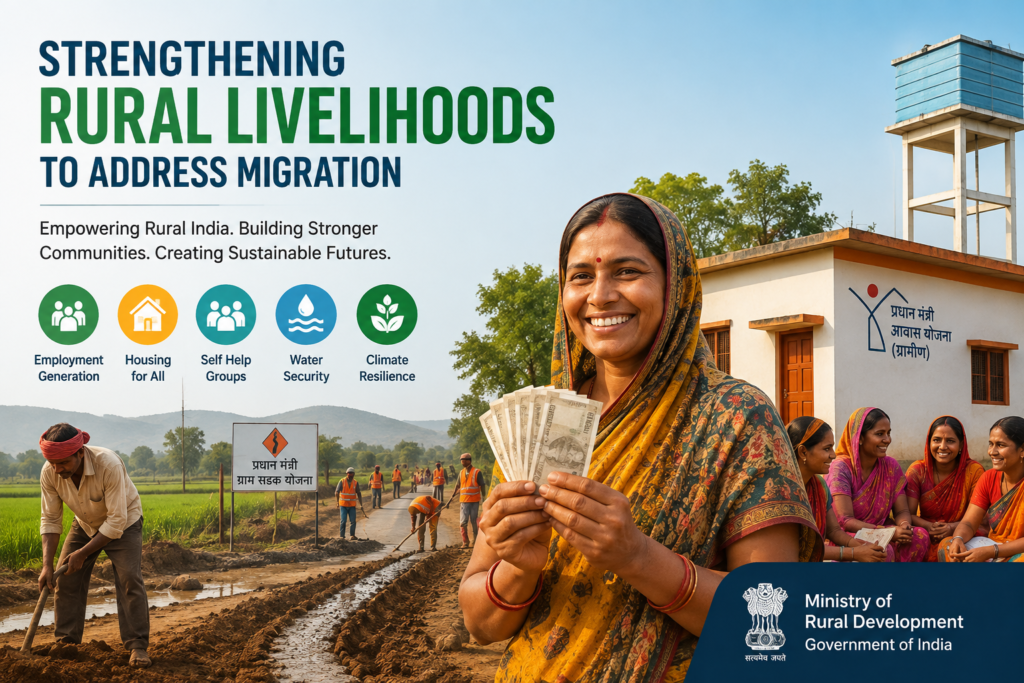
According to information provided by the Ministry, the approach focuses on improving rural infrastructure, expanding employment opportunities, strengthening livelihoods, developing skills and entrepreneurship, and improving access to financial assistance and credit. The measures also seek to reduce regional disparities through a more equitable distribution of resources.
Rural Development Programmes Target Livelihood and Infrastructure Gaps
The Ministry is implementing a range of rural development schemes aimed at improving living and livelihood conditions in rural areas. These include the Viksit Bharat – Guarantee for Rozgar and Aajeevika Mission (Gramin) (VB-G RAM G), Pradhan Mantri Awaas Yojana-Gramin (PMAY-G), Pradhan Mantri Gram Sadak Yojana (PMGSY), Deendayal Antyodaya Yojana – National Rural Livelihoods Mission (DAY-NRLM), Deen Dayal Upadhyaya Grameen Kaushalya Yojana (DDU-GKY), Rural Self Employment Training Institutes (RSETIs), National Social Assistance Programme (NSAP) and the Watershed Development Component of Pradhan Mantri Krishi Sinchayee Yojana (WDC-PMKSY).
The Government stated that it regularly assesses and reviews the implementation of rural development programmes to ensure that their intended objectives are achieved.
Nearly 5,000 Crore Persondays Generated Under MGNREGS
The Ministry reported that since the inception of the employment programme in 2006, a total of 4,994.17 crore persondays had been generated under MGNREGS as of June 30, 2026.
The data also highlights the scale of interventions under other major rural development programmes:
- DAY-NRLM: Since its launch in 2011, the programme has mobilised 10.08 crore women into 92 lakh Self Help Groups (SHGs) as of June 30, 2026.
- PMAY-G: A total of 3.11 crore rural houses have been completed since 2016.
VB-G RAM G Act Provides 125 Days of Wage Employment
A key component of the Government’s current strategy is the Viksit Bharat – Guarantee for Rozgar and Aajeevika Mission (Gramin): VB-G RAM G Act, 2025, which came into force on July 1, 2026.
The Act provides a statutory guarantee of 125 days of wage employment to every willing rural household. Alongside employment generation, the programme places emphasis on the creation of durable assets and strengthening sustainable rural livelihoods.
The programme includes a dedicated Livelihood Infrastructure thematic area covering agriculture and allied activities, rural enterprises, Self Help Groups and other income-generating activities. These interventions are intended to create and strengthen livelihood opportunities within rural areas.
Focus on Water Security and Climate Resilience
The Government’s rural development approach also links employment generation with water security and climate resilience. Works related to water conservation, watershed development, groundwater recharge and source sustainability are intended to improve the availability of water for agriculture and support rural livelihoods.
The programme also includes measures for the mitigation of extreme weather events and disaster preparedness, including interventions addressing droughts, floods and other extreme weather events. These measures are aimed at protecting agricultural and rural livelihood assets and strengthening the resilience of rural communities.
The Ministry said that the combined emphasis on livelihood infrastructure, water security, climate resilience and rural infrastructure is intended to enhance rural employment, strengthen agricultural and allied livelihoods, and promote sustainable rural development.
Measures Applicable Across Rural India
The Ministry stated that these provisions apply across rural areas of the country, including Jalgaon Lok Sabha Constituency in Maharashtra, and are intended to strengthen livelihoods and reduce vulnerability to seasonal and climate-related livelihood distress.
The information was provided by Minister of State for Rural Development Kamlesh Paswan in a written reply in the Lok Sabha on August 11, 2026.
Also Read: From Shahjahanabad to the Master Plan: A.K. Jain Reflects on the Evolution of Delhi’s Urban Planning
Join our WhatsApp Channel for fastest updates: Join now