

Award-winning research documents 26 ancient religious buildings and explores architectural links between Syria and India.
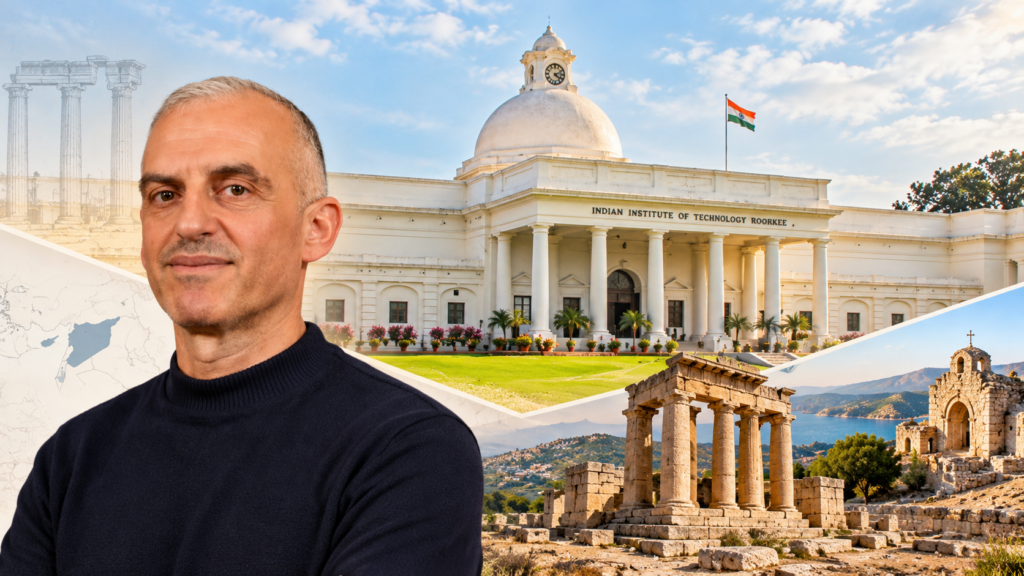
Dr. Ghieth Alwarah of the Department of Architecture and Planning, Indian Institute of Technology (IIT) Roorkee, has received the Excellence in Doctoral Research Award 2026 for his research on the architectural interpretation of Classical Age temples and churches along the Syrian coast.
An architectural historian and heritage conservation specialist from Syria, Dr. Alwarah documented and analysed 26 historic religious buildings, addressing gaps in their systematic documentation. His research examines their architectural features, spatial organisation and construction modules through fieldwork, measured drawings, archival studies and qualitative analysis.
The study also compares Syrian religious architecture with Greek, Roman and Indian temple traditions, offering insights into architectural similarities and differences across cultures. It highlights the importance of documenting and conserving historic structures that have faced neglect, damage and historical transformations.
Dr. Alwarah acknowledged the support of his doctoral supervisor, Professor Ram Sateesh Pasupuleti, his research colleagues, IIT Roorkee and the Indian Council for Cultural Relations (ICCR) in shaping his academic journey.
Looking ahead, he hopes to advance heritage documentation through drone-based photogrammetry and scientific dating methods, while promoting academic collaboration between Indian and Arab universities.
In an exclusive conversation with The Architecture and Planning News (TheAPN), Dr. Alwarah spoke about his award, doctoral research, the importance of documenting Syria’s architectural heritage, his experience at IIT Roorkee, the role of his supervisor and colleagues, the challenges faced by international researchers, and his vision for future research and international academic collaboration.
TheAPN: Congratulations on receiving the Excellence in Doctoral Research Award 2026. What does this recognition mean to you personally and academically?
Dr. Ghieth Alwarah: Thank you very much. This award means a great deal to me, both academically and personally. It has motivated me to continue my research and explore opportunities for postdoctoral study. The recognition has opened new horizons and created further opportunities for me. I was also surprised and very happy because, as far as I know, it is rare for international students to receive this kind of recognition at the institute. I am from Syria, and I joined IIT Roorkee in July 2021, during the COVID-19 pandemic. I received a five-year scholarship through the Indian Council for Cultural Relations (ICCR), following cooperation between the Indian Embassy in Damascus and the Syrian Embassy in Delhi.
TheAPN: What was the central question or problem that you set out to address through your doctoral research?
Dr. Ghieth Alwarah: My research focuses on the architectural interpretation of Classical Age temples and churches along the Syrian coast. Many of these religious buildings are now neglected archaeological sites. Some temples are associated with the Canaanite period, with some dating back to around the 10th century BC. Later, as people converted from paganism to Christianity, some temples were transformed into churches.
My research examines this region and its long history, including the Classical Age, which encompasses the Greek and Roman periods and extends into the period when Byzantine Christianity became established. These temples and churches have been affected by natural disasters, social and political upheavals, occupation and conflict. One of the major problems I identified was the lack of systematic documentation. To understand many of these archaeological sites, researchers often have to rely on foreign or European studies. My first objective, therefore, was to do the archival studies, the second was to document these sites; the third was to interpret them architecturally.
TheAPN: What initially motivated you to choose this particular research area?
Dr. Ghieth Alwarah: One important motivation was the research methodology itself. My research relies largely on qualitative observation, mapping, interviews and case studies. I learned much of this methodology at IIT Roorkee, and it was important to me because it differed from the approach I had followed during my master’s studies at The Damascus University in Syria. My research had three broad objectives: archival study, documentation and interpretation.
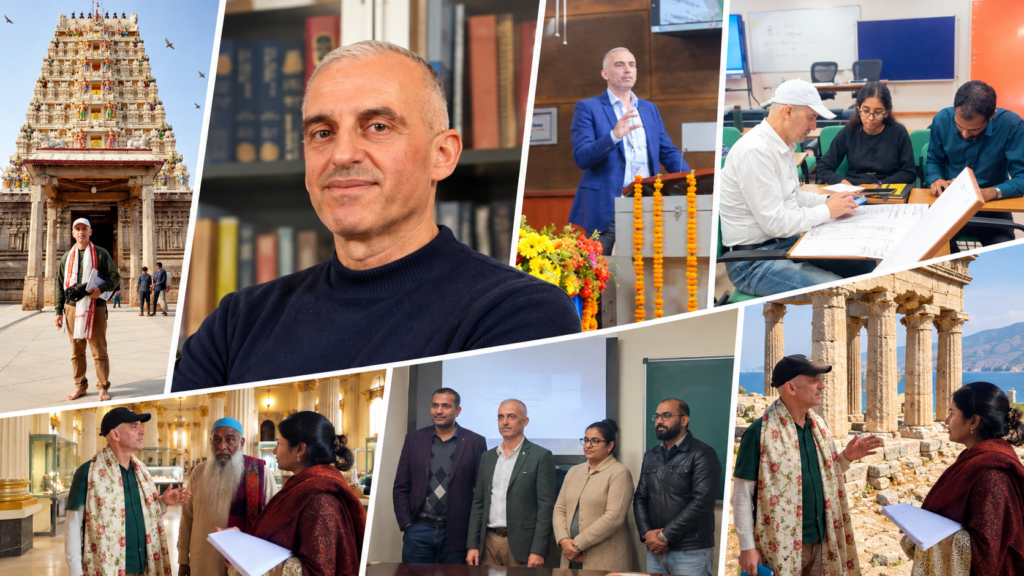
India also gave me an important comparative perspective. For example, I explored similarities in religious traditions and architectural elements between India and Syria. I studied the worship of deities and the spatial organisation of temples, considering how similar concepts can appear in different cultural contexts, such as the God of thunder and storm Baal in Syria is the same of Indra in India .
Through this comparison, I examined the organisation of Syrian and Indian temples. In Indian temple architecture, terms such as Garbhagriha, Mandapa and Ardha Mandapa describe important spatial components. In Syrian and Classical temple architecture, corresponding spatial elements include the Temenos, Pronaos, Naos and Opisthodomos. This comparative approach eventually led me to examine churches as well.
TheAPN: Your research compares architecture across several countries. What did this comparative study reveal?
Dr. Ghieth Alwarah: For temples, I studied examples from Greece, Italy, France and Egypt, as well as India. These examples belong largely to the Classical Age, particularly the Greek and Roman periods. For churches, I also examined Byzantine examples in Turkey and Greece.
In India, I visited several temples and archaeological sites in person. I was particularly interested in understanding the history of worship and how religious architecture developed over long periods. I also visited rock-cut sites such as the Elephanta Caves.
One interesting question emerged from my observations of Buddhist architecture. I noticed some similarities between chaitya and ancient stupa traditions and the spatial organisation of churches. For example, some churches have a nave flanked by two aisles, while certain Buddhist architectural forms also feature related spatial arrangements.
I believe this raises an interesting question for future research. Any historical architectural connection between these traditions requires further investigation. I would not claim a direct connection without archaeological evidence, but it is certainly a question worth exploring.
TheAPN: Did you find differences between South Indian and North Indian temple architecture in relation to Syrian temples?
Dr. Ghieth Alwarah: Yes, there are important differences. In Dravidian temple architecture, the Garbhagriha is often associated with a pyramidal form, while in North Indian, or Nagara, architecture, the corresponding vertical element is the Shikhara.
The roofs of the Syrian coastal temples that I have studied are generally flat, which is a major difference. I also observed similarities in the practice of circumambulation. In South Indian temples, I observed priests and devotees carrying the deity around the sacred space. Historical references to Syrian temples describe similar practices, in which the statue of the deity was carried around the sacred room.
Today, however, the Syrian temples in my study area generally no longer function as temples. Many have become archaeological sites because the religious practices associated with them disappeared following later religious transformations.
TheAPN: What is the most important contribution of your research?
Dr. Ghieth Alwarah: One important contribution of my research is the documentation and classification of these relatively neglected Syrian religious buildings. When I searched for references to temples such as Al-Qadbon, Al-Shams, Kherbt Alkabo and Nibal, I found very limited information, particularly in Syrian or Arabic-language sources.
During my PhD, I spent two years conducting fieldwork in Syria. I prepared measured drawings, documented the buildings and collected data. I then brought the information back to CIVIC Design Lab at IIT Roorkee and analysed it using the research methodology developed at the Department of Architecture and Planning.
In total, I documented 26 buildings; 9 temples and 17 churches. This work was important for me because I wanted to contribute documentation produced by a Syrian researcher, rather than relying solely on studies by foreign researchers.
TheAPN: Your research also explores architectural modules. What did you discover?
Dr. Ghieth Alwarah: I explored the architectural modules of these religious buildings. In Indian temple architecture, researchers have studied modular systems based on geometric grids such as Laxman Thakur, and John Senseney in the Greek temples. I applied a similar approach to ancient Syrian temples.
Using measured drawings, I explored the relationship between building dimensions and the human body. The module I identified for the ancient Syrian temples is related to the human step and measures approximately 73 to 84 centimetres, depending on the individual.
For churches, the modular system is related to units of construction, including the radius of the church’s Abside “curved end”. Understanding these modules can help us interpret how the buildings were planned and constructed.
TheAPN: Who should pay greater attention to the findings of your research?
Dr. Ghieth Alwarah: My research sits at the intersection of architecture and archaeology, so several groups can benefit from it. Archaeologists working on the Classical Age can use the documentation. Architects working in built heritage, conservation, disaster management and heritage assessment may also find it useful. Historians are another important audience.
When I interviewed archaeologists and historians at universities in western Syria, I asked whether they had Syrian or Arabic-language references on these Classical temples and churches architecture. In many cases, they did not.
The Directorate General of Antiquities and Museums, a government institution, holds valuable archives and information. However, I felt there was a need for more research and documentation by Syrian and Arab scholars. For me, conducting this research was also a responsibility towards my country and its cultural heritage.
TheAPN: How important were your supervisor, research colleagues and institutional environment in shaping the final outcome of your work?
Dr. Ghieth Alwarah: My supervisor, Professor Ram Sateesh Pasupuleti, was extremely important to my research journey. I have said this many times: to me, he is like a saint. When I came to India, I had a different cultural and linguistic background and limited proficiency in academic English. He taught me how to write research papers, prepare research proposals, follow academic research methodology, and conduct research.
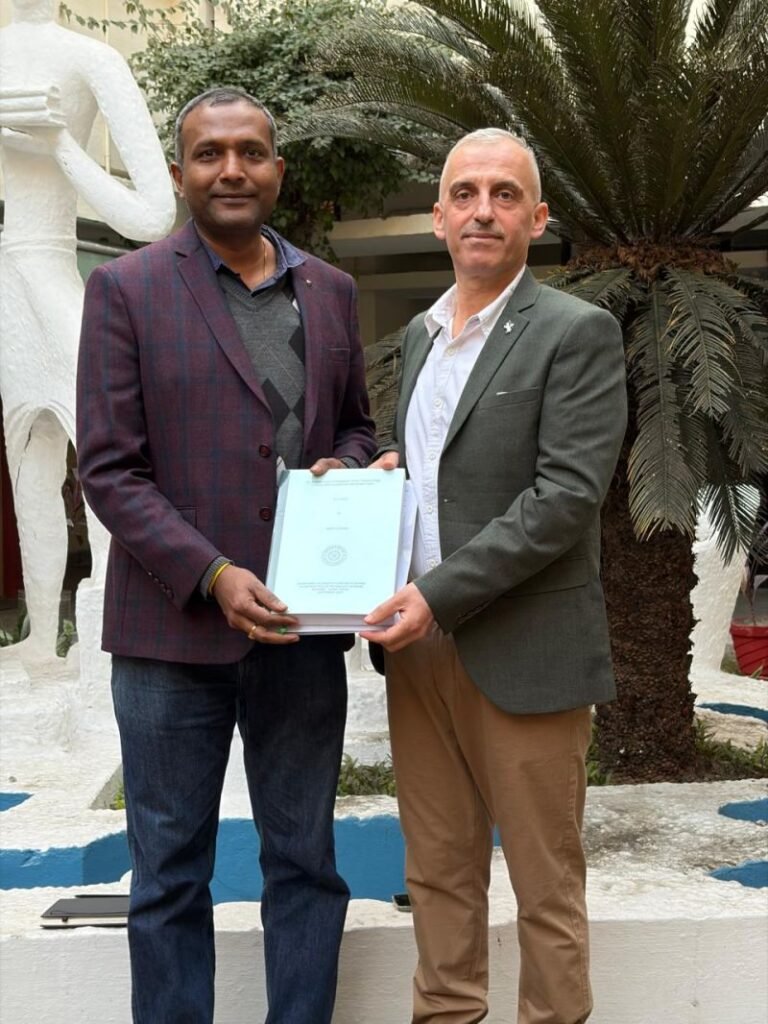
He encouraged me to spend time in the Central Mahatma Gandhi Library and guided me throughout the research process. Without his guidance, I would not have been able to complete the work as I did. My Indian colleagues CIVIC Design Lab also helped me significantly, particularly with analysing and testing the data. I collected a great deal of information through fieldwork and interviews, but I also had to learn how to analyse and validate it. I am very thankful to IIT Roorkee and ICCR for the scholarship and academic environment they provided.
For me, these five years in India were about more than scientific research; they were also a spiritual journey. My supervisor and colleagues helped me feel that I was part of a family rather than a stranger in a foreign country, In addition to the support from my Syrian friends.
TheAPN: What are the biggest challenges currently facing doctoral researchers, particularly international researchers?
Dr. Ghieth Alwarah: One of the first challenges is adapting to a different culture. For international researchers, language can also be a major challenge. Another is developing the technical skills required for contemporary research. Technology is now an important part of architectural research. I am learning to use drones and developing my skills in photogrammetry.
I was fortunate that, even after I completed my PhD, my supervisor involved me in projects that allowed me to continue learning and developing my skills. I also found the academic environment at IIT Roorkee supportive. Despite the difficulties, I felt that I was among people who cared about me.
I would like to continue developing my professional skills and hope to build academic connections between IIT Roorkee and universities in other countries, particularly in Arab countries. International conferences, visiting-professor programmes and academic cooperation could create valuable opportunities for future researchers.
TheAPN: If you could change one thing about the way research is conducted, evaluated or implemented in India, what would it be?
Dr. Ghieth Alwarah: One thing I value in India is that many historic religious sites continue to receive support from both communities and government institutions. People continue to visit these places, offer prayers and maintain their connection with them.
In western Syria, the situation is different. Some historic temples have been transformed into Islamic shrines, and local communities have protected them out of respect for their heritage, even when the original religious practices have disappeared. In some places, community sentiment and traditional respect have effectively created a buffer zone, rather than formal government planning.
For example, there are trees near Baal Qadbon Temple that local people will not cut because they associate the area with a sacred person or tomb. Such community-based protection demonstrates the important role local people can play in heritage conservation. I hope that, in the future, better management systems for these archaeological sites can combine government administration with local community participation.
TheAPN: Years from now, when you look back at your doctoral research, what would you like to have changed in the real world because of your work?
Dr. Ghieth Alwarah: I would like to continue this research using technologies and scientific methods that were not available to me during my PhD. One important area is radiocarbon dating, which could help establish more precise dates for archaeological sites. During my research, I could not undertake such testing because transporting archaeological samples out of Syria was not permitted. I also want to use drones and photogrammetry to create new digital documentation for future researchers.
The situation in Syria has made this particularly difficult. After years of war and conflict, the use of drones can be restricted and may raise security concerns. This has limited researchers’ ability to use modern digital documentation techniques. I hope researchers will have greater access to these technologies in the future. My two main goals are to develop drone-based photogrammetry for documentation and to use radiocarbon dating to establish more accurate dates for archaeological sites.
Looking Ahead: Building Bridges Through Architecture
Dr. Alwarah sees his experience in India as extending beyond his doctoral research. He hopes to develop academic and professional links between IIT Roorkee and universities in Arab countries, including through international conferences and visiting-professor opportunities.
His research and professional portfolio also reflect a broader engagement with architectural conservation in India. His recent work includes research and conservation-related projects involving the UNESCO World Heritage Site of the Capitol Complex in Chandigarh; Rampur Raza Library and Museum; the Punjab and Haryana High Court heritage impact assessment; and Rashtrapati Niwas in Shimla. Reflecting on his years in India, Dr. Alwarah described the country through four ideas that particularly influenced him: “goodness, spirituality, science and diversity.”
For TheAPN, his journey offers an important reminder that architectural research can do more than document buildings. It can connect cultures, recover overlooked histories, strengthen conservation practices and foster new academic relationships across borders.
Also Read: A.K. Jain on Delhi’s Future, Urban Planning, Technology & Reform
Join our WhatsApp Channel for fastest updates: Join now