
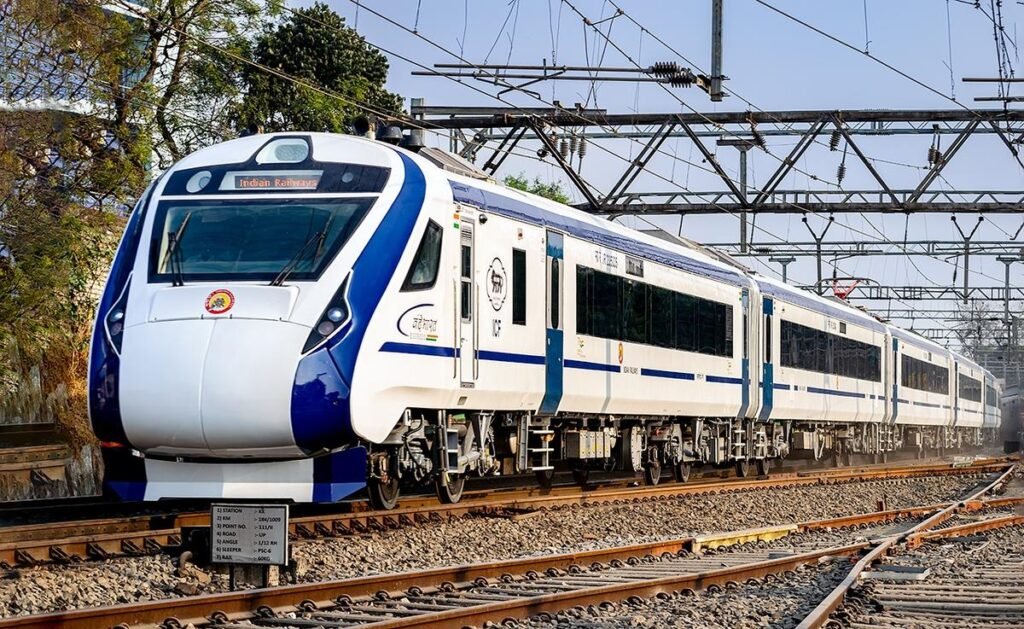
India’s rail network is undergoing a decisive transformation, with the Vande Bharat Express emerging as the flagship of modern inter-city mobility. Conceived as an indigenously designed, semi-high-speed trainset, Vande Bharat represents a shift from conventional locomotive-hauled trains to integrated, technology-driven rail systems focused on speed, safety, comfort, and sustainability.
A National Scale-Up in Rail Connectivity
As of December 2025, 164 Vande Bharat services are operational across the country, connecting 274 districts and having already served over 7.5 crore passengers. Designed for rapid acceleration and deceleration, these trains have reduced travel times by up to 45 percent on several inter-city corridors, making rail travel more competitive with road and air transport.
This expansion aligns with India’s long-term mobility vision, which targets 800 Vande Bharat trainsets by 2030 and an ambitious 4,500 trainsets by 2047, supporting economic integration and regional development across the country.
Design, Technology, and Passenger Experience
Vande Bharat trains are engineered with a strong emphasis on passenger-centric design and operational efficiency. Key features include:
- Semi-permanent, jerk-free couplers and advanced suspension systems for improved ride comfort
- Regenerative braking for enhanced energy efficiency
- Fully sealed, automatic plug doors and wider inter-coach gangways
- GPS-based passenger information systems and ergonomic seating
- Bio-vacuum toilets and Divyangjan-friendly facilities
- CCTV surveillance, emergency alarm systems, and passenger–crew communication units
A major safety upgrade is the integration of KAVACH, India’s indigenously developed Automatic Train Protection system, certified to Safety Integrity Level-4. This system continuously monitors train movement and automatically applies brakes to prevent collisions, overspeeding, and signal violations.
Indigenous Manufacturing and Sustainability
Manufactured at the Integral Coach Factory (ICF), Chennai, Vande Bharat trainsets achieve nearly 90 percent localisation, reflecting the objectives of the Make in India initiative. The emphasis on energy-efficient systems and sustainable manufacturing practices earned ICF the National Energy Conservation Award (2024) for Vande Bharat production.
Evolution from Vande Bharat 1.0 to 4.0
Since its first run on the New Delhi–Varanasi route in February 2019, the Vande Bharat platform has evolved rapidly:
- Vande Bharat 2.0 introduced lighter trainsets, higher energy efficiency, and improved safety systems
- Vande Bharat 3.0 enhanced acceleration, ride quality, and onboard amenities, achieving 0–100 kmph in around 52 seconds
- Vande Bharat 4.0, currently envisaged, aims to set global benchmarks with next-generation safety systems and superior interior finish, while preparing for future high-speed corridors
Introducing the Vande Bharat Sleeper
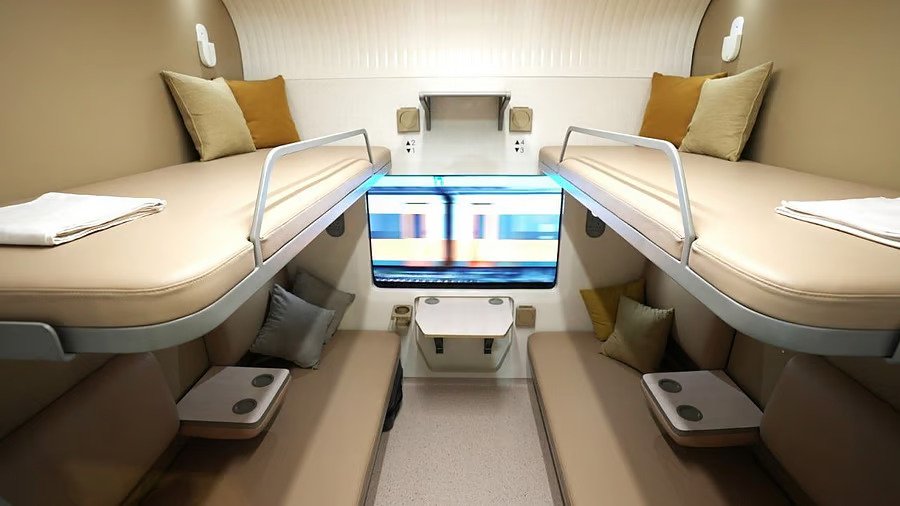
Marking a significant expansion of the platform, the Vande Bharat Sleeper Train is scheduled for launch in January 2026, extending services to long-distance overnight travel. The first route, Howrah–Guwahati, is expected to cut travel time by nearly three hours, offering faster and more comfortable connectivity between eastern and north-eastern India.
The sleeper variant comprises 16 fully air-conditioned coaches, accommodating around 823 passengers, and includes improved sleeping berths, enhanced luggage storage, and modern sanitation systems. Extensive trials have validated its performance at speeds of up to 180 kmph, along with ride comfort and system reliability.
Strengthening Operations and Workforce Conditions
Beyond passenger comfort, the new trainsets also improve working conditions for railway staff. Ergonomically designed driver cabins, dedicated onboard facilities, and improved rest spaces for crew members contribute to safer operations and better service delivery.
A Strategic Leap in Public Rail Infrastructure
The Vande Bharat Express is more than a premium train—it represents a broader shift in India’s approach to public transport infrastructure. By combining indigenous technology, modern design, and scalable deployment, the programme reinforces the role of railways as a backbone of sustainable, inclusive, and future-ready mobility.
As India moves towards its 2047 development goals, Vande Bharat stands as a critical enabler of faster connectivity, regional integration, and a renewed public confidence in rail-based travel.
Also Read: Prime Minister Applauds Launch of Nine New Amrit Bharat Express Trains