

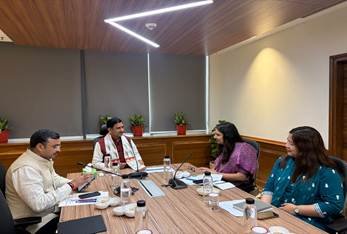
New Delhi: Minister of State for Housing and Urban Affairs Shri Tokhan Sahu chaired a series of review meetings at Sankalp Bhawan, New Delhi, focusing on the implementation of the Gurugram Metro Connectivity Project, AMRUT 2.0 and CITIIS 2.0. The meetings emphasised expediting projects, resolving implementation bottlenecks and ensuring that urban infrastructure initiatives deliver tangible benefits to citizens.
Gurugram Metro Project Reviewed
Shri Sahu reviewed the progress of the Metro Connectivity Project from Millennium City Centre, Gurugram to Cyber City, Gurugram, with a spur to Dwarka Expressway. The project is being implemented through Gurugram Metro Rail Limited (GMRL).
Officials briefed the Minister on project implementation, planning and coordination among the agencies involved. Shri Sahu stressed the need for close coordination among stakeholders and timely resolution of issues to ensure steady progress.
AMRUT 2.0 Implementation and Coverage Discussed
The Minister also reviewed the progress of AMRUT 2.0 and discussed observations contained in the 10th Report of the Parliamentary Standing Committee on Housing and Urban Affairs.
According to the Ministry’s assessment, AMRUT covers 500 cities, representing approximately 7.41 crore urban households based on 2025 data reported by these cities. The Ministry stated that the Mission’s actual coverage, based on data reported by AMRUT cities, is approximately 55%.
The meeting also highlighted the scale of investment in sewerage and septage infrastructure. Although such projects account for around 6.8% of the total number of approved projects, they represent approximately ₹71,133 crore, or nearly 36% of the total approved project cost of ₹1,97,191 crore.
Officials informed that 394 ongoing sewerage projects worth approximately ₹47,230 crore are currently under implementation. Once completed, these projects are expected to provide new sewerage connections to around 48.76 lakh households, while approximately 60.59 lakh households will benefit through system upgrades and servicing.
The Minister called for continued monitoring, stronger coordination with State Governments and Urban Local Bodies, and speedy resolution of implementation-related bottlenecks.
CITIIS 2.0 and Sustainable Waste Management
Shri Sahu also reviewed the city-wise implementation of CITIIS 2.0, including the progress of State Climate Cells and actions being undertaken at the city level.
The meeting further examined proposed Solid Waste Management processes and interventions for Bilaspur, with discussions centred on sustainable, efficient and scientifically planned waste management practices.
Shri Sahu reiterated that strong inter-agency coordination, continuous monitoring and timely decision-making are essential for translating flagship urban missions into measurable improvements. He emphasised the Government’s commitment to developing cleaner, greener, more resilient and future-ready cities in line with the vision of Viksit Bharat @2047.
Also Read: Master Plan Delhi 2047: DDA Unveils Vision for Redevelopment, Housing and Green Mobility
Join our WhatsApp Channel for fastest updates: Join now