

New Delhi | The Government of India is set to roll out a major urban development initiative worth ₹33,500 crore, aimed at strengthening public infrastructure, expanding metro connectivity, and redeveloping government housing across the national capital. The projects are expected to significantly enhance urban mobility, housing infrastructure, and administrative facilities in Delhi.
Prime Minister Narendra Modi is scheduled to inaugurate and lay the foundation stones for multiple projects during a public event in Delhi. The announcement marks one of the largest coordinated development pushes for the capital in recent years.
Major Metro Expansion Underway
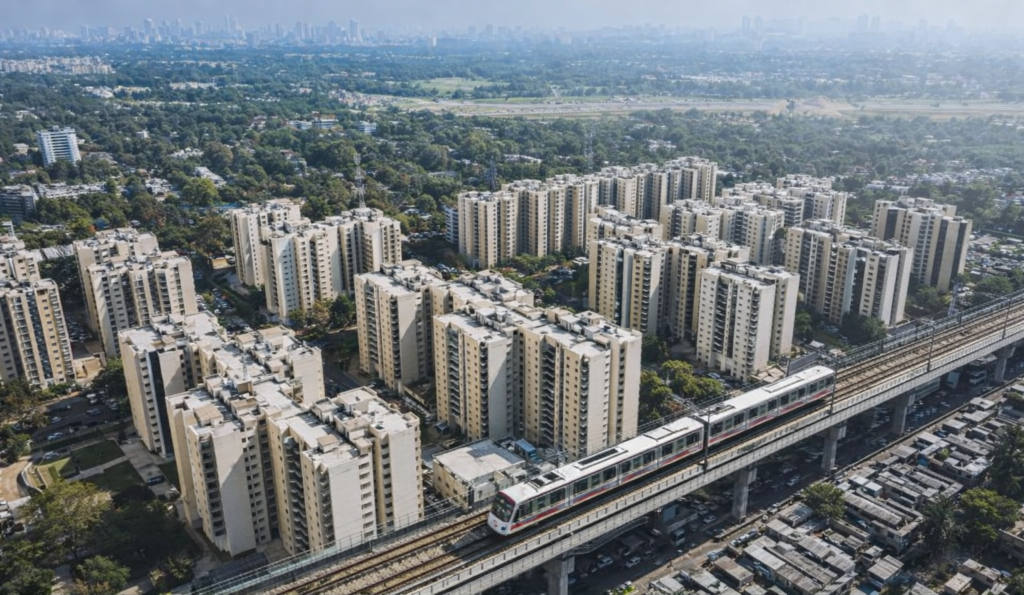
Two key extensions of the Delhi Metro Rail Corporation network will be inaugurated as part of the programme. These include the Majlis Park–Maujpur corridor of the Pink Line and the Deepali Chowk–Majlis Park section of the Magenta Line.
In addition, foundation stones will be laid for three new metro corridors under the Phase IV expansion plan, which aims to further strengthen Delhi’s public transport network and improve regional connectivity across the National Capital Region.
Officials say the new corridors will provide faster transit options and help reduce congestion on major road corridors by shifting more commuters to public transport.
Redevelopment of Government Housing Colonies
A significant portion of the investment—approximately ₹15,200 crore—has been allocated for the redevelopment of General Pool Residential Accommodation (GPRA) colonies in Delhi. These colonies house central government employees and many of the existing buildings have aged significantly over time.
Seven major housing colonies spread across about 537 acres will be redeveloped under this initiative. The redevelopment areas include:
- Sarojini Nagar
- Netaji Nagar
- Nauroji Nagar
- Kasturba Nagar
- Thyagraj Nagar
- Srinivaspuri
- Mohammadpur
Many of the existing residential units in these colonies have been declared structurally unsafe, with around 40% considered uninhabitable. At the same time, authorities have faced a shortage of more than 20,000 housing units for government employees.
The redevelopment programme will replace the old low-rise housing with modern high-rise residential complexes, providing over 21,000 new flats along with upgraded urban infrastructure and civic amenities.
Modern Infrastructure and Administrative Facilities
The project will also generate more than 9,350 modern flats for government employees along with nearly 48 lakh square feet of office space. This will significantly strengthen the administrative infrastructure in central Delhi while improving living conditions for government staff.
Authorities say the initiative follows an innovative self-sustaining financial model, where limited portions of land are monetised through commercial and residential development to finance the redevelopment works.
About 69.4 acres (around 12.9% of the total project area) have been earmarked for commercial and residential development to support project financing.
Revenue Generation Model
Through land monetisation and integrated planning, the redevelopment project is expected to generate over ₹35,100 crore in revenue, which will cover the estimated redevelopment cost of around ₹32,800 crore.
Officials state that the model will allow the entire redevelopment process to be completed without placing additional burden on the government exchequer, while potentially generating a surplus of more than ₹2,300 crore.
Impact on Urban Mobility and Housing
Urban planners view the combined metro expansion and housing redevelopment as a significant step towards improving public transportation efficiency, housing standards, and administrative infrastructure in Delhi.
The projects are expected to reduce dependence on private vehicles, improve connectivity across the National Capital Region, and support the capital’s long-term urban growth.
Also Read: Delhi Govt Floats Tender for Geotechnical Survey of Magenta Line Extension in Central Delhi