

New Delhi | In response to a steady decline in air quality across the National Capital Region (NCR), the Commission for Air Quality Management (CAQM) has activated Stage-I of the Graded Response Action Plan (GRAP) with immediate effect. The move comes after Delhi’s daily average Air Quality Index (AQI) reached 226, placing it in the ‘Poor’ category, according to data from the Central Pollution Control Board (CPCB).
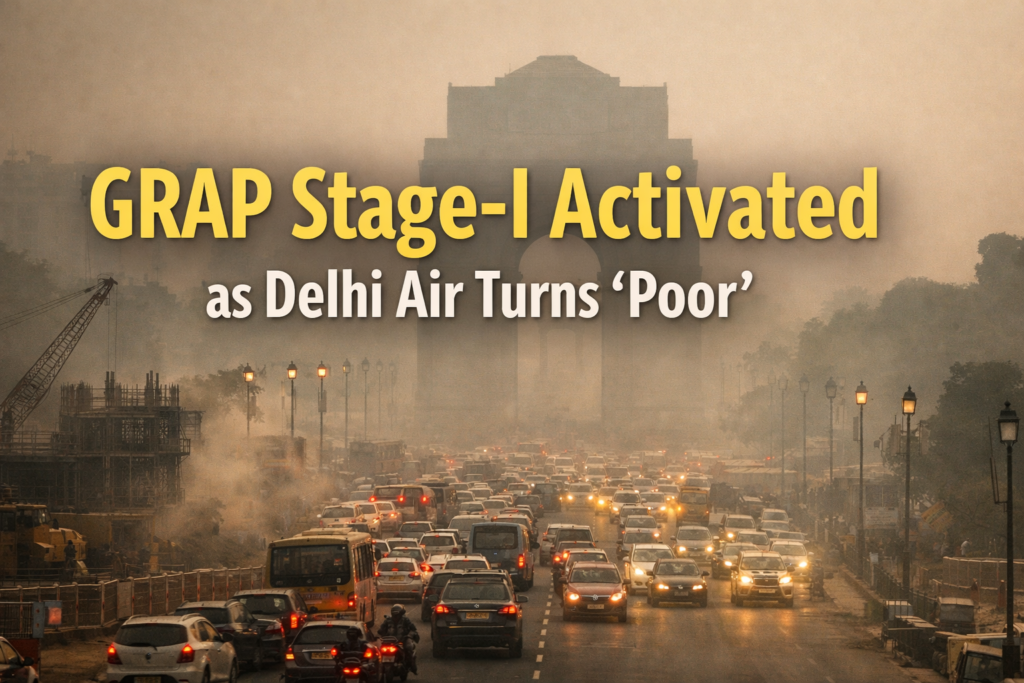
The decision was taken by the GRAP Sub-Committee following a comprehensive review of current air quality conditions and forecasts provided by the India Meteorological Department (IMD) and the Indian Institute of Tropical Meteorology (IITM). Authorities noted that unfavorable meteorological conditions have contributed to the rising pollution levels, which are expected to remain in the ‘Poor’ range over the coming days.
Key Measures Under GRAP Stage-I
Under Stage-I, a total of 31 actions have been mandated across Delhi-NCR to curb further deterioration in air quality. These include:
- Strict enforcement of dust control measures at construction and demolition (C&D) sites
- Mandatory registration and compliance monitoring of large construction projects
- Mechanized road sweeping and regular water sprinkling
- Prohibition of open burning of waste and biomass
- Enhanced traffic management and enforcement of vehicular emission norms
- Crackdown on visibly polluting and overaged vehicles
- Regulation of industrial emissions and fuel usage
- Ban on coal and firewood use in commercial eateries
- Increased deployment of CNG/electric public transport and metro services
Additionally, authorities have been directed to ensure uninterrupted power supply to reduce reliance on diesel generators and to intensify public awareness campaigns through media and digital platforms.
Focus on Monitoring and Public Participation
The CAQM has instructed all implementing agencies, including state pollution control boards and the Delhi Pollution Control Committee, to maintain strict vigilance and ensure effective implementation of the prescribed measures. Real-time grievance redressal via platforms such as the Green Delhi App and SAMEER App is also being emphasized.
Citizens have been urged to cooperate by adhering to the guidelines outlined in the GRAP Citizen Charter, including minimizing polluting activities and reporting violations.
The Sub-Committee will continue to monitor the situation closely and may escalate actions depending on AQI trends and weather forecasts. The activation of Stage-I signals an early intervention approach aimed at preventing the air quality from slipping into more severe categories.
Also Read: MCD Plans ₹2,939 Crore Waste Management Overhaul Across Delhi Zones