

Ghaziabad: The Uttar Pradesh Pollution Control Board (UPPCB) has identified nine pollution hotspots in Ghaziabad that are considered vulnerable to excessive emissions and dust during the 2026–27 winter season, according to officials.
The identified locations are Sahibabad, Raj Nagar Extension, Loni, Bhopra–Delhi Border, Siddharth Vihar/Kanawani Pushta Road, Vijay Nagar and South Side GT Road, Lal Kuan, Indirapuram, and Vasundhara/Vaishali.
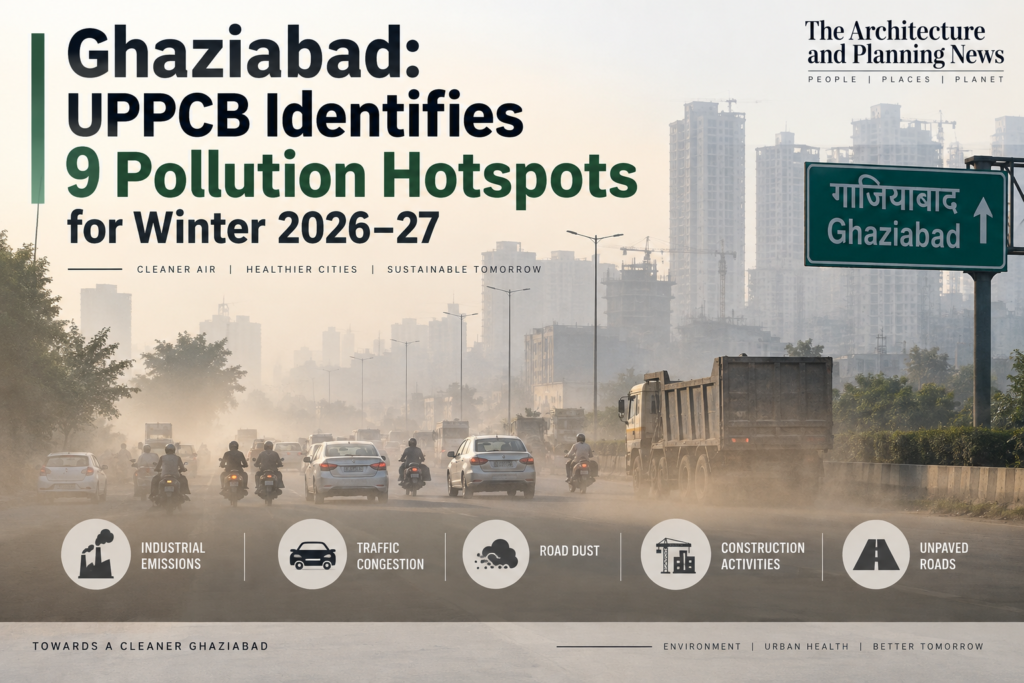
According to UPPCB officials, these areas face a combination of pollution sources, including industrial emissions, traffic congestion, road dust, open storage of construction materials, illegal industrial units operating in non-conforming zones and unpaved roads.
Two New Hotspots Added
UPPCB regional officer for Ghaziabad, Ankit Kumar, said that seven hotspots had been identified during the previous year, while Indirapuram and Vasundhara/Vaishali have been added to the list this year.
The newly identified areas are reportedly experiencing increased dust pollution associated with construction activities. To address the problem, the UPPCB plans to intensify pollution-control measures at all nine locations.
These measures will include the increased deployment of anti-smog machines and water-sprinkling operations, particularly to control airborne dust during the winter months.
Regular Monitoring and Enforcement Planned
Officials said UPPCB teams have surveyed and assessed the nine locations. The department plans to undertake strict enforcement and regular monitoring at the identified hotspots during the winter season.
The focus is expected to be on controlling dust-generating activities, industrial emissions and other local sources contributing to deteriorating air quality.
Ghaziabad’s Annual AQI Shows Improvement
Despite the identification of new hotspots, UPPCB data cited in the report indicates that Ghaziabad’s annual average Air Quality Index (AQI) improved over the five-year period from 2021 to 2025.
The annual average AQI declined from 227 in 2021 to 185 in 2025, representing a 42-point reduction. The annual averages were 206 in 2022, 181 in 2023 and 177 in 2024, before rising to 185 in 2025.
Environmental concerns, however, remain significant during winter, when stagnant atmospheric conditions can contribute to the accumulation of pollutants.
City-based environmentalist Sushil Raghav said winter brings increased pollution from sources including road dust and industrial emissions. He also pointed to enforcement as an important factor in addressing the continuing pollution concerns faced by residents.
With winter approaching, the identification of nine hotspots provides a targeted framework for the UPPCB’s pollution-control and monitoring efforts across Ghaziabad. HT
Also Read: A.K. Jain on Delhi’s Future, Urban Planning, Technology & Reform
Join our WhatsApp Channel for fastest updates: Join now