

The Ministry of Housing and Urban Affairs (MoHUA) has accelerated the implementation of the ‘Catch the Rain – Where it Falls, When it Falls’ campaign across urban India, strengthening rainwater harvesting, groundwater recharge and water body rejuvenation initiatives under the Atal Mission for Rejuvenation and Urban Transformation (AMRUT) 2.0. The nationwide effort aims to enhance urban water security while improving climate resilience in cities.
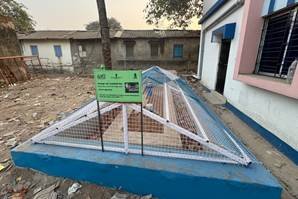
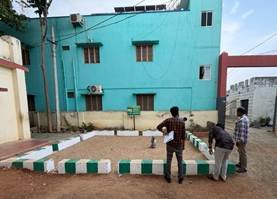
Recharge pits with injection bore wells construted in Burdwan, West Bengal and Vizingarim, Andhra Pradesh | PIB
Responding to Prime Minister Narendra Modi’s call to sustain the momentum of the campaign, MoHUA has expanded water conservation measures in partnership with Urban Local Bodies (ULBs) and State governments. According to the ministry, 27 States and Union Territories and around 900 Urban Local Bodies are actively participating in the initiative.
As part of the Jal Shakti Abhiyan–Jan Bhagidari (JSJB) 2.0, implemented jointly by MoHUA and the Ministry of Jal Shakti, 1,99,278 groundwater recharge structures have been undertaken by 79 Municipal Corporations, while an additional 73,036 recharge structures are under implementation across 738 Urban Local Bodies. These interventions are expected to significantly improve groundwater recharge and urban water conservation.
The ministry is also implementing the Shallow Aquifer Management (SAM) Programme under AMRUT 2.0, which uses scientific aquifer mapping to improve groundwater recharge. Several cities have already demonstrated successful interventions. Burdwan (West Bengal) and Vizianagaram (Andhra Pradesh) have installed recharge pits integrated with injection borewells to channel rainwater into deeper aquifers. In Itanagar (Arunachal Pradesh), rooftop rainwater harvesting systems with storage facilities are supporting water conservation, while Korba (Chhattisgarh) and Warangal (Telangana) completed recharge structures before the monsoon to maximise seasonal rainfall capture.
Beyond groundwater recharge, MoHUA is rejuvenating nearly 1.21 lakh acres of urban water bodies under the Water Body Rejuvenation (WBR) component of AMRUT 2.0. The projects include desilting, strengthening inlet and outlet systems, shoreline protection, landscaping and biodiversity enhancement, aimed at increasing water storage capacity and reducing urban flood risks.
Complementing these initiatives, more than 18,000 acres of parks and green spaces are being developed across urban India. These green infrastructure projects are expected to improve groundwater recharge, mitigate urban heat stress, enhance biodiversity and provide healthier public spaces for residents.
Highlighting the long-term significance of the campaign, the ministry reiterated that every water conservation effort contributes to building resilient cities capable of addressing future water challenges. As MoHUA stated, “Every drop saved today is an investment in the water security of future generations.”
Also Read: Kailashahar Water Body Rejuvenation Project Revives Urban Blue-Green Infrastructure in Tripura
Join our WhatsApp Channel for fastest updates: Join now