
Profile
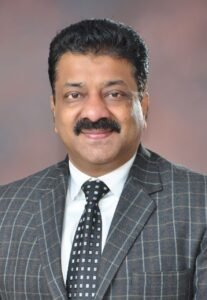
Ar. Sanjay Goel Principal Architect, Designex Architects, Ludhiana | Former Chairman, Indian Institute of Architects (Punjab Chapter) | Former Director, Ludhiana Smart City Limited With over three decades of professional experience, Ar. Sanjay Goel is a leading architect, urban thinker, and advocate of sustainable development. Through his practice, Designex Architects, he has delivered a diverse portfolio.
In this exclusive conversation with The Architecture and Planning News (TheAPN), he reflects on his architectural journey, design philosophy, leadership experiences, and the evolving future of India’s built environment.
Interview
TheAPN: Could you take us through your architectural journey?
SG: My architectural journey began when I graduated from the Chandigarh College of Architecture in 1993. Soon after, I started my professional practice and founded Designex Architects in Ludhiana. Over the past three decades, I have had the opportunity to work on a diverse range of projects, including residential, commercial, institutional, healthcare, industrial, and urban development projects.
I have two daughters, and both have joined Designex Architects. My elder daughter is an architect who has completed her postgraduate studies, while my younger daughter holds a Bachelor’s degree in Interior Design from Lovely Professional University, Punjab.
Together, we are working on more than fifty projects across Punjab. These include residential, commercial, institutional, and public projects. It is satisfying to see our practice grow while maintaining our commitment to thoughtful design, professional ethics, and quality architecture.
TheAPN: Having served as Director of Ludhiana Smart City Limited, what were your key responsibilities?
SG: I was one of the nominated Directors of Ludhiana Smart City Limited, representing the architectural fraternity. It was an ex-officio position. During my tenure as Chairman of the Indian Institute of Architects (IIA), Punjab Chapter, the State Government nominated me, in accordance with the Government of India guidelines, as one of the architect directors in Ludhiana Smart City Limited.
The Smart City Mission started around 2015. As a member of the Board of Directors, I had the opportunity to work closely with consultants and other board members. AECOM, a Chicago-based international engineering consultancy, was the planning consultant for Ludhiana Smart City Limited. I thoroughly enjoyed my professional role on the Board of Directors of the Special Purpose Vehicle (SPV) formed under the Smart City Mission.
Ludhiana was among the first twenty cities selected under the Smart City Mission. As part of the Board, we reviewed and discussed a wide range of projects, including road widening, smart signage, the Integrated Command and Control Centre (ICCC), water supply systems, LED street lighting, indoor sports facilities, landscaping, waterfront development, and several other infrastructure projects across the city.
A team of specialists worked tirelessly on these projects, and many of them were appreciated by the Government of India. I am happy that today the idea of a Smart City is no longer limited to experts, engineers, or technocrats. It has reached the minds of ordinary citizens as well.
People have become more aware that we should make our cities, our state, and our country as smart and as liveable as possible. This awareness has increased everyone’s sense of responsibility. Earlier, large amounts of public money were often spent on roads, drainage, landscaping, signage, and other civic works without proper planning or design. Today, there is greater emphasis on planning, designing, and creating a long-term roadmap before executing projects. That, in my opinion, is one of the biggest achievements of the Smart City Mission.
TheAPN: More than a decade after the Smart City Mission was launched, how do you assess its overall impact on Indian cities? What has worked well, and where do you think improvements are needed?
SG: The term Smart City creates very high expectations. Many people think that after reading about the Smart City Mission in the newspaper, their city will become smart overnight, or perhaps within a year. But I have always believed that transforming a city is a long-term process. It takes at least twenty to thirty years.
One of the major challenges has been funding. Initially, the Central and State Governments each contributed ₹200 crore, followed by additional allocations in subsequent years. Even after several years, the total funding available for a city was limited when compared to the scale of transformation expected. With that amount, it is difficult to make a large city truly smart. The expectations of citizens are much higher than the available resources.
Another challenge has been the frequent transfer of IAS officers serving as Chief Executive Officers of Smart City projects. Continuity in leadership is essential if we want to achieve long-term goals. A project of this scale requires consistent leadership by professionals who remain associated with it for many years.
If we look at successful projects such as the Delhi Metro, one of the reasons for their success was continuity in leadership and technical direction. Urban transformation also requires long-term commitment.
I believe the Smart City Mission can achieve much more if cities receive greater funding, stronger administrative powers, and continuity in leadership. Frequent transfers have slowed progress in many places. With stable leadership and sustained investment, the mission can deliver much better results in the years ahead.
TheAPN: More than a decade after the Smart City Mission was launched, how do you assess its overall impact on Indian cities? What has worked well, and where do you think improvements are needed?
SG: The term Smart City creates very high expectations. People often think that after reading about the Smart City Mission in the newspaper, their city will become smart overnight or within a year. But I have always believed that it is a long-term programme. Transforming a city takes at least 20 to 30 years.
In the beginning, the funding was limited. The Central Government and the State Government each contributed ₹200 crore initially, followed by additional funding in subsequent years. Even after several years, the total amount available was not sufficient to create real transformation in large cities like Delhi, Bengaluru, or Chennai. With this level of funding, it is difficult to make a large city truly smart. The expectations of the public are much higher than the available resources.
Another major challenge has been the frequent transfer of IAS officers serving as Chief Executive Officers of Smart City projects. If you want to achieve long-term targets, there must be continuity in leadership. A city should have one competent technocrat or administrator leading the mission for many years. Successful projects, such as the Delhi Metro, demonstrate the importance of stable leadership and long-term vision.
I believe the Smart City Mission can achieve much more with greater funding, stronger administrative powers, and continuity in leadership. Frequent transfers have slowed progress in many cities. With sustained leadership and long-term commitment, these projects can deliver much better outcomes.
TheAPN: How important is the involvement of architects in urban policymaking and city governance? Should architects play a larger role in decision-making?
SG: After elected representatives and bureaucrats, the role of town planners is extremely important. Where there is a shortage of town planners, experienced architects should also be actively involved in city planning. In fact, every major city in India should have architects on its planning and decision-making bodies, along with town planners.
Local architects understand their cities better. They know the local climate, culture, urban challenges, and development needs. Because of this understanding, they can think better, make better decisions, and contribute more effectively to the planning and execution of projects.
If we consider around 600 major cities across India, I believe at least five architects from each city should be included in the planning process along with town planners. That would bring nearly 3,000 architects into urban governance across the country. Their professional knowledge and local experience would contribute significantly to better planning, better implementation, and ultimately, better cities.
I firmly believe that involving architects in decision-making will strengthen urban development and help create more sustainable, functional, and liveable cities across India.
TheAPN: What are the most significant changes you have witnessed in Ludhiana’s urban landscape over the past decade?
SG: The most significant changes in Ludhiana have been in its infrastructure. A number of railway overbridges, underpasses, elevated roads, and wider roads have been developed within the city. Better road infrastructure has improved traffic movement, and more such projects are expected in the coming years.
Our railway station is being redeveloped, and the new airport has already become operational with flights connecting Ludhiana to the national capital. The city is also expanding, and several new national highways are passing through the region, including the Delhi–Katra corridor.
Within the city, considerable attention has been given to landscaping and the development of public spaces. Areas such as the Rose Garden, Mini Rose Garden, and the Sidhwan Canal corridor have been improved, creating a more pleasant urban environment. There is now greater awareness about the importance of beautification and public spaces, and more such projects are being taken up.
However, I believe the responsibility of every citizen is equally important. We need smart healthcare and smart education because only smart citizens can create smart and liveable cities.
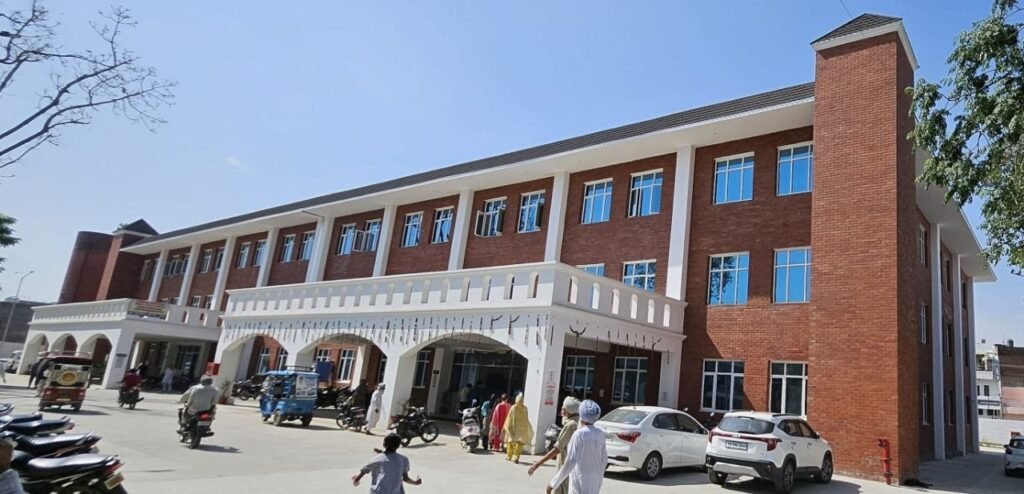
Infrastructure development has naturally received greater attention than public spaces. Most of our cities, including Ludhiana, are already old and densely developed. It is not easy to create large new parks or recreational areas. Instead, we need to redesign and improve the public spaces that already exist.
Similarly, many cities that were planned decades ago are now struggling with increasing traffic. They require wider roads, elevated corridors, and improved transport infrastructure. I hope that, in the coming years, more cities will develop better road networks and metro systems, as we have seen in the National Capital Region. Better mobility will ultimately lead to better urban living.
TheAPN: The Sidhwan Canal Waterfront has become one of Ludhiana’s landmark public spaces. What was the vision behind this project, and what impact has it had on the community?
SG: The Sidhwan Canal has become an important part of Ludhiana’s urban landscape. Earlier, it was located on the western edge of the city, but as Ludhiana expanded, development gradually extended beyond the canal. Today, it passes through the city and has become an important urban asset.
We have two major water bodies in Ludhiana, and both should be preserved and maintained carefully. The Sidhwan Canal, in particular, has been given significant importance under the Smart City Mission.
Ludhiana is known as one of India’s leading industrial cities and is recognised globally for manufacturing bicycles. Many renowned brands, including Hero Cycles and Atlas Cycles, have their roots here. Despite this, the city earlier lacked dedicated cycling infrastructure.
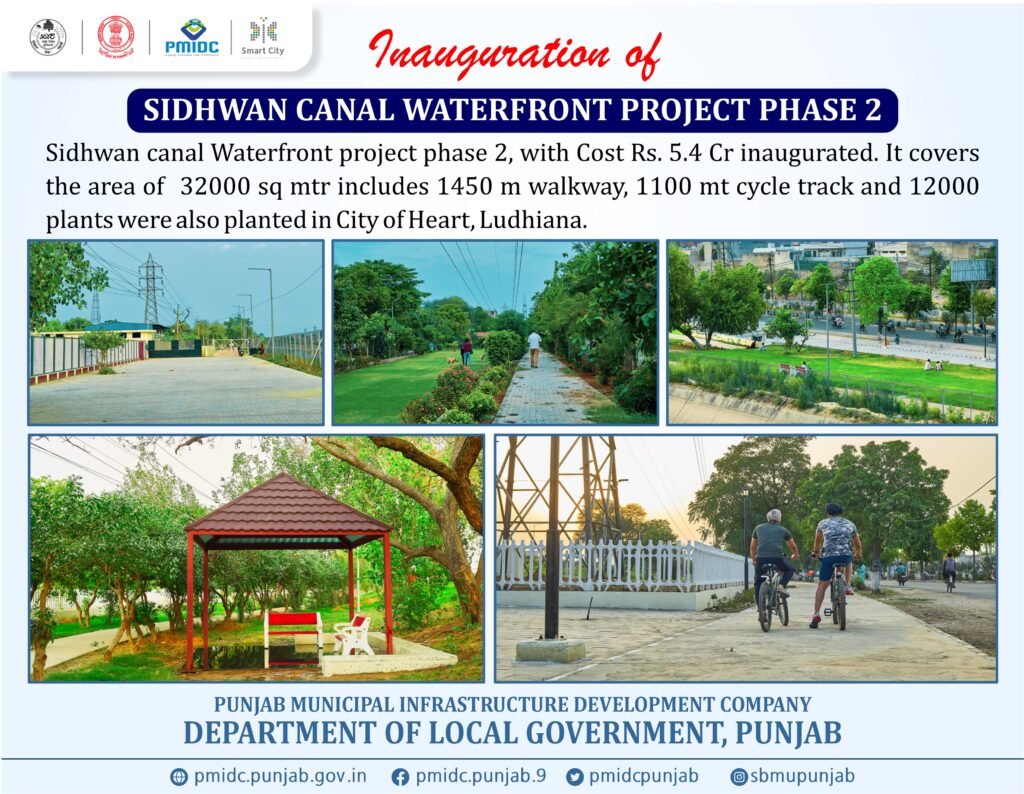
The waterfront project introduced dedicated cycle tracks, walking paths, jogging tracks, landscaping, and public spaces along the canal. These facilities have become extremely popular among morning walkers, cyclists, senior citizens, children, and families. They have created a healthy and inclusive public space that can be enjoyed by everyone.
I hope that, in the coming years, more such developments will take place along the canal. Public spaces like these improve the quality of life and encourage people to spend more time outdoors.
TheAPN: Was your firm directly involved in designing the waterfront?
SG: No. As one of the Directors of Ludhiana Smart City Limited, my role was to provide professional inputs, supervise the projects, and review the work carried out by the appointed consultants. The detailed design was prepared by the consultants, while we guided and monitored the overall implementation……………………………………………………………………………………………………..
End of Part 1
Editor’s Note: In the first part of this exclusive conversation, Ar. Sanjay Goel reflected on his architectural journey, his experience with the Ludhiana Smart City Mission, the need for architects in urban governance, and the transformation of Ludhiana’s public infrastructure. In the next part, he discusses climate-responsive architecture, the future of Tier-II cities, educational design, evolving client expectations, and the technologies shaping tomorrow’s built environment.
To be continued in the next (Part 2) →
This interview by TheAPN is part of its ongoing eff ort to facilitate professional dialogue, knowledge exchange, and encourage critical discourse on sustainable urban development among its readers. We sincerely thank the interviewee for generously sharing their time, insights, and expertise, which have greatly enriched this conversation.
Join our WhatsApp Channel for fastest updates: Join now