

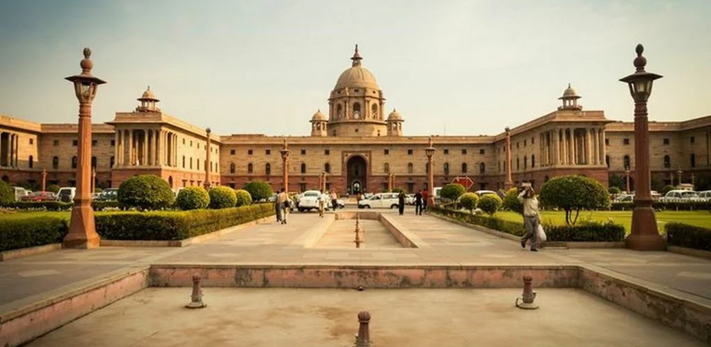
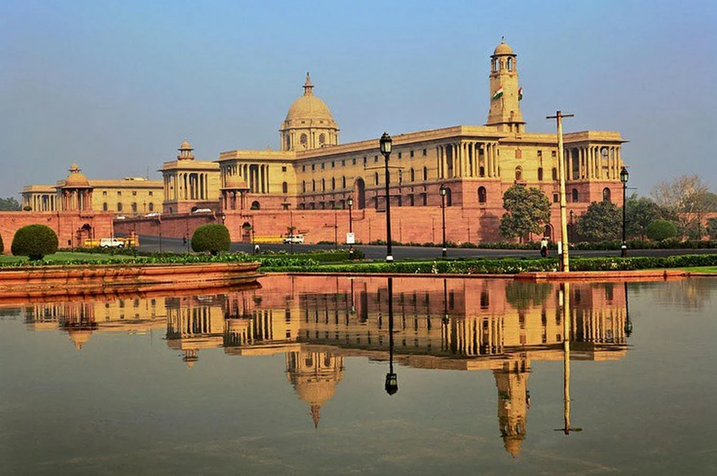
Rashtrapati Bhavan stands at the summit of Raisina Hill in New Delhi as one of the most extraordinary architectural achievements of the twentieth century. Originally constructed as the Viceroy’s House during British colonial rule and later transformed into the official residence of the President of India, the building is far more than a governmental structure. It is an architectural manifesto — a carefully composed expression of authority, geometry, symbolism, climate responsiveness, landscape planning, and cultural synthesis. Designed principally by Sir Edwin Lutyens with contributions from Herbert Baker, Rashtrapati Bhavan became the nucleus around which the entire imperial capital of New Delhi was organized.
The structure embodies an unusual fusion of European classical planning and Indian architectural traditions. It incorporates Mughal spatial principles, Buddhist symbolism, Rajput elements, climatic devices from Indo-Islamic architecture, and Edwardian monumentalism into a single integrated composition. Today, Rashtrapati Bhavan continues to symbolize not colonial power but the democratic continuity of the Indian Republic.
Urban Planning and the Spatial Vision of New Delhi
The architectural significance of Rashtrapati Bhavan begins with its urban setting. The building was conceived not as an isolated monument but as the focal point of an entirely new imperial city. When the British shifted the capital from Calcutta to Delhi in 1911, they envisioned a city that would visually and spatially communicate permanence and authority. Unlike the organically evolved and densely layered streets of Shahjahanabad, New Delhi was planned according to geometric order, visual axes, hierarchy, and monumental scale.
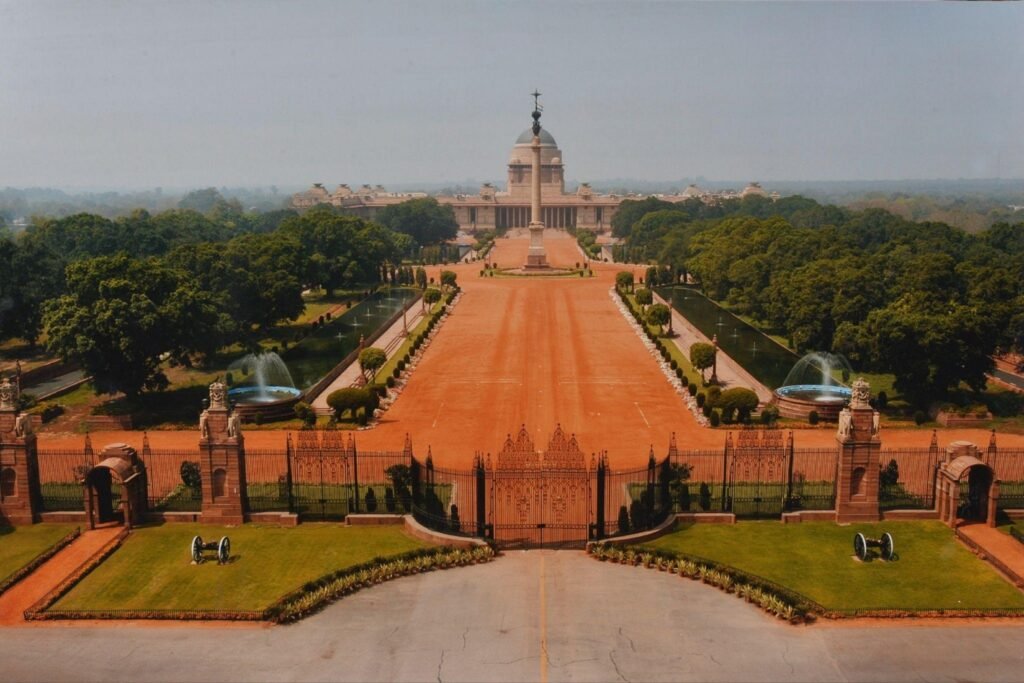
At the center of this planning composition lay the great ceremonial avenue now known as Kartavya Path. Rashtrapati Bhavan was positioned at the terminal point of this axis, creating one of the strongest examples of axial urban planning in the world. The long visual corridor beginning at India Gate and culminating at the presidential palace establishes movement, procession, and political symbolism simultaneously.
The placement of the structure atop Raisina Hill was deliberate and symbolic. Elevation has historically been associated with authority, spirituality, and dominance. By situating the Viceroy’s House above the city, the British transformed geography into political expression. The building appears to overlook the capital, visually reinforcing centralized power. The spatial hierarchy of the Central Vista further strengthens this symbolism. Rashtrapati Bhavan occupies the highest and most dominant position, while North Block and South Block frame the processional route below. Broad avenues, controlled open spaces, and monumental perspectives organize the city into layers of ceremonial and administrative importance.
An important planning episode emerged from the disagreement between Lutyens and Herbert Baker regarding road gradients approaching the palace. Baker modified the slope leading toward the building, resulting in the structure revealing itself gradually rather than appearing fully visible from a distance. Lutyens criticized this change intensely, yet the final effect created one of the most dramatic urban sequences in India. The gradual unveiling of the dome and façade intensifies monumentality and anticipation.
Also Read: Humayun’s Tomb: The First Great Mughal Garden Mausoleum
The Making of Rashtrapati Bhavan: Architecture, Construction and the Vision of Empire
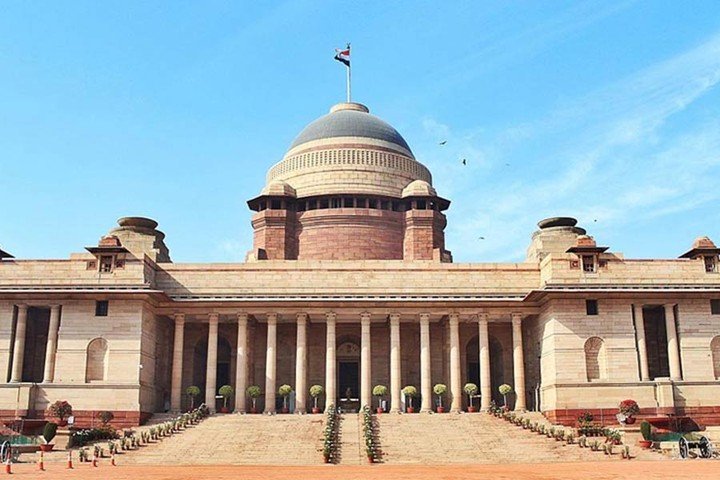
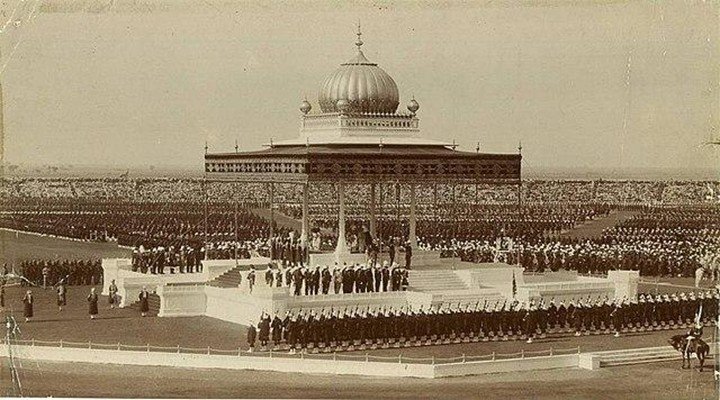
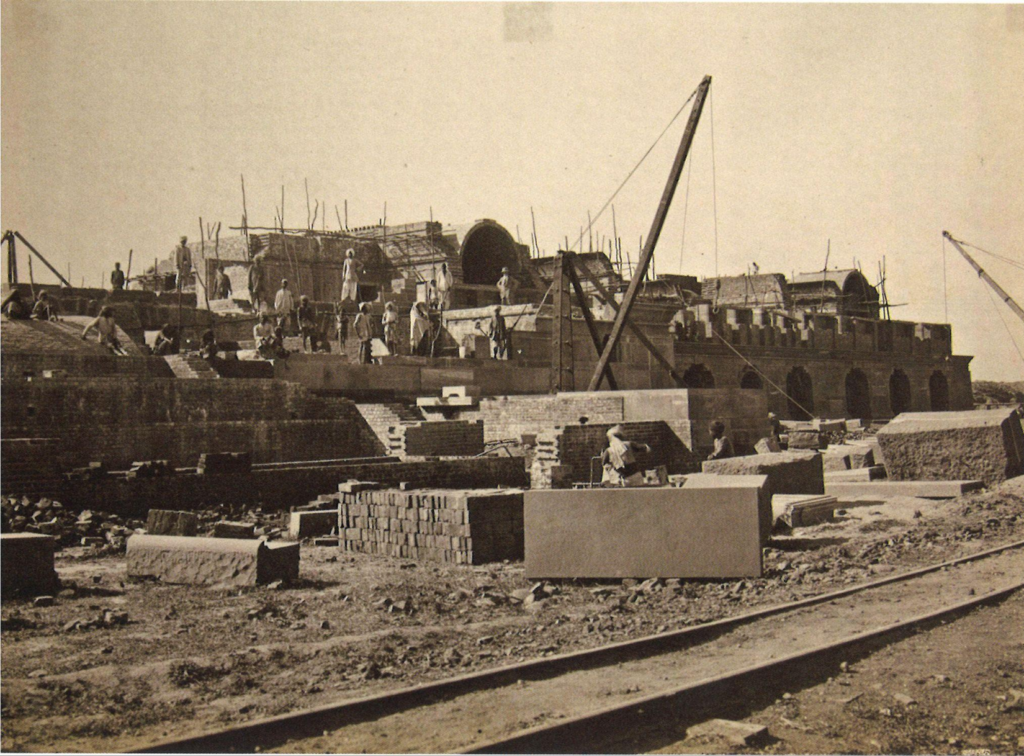
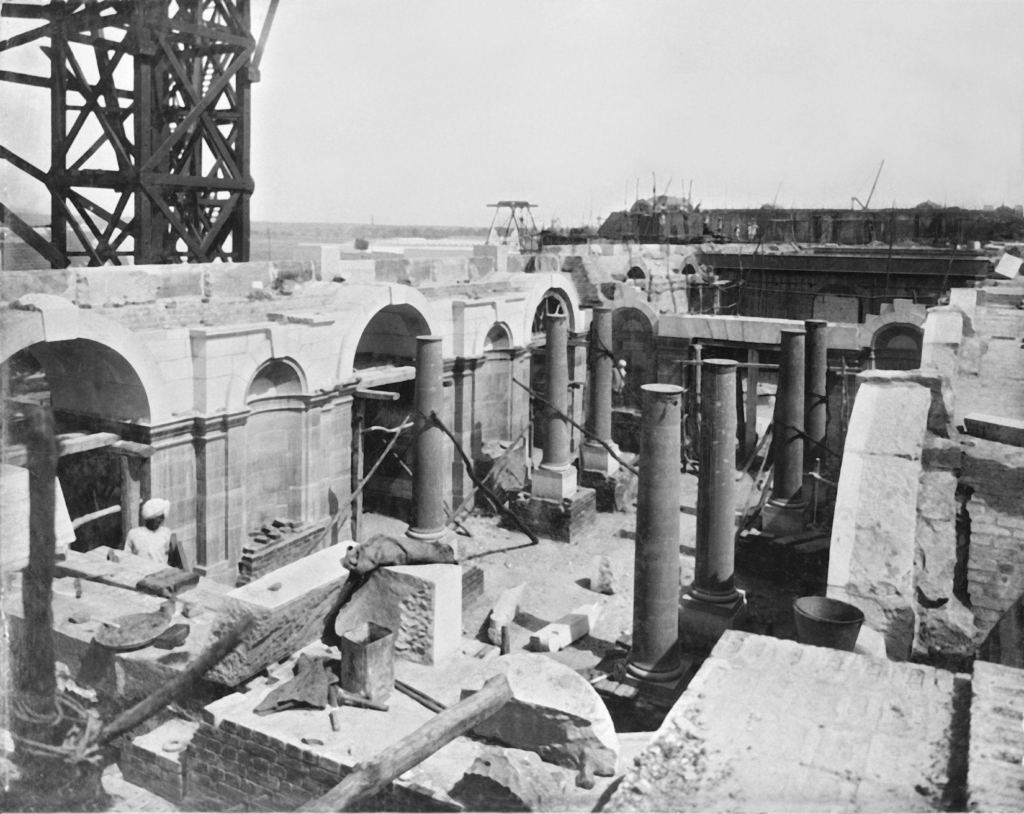
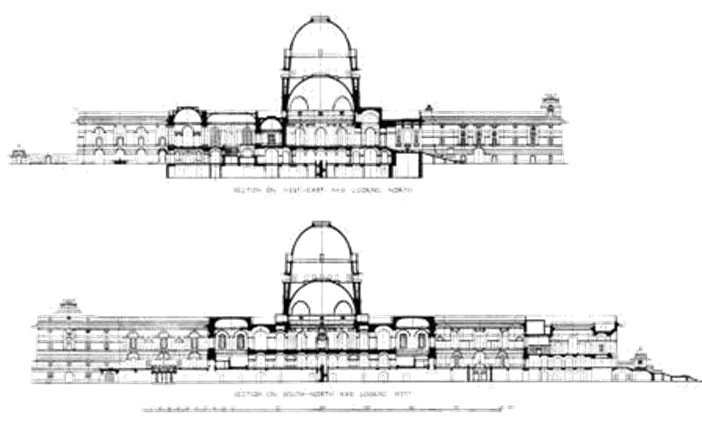
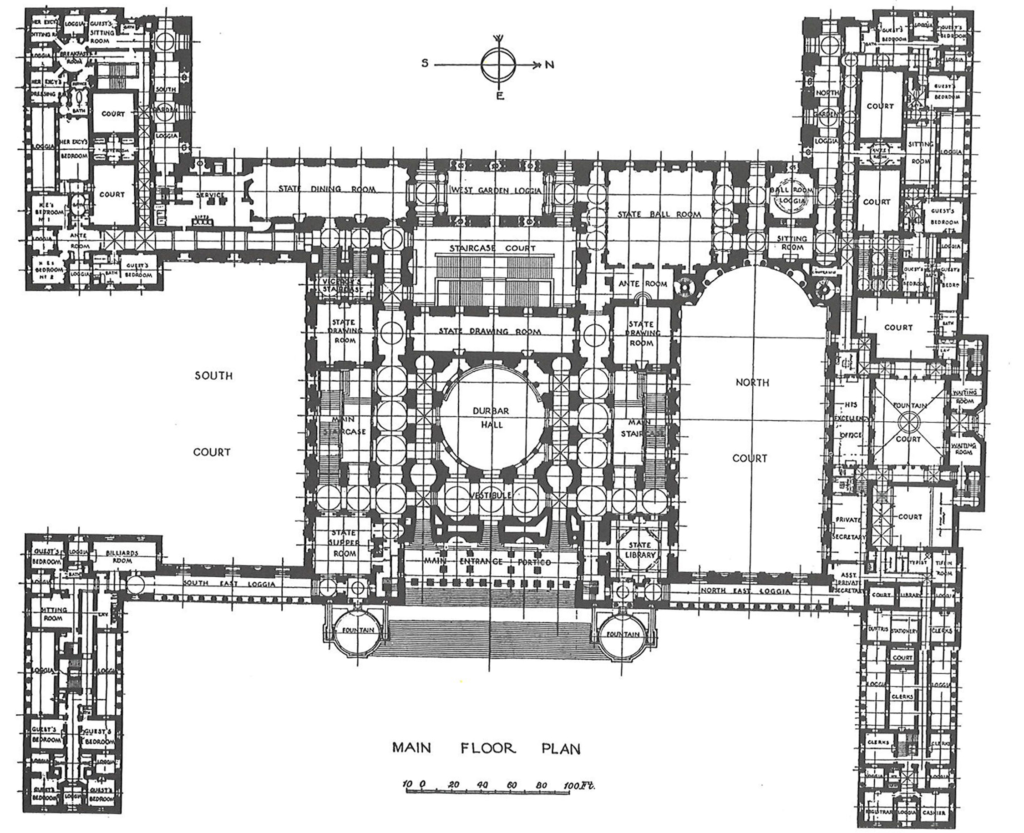
The making of Rashtrapati Bhavan was one of the most ambitious architectural and engineering enterprises undertaken during colonial India, reflecting both imperial aspiration and extraordinary craftsmanship. According to the official records of Rashtrapati Bhavan, the project began after the historic Delhi Durbar of 1911, when King George V announced the transfer of the capital from Calcutta to Delhi. The construction of the Viceroy’s House, now Rashtrapati Bhavan, extended over seventeen years instead of the originally anticipated four due to the enormous scale of work and delays caused by World War I. Nearly 700 million bricks and about three million cubic feet of stone were used in the construction, while more than 23,000 labourers and 3,000 stone-cutters worked on the site at its peak. A dedicated railway line was specially laid to transport construction materials, and underground water had to be pumped because there was no nearby river source. Sir Edwin Lutyens conceived the building as “one complete organism, perfect and inseparable,” designing it in an H-shaped configuration that combined monumental grandeur with geometric precision and spatial balance. The building integrated European classical planning with Indian architectural elements such as chhatris, jaalis, chhajjas, temple bells, elephants, and Buddhist-inspired motifs, creating a unique Indo-European architectural synthesis later known as the “Delhi Order.” Lutyens also made masterful use of pink sandstone from Fatehpur Sikri and cream Dholpur stone, whose changing tones under sunlight enhanced the visual richness and climatic suitability of the structure. The forecourt, approached through thirty-one massive ceremonial steps and framed by monumental colonnades, was designed to create a dramatic processional experience that gradually revealed the palace in stages, reinforcing the symbolism of authority, grandeur, and imperial power.
Architectural Language: Between Classicism and Indian Identity
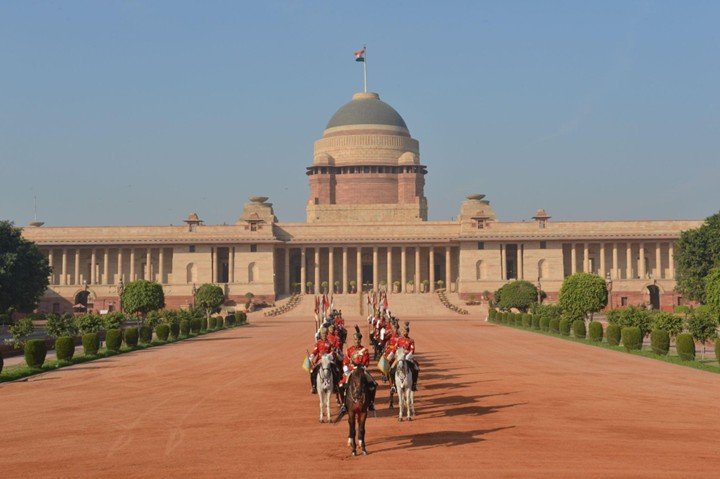
Architecturally, Rashtrapati Bhavan represents a synthesis of multiple traditions rather than adherence to a single style. Lutyens was deeply trained in European classicism and initially preferred a purely Western monumental vocabulary. However, political realities required the incorporation of Indian forms into the design so that the structure would appear rooted within the Indian landscape rather than entirely foreign.
The resulting architectural language combines Edwardian Baroque planning, Neoclassical symmetry, Mughal spatial principles, Buddhist-inspired domes, Rajput chhatris, and Indo-Islamic climatic devices. This hybridization produced what later came to be called the “Delhi Order,” a reinterpretation of classical architecture adapted to Indian conditions.
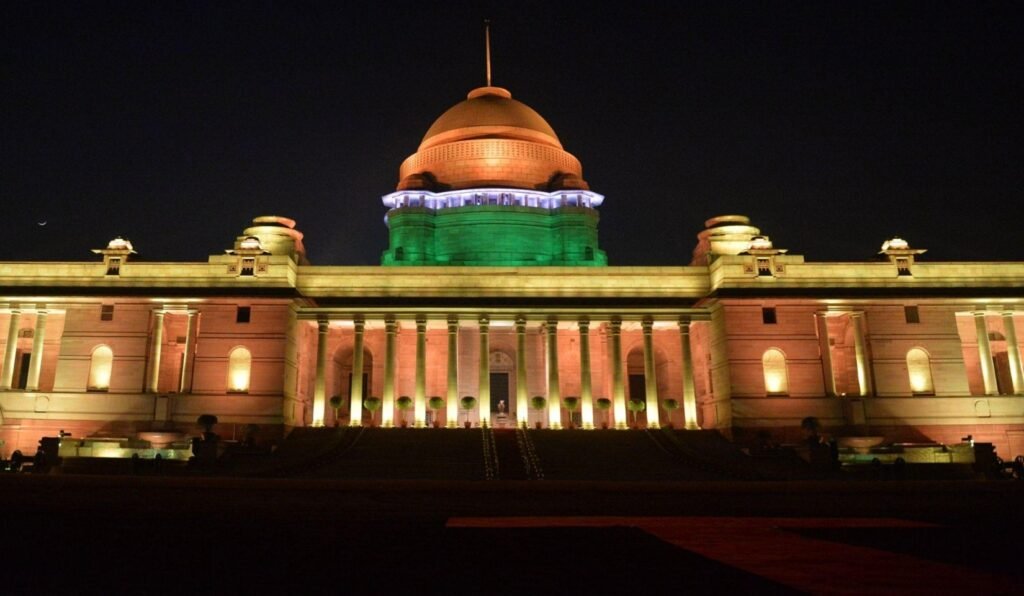
The architecture achieves a remarkable balance between horizontality and vertical dominance. The broad horizontal wings establish stability and monumentality, while the great central dome acts as the visual anchor. This interplay prevents the massive building from appearing visually overwhelming despite its enormous scale.
Principles of Design in Rashtrapati Bhavan
The design of Rashtrapati Bhavan is governed by the classical principles of symmetry, balance, hierarchy, rhythm, proportion, and unity. Symmetry dominates the composition, with the central dome acting as the axis around which the building unfolds equally on both sides. This bilateral arrangement creates visual order and harmony while reinforcing institutional stability and authority. The façades, gardens, courtyards, and water channels all follow geometric symmetry, creating an impression of discipline and permanence.
The principle of axis is equally significant. The entire Central Vista culminates visually at Rashtrapati Bhavan, making it the symbolic endpoint of New Delhi. Internally, movement through the building follows a carefully orchestrated sequence of spaces that gradually increase in grandeur. Broad staircases, forecourts, ceremonial halls, and transitional corridors create a processional experience intended to evoke awe and dignity.
Hierarchy is established through scale, elevation, and spatial organization. The central dome rises prominently above all other architectural elements, immediately signifying importance. Ceremonial spaces occupy the core beneath the dome, while secondary administrative and residential functions extend outward. Monumentality is intentionally emphasized through high ceilings, expansive courts, and massive staircases that diminish the scale of the individual and magnify the presence of the institution.
Rhythm is generated through the repetition of columns, arches, jaalis, parapets, and chhatris across the façade. These repeated elements create visual continuity and movement, reducing the heaviness of the structure despite its monumental scale. Unity and harmony emerge through the consistent use of materials, controlled ornamentation, and carefully balanced proportions that integrate diverse stylistic influences into a coherent architectural whole.
Also Read: The Shore Temple at Mahabalipuram: An Architectural and Historical Study
The Dome and Architectural Elements
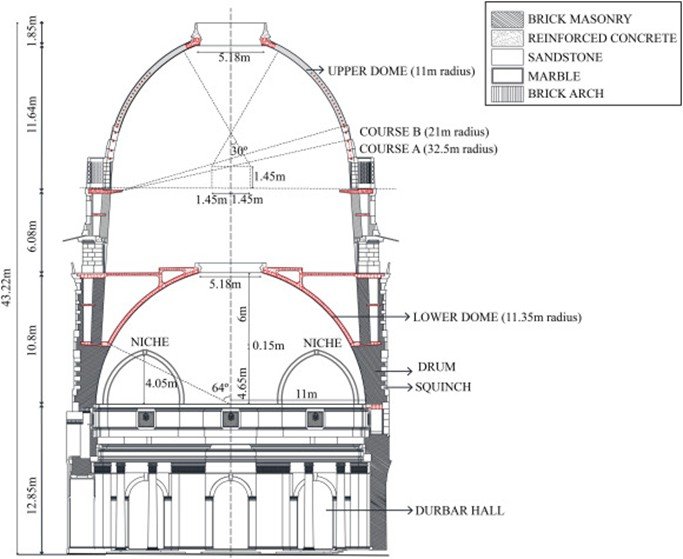
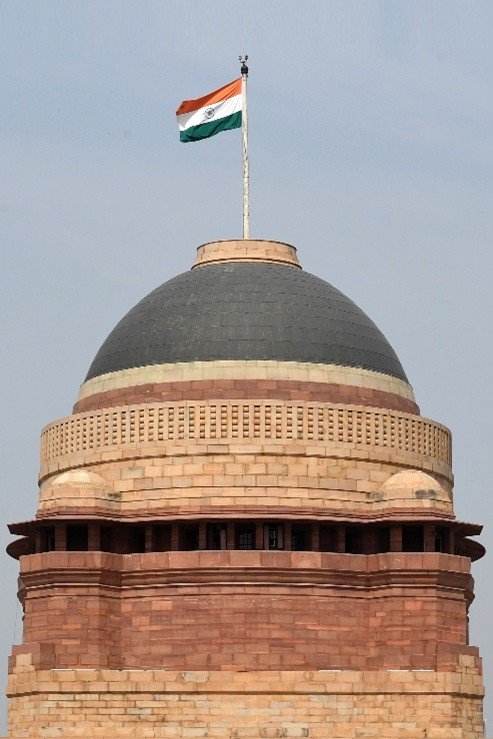
The central dome is the defining architectural feature of Rashtrapati Bhavan. Rising prominently above the entire composition, it dominates the skyline of New Delhi and functions as the symbolic heart of the structure. Unlike Renaissance domes derived from European cathedrals, this dome draws inspiration from the Great Stupa at Sanchi. Its circular mass, surrounding railings, and drum-like base reinforce Buddhist references while maintaining imperial monumentality.
The dome symbolizes sovereignty, continuity, and centralized authority. Its immense scale establishes vertical emphasis within the otherwise horizontal composition. The copper-clad exterior has weathered over time, giving the structure a sense of age and permanence.
One of Lutyens’ most innovative contributions was the creation of the “Delhi Order” columns. These columns retain classical proportions but incorporate Indian motifs such as lotus forms, bells, geometric carvings, and symbolic ornamentation. The columns create rhythm, shade, and structural grandeur simultaneously. Deep colonnaded verandahs also reduce solar heat gain, making them climatically functional.
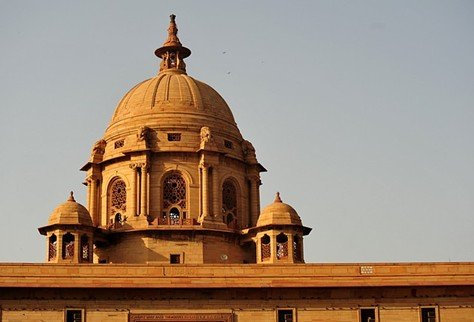
The roofline contains numerous chhatris, or domed kiosks, commonly found in Rajput and Mughal architecture. These elements soften the skyline, create visual transitions, and improve ventilation. The perforated stone screens known as jaalis are among the most climatically responsive features of the building. These screens diffuse sunlight, allow ventilation, reduce glare, and cast intricate shadow patterns within interior spaces.
Materials and Construction Techniques
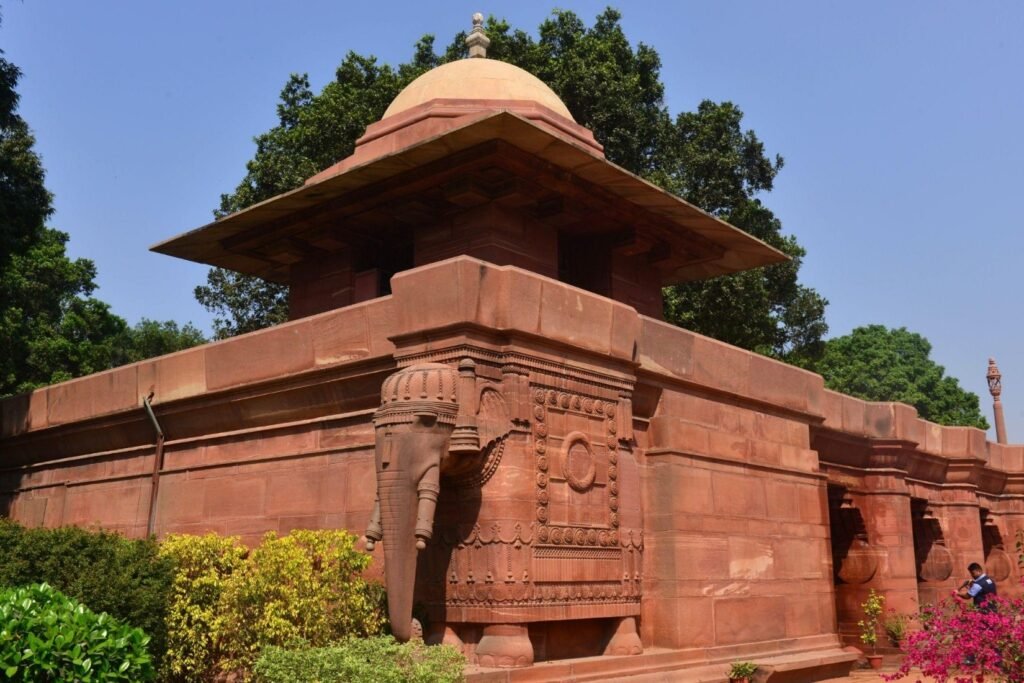
Rashtrapati Bhavan primarily uses red and cream sandstone sourced from Rajasthan. The lower sections employ red sandstone while upper portions use cream sandstone, creating contrast and depth within the façade. The use of sandstone visually connects the building to Mughal monuments such as Humayun’s Tomb and the Red Fort while also responding effectively to Delhi’s harsh climate.
The building was constructed using approximately 700 million bricks and nearly 3 million cubic feet of stone with minimal steel usage. The thick masonry walls provide thermal insulation, structural stability, and durability. Their mass helps maintain cooler interior temperatures during Delhi’s intense summers.
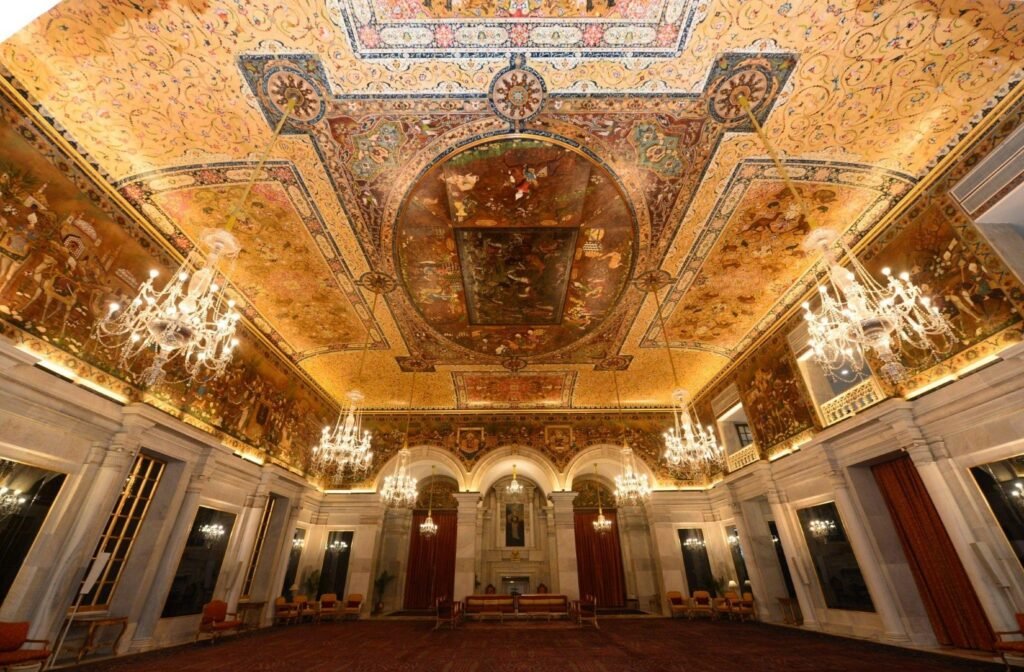
Interior spaces incorporate Italian marble, Burmese teak, polished stone, decorative plaster, bronze detailing, and handcrafted furnishings. Ceremonial spaces such as Durbar Hall employ monumental proportions, polished surfaces, and dramatic lighting to intensify grandeur and symbolism.
Landscape Architecture and the Mughal Gardens
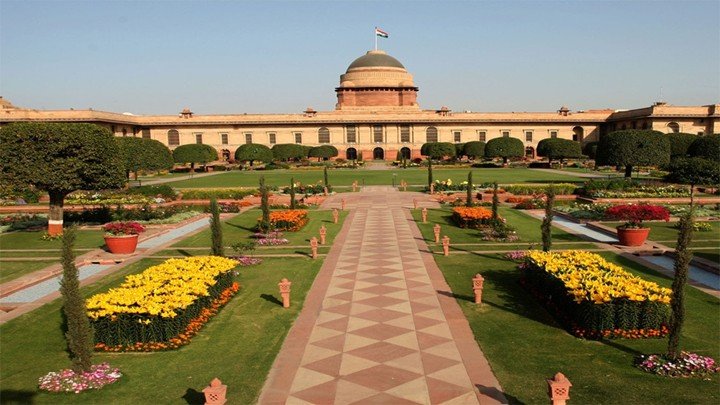
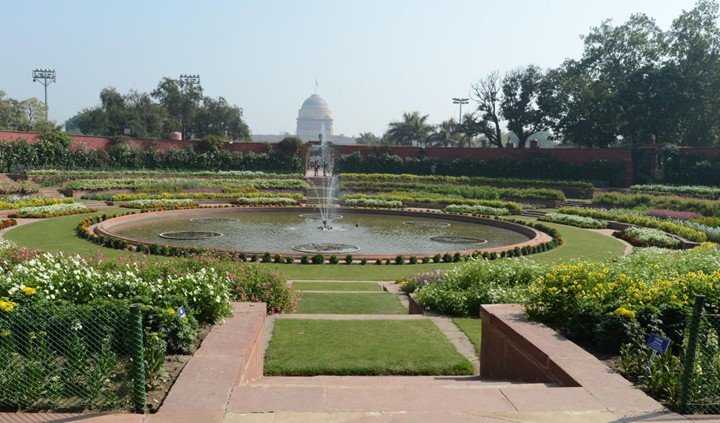
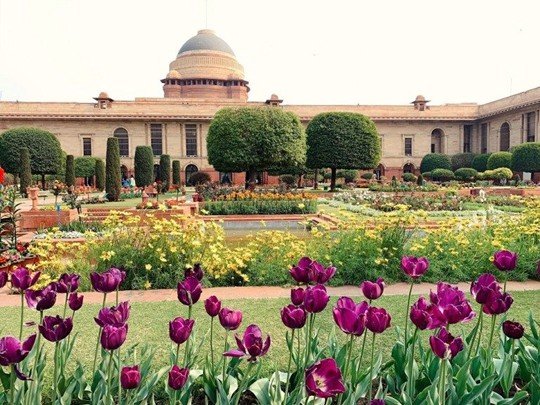
The Mughal Gardens, now officially known as Amrit Udyan, form an integral extension of the architectural composition. Designed collaboratively by Lutyens and horticulturist William Mustoe, the gardens combine Mughal charbagh planning with English landscape traditions. Geometric pathways, terraced lawns, axial water channels, fountains, reflective pools, and floral symmetry establish continuity between built form and nature.
Water functions both aesthetically and climatically by cooling surrounding spaces and visually extending the architecture into the landscape. The gardens soften the monumentality of the palace and create a transition between architecture and the natural environment.
Originally designed as exclusive imperial gardens, these landscapes now open annually to the public, transforming them into democratic cultural spaces that symbolize accessibility and national heritage.
Climatic Responsiveness and Environmental Design
Despite its monumental character, Rashtrapati Bhavan demonstrates sophisticated climatic intelligence. The building incorporates deep verandahs, shaded colonnades, thick thermal walls, courtyards, recessed openings, jaalis, and high ceilings to reduce heat gain and encourage natural ventilation.
The courtyards create microclimates that improve thermal comfort, while shaded transitional spaces reduce direct solar exposure. These passive design strategies reflect traditional Indian architectural wisdom adapted to a monumental governmental structure. Rashtrapati Bhavan therefore becomes an important example of environmentally responsive architecture long before sustainability emerged as a formal architectural discourse.
Rashtrapati Bhavan as a Democratic Symbol
Originally conceived as the Viceroy’s House, Rashtrapati Bhavan symbolized imperial authority over colonial India. Yet after independence in 1947, the building underwent one of the most significant symbolic transformations in architectural history. Rather than demolishing the structure, independent India reappropriated it as the residence of the President of the Republic.
This transformation altered the meaning of the architecture itself. What once represented colonial dominance now symbolizes constitutional governance, democratic continuity, and national identity. Rashtrapati Bhavan today stands not only as an architectural masterpiece but also as a physical narrative of India’s political evolution from empire to democracy.
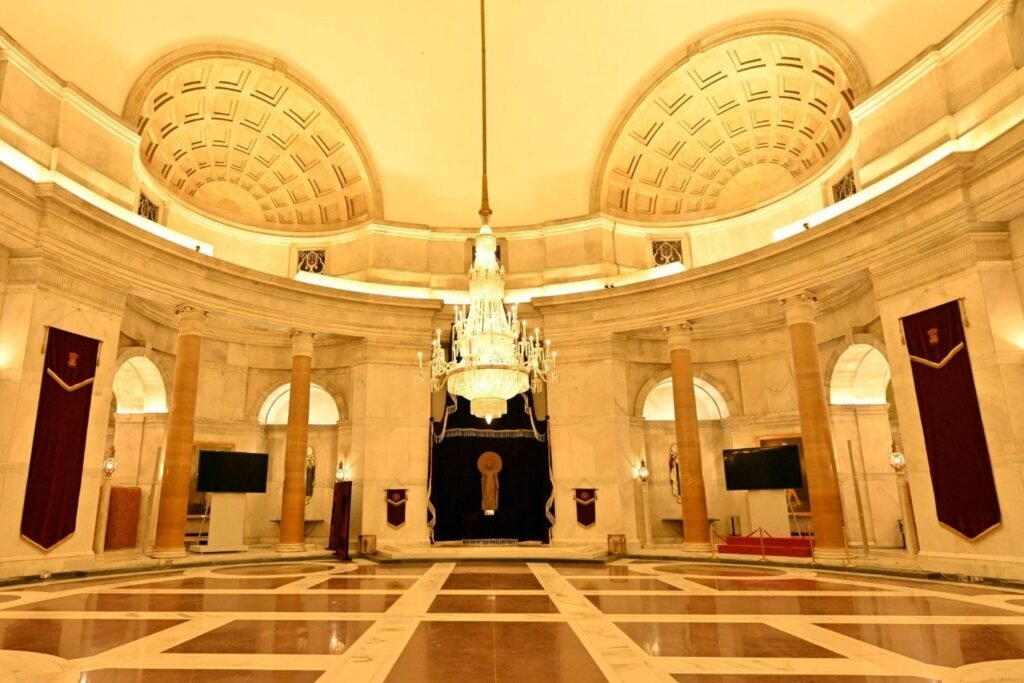
Rashtrapati Bhavan remains one of the world’s finest examples of integrated architecture and urban planning. Its monumental geometry, climatic adaptation, symbolic landscape design, material richness, and Indo-European synthesis combine to create a structure of extraordinary sophistication and significance.
Through its dome, colonnades, sandstone façades, Mughal Gardens, ceremonial axes, and spatial hierarchy, the building communicates far more than political authority. It narrates the story of empire, adaptation, nationalism, and democracy through architecture itself. Even today, the skyline of New Delhi continues to be defined by the great dome of Rashtrapati Bhavan — a structure where planning, symbolism, materiality, and identity converge into one of the most enduring architectural landmarks of modern India.
References
- Britannica. (n.d.). Rashtrapati Bhavan. Encyclopaedia Britannica. Retrieved May 15, 2026.
- Britannica. (n.d.). Presidential Palace, New Delhi, India. Encyclopaedia Britannica. Retrieved May 15, 2026.
- CN Traveller India. (2021, February 13). Rare photos from the construction of Rashtrapati Bhavan.
- Proptiger. (2022). Rashtrapati Bhavan: An architectural masterpiece.
- Rashtrapati Bhavan. (n.d.). Making of Rashtrapati Bhavan. President’s Secretariat, Government of India. Retrieved May 15, 2026.
- Wikipedia contributors. (n.d.). Rashtrapati Bhavan. Wikipedia. Retrieved May 15, 2026.
- Architectural Digest India. (2023). Inside the magnificent Rashtrapati Bhavan.
- Structurae. (n.d.). Rashtrapati Bhavan. Retrieved May 15, 2026.
- The Telegraph India. (2024). Rashtrapati Bhavan and the changing face of New Delhi.
- Times of India. (2024). Rashtrapati Bhavan replacing British-era portraits with India’s heroes.
- YouTube. (2023). The making of Rashtrapati Bhavan [Video].
Join our WhatsApp Channel for fastest updates: Join now