

Baku, Azerbaijan | Cities are now playing a central role in global climate action, according to a new report released by UN-Habitat during the thirteenth session of the World Urban Forum 13. The report reveals that 80 per cent of newly submitted Nationally Determined Contributions (NDC 3.0) now include well-developed urban climate measures, marking a major increase from 49 per cent in the previous NDC cycle.
Titled Urban Content in NDC 3.0: Cities at the Centre, the analysis examined 142 national climate plans submitted to the UNFCCC before April 2026. The findings underline a growing international understanding that while climate commitments may be drafted at national levels, real implementation takes place in cities through housing, infrastructure, transport systems, water management, and public services.
The report shows significant progress in urban adaptation strategies. Around 87 per cent of the submitted climate plans now recognize the role of cities in climate adaptation, compared to 54 per cent in the previous cycle. Governments are increasingly focusing on resilient infrastructure, biodiversity protection, flood management, and ecosystem restoration to prepare urban areas for escalating climate risks.
Urban mitigation measures have also expanded rapidly, appearing in 83 per cent of submissions. Key interventions include renewable energy adoption, electric mobility, sustainable transport systems, and circular economy initiatives. Interestingly, several rapidly urbanizing middle-income countries are leading ambitious urban mitigation efforts, while some high-income nations still integrate cities less prominently despite strong national emission reduction targets.
Housing emerged as one of the most important themes of the report. Nearly half of the NDC 3.0 submissions address housing and informal settlements, with emphasis on safe housing, slum upgrading, resilience, and land tenure security. This reflects growing recognition that the global housing crisis and climate crisis are deeply interconnected, particularly in rapidly urbanizing regions vulnerable to extreme weather and environmental stress.
Speaking at the launch, Anacláudia Rossbach stated that cities are increasingly recognized as essential to climate delivery mechanisms. She emphasized that stronger housing systems, resilient infrastructure, and community-led urban development are critical for translating climate commitments into real action on the ground.
The report also highlights that four out of five national climate plans now include at least one enabling mechanism for urban climate action, such as multilevel governance frameworks and local capacity-building. However, financing remains a major challenge, as only 19 per cent of NDCs currently include dedicated urban climate finance mechanisms.
Regional trends indicate uneven but notable progress. Asia now has 77 per cent of submitted NDCs featuring well-developed urban content, representing the world’s largest urban population coverage. Europe’s collective NDC also reflects stronger urban integration and multilevel governance priorities.
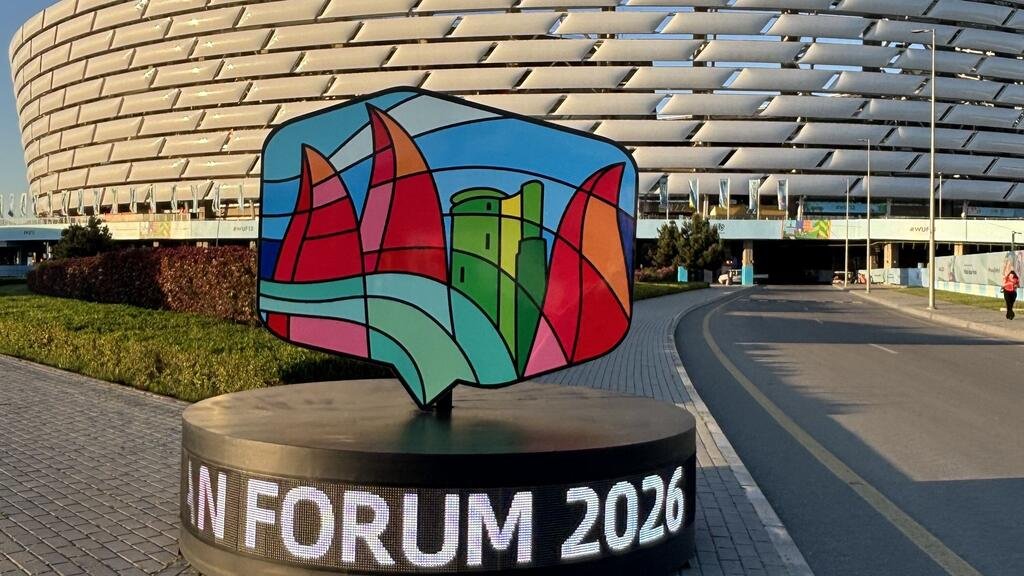
The report was launched during WUF13 in Baku, which attracted more than 21,000 participants on its opening day. Discussions throughout the forum continue to focus on the urgent need for resilient housing, sustainable urbanization, and climate-responsive city planning ahead of the upcoming COP31.
Source: UN-Habitat Report – Urban Content in NDC 3.0: Cities at the Centre
Also Read: WUF13 Opens in Baku with Global Focus on Housing Crisis and Urban Resilience
Join our WhatsApp Channel for fastest updates: Join now