
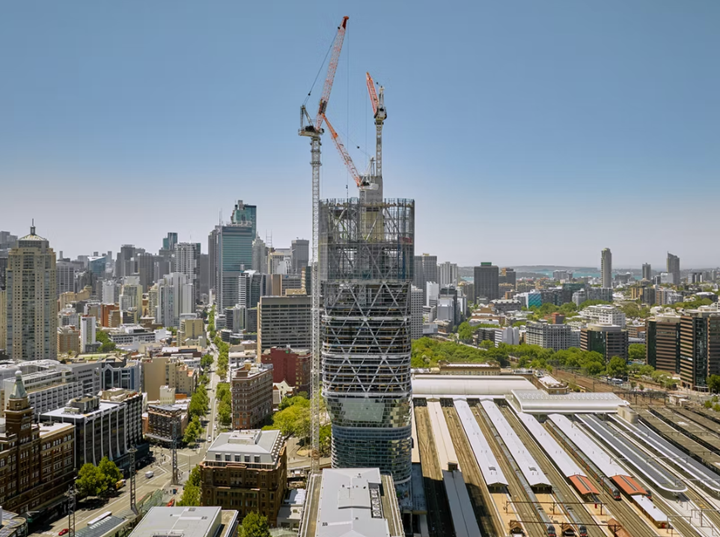
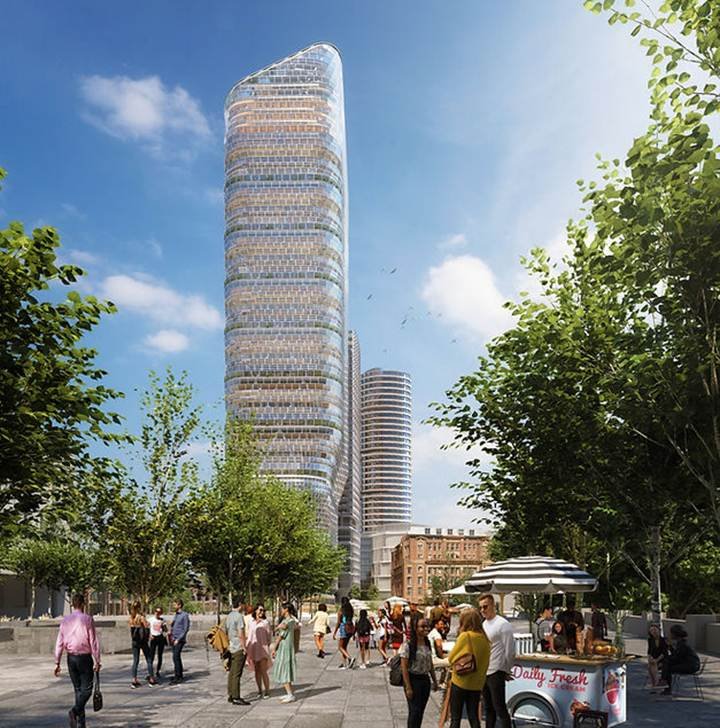
In the heart of Sydney, beside one of the busiest railway hubs in the country, a structure is quietly rewriting the rules of architecture. The Atlassian Central is not just another glass-and-steel tower piercing the skyline—it is a paradox. A 183-metre-tall skyscraper… made of timber.
At first glance, the claim seems almost absurd. Timber? In a 39-storey high-rise? For decades, the very idea of wood in tall buildings was dismissed due to concerns over fire, durability, and structural strength. And yet, here stands a project that is set to become the world’s tallest hybrid timber tower, challenging every conventional belief about what cities can be built from.
A BUILDING INSIDE A BUILDING
The real intrigue of Atlassian Central lies not just in its height, but in its hidden anatomy. Engineers describe it as a “timber building inside a much larger building.”
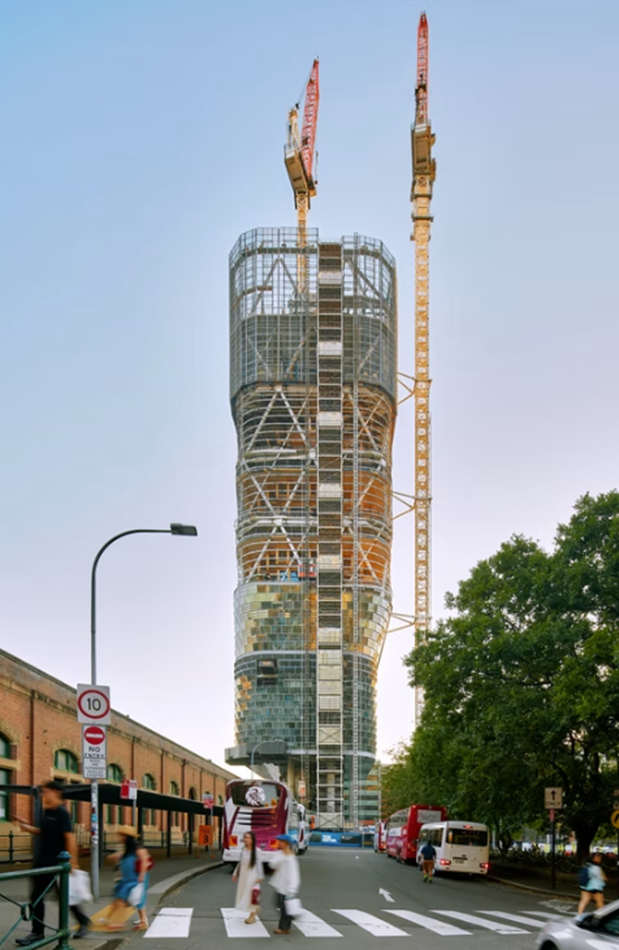
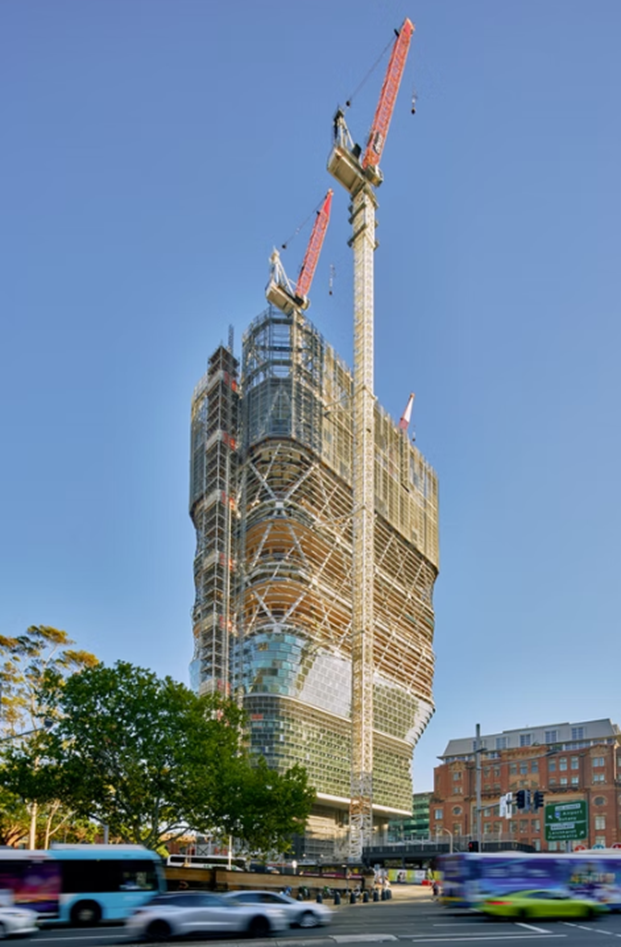
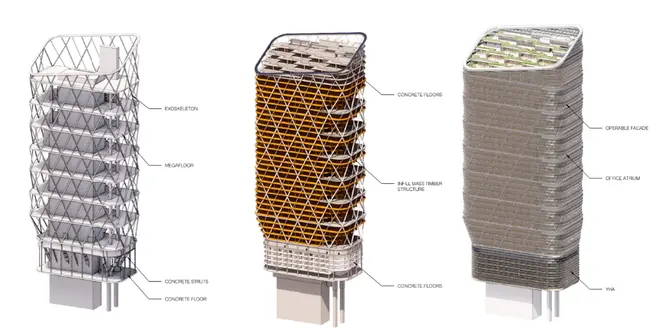
Instead of relying solely on timber, the tower adopts a hybrid approach—a structural symphony of cross-laminated timber (CLT), glulam beams, steel, and concrete. A rigid concrete and steel core anchors the building, while a steel exoskeleton wraps around it like an external spine. Between these, entire zones—called “timber habitats”—are inserted, spanning multiple floors.
These habitats are not decorative features. They form the heart of the building—21 floors of engineered timber, carefully layered and “sandwiched” between massive steel and concrete plates. Each piece is precision-manufactured, transported, and assembled almost like a giant three-dimensional puzzle, clicking into place high above the ground.
WHY TIMBER—AND WHY NOW?
This is not a nostalgic return to wood, but a technological leap forward. The timber used here is not ordinary—it is engineered wood, designed to rival steel in strength and outperform concrete in sustainability.
Over 30,000 cubic metres of timber are being used, significantly reducing embodied carbon compared to conventional skyscrapers. This is crucial in an era where buildings are responsible for a major share of global emissions. Atlassian Central is not just a structure; it is a statement—that future cities may grow upward without increasing their carbon footprint.
Beyond sustainability, timber introduces a human dimension rarely found in corporate towers. The building integrates natural ventilation, open-air terraces, and biophilic environments, transforming the workplace into something closer to a vertical ecosystem than a sealed glass box.
THE IMPOSSIBLE SITE
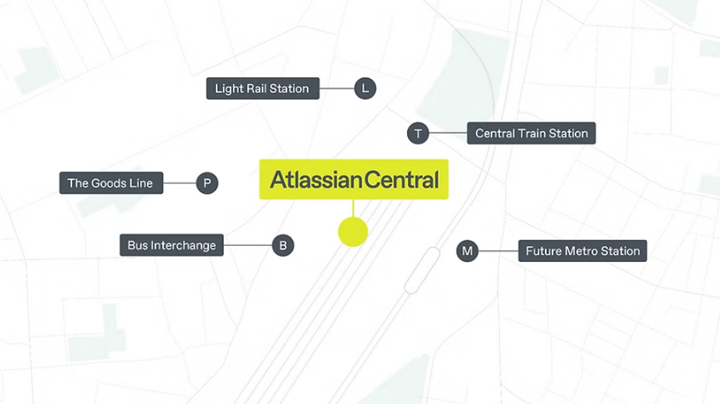
If the material choice wasn’t challenging enough, the location adds another layer of complexity. The tower is being constructed directly above a live railway corridor at Central Station, one of the busiest transport interchanges in Australia.
Imagine building a 40-storey structure not on solid ground, but over a constantly moving, vibrating network of trains. Every load, every vibration, every construction sequence must be calculated with extreme precision.
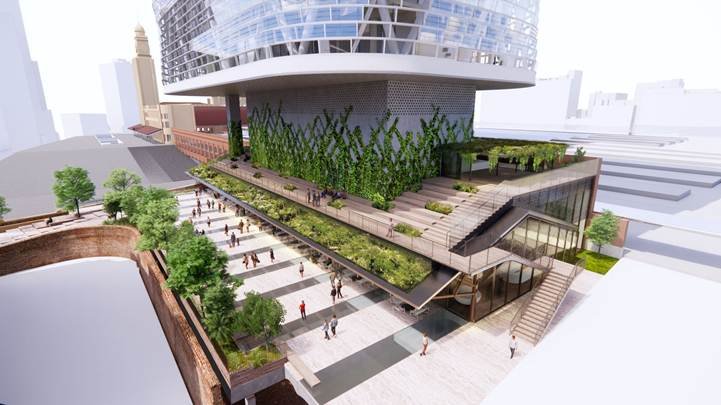
The solution? A seven-storey concrete podium forms the base, stabilizing the structure while allowing construction to progress upward without disrupting the city below.
CONSTRUCTION AS A CHOREOGRAPHY
Perhaps the most fascinating aspect is not the design—but the way it is being built. Unlike traditional skyscrapers that rise floor by floor, Atlassian Central follows a more complex choreography.
Steel and concrete elements advance upward first, forming the structural skeleton. Then, timber modules are inserted within this framework—sometimes even constructed simultaneously at different levels. This overlapping process reduces construction time and demonstrates a new hybrid methodology for high-rise construction.
It is less like stacking floors—and more like weaving together multiple systems in mid-air.
Also Read: Sydney Fish Market Reimagined: A Living Market, a Civic Stage, and a New Harbour Icon
THE NUMBERS THAT MAKE IT UNBELIEVABLE
Atlassian Central is not just an architectural experiment—it is a numerical contradiction to everything we thought we knew about skyscrapers.
Start with its sheer scale.
The tower rises to 183 metres (≈600 feet)—nearly twice the height of earlier timber towers globally.
It spans 39–41 storeys, depending on how levels are counted, with over 75,000 square metres of usable floor area—equivalent to nearly 10 football fields stacked vertically.
Now consider the material paradox:
More than 30,000 cubic metres of engineered timber are being used—enough wood to build thousands of homes, yet compressed into a single vertical system.
But here’s where it gets more intriguing:
- Only 21 floors are actually timber-dominant
- These are grouped into 7 “timber habitats”, each spanning 4 levels
- Each habitat forms a 15-metre-high vertical village inside the tower
So what appears to be a timber skyscraper… is actually a layered hybrid machine, where timber exists in controlled zones rather than across the entire height.
THE HIDDEN ENGINEERING LOGIC
To understand the real genius, you have to look at the structural breakdown:
- Core: Reinforced concrete spine (handles gravity + services + stability)
- Exoskeleton: Steel frame resisting lateral wind loads
- Infill Zones: Mass timber (CLT + Glulam) forming habitable floors
This means timber is not carrying the entire building load—a critical fact often overlooked.
Instead, the load distribution works like this:
- Concrete core → vertical load-bearing
- Steel exoskeleton → lateral stability (wind + seismic)
- Timber → floor systems + spatial environments
This hybridization allows the building to go beyond what pure timber ever could.
COST, TIME, AND CONSTRUCTION SCALE
The financial and logistical scale is just as staggering:
- Estimated Cost: ~$1.8 billion (AUD)
- Construction Start: 2022
- Expected Completion: 2026
But what truly disrupts conventional construction is the speed logic:
Instead of building floor-by-floor, the project uses a “jump construction method”:
- Steel + concrete structure rises 5 levels at a time
- Timber is then inserted retrospectively into these zones
This overlapping process significantly reduces time compared to traditional skyscraper construction.
SUSTAINABILITY BY THE NUMBERS
This is where the project shifts from impressive to revolutionary:
- ~50% reduction in embodied carbon compared to conventional towers
- Designed for 100% renewable electricity from day one
- Operable façade enabling natural ventilation, reducing HVAC dependency
- Integration of photovoltaic panels into façade systems
In simple terms:
This building is not just consuming less energy—it is redefining how tall buildings interact with climate.
OCCUPANCY & FUNCTIONAL COMPLEXITY
The building isn’t just an office tower—it’s a mixed-use vertical ecosystem:
- Headquarters for Atlassian
- 500-bed co-living / hostel accommodation in lower floors
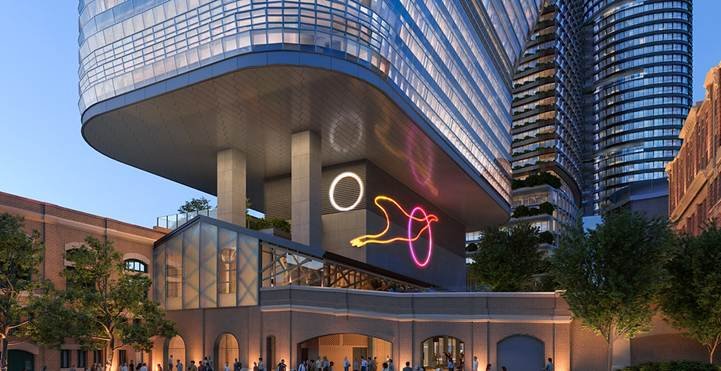
- Public retail and activated ground plane
- Integrated heritage structure (restored Parcels Shed as lobby)
This means the building operates across multiple time cycles—day (office), night (co-living), and continuous public access.
THE SITE CONSTRAINT THAT CHANGES EVERYTHING
Now consider perhaps the most unbelievable statistic—not about the building, but its ground:
It is constructed directly above one of Australia’s busiest railway stations.
This introduces:
- Continuous vibration loads
- Zero tolerance for foundation error
- Complex load transfer through a 7-storey concrete podium
In most cases, skyscrapers rely on stable ground.
Here, the building is effectively hovering over infrastructure in motion.
A NEW URBAN PROTOTYPE
The tower is part of Sydney’s emerging Tech Central precinct, envisioned as a hub of innovation, connectivity, and future-forward infrastructure. It will house offices, co-living spaces, and public areas, blending private corporate space with urban life.
More importantly, it signals a shift in architectural thinking. Skyscrapers are no longer just about height or skyline dominance—they are becoming instruments of environmental responsibility, human wellbeing, and material experimentation.
BUT HERE’S THE QUESTION…
As the structure climbs higher and the timber elements slot into place, one question lingers—quiet, unsettling, and fascinating:
If a 183-metre tower can be built from timber today… what is stopping entire cities from being built this way tomorrow?
Or perhaps more provocatively—
Is this truly a timber skyscraper… or an illusion carefully engineered within steel and concrete?
REFERENCES
- Atlassian Central. (n.d.). Wikipedia.
- Williams, A. (2026). World’s tallest hybrid timber tower reaches 600 ft with innovative design. New Atlas.
- Sen, E. A. (2026). Atlassian Central: World’s tallest hybrid timber skyscraper. Illustrarch.
- Wood Central. (2026). Atlassian’s timber habitats now tower over Sydney’s Central Station.
- Doka. (n.d.). Atlassian Central: Engineering excellence for the world’s tallest hybrid timber tower.
- Build Sydney. (n.d.). Atlassian Central HQ – Sydney’s timber skyscraper.
- WIEHAG. (n.d.). Atlassian Central Sydney – world’s tallest hybrid timber tower.
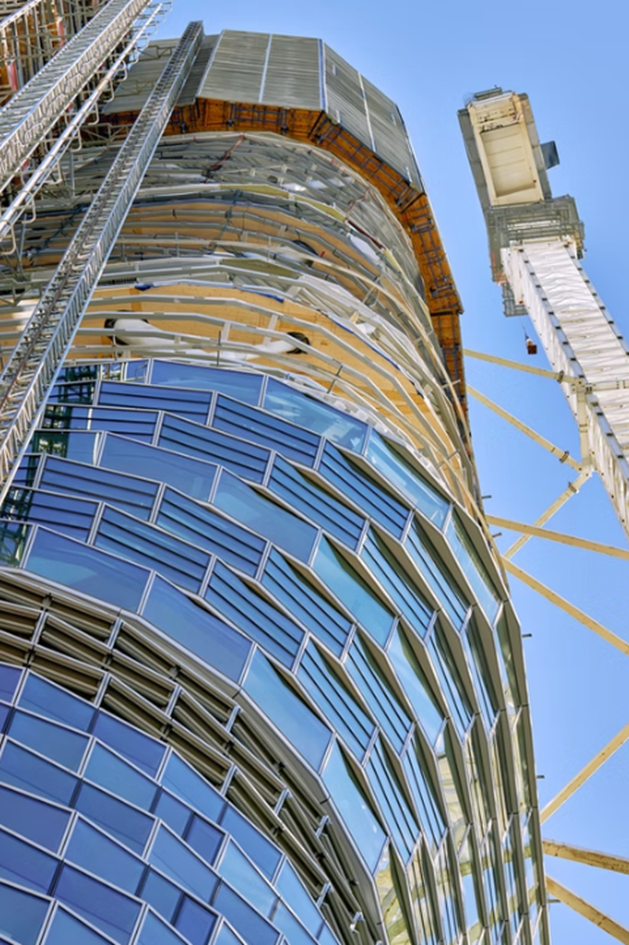
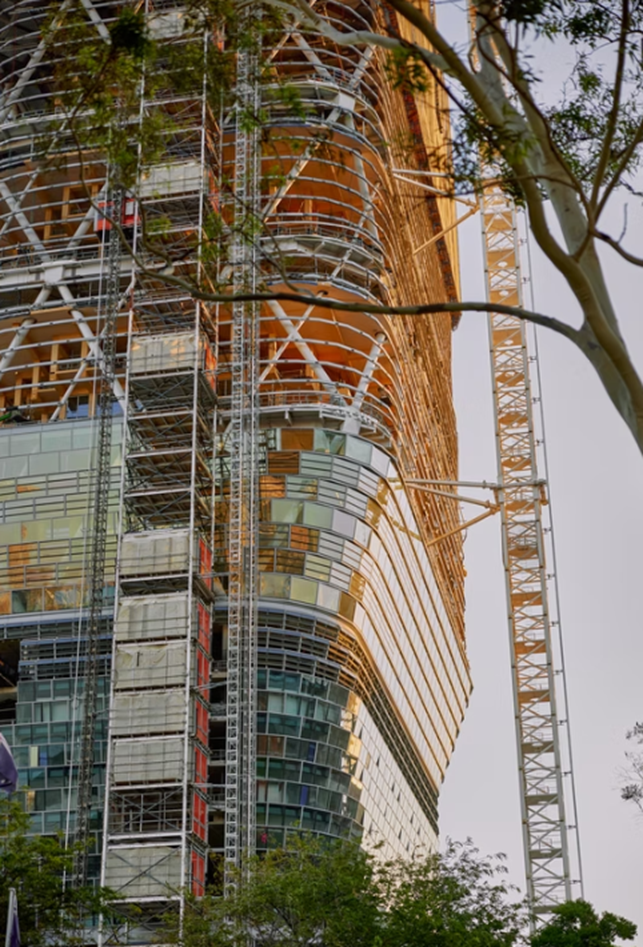
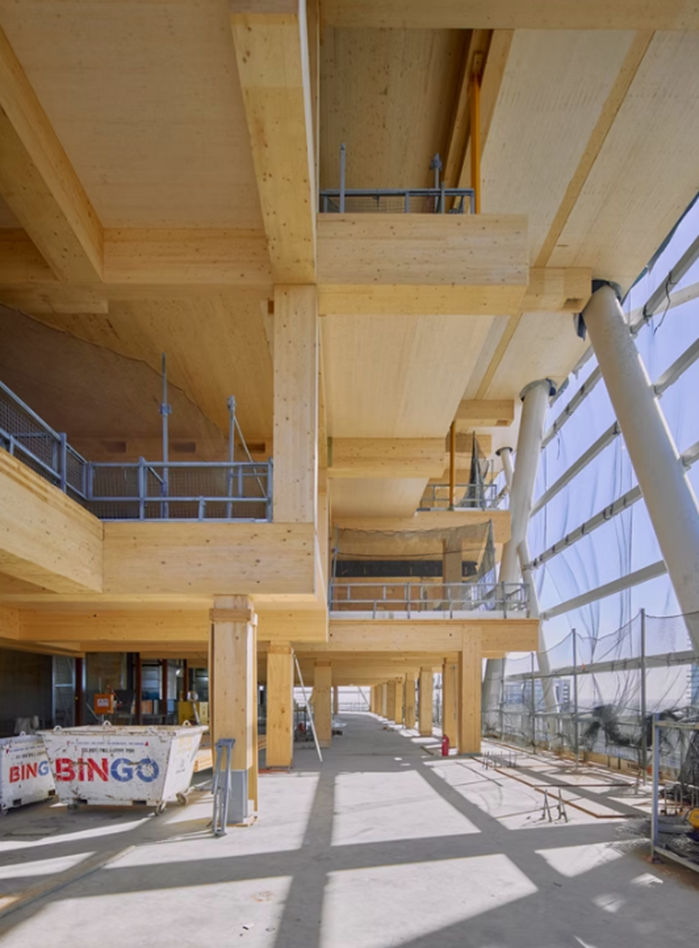
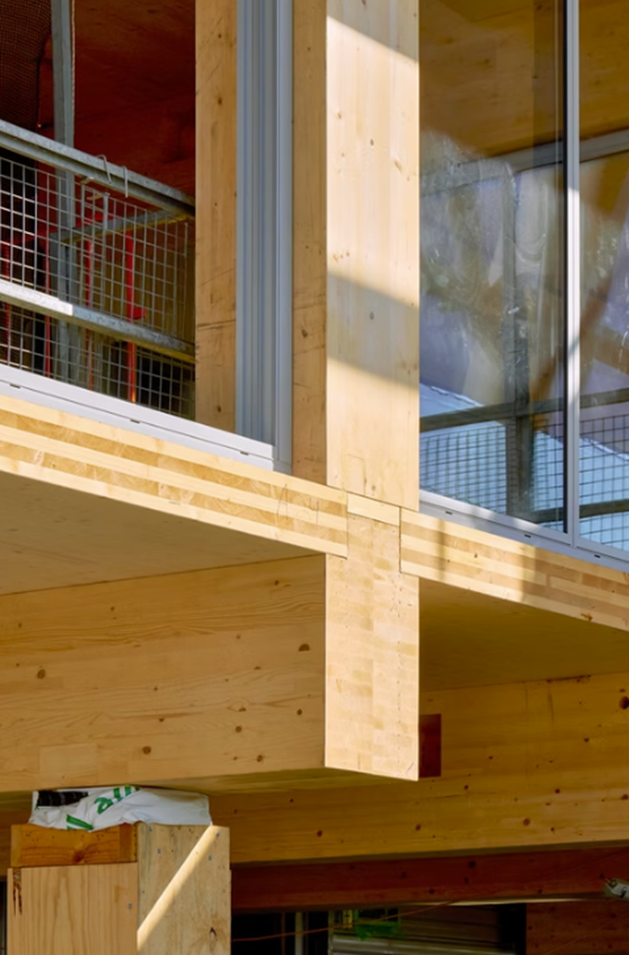
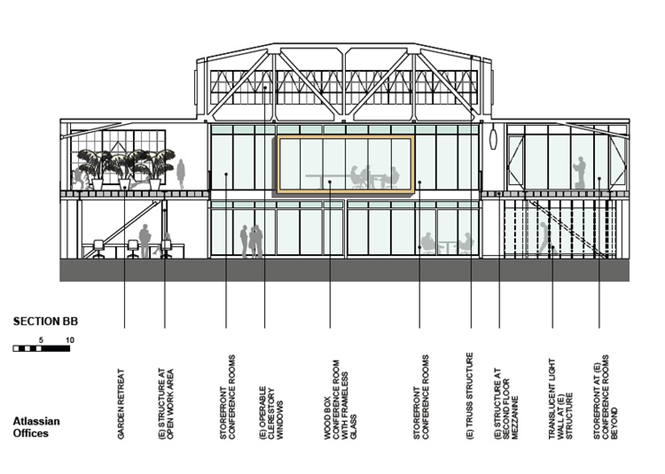
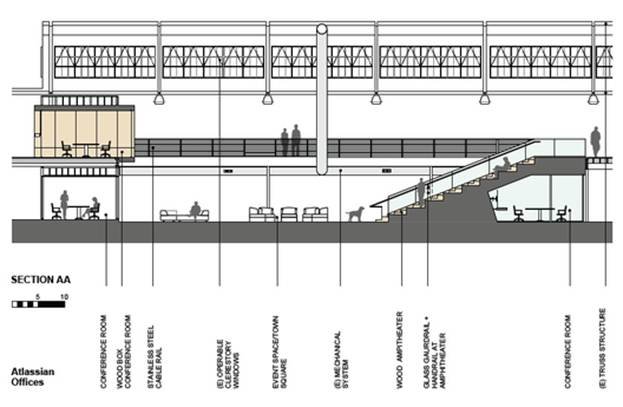
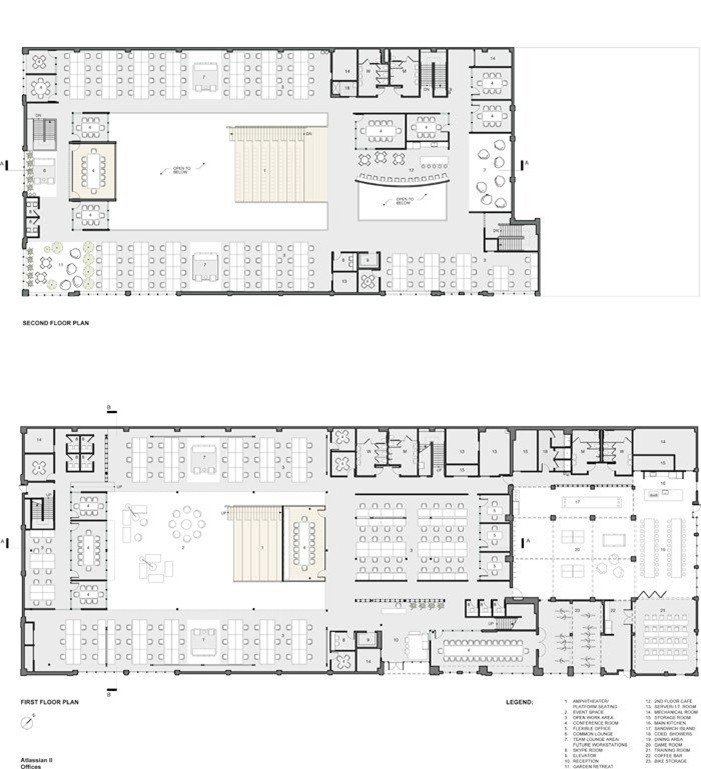
PART SECTIONS OF THE OFFICE BLOCK
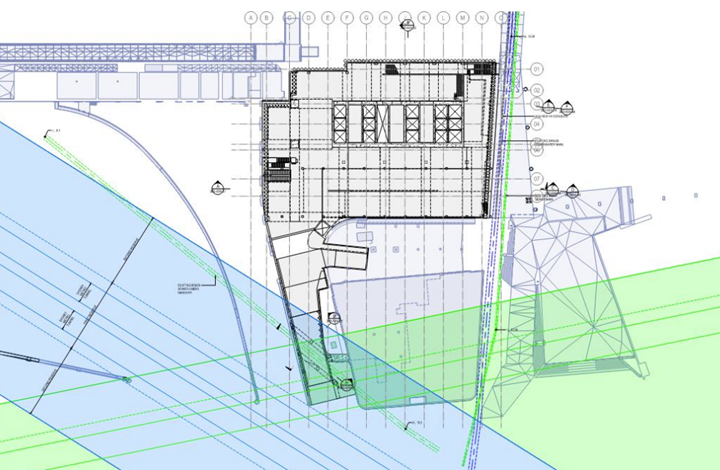
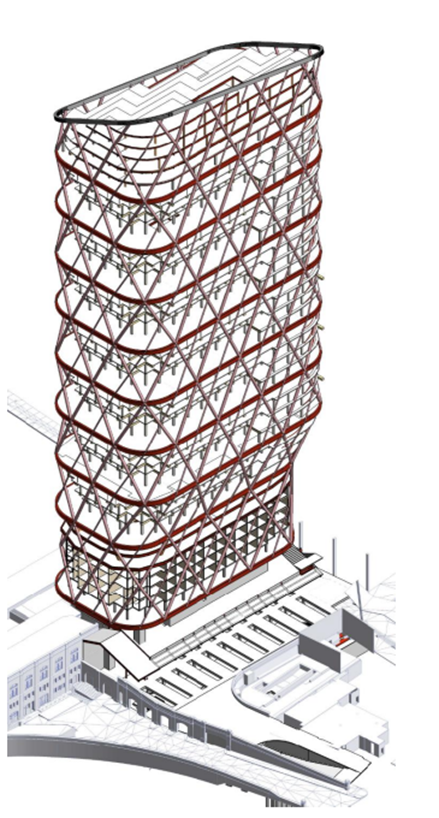
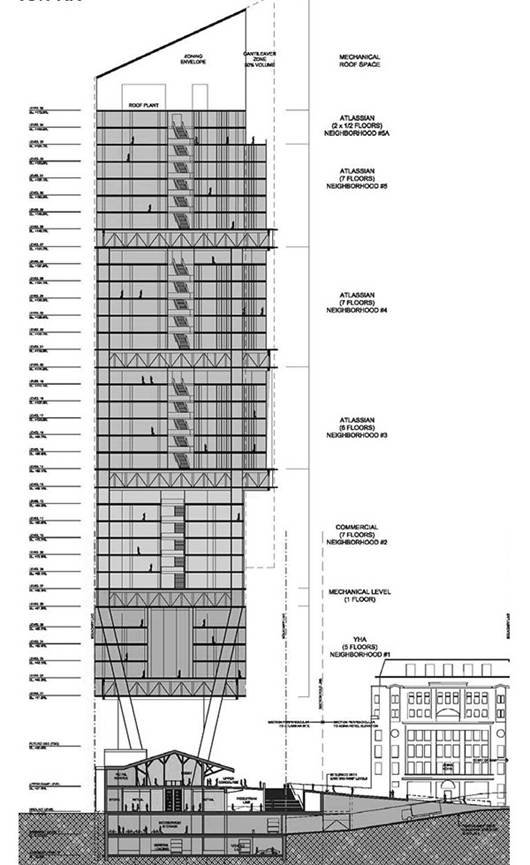
STRUCTURAL CONCEPT | SECTION OF THE TOWER
Also Read: The Bird’s Nest: Architecture, Engineering, and the Making of a Global Icon