
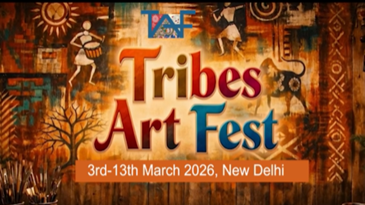
The Tribes Art Fest 2026, held from March 3 to 13 at the historic Travancore Palace in New Delhi, brought together India’s rich tribal artistic traditions under one roof. Organised by the Ministry of Tribal Affairs in collaboration with the National Gallery of Modern Art (NGMA) and FICCI, the festival featured more than 75 tribal artists and over 1,000 artworks representing 30+ indigenous art forms.
The event transformed the venue into a vibrant cultural landscape, where visitors experienced live art-making, traditional storytelling, and the use of natural pigments. Beyond a conventional exhibition, the festival functioned as a dynamic platform connecting traditional knowledge systems with contemporary audiences, while also enabling artists to access markets and recognition.
Beyond Exhibition: Dialogue, Learning, and Engagement
The festival extended beyond displays, hosting panel discussions on themes such as Tribal Art Revival & Sustainable Futures, Tribal Art in Contemporary Spaces, and Livelihoods & Market Linkages. Workshops, illustrated talks, and live demonstrations enriched the experience, while over 100 tribal art students participated in curated walkthroughs and mentorship sessions with senior artists.
Warli Art: Geometry Rooted in Nature
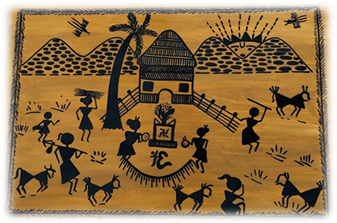
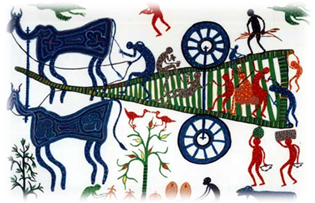
Among the highlights was Warli painting, a traditional art form from Maharashtra known for its minimalistic geometric language. Veteran artist Madhukar Rambhau Vadu, who has practiced the craft for nearly five decades, emphasized its deep connection to nature and ancient traditions. Using rice paste on earthen surfaces, Warli art captures scenes of farming, rituals, and community life through circles, triangles, and squares—echoing prehistoric visual storytelling.
Masks and Mythology: Rabha & Tamang Traditions
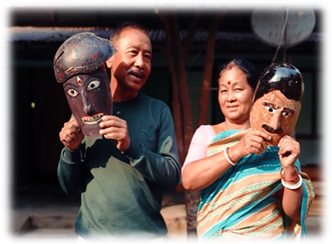
The festival also showcased striking mask-making traditions from the Rabha and Tamang communities. Crafted using wood, bamboo, clay, and natural pigments, these masks represent deities, spirits, and mythological figures. Artist Shanti Ram Rabha highlighted how these masks are integral to ritual performances, blurring the line between performer and deity while preserving centuries-old cultural narratives.
Gond Art: Narratives in Pattern and Colour
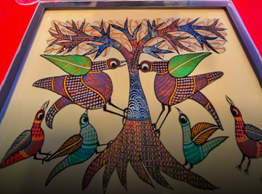
Gond art from Madhya Pradesh captivated audiences with its intricate patterns of dots and lines forming animals, forests, and folklore-inspired narratives. Young artist Japani Shyam Hurley demonstrated how the tradition continues to evolve while remaining rooted in community memory and ecological consciousness. The art form’s recognition through a Geographical Indication (GI) tag underscores its cultural significance and regional identity.
Bhil Art: A Pointillist Universe
Bhil paintings, among India’s oldest tribal art forms, stood out for their distinctive dot-based compositions. Each dot symbolizes elements of nature, creating vibrant depictions of animals, deities, and daily life. Artist Ram Singh Bhavor described how such platforms not only provide economic opportunities but also foster cultural exchange among artists from different regions.
A Platform for Living Traditions
The Tribes Art Fest 2026 reaffirmed that tribal art is not merely a relic of the past but a living, evolving expression of community identity. Each artwork reflected a unique worldview—interwoven with nature, mythology, and lived experiences.
By bringing artists, students, and audiences together, the festival played a crucial role in preserving, promoting, and recontextualizing India’s indigenous art traditions in contemporary cultural discourse.
Also Read: PM Narendra Modi to Flag Off New Amrit Bharat and Express Train Services from Tiruchirappalli