

The India Rankings 2025, released under the National Institutional Ranking Framework (NIRF) by the Ministry of Education, have once again spotlighted the leading institutions in the field of Architecture & Planning. These rankings underline the progress, research contributions, and academic excellence of institutions that are shaping the future of design, cities, and sustainable development in India.
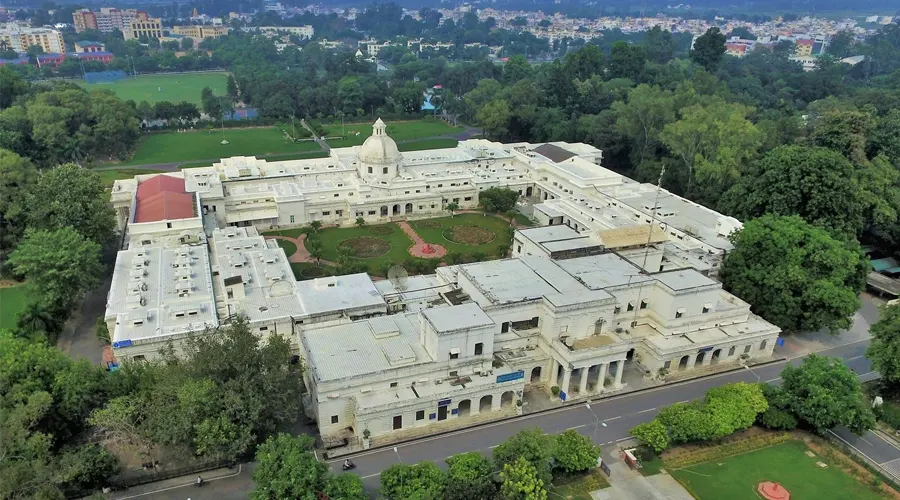
At the top of the list, IIT Roorkee has secured the first position for the fifth consecutive year (2021–2025). With its Department of Architecture & Planning established in 1956, IIT Roorkee has consistently set benchmarks in sustainable design, smart city research, and planning innovations, making it the most sought-after institute in this field. Following closely is NIT Calicut, which has developed a strong reputation since establishing its Department of Architecture & Planning in 1996. The institute focuses heavily on heritage conservation, urban design, and green building technologies, strengthening its position as a leader in South India.
IIT Kharagpur holds the third rank, carrying forward its legacy as the first IIT to introduce an architecture program in 1952. The institute is well-regarded for its pioneering work in regional planning, housing studies, and transportation planning. Ranking fourth is IIEST Shibpur, one of India’s oldest engineering institutions established in 1856, whose Architecture Department has carved a niche in urban planning, sustainable landscapes, and infrastructure design, especially in Eastern India. Jamia Millia Islamia, New Delhi, at fifth position, stands out for its Faculty of Architecture and Ekistics, which blends traditional and modern approaches and is recognized for impactful research in housing policy, urban regeneration, and community-based development projects.
At sixth, CEPT University, Ahmedabad, holds a distinguished reputation in architectural and urban studies. Established in 1962, CEPT is globally recognized for its specialized programs in architecture, urban planning, interior design, and conservation, and is known for fostering innovation and cross-disciplinary design thinking.
NIT Rourkela has secured the seventh position, marking its steady rise in architectural education. The institute emphasizes sustainable infrastructure, technology integration in design, and strong research in planning for industrial and developing regions. At eighth place, the School of Planning and Architecture (SPA), New Delhi, maintains its legacy as one of India’s premier specialized institutions, excelling in urban and transport planning, design innovation, and policy-driven research since 1959.
The ninth position is held by NIT Tiruchirappalli (NIT Trichy), a leading technical institute in Tamil Nadu, which has built a reputation for integrating engineering expertise with architectural education, especially in structural design, sustainable technologies, and urban development. Completing the top 10 list is the Visvesvaraya National Institute of Technology (VNIT), Nagpur, recognized for its architecture department’s contributions to urban planning, housing, and environment-sensitive design in central India.
The inclusion of CEPT University, NIT Rourkela, NIT Trichy, and VNIT Nagpur alongside traditional leaders like IITs and SPAs underscores the diversity and geographic spread of excellence in architectural education across India. Introduced in 2018, the Architecture & Planning rankings continue to provide valuable insights into institutions that are not only shaping India’s urban future but also addressing global challenges in sustainability, design innovation, and planning.
Full rankings are available at: NIRF Architecture & Planning Rankings 2025