

In a significant move towards modernizing India’s highway infrastructure, the Ministry of Road Transport & Highways has notified the National Highways Fee (Determination of Rates and Collection) (Second Amendment) Rules, 2026, aimed at strengthening toll compliance through digital enforcement mechanisms.
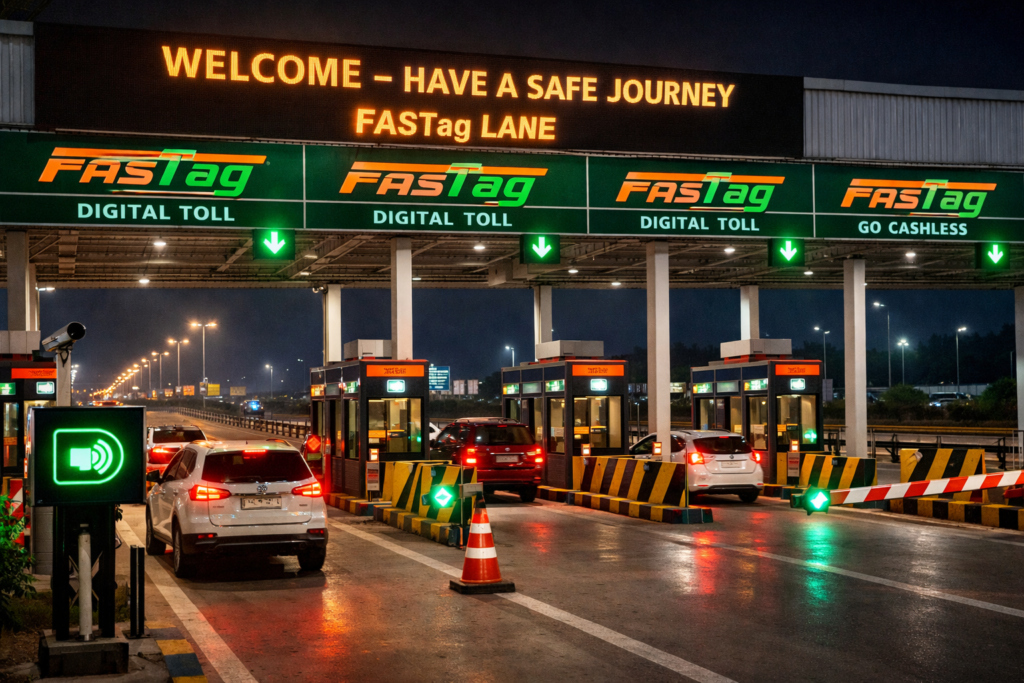
The amendment, which came into effect on March 17, 2026, introduces a comprehensive, technology-driven framework to ensure efficient and transparent toll collection across National Highways.
A key highlight of the revised rules is the formal introduction of the term “unpaid user fee”, defined as toll charges applicable to a vehicle whose passage is recorded by Electronic Toll Collection (ETC) systems but remains unpaid.
E-Notice System for Toll Recovery
To address unpaid tolls, the government has introduced a structured recovery mechanism under Rule 14. This includes a digital e-notice system, where vehicle owners will receive notifications via SMS, email, or mobile applications. These notices will contain details such as vehicle identification, location of toll crossing, date, and payable amount.
Additionally, all notices will be accessible through a designated online portal, ensuring transparency and accessibility.
Penalty Structure and Compliance Window
Under the new rules, unpaid toll charges will attract a penalty of double the original toll amount. However, to promote prompt compliance, vehicle owners can settle dues within 72 hours of receiving the e-notice by paying only the original toll amount without any penalty.
Integration with VAHAN Database
A major technological advancement under the amendment is the integration of the National Electronic Toll Collection system with the VAHAN database, enabling seamless identification of vehicles and automated enforcement of unpaid toll dues.
If dues remain unpaid beyond 15 days, and no grievance is filed, the pending amount will be recorded in the VAHAN system. This could lead to restrictions on vehicle-related services until the dues are cleared.
Grievance Redressal Mechanism
To ensure fairness, the rules provide a grievance redressal mechanism. Vehicle owners can submit complaints within 72 hours of receiving the e-notice through the online portal. Authorities are required to resolve such grievances within five days, failing which the claim for unpaid toll will lapse.
Towards Barrier-Free Tolling
The amendment supports India’s transition towards a barrier-free tolling ecosystem, enhancing operational transparency, improving compliance, and boosting investor confidence in highway infrastructure.
Also Read: NHAI Awards Contract for 7 km Gangaikonda Cholapuram Bypass on NH-81 in Tamil Nadu