In a significant policy shift affecting India’s construction and urban development sector, the Government of India has replaced the long-standing National Building Code (NBC) with a new framework titled the National Building Construction Standards (NBCS). The move, notified recently, aims to transform regulatory approaches from prescriptive norms to more flexible, performance-based guidelines.
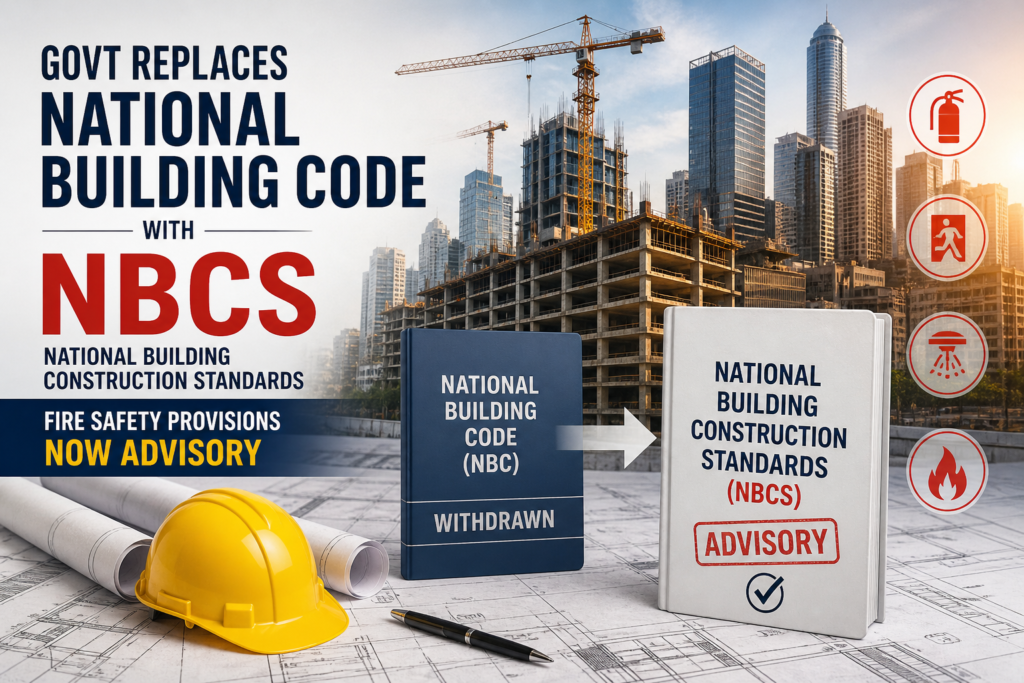
The earlier NBC has been withdrawn following directions from the Deregulation Cell under the Cabinet Secretariat. One of the key reasons behind this transition was the ambiguity associated with the term “Code,” which often led to its provisions being interpreted as legally binding, despite technically being voluntary. This frequently resulted in legal disputes.
Under the newly introduced NBCS, provisions are positioned as advisory guidelines rather than mandatory requirements. A major concern emerging from this shift is the treatment of fire and life safety norms. While these provisions have been retained in the standards after strong opposition from safety experts, their enforceability has been diluted. The language has changed from “shall” (mandatory) in NBC to “should” (recommendatory) in NBCS, significantly altering their legal weight.
Another notable revision relates to applicability thresholds. Previously, fire and life safety norms applied to residential buildings above 15 metres. Under NBCS, this threshold has been raised to 24 metres, potentially reducing the number of buildings required to comply with these safety provisions.
The government has justified the overhaul by citing evolving urban conditions, technological advancements, and changing socio-economic needs since the last NBC revision in 2016. The new framework emphasizes a performance-oriented approach, giving states and local authorities greater autonomy in implementation, particularly since construction remains a state subject.
However, experts have expressed caution. With reduced central prescriptiveness, state authorities will now need to develop detailed compliance mechanisms independently, raising questions about consistency and enforcement across regions.
The shift marks a fundamental transition in India’s building regulation philosophy—prioritizing flexibility and innovation, but also placing greater responsibility on local governance systems to ensure safety and compliance.
Also Read: DSEU Diploma Admissions 2026-27 Begin May 4 | 10th Pass Eligible
Join our WhatsApp Channel for fastest updates: Join now