

In the previous part of this exclusive conversation, A.K. Jain (Former commissioner (Planning) DDA) reflected on Delhi’s planning history, the evolution of its master plans and the institutional framework that has shaped the city. Continuing that discussion, the conversation now moves into some of the most persistent challenges facing Delhi—from unauthorized colonies and informal settlements to weak implementation, political interference, rehabilitation, emerging technologies and the need to rethink the city’s planning institutions.
In this part, Jain also discusses his experience with slum rehabilitation policies, the evolution of the PPP model, his work and observations from international forums, the role of technology in contemporary planning, his books on Delhi, and the lessons that young planners and professionals should carry forward.
Unauthorized Colonies and the Politics of Planning
TheAPN: You explained the process through which the Master Plan developed. But while planning was taking place, unauthorized colonies and slums were also developing in Delhi. How did this development take place outside the planning process? Apart from the refugee colonies that were formally allotted by the government, how did unauthorized areas, JJ clusters and slums develop?
A.K. Jain: Delhi has around 1511 unauthorized colonies and 367 villages, and many of which have effectively become unauthorized colonies. When the first Master Plan was prepared in 1962, around 112 unauthorized colonies were identified. The Master Plan said that Delhi was facing a major housing shortage, so these colonies could be regularized subject to certain conditions. Layout plan or building plans have to be approved and land ownership was to be granted along with the provision and basic services such as electricity, sanitation and water supply.
Later, In the 1970s and 1980s, around 657 colonies were regularized. The justice Nanavati Committee recommended that instead of rewarding illegal construction through regularization, penalties and development charges should be recovered. The government agreed, but recovery of development and land charges could not be done.
However, these colonies were subsequently incorporated into the 2001 Master Plan. In 2008, provisional certificates were distributed to around another 800 unauthorized colonies. These have now grown into 1511 colonies. The current list excludes the colonies in Zone O (River zone), affluent colonies and those located in the Ridge or Preserve Forest areas.
According to the Gazette notification dated 6 April, 2026, the colonies are to be approved on an “as is where is” basis, and there is no requirement for preparation and submission of a layout plan. The building plans can also be approved through a fast-track process.
These provisions are may be contrary to the Delhi Development Act, Delhi Municipal Corporation Act, Unified Building Bye Law and Delhi fire service act. Buildings have been constructed on lands that may be government land, road, right of way or a park. This puts a challenge for the architects and Planners to ensure and point out that the regularization process does not violates the Delhi Development Act, the Delhi Master Plan or other legislation.
What Baku Taught Me About Discipline
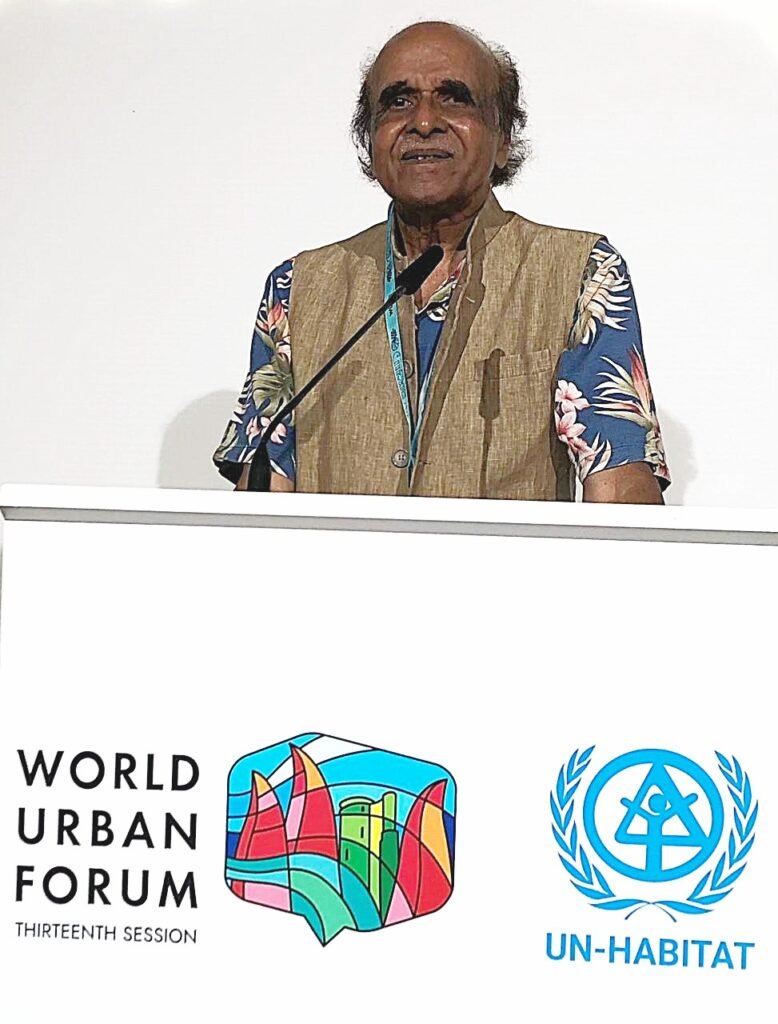
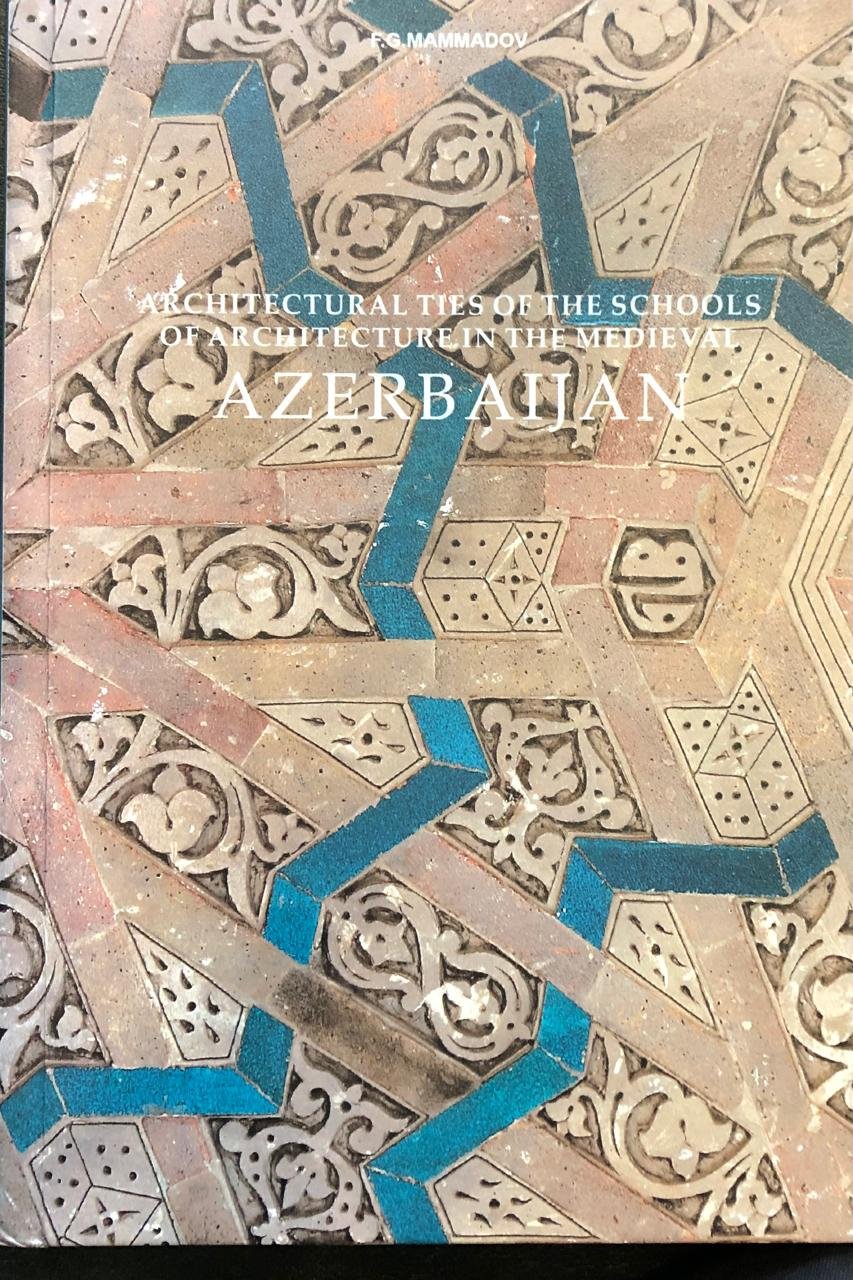
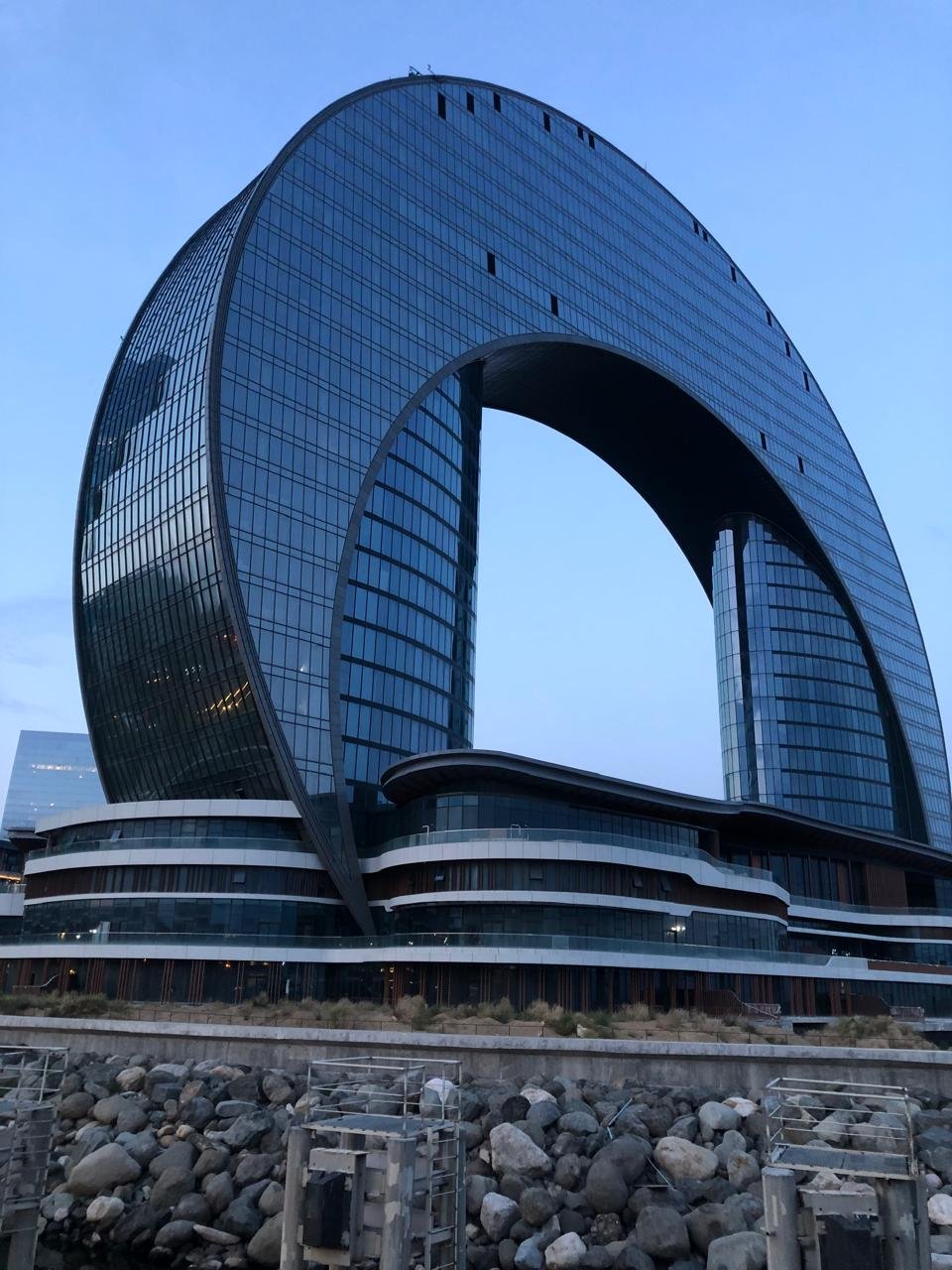
I attended the world urban forum in Baku recently. Like Shahjahanabad, the old city with monuments, mosques, heritage, parks, restaurants, shops, etc. attracts a huge number of tourists. There I did not see any unauthorized construction or dangerous buildings.
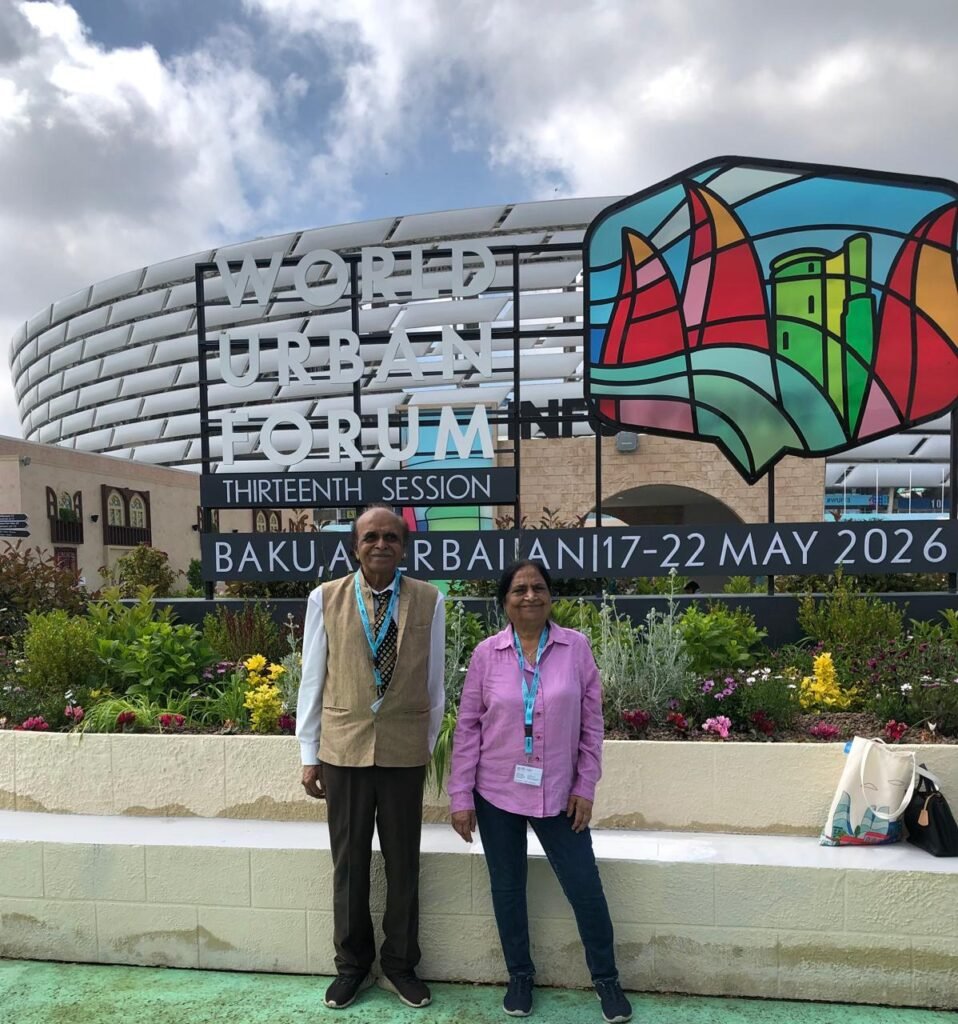
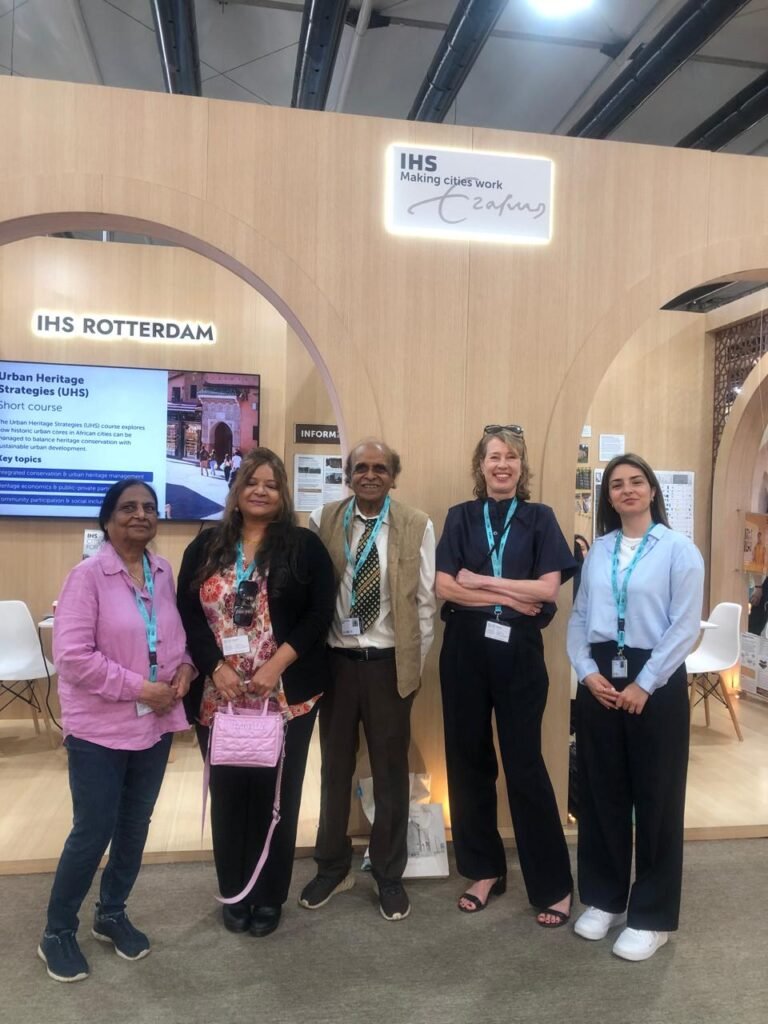
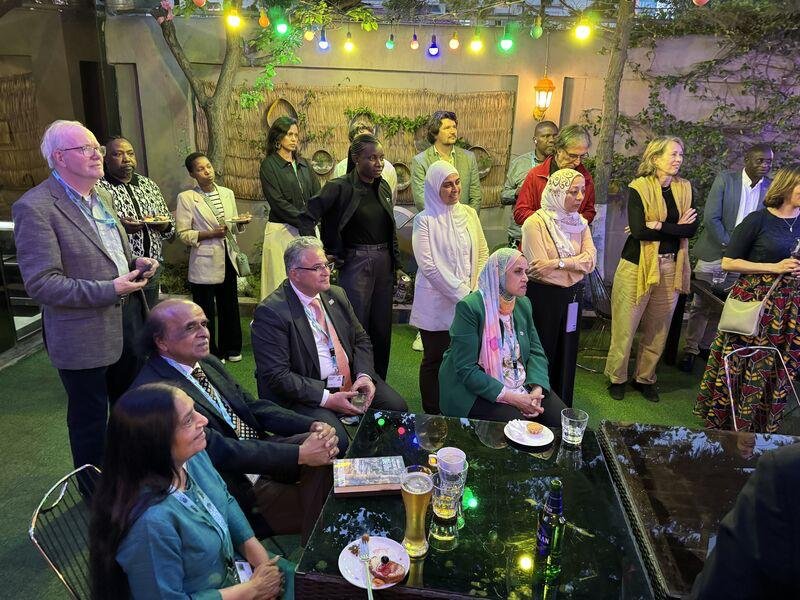
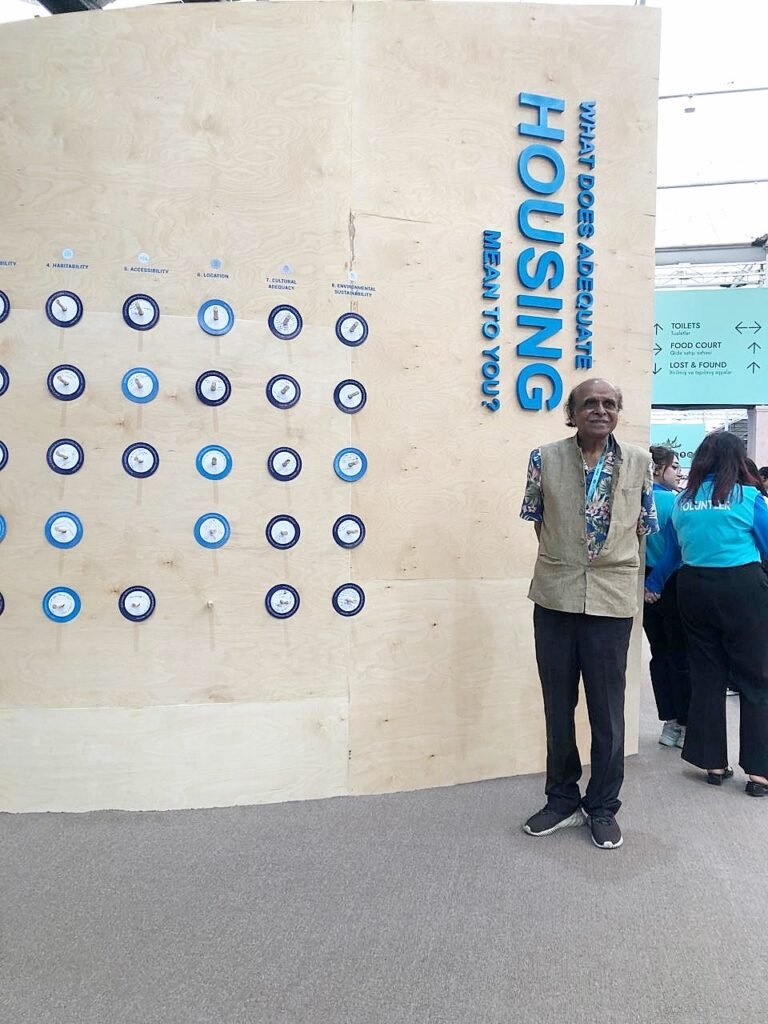
I asked some local people whether they are not tempted to extend their houses or shop. They told me that Azerbaijan was part of erstwhile USSR with a culture of discipline. That discipline still survives. That is the reason that the heritage Baku city still functions so well. The point is that the city and buildings reflect the culture and responsible system, above vote bank politics.

Finding Practical Solutions
TheAPN: In your view, what additional planning measures are required? What is the solution?
A.K. Jain: Solutions do exist. But they must be practical and easy to implement. The School of Planning & Architecture, Jamia Millia Islamia have done considerable work. Practical and participatory solutions emerge when you go to the ground and speak to the people.
TheAPN: Many unauthorized colonies are occupied by middle- and lower-income groups. If you impose fines, development charges or ask them to undertake improvements, even preparing a layout plan may require them to pay an architect. How can that work?
A.K. Jain: There is some truth in that argument, but also a fallacy.
People avoid paying because there is no effective enforcement. Consider property tax. Around 90 percent of people pay because they know that if they do not, there can be penalties or their bank account may be affected. But when development charges or conversion charges are involved, people often believe they can ignore notices or use legal loopholes. The implementation and enforcement should be the first priority. This is also necessary to ensure safe construction and compliance with building planning regulations and bye-laws.
Possible Approaches
When we worked on the idea of in-situ slum rehabilitation, we identified the following options, where the unauthorized colonies can also be considered within this framework.
The first is in-situ upgradation. If an existing colony is compliant with the land use of the Master Plan or Zonal Plan and does not create serious nuisance in terms of traffic or other factors, it can be regularized and upgraded. Services can be improved, and vacant plots can potentially be converted into parks, police stations, fire stations or other essential facilities. It could undergo conservative surgery for provision of parks, playgrounds and essential community facilities.
The second is in-situ redevelopment. Three or four buildings can be combined with the agreement of the residents, and a redevelopment scheme can provide additional built space. For example, if somebody has 100 square metres of floor area, they could be offered at least 50 percent additional area without paying for it. A developer could participate in such redevelopment, and a portion—say 10 percent—could be used for market sale or commercial purposes to help finance the construction.
The third option is composite redevelopment, where fragmental plots are reorganized or redeveloped into group housing is a minimum area of 2000 sqm with one third area under greens.
The fourth option is relocation. Some colonies are located in the Ridge or along the Yamuna where regularization may not be legally possible. Such settlements may be relocated, as done in the 1950s for development of the rehabilitation colonies with plots of 80 square yards. Today, even a 50-square-yard plot in a properly planned layout, could be valuable, which need not be subsidized.
The fifth is Support System. This approach has been developed by the SAR, Netherlands. The government provides the basic structure—columns, pillars, toilets or wet areas—and residents Incrementally complete the remaining construction themselves. This ensures adequate road widths, open spaces and other basic planning and safety requirements.
The sixth option is reblocking by improving the geometry of roads/ streets and merger of isolated blocks into group housing. The tools of Accommodation Reservation (AR) and Transferable Development Right (TDR) can be used for improving open space and facilities.
Keeping in view the diversity of slums and informal settlements, a single solution does not work. We need multiple choices Delhi mega city contains many different types of informal settlements. We also need to move away from the assumption that subsidies are necessary. The poor now realize the value of owing a house, even small one, which transforms their lives and future if their children.
TheAPN: Earlier plots allowed people to expand their homes floor by floor. Today, government relocation often means a small fixed flat with almost no possibility of expansion. Is the present strategy appropriate?
A.K. Jain: You are right. Giving every family a fixed flat should not be the only option. It is also very expensive and time-consuming.
Our site-and-services scheme of the 1970s has been appreciated by World Bank in its 2023 report. It was found as a particularity, relatively low-cost, rapid, and avoids many controversies and disputes. As Indian economy (GDP) is growing at 7% pa or so, the plot offers a choice is grow and improve.
Is PPP the Right Model for Slum Rehabilitation?
TheAPN: A new Delhi Slum and JJ Cluster Rehabilitation policy proposes a PPP model. Do you believe PPP is the most appropriate mechanism for rehabilitation in informal settlements?
A.K. Jain: If you look at the 2021 Master Plan, the same approach is already there, including the PPP model and involvement of private developers.
Apart from the In-situ rehabilitations project in Kathputli Colony, Ashok Vihar and Kalkaji projects have been completed with 14 storied flats for slum dwellers. In 2004 the Madhukar Gupta Committee of which I was Member Secretary recommended the idea of In-situ slum rehabilitation (ISR) with enhanced FAR in PPP mode. Mixed land use and market sale residential component were in corporate to subsidize the development. However, the PPP model may not be viable for every type of slum because slums. The basic principle is that it should be participatory, incremental and integrated with jobs.
What Are Delhi’s Biggest Planning Mistakes?
TheAPN: What are the three biggest planning mistakes Delhi continues to repeat?
A.K. Jain: Planning is never perfect. I do not believe in looking at mistakes only negatively. Mistakes will always happen, and the person who makes a mistake can improve and learn.
The bigger issue is coordinated implementation and enforcement. Which are extremely weak.
Administrative Boundaries and Local Area Planning
TheAPN: Every department has its own boundaries and planning zones. They are still not unified. Is this a major challenge for planning and implementation?
A.K. Jain: Yes, Delhi has numerous boundaries, MP and MLA constituencies, Election Commission ward boundaries, Census boundaries planning zone boundaries, MCD zonal boundaries, Delhi Government Revenue boundaries, Police Districts, Postal boundaries and other Administrative boundaries. Earlier, we examined whether they could be unified, but ultimately found that unifying them may not provide a significant planning advantage.
Accordingly, what we provided in the 2021 Master Plan was local area planning. Where the ward boundaries could provide the basis for local area plans.
TheAPN: But ward planning is still not happening.
A.K. Jain: It is not happening for several reasons. Ward or local Planning requires involving the people, elected representatives and councilors. MCD took up some pilot projects. However, it also identified two problems. One was finance: that is budget provision for ward planning. The second was that the DMC Act did not have a specific provision for local area planning.
Some Ward/Local area plans were prepared with the help of institutions such as Jamia Millia and the SPA, New Delhi. However, these were not approved and faced opposition from the MLAs and MPs, blaming their non-participation, and fear of action against illegal activities.
Pedestrians, the Supreme Court and Weak Enforcement
TheAPN: What about the recent Supreme Court decision concerning the right of walking and pedestrian movement? Will it lead to changes in design?
A.K. Jain: It is a pity that the Supreme Court has to give a decision on something as basic as pedestrian movement. Every planner and designer knows that the pedestrians have to be prioritized over vehicles and protected. The planning framework already exists. However, the problem of detailing, enforcement and implementation.
Technology and the Transformation of Planning
TheAPN: What about technologies such as AI, GIS, remote sensing and digital twins? How are they transforming planning and design?
A.K. Jain: They are extremely important for the future of Delhi. Fortunately, or unfortunately, many planners and engineers often stop learning once they complete graduation or post-graduation and get a job. They loose touch with the latest development and become obsolete. The recent developments, such as AI, Blockchain, Digital Twins, GIS, etc. have changed the entire world and transforming planning and design including infrastructure services, transport, energy, safety and economy. These are indispensable tools planning, urban design architecture and build. We have a choice either to continue using 50 years old planning tools or transform it by using new technologies. Avoiding the later would be a catastrophe for the future of Delhi and its planning.
Also Read Part 1: From Shahjahanabad to the Master Plan: A.K. Jain Reflects on the Evolution of Delhi’s Urban Planning
Join our WhatsApp Channel for fastest updates: Join now