

The UNESCO has expressed deep concern over the damage to several cultural and historical landmarks in Iran following recent US-Israeli strikes, warning of irreversible loss to global heritage.

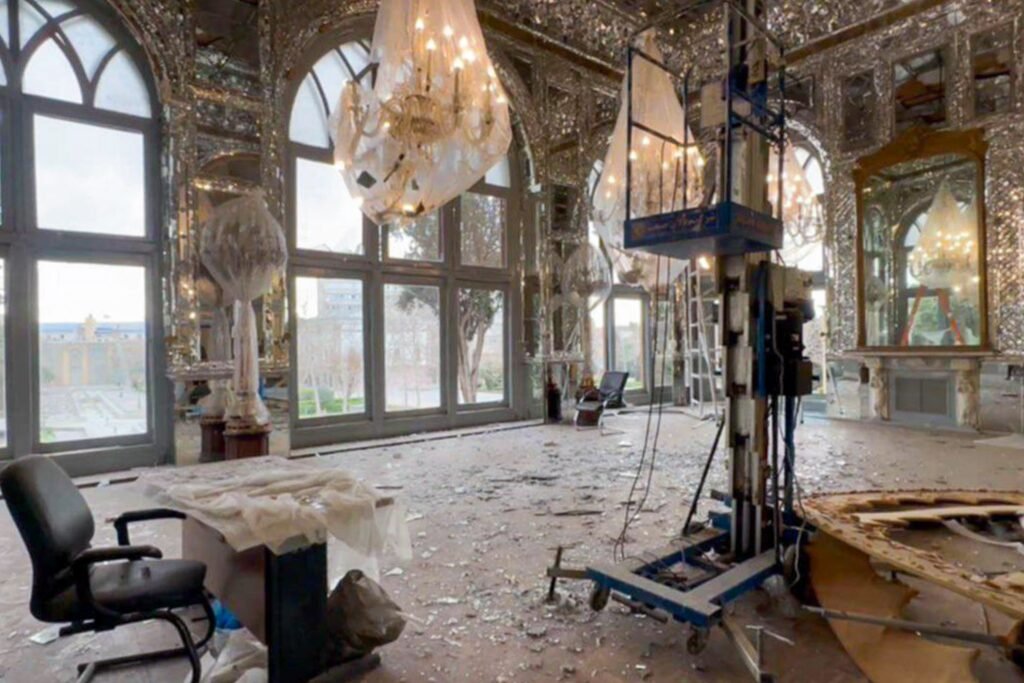
According to reports, at least four of Iran’s 29 World Heritage Sites have sustained damage since the escalation of hostilities. Among the most prominent is the Golestan Palace in Tehran—an iconic 19th-century royal complex that symbolizes the fusion of Persian and European architectural styles.
Lazare Eloundou Assomo, Director of the World Heritage Centre, stated that UNESCO is closely monitoring the situation and has already shared the geographical coordinates of key cultural sites with all parties involved to prevent further destruction. The organization has also extended its concern beyond Iran, noting potential risks to heritage sites across Israel, Lebanon, and the broader Middle East region.
The damage to Golestan Palace reportedly includes shattered glasswork, damaged interiors, and debris scattered across historically significant spaces. The palace, once the seat of power of the Qajar dynasty and the site of the last Shah’s coronation in 1969, holds immense architectural and cultural value.
In the historic city of Isfahan, additional concerns have emerged over damage near the Masjed-e Jame (Jameh Mosque), a structure over 1,000 years old that reflects the evolution of Islamic architecture across centuries. The city itself was a vital hub along the ancient Silk Road, making it a cornerstone of global cultural exchange.
UNESCO has also reported impacts near the Khorramabad Valley, a prehistoric site of archaeological significance, indicating that the conflict is affecting heritage across multiple historical timelines.
The organization has urged all parties to adhere to international conventions that protect cultural heritage during armed conflicts. Experts warn that continued damage could result in permanent loss of irreplaceable historical assets, underscoring the urgent need for preservation measures even amid geopolitical tensions.
Source: CGTN
Also Read: UNESCO Heritage Bauhaus Buildings in Tel Aviv Damaged in Iranian Missile Strike