

Tel Aviv, Israel | Two historic Bauhaus-style buildings located within Tel Aviv’s internationally recognized White City UNESCO World Heritage Site were damaged following an Iranian missile strike on 28 February, raising concerns about the vulnerability of globally significant architectural heritage during armed conflicts. The attack reportedly killed one woman and injured more than two dozen people.
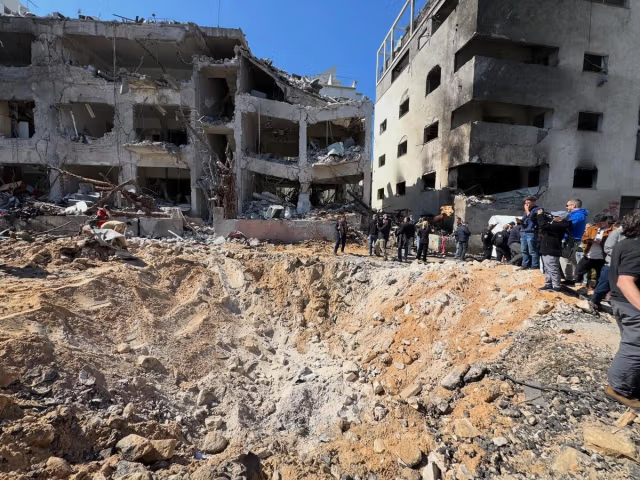
The affected structures are part of Tel Aviv’s celebrated White City, a district containing more than 4,000 buildings designed in the International Style. Developed between the 1930s and 1950s, the area was based on an urban plan by Scottish planner Patrick Geddes and represents one of the world’s largest collections of Bauhaus and modernist architecture. UNESCO inscribed the district on its World Heritage List in 2003, recognizing it as an exceptional example of early 20th-century modern urban planning adapted to local climate and cultural conditions.
Historic Bauhaus Buildings Impacted
According to architectural historians, one of the most significant structures damaged in the strike was the Froma Gurvitz House, constructed in 1937 by the architectural firm Zabrodsky and Blacks. The building had undergone restoration in recent years, during which architects added an additional floor and rooftop extension.
The Bauhaus Center in Tel Aviv confirmed the damage and emphasized the cultural symbolism of the buildings. In a public statement, the center noted that the structures represented more than physical architecture—they embodied “survival, modernity, and the rebuilding of life in Tel Aviv.”
The strike also damaged the glass façade of Habima Theatre, Israel’s National Theatre originally built in 1934, another significant modernist cultural landmark in the city.
Cultural Institutions Move Collections to Shelters
Due to escalating conflict, several cultural institutions across Israel have temporarily closed and relocated valuable collections to protected facilities. Museums including the Israel Museum in Jerusalem reported that staff moved important artworks and artefacts to bomb shelters in accordance with emergency guidelines.
Similarly, the Islamic Museum of Art in Jerusalem has evacuated key objects from its collection, including the Harari Hoard, a rare set of Persian silver artefacts dating from the 11th–12th century Seljuk period, considered one of the most important collections of its kind.
UNESCO and Global Concerns Over Heritage Protection
UNESCO and several United Nations officials have condemned the escalation of hostilities and the risks posed to cultural heritage. Reports also indicate that Golestan Palace in Tehran, another UNESCO-listed site, may have suffered damage during retaliatory strikes earlier in March.
Heritage professionals have warned that war threatens not only human lives but also cultural memory embedded in historic architecture. Archaeologists and conservationists have emphasized that damage to heritage sites represents an irreversible loss shared by global civilization.
Heritage at Risk in Modern Conflicts
Experts note that the White City buildings represent a unique adaptation of European modernist architecture to the Mediterranean climate, featuring shaded balconies, horizontal windows, and climate-responsive design strategies. Their damage highlights the broader vulnerability of heritage sites during geopolitical conflicts.
Observers hope that the destruction may reinforce the need for international cooperation in protecting cultural heritage, particularly sites recognized as part of humanity’s shared legacy.
Also Read: NATA 2026 Schedule; Exams from April 4 to June 13