

New Delhi: Union Home Minister and Minister of Cooperation Amit Shah attended the inauguration and foundation-stone laying ceremony for Yamuna rejuvenation projects worth ₹8,941 crore in Delhi on October 22, 2026. The initiatives aim to improve wastewater treatment, strengthen sewerage infrastructure and reduce pollution entering the Yamuna River.
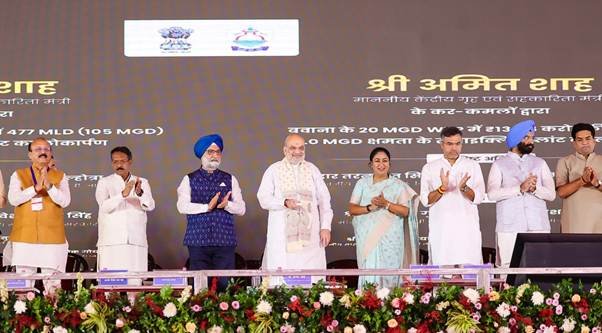
Delhi Lieutenant Governor Taranjit Singh Sandhu and Chief Minister Rekha Gupta were among the dignitaries present at the event.
43 Projects to Strengthen Wastewater Management
According to the official release, 10 projects were inaugurated and 33 projects were initiated under the programme. The projects cover several parts of Delhi and include the upgradation of existing Sewage Treatment Plants (STPs), installation of new treatment facilities, decentralised STP pumping infrastructure and sewer network improvements.
The programme also includes connecting households to sewer lines, sewer rehabilitation, sewage tapping and drainage works. These measures are intended to improve the collection and treatment of wastewater before it reaches the river.
Shah said the projects would enable the treatment of several lakh litres of water for discharge into the Yamuna. He expressed confidence that the river could be cleaned before May 2029.
Inter-State Coordination for River Rejuvenation
The Union Home Minister said that the governments of Delhi, Haryana and Uttar Pradesh, along with the Central Government, had prepared time-bound roadmaps to address pollution in the Yamuna. The river’s pollution challenges extend beyond Delhi, requiring coordinated action on sewage discharge and wastewater management across state boundaries.
Shah stated that the broader objective was to make the Yamuna clean by 2029, with the initiative forming part of Prime Minister Narendra Modi’s vision for river rejuvenation.
Waste Management and Sewerage Expansion
The official release also highlighted efforts to reduce Delhi’s legacy waste at major landfill sites. Shah said that 2.17 crore metric tonnes of garbage had been cleared, freeing approximately 100 acres of land. He added that the height of the Okhla and Bhalswa landfill sites had been reduced by 30–40 metres, while the Ghazipur landfill had been lowered by 10–15 metres.
The government has also prepared a three-year action plan to provide sewerage connections to households across Delhi, alongside measures to improve access to clean drinking water. The release cited projects at Asita East, Baansera and Vasudev Ghat as examples of urban development works undertaken along the Yamuna.
Implementation Will Determine Environmental Outcomes
The ₹8,941-crore programme represents a major investment in Delhi’s wastewater and sanitation infrastructure. However, its environmental impact will depend on the timely completion and effective operation of treatment plants, household sewer connections and drainage networks, as well as sustained monitoring of wastewater entering the river.
Achieving the 2029 cleanup target will require coordinated implementation, reliable treatment capacity and long-term maintenance. The performance of these projects will be important in determining whether infrastructure expansion translates into measurable improvements in the Yamuna’s water quality.
Also Read: India’s Ramsar Site Count Reaches 103 with Addition of Sukhna Wetland and Sauj Jheel
Join our WhatsApp Channel for fastest updates: Join now