

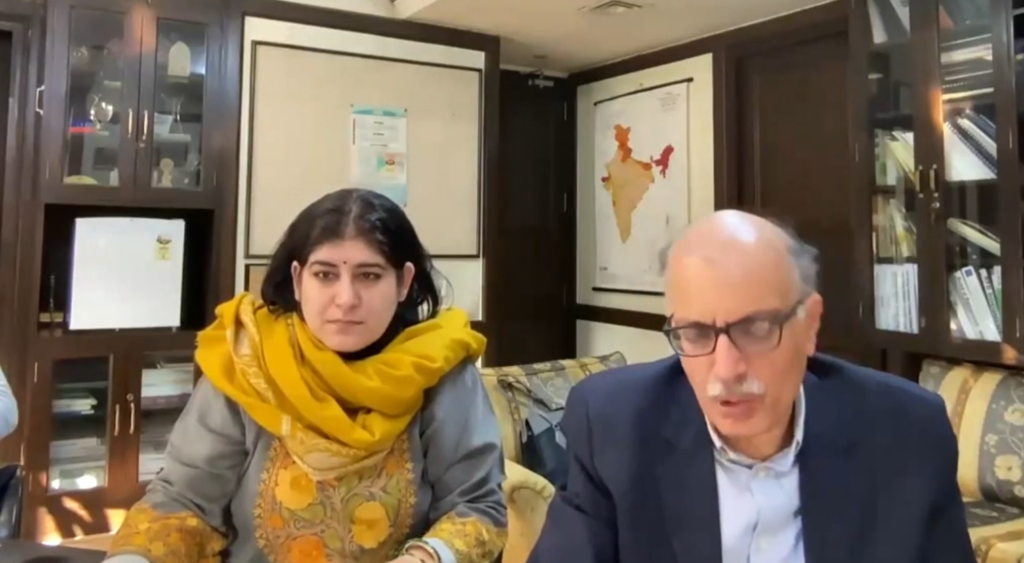
India’s built environment stands at a critical crossroads where rapid urbanisation, climate change, and rising energy demand are converging. Addressing this challenge was the focus of BMTPC Webinar #6 of the national webinar series on Innovative Building Materials and Technologies for Thermally Comfortable Green Buildings, organised by the Building Materials and Technology Promotion Council (BMTPC) under the Ministry of Housing and Urban Affairs, Government of India.

The virtual session, held on 24 December 2025, brought together policymakers, engineers, architects, academicians, and sustainability professionals to deliberate on practical pathways for climate-responsive and energy-efficient construction practices.
Setting the Context: Why the Built Environment Matters
Opening the session, BMTPC officials underlined that the construction and building sector plays a decisive role in India’s climate action journey. Buildings not only consume a large share of materials and energy but also significantly influence public health, urban resilience, and long-term economic sustainability.
The webinar forms part of BMTPC’s broader mandate to mainstream cost-effective, environment-friendly, and energy-efficient building materials and technologies, particularly within national housing missions and urban development programmes.
Rethinking Building Materials Through a Sustainability Lens
The first technical presentation focused on eco-friendly building materials and their classification beyond conventional labels. Participants were encouraged to assess materials using four key lenses:
- Origin and sourcing (renewable, natural, recycled, or industrial by-products)
- Embodied carbon, including transportation impacts
- Recyclability and end-of-life potential
- Health and indoor environmental quality, such as low-VOC content and material breathability
The discussion highlighted that materials traditionally considered “green” may lose their sustainability advantage if transported over long distances, while locally available materials—stone, lime, bamboo, or earth-based systems—often offer better climate and economic outcomes.
From Traditional Wisdom to Emerging Technologies
Speakers traced the evolution of construction materials in India—from traditional, region-specific practices to industrial and now advanced technological solutions. While fly ash blocks, blended cements, and AAC blocks represent a transitional phase, newer innovations such as geopolymer concrete, mycelium-based panels, and carbon-sequestering aggregates are gaining attention.
A key message was that even widely used materials like concrete can be made greener through partial substitution of cement and aggregates, particularly in non-structural components, without compromising safety.
Life Cycle Assessment: Moving Beyond Capital Cost Decisions
A central theme of the webinar was the importance of Life Cycle Assessment (LCA) in sustainable decision-making. Unlike traditional cost-centric approaches, LCA evaluates environmental impact from material extraction to end-of-life disposal or reuse.
Real-world examples demonstrated how LCA can influence choices between glass and masonry facades, stone versus fly-ash bricks, or conventional versus green steel—helping stakeholders quantify avoided emissions rather than just upfront savings.
Role of Rating Systems and Product Catalogues
The session also reviewed India’s major green building frameworks, including GRIHA, LEED, IGBC, and EDGE, noting their role in guiding material selection and performance benchmarking. While these systems provide valuable product catalogues and assessment tools, speakers acknowledged gaps in domestic testing infrastructure and the need for wider access to environmental product declarations (EPDs).
Systems Thinking: Cities, Circularity, and Climate Resilience
The second presentation adopted a systems-level perspective, linking building design to broader urban and economic trends. With Indian cities occupying a small fraction of land but consuming disproportionate resources, the case was made for integrating construction and demolition waste recycling, especially aggregates and sand, into mainstream building practice.
The discussion highlighted that regulatory frameworks already exist, but demand creation and consistent quality assurance remain key barriers. Participants were urged to view urban pollution challenges not just as crises, but as opportunities for circular economy solutions.
Governance, Markets, and Awareness
On the policy front, the webinar emphasised three critical roles for government:
- Creating markets for green materials through public procurement
- Ensuring effective implementation of existing regulations
- Building awareness and capacity across institutions and professionals
Reducing GST on sustainable materials and strengthening pilot-to-scale transitions were also identified as potential accelerators.
A Call for Collaborative Action
The webinar concluded with a clear message: achieving climate-responsive and energy-efficient buildings requires coordinated action across government, industry, academia, and citizens. From revising curricula and improving data transparency to strengthening supply chains and local skills, the transition must be both systemic and inclusive.
As India continues to urbanise, conversations like these underline that the solutions to climate challenges are not external—they are embedded within the way we plan, design, and build our cities.
Also Read: 17th GRIHA Summit 2025: Innovation, Climate Action & Excellence in Green Building