

New Delhi: Union Minister of State (Independent Charge) for Science and Technology and Earth Sciences, Dr Jitendra Singh, has inaugurated an advanced air pollution analysis facility at the Delhi branch of the Indian Institute of Tropical Meteorology (IITM). The facility, named the Integrated Atmospheric Chemistry and Aerosol Toxicity Analysis Laboratory (AATAL), is designed to identify the sources and composition of air pollution in real time, enabling more targeted interventions across Delhi-NCR.
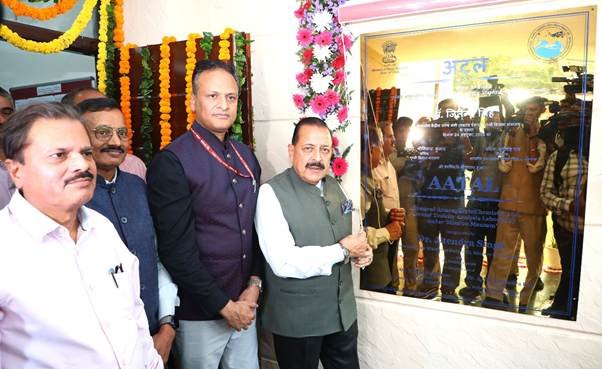
Established under the Centre’s Mission Mausam, the laboratory integrates advanced atmospheric measurements, chemical analysis, pollution-source identification and forecasting capabilities. According to the Ministry of Earth Sciences, the facility aims to move air-quality assessment beyond measuring pollution levels to understanding their composition, origin, relative contribution and potential health implications.
Inaugurating the facility, Dr Jitendra Singh said Delhi-NCR had been selected because of the serious public concern surrounding air pollution. He emphasised that scientific evidence on the sources of pollution would help authorities identify the sectors responsible for deteriorating air quality and determine where corrective measures could have the greatest impact.
AATAL will help distinguish between major pollution sources, including vehicular emissions, industrial activities, biomass and crop-residue burning, construction and road dust, and pollutants transported from neighbouring regions. By estimating the contribution of different sources, the laboratory is expected to support more focused pollution-control strategies.
The facility is equipped with advanced instruments to analyse atmospheric gases and aerosols, including fine particulate matter (PM2.5), metals, toxic elements and other pollutants. This detailed chemical analysis will help scientists understand how pollutants interact and transform in the atmosphere, as well as assess the potential toxicity of different particulate components.
The initiative is also integrated with IITM’s AIRWISE (Air Quality Warning and Integrated Decision Support System for Emissions). The system combines air-quality observations, forecasts and source-apportionment data to provide actionable information for pollution management. Its forecasting capability operates at a spatial resolution of 400 metres for the next 72 hours, allowing pollution conditions and their likely sources to be assessed across individual pockets of Delhi. The integrated facility is also intended to provide real-time information and forecasts for the coming days.
Dr Sachin Ghude, Project Director of MAQWS, said the system would strengthen air-quality management by providing early warnings and detailed information on pollution sources. The data could help the Commission for Air Quality Management (CAQM) and other implementing agencies identify priority sectors, plan targeted interventions and evaluate their effectiveness.
The information generated by AATAL, combined with AIRWISE forecasts, is expected to support preventive measures and responses under the Graded Response Action Plan (GRAP). It could also strengthen coordination between scientific institutions, environmental authorities, pollution-control agencies and disaster-management stakeholders.
Dr Jitendra Singh highlighted that air pollution cannot be addressed by a single department working in isolation. He called for coordinated action among the Ministry of Earth Sciences, the Ministry of Environment, Forest and Climate Change, and other relevant agencies to translate scientific findings into effective measures on the ground.
The inauguration of AATAL marks a step towards integrating advanced atmospheric science with public policy and urban environmental management. By providing detailed information on pollution composition, source contributions and short-term forecasts, the facility is expected to help authorities develop more evidence-based and location-specific responses to Delhi-NCR’s air pollution challenge.
Also Read: Delhi Announces ₹8,941 Crore Yamuna Rejuvenation Projects; Cleanup Target Set for 2029
Join our WhatsApp Channel for fastest updates: Join now