

The Commission for Air Quality Management (CAQM) has reviewed paddy stubble management measures in Amritsar and Tarn Taran districts of Punjab, expressing concern over the increase in stubble-burning incidents and directing district administrations to intensify preventive action.
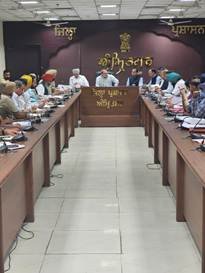
A high-level team led by Rajesh Verma, Chairperson of CAQM, held a review meeting on October 24, 2026, with the Deputy Commissioners and other concerned officials of both districts. The meeting assessed ongoing efforts to manage paddy residue and strengthen measures to eliminate stubble burning.
During the review, the Commission examined in-situ and ex-situ stubble management practices, the availability of machinery and supporting infrastructure, and the action taken by district administrations in response to the rising number of fire incidents. Officials were directed to strengthen their efforts to prevent further incidents.
CAQM emphasised the need to maximise the use of paddy stubble as fuel in thermal power plants, brick kilns and industries wherever technically feasible. It also directed the appointment of sector-wise nodal officers to ensure actual utilisation of paddy residue by respective industries, along with regular monitoring and compliance reporting.
The Commission stressed the importance of timely intervention at the village level. Officials were instructed to regularly visit villages and interact with farmers to ensure that machinery and stubble management facilities reach them when required. District administrations were also asked to improve coordination among farmers, Custom Hiring Centres (CHCs), machinery providers and other stakeholders to facilitate access to residue management solutions.
Tarn Taran, which continues to report among the highest numbers of paddy stubble-burning incidents, was given particular attention. The Deputy Commissioner was directed to accord the issue top priority and intensify field-level preventive measures. CAQM warned that any laxity or failure to implement effective measures would invite strict action and accountability.
As part of the visit, the team inspected an industrial complex in Amritsar where paddy stubble pellets are being used as fuel in an industrial boiler. The inspection provided an opportunity to assess the practical application of processed agricultural residue and the potential to expand such productive end-use models.
The Commission reiterated that paddy stubble management must be approached as a comprehensive residue-management and resource-utilisation exercise, with farmers’ needs at its centre. It called for coordinated action by district administrations and all stakeholders to ensure the effective deployment of available solutions, channelise paddy residue towards productive uses and bring stubble-burning incidents to an end.
Join our WhatsApp Channel for fastest updates: Join now