

Chandigarh: The Commission for Air Quality Management (CAQM) in NCR and adjoining areas has reviewed air pollution control measures in Punjab and Haryana, calling for prompt ground-level action to prevent paddy stubble burning and address other major sources of pollution ahead of the winter season.
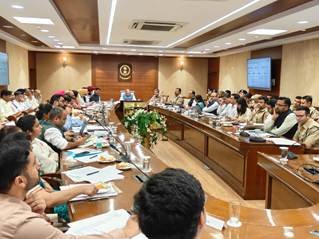
Under the chairmanship of CAQM Chairperson Rajesh Verma, the Commission held separate review meetings with the governments of both states in Chandigarh to assess the implementation of their action plans, enforcement mechanisms and preparedness for managing seasonal air pollution.
In Punjab, the review focused on implementing the State Action Plan for preventing paddy stubble burning under CAQM Direction No. 99, dated 15 May 2026. Discussions covered the availability and effective deployment of Crop Residue Management (CRM) machinery, district-level preparedness, and arrangements for collecting, transporting and utilising paddy straw through in-situ and ex-situ management methods. The Commission stressed the need to address machinery gaps and strengthen the crop-residue supply chain during the peak harvesting period.
The meetings also reviewed satellite-based fire alerts, field verification of burnt areas, and the deployment of drones and low-cost sensors to monitor stubble-burning incidents. Compliance with CAQM Direction No. 92, which mandates the use of paddy-straw-based biomass pellets or briquettes in brick kilns, and progress towards biomass co-firing targets in thermal power plants were also examined.
The review in Haryana covered a broader range of pollution sources, including vehicular emissions, road and open-area dust, construction and demolition (C&D) activities, and industrial pollution. Measures to enforce valid Pollution Under Control Certificates (PUCCs) through Automatic Number Plate Recognition (ANPR) systems at fuel and CNG stations were discussed, along with action against end-of-life vehicles, cleaner mobility initiatives and the phased withdrawal of diesel-operated auto-rickshaws in NCR districts.
The Commission also assessed road-dust control, mechanised road sweeping, dust-mitigation measures at construction sites, and compliance monitoring for industrial units.
Emphasising time-bound implementation, CAQM called on both state governments to strengthen field-level enforcement, improve coordination among state departments and district administrations, and address implementation gaps through timely corrective action. The states were also advised to facilitate greater access to crop-residue management machinery, strengthen ex-situ residue utilisation and implement information, education and communication (IEC) action plans more effectively.
The Commission underlined that paddy-straw management should go beyond preventing open burning and promote the productive use of agricultural residue as a resource. Greater utilisation of paddy straw could support a circular economy while contributing to improved air quality and public well-being.
CAQM cautioned district administrations that any laxity resulting in an increase in stubble-burning incidents would be viewed seriously. It reiterated that sustained coordination among state governments and enforcement agencies is essential to prevent crop-residue burning and reduce air pollution during the critical winter period.
Also Read: CAQM Reports 55 Violations During 124 Inspections Across NCR, Proposes Closures and Sealing Actions
Join our WhatsApp Channel for fastest updates: Join now