

The Commission reviews field-level preparedness, farmer facilitation and technology-based monitoring to prevent stubble burning in Punjab.
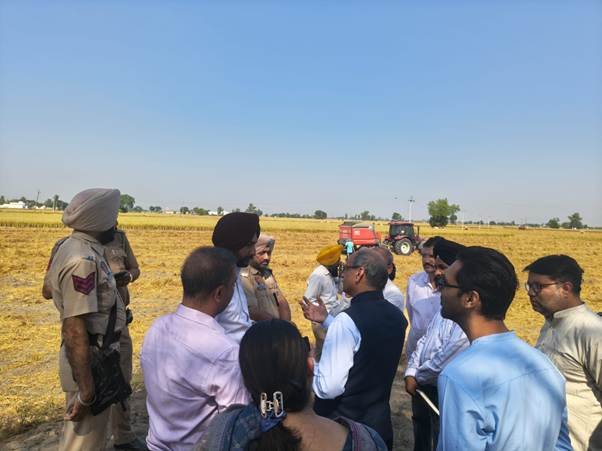
The Commission for Air Quality Management (CAQM) in NCR and Adjoining Areas has reviewed measures to prevent paddy stubble burning in Punjab’s Firozpur and Faridkot districts, emphasising the timely availability of Crop Residue Management (CRM) machinery and improved coordination among farmers, district administrations and other stakeholders.
On October 17, 2026, a high-level CAQM team led by Dr. T.S. Panwar, Member (Technical), visited the two districts following its earlier visit to Moga to assess the ground-level implementation of paddy stubble management measures during the ongoing harvesting season.
The team held a joint review meeting with the Deputy Commissioners and concerned district officers at the Deputy Commissioner’s office in Firozpur. Discussions covered district preparedness, interdepartmental coordination, deployment of CRM machinery, field-level surveillance, monitoring of stubble-burning hotspots and enforcement measures.
The Commission stressed the need to strengthen both in-situ management, which involves managing crop residue within agricultural fields, and ex-situ management, which involves collecting and utilising straw outside the fields. Ensuring the timely availability and optimal use of machinery was identified as a key priority.
The review also covered the use of drones and low-cost sensors for technology-based monitoring and trend analysis. Officials discussed efforts to sensitise farmers about the harmful effects of stubble burning and the associated PM2.5 air pollution.
CAQM emphasised facilitating farmers’ access to CRM equipment and improving coordination with aggregators to support the effective collection and utilisation of paddy straw. District administrations were advised to ensure that machinery is available when required and that all stakeholders work together to prevent burning incidents.
Following the meeting, the team visited selected hotspot villages in Firozpur and Faridkot to assess field conditions and review the implementation of preventive measures.
The visit forms part of CAQM’s continued monitoring of paddy stubble management in Punjab’s hotspot districts. The initiative aims to strengthen crop residue management practices, improve farmer support and reduce stubble-burning incidents that contribute to regional air pollution.
Also Read: CAQM Team Reviews Stubble Burning Prevention Measures in Punjab’s Moga District
Join our WhatsApp Channel for fastest updates: Join now