

Delhi: Union Environment Minister Bhupender Yadav and Delhi Chief Minister Rekha Gupta reviewed air pollution mitigation measures at Anand Vihar, a major pollution hotspot in the national capital, on October 13, 2026. The visit also included an inspection of the Delhi Pollution Control Committee’s (DPCC) AI-enabled Integrated Command and Control Centre (ICCC) at Shastri Park.
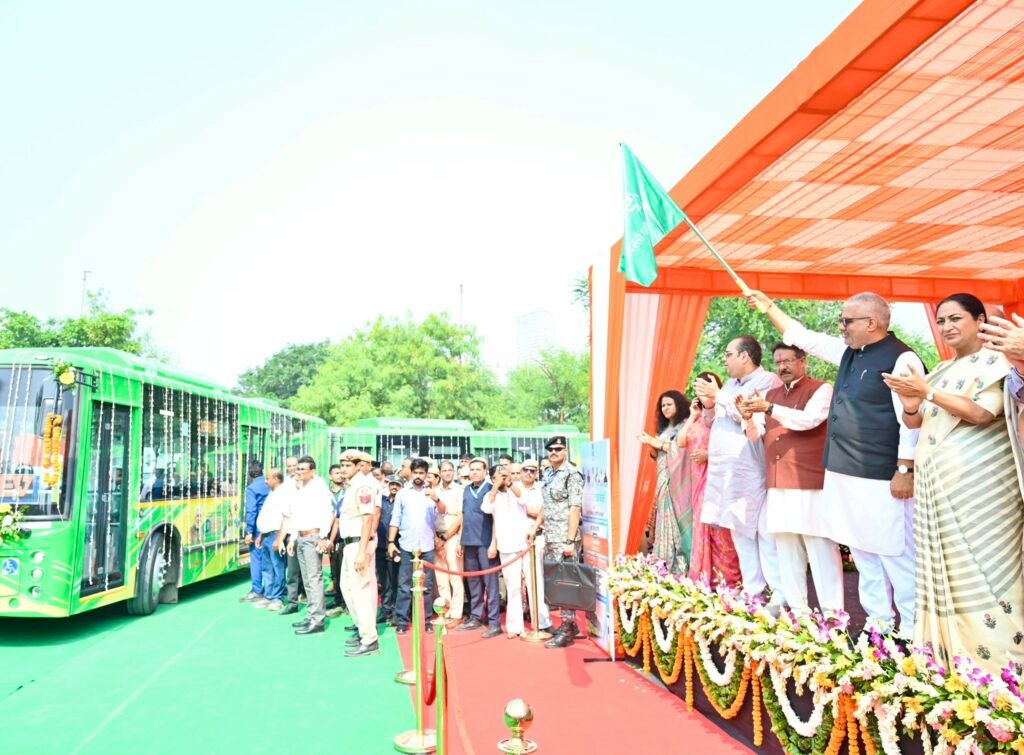
During the programme, the dignitaries flagged off 150 new electric buses at Swami Vivekanand ISBT, Anand Vihar, and virtually inaugurated public electric vehicle (EV) charging stations at five locations: ISBT Anand Vihar, Nand Nagri depot, Rohini Sector-37 depot, Nangloi depot and Keshopur depot. The initiatives aim to strengthen Delhi’s public transport and support the transition towards electric mobility.
The ministers also inaugurated 13 new Continuous Ambient Air Quality Monitoring Stations (CAAQMS) installed by DPCC across Delhi. The new stations are located in areas including Ghummanhera, Chhawla, Karala, Hastsal, Jharoda Kalan, Burari, Tikri Kalan, Narela, Maidan Garhi, Nangloi, Vasundhara Enclave and Badarpur. They will provide continuous air quality and meteorological data to support pollution assessment, regulatory enforcement and public dissemination of the Air Quality Index (AQI).
At Anand Vihar, officials identified traffic congestion, bus movement, road dust, unpaved surfaces, potholes, construction activities, illegal construction and demolition waste dumping, plastic waste and open waste burning as key contributors to pollution. According to the Environment Ministry, short- and long-term mitigation measures were assigned to 11 agencies. Actions included paving internal roads, removing encroachments and illegal waste dumping, implementing dust-control measures at construction sites and undertaking greening activities.
At the Shastri Park ICCC, the ministers reviewed a digital monitoring platform designed to integrate information on air quality, dust-control sites, ambient noise, industrial emissions, stubble burning, citizen grievances and enforcement vehicles. Of the 15 external data systems planned for integration, nine have been connected, while the remaining six are being integrated in phases.
With the addition of the 13 new monitoring stations, Delhi’s air quality monitoring network has expanded from 47 to 60 stations, with real-time data made available through the CPCB server and SAMEER mobile application. The ministry also highlighted plans to expand the monitoring grid to other National Capital Region cities.
Also Read: IGBC’s Green Rajasthan Summit 2026 to Focus on Climate-Smart Development and Green Infrastructure
Join our WhatsApp Channel for fastest updates: Join now