
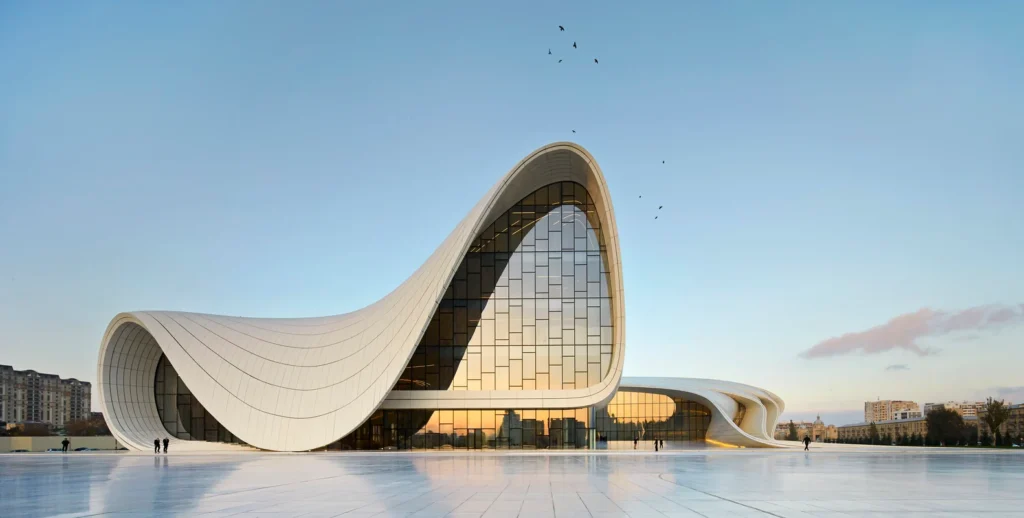
In the heart of Baku, Azerbaijan, the Heydar Aliyev Center rises not as a conventional building but as a sculpted landscape that appears to flow effortlessly from the ground. Designed by the late Zaha Hadid, one of the most influential architects of the modern era, the Centre has become a global symbol of innovation, challenging traditional architectural norms while redefining the relationship between public space, structure, and culture.
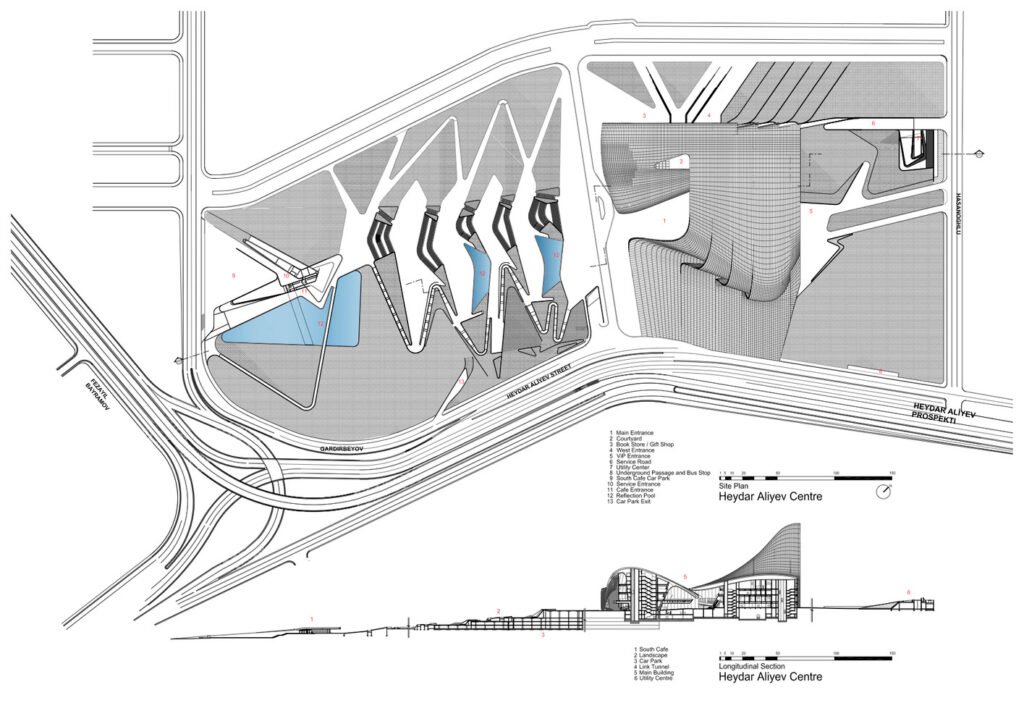
Completed in 2012, the project represents a turning point in contemporary architecture. Its sweeping curves, seamless surfaces, and absence of rigid geometry transformed Baku’s skyline and established the city as a destination for world-class architecture. More than a cultural institution, the building reflects Azerbaijan’s aspirations to project a modern national identity while embracing creativity, technology, and global engagement.
The Centre was commissioned as part of Baku’s urban transformation following Azerbaijan’s independence from the Soviet Union. The objective was to create a cultural landmark that would break away from the monumental and often austere Soviet architectural vocabulary. Instead of erecting another imposing civic structure, Zaha Hadid Architects envisioned a building that dissolves the boundaries between architecture, landscape, and public life.
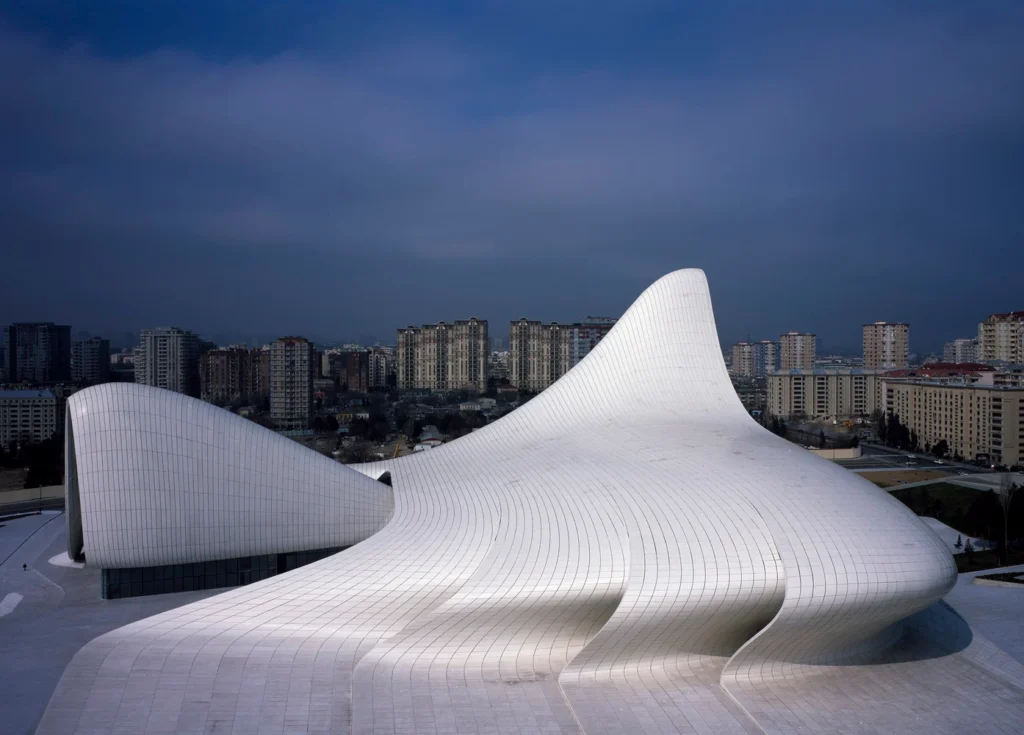
One of the most striking aspects of the Heydar Aliyev Center is its fluid architectural language. Unlike conventional buildings defined by walls, roofs, and corners, the structure unfolds as a continuous surface where the ground gradually rises to become the building itself. The expansive plaza flows naturally into the roof, creating an uninterrupted experience for visitors. This seamless transition reflects Hadid’s philosophy that architecture should encourage movement rather than merely enclose space.
The Centre demonstrates how digital design has transformed contemporary architecture. Its complex geometry could only be realised through advanced computational modelling and parametric design tools, allowing architects, structural engineers, and fabricators to coordinate every element with remarkable precision. The result is a building that appears effortless despite its extraordinary engineering complexity.
Behind its graceful form lies an equally impressive structural system. Large column-free interior spaces are achieved through a combination of reinforced concrete cores and a sophisticated steel space-frame structure. This hybrid engineering solution supports the sweeping roof while maintaining the uninterrupted spatial experience envisioned by the architects.
The building envelope presented another significant challenge. Thousands of individually manufactured Glass Fibre Reinforced Concrete (GFRC) and Glass Fibre Reinforced Polyester (GFRP) panels were digitally fabricated to create the Centre’s smooth white exterior. These lightweight yet durable materials allowed the building’s complex curves to be constructed with exceptional precision while maintaining a clean, continuous appearance.
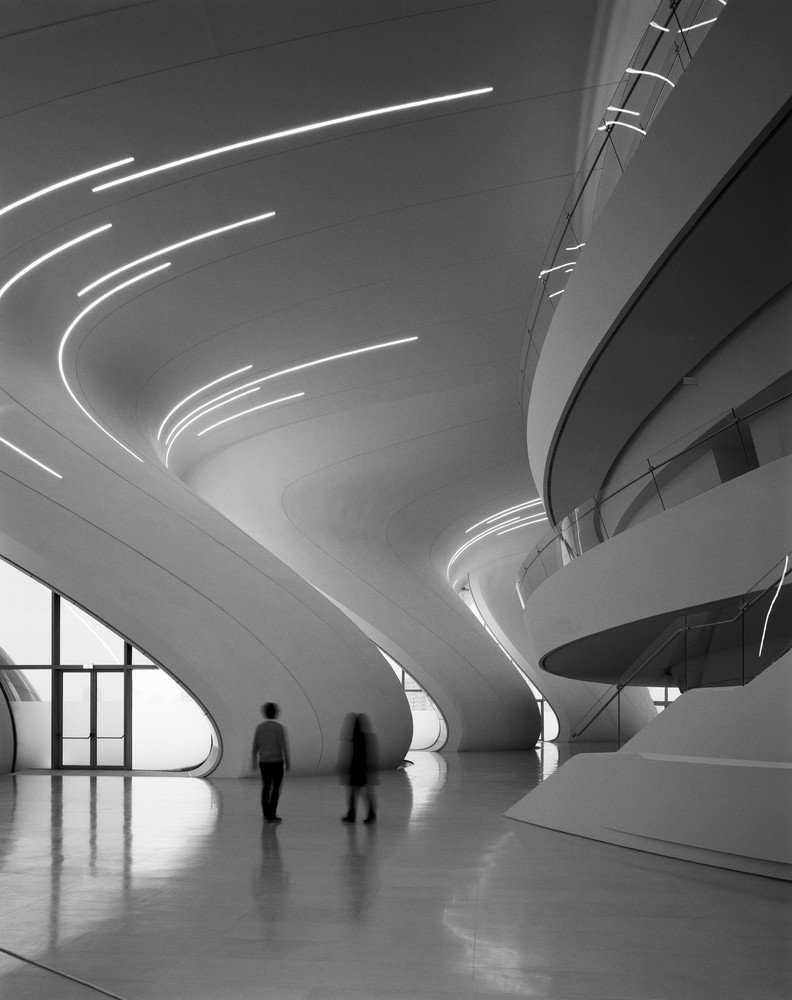
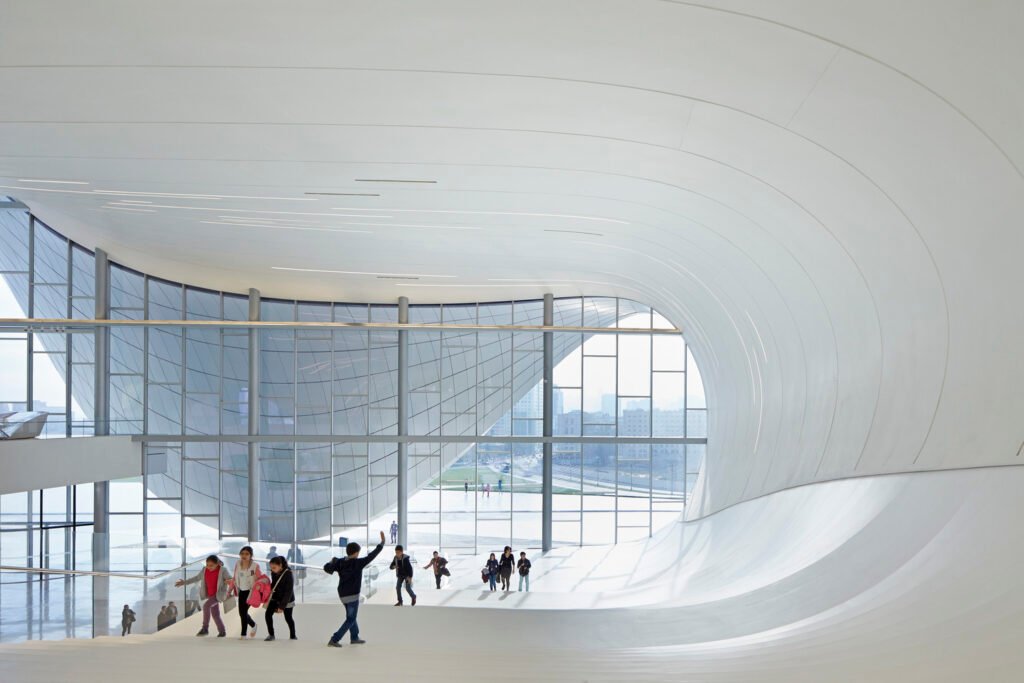
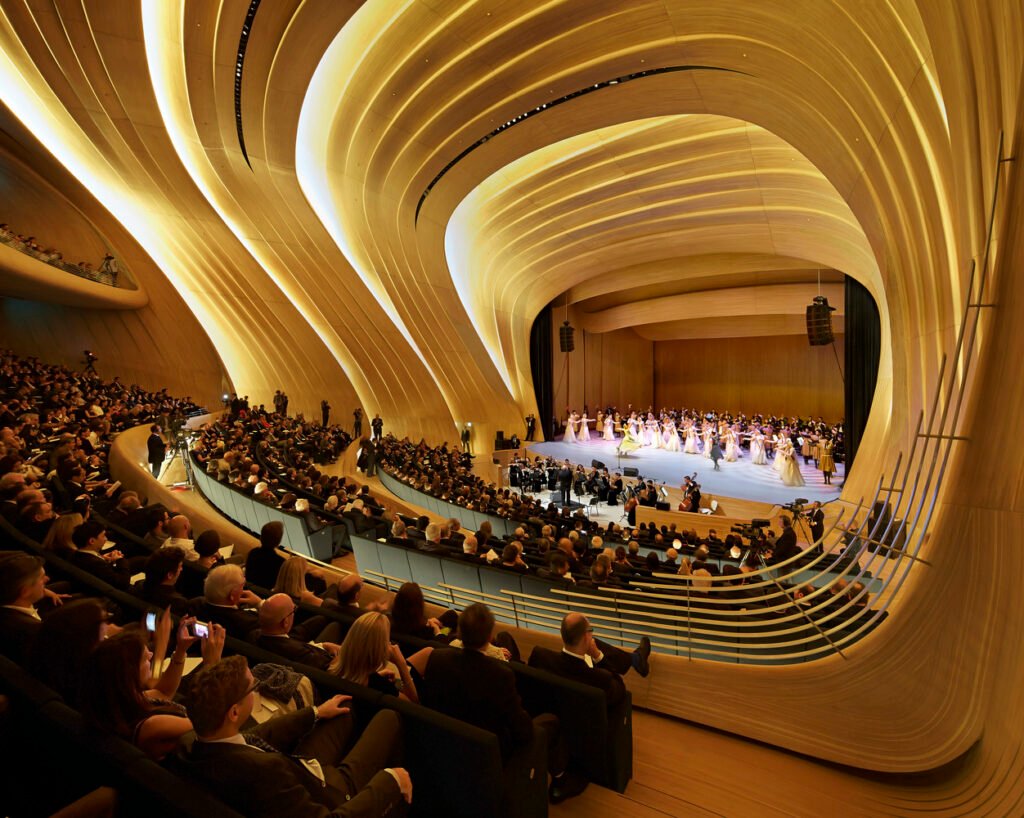
Inside, the architectural language remains consistent. The Centre houses exhibition galleries, museums, conference halls, an auditorium, educational facilities, and flexible cultural spaces. Rather than separating rooms with rigid boundaries, the interiors flow into one another through gently curving walls and ceilings. Carefully positioned skylights and glazed openings bring natural daylight deep into the building, enhancing the sense of openness and reducing dependence on artificial lighting during daytime hours.
The Heydar Aliyev Center is not merely an architectural icon; it functions as one of Azerbaijan’s most important cultural institutions. It hosts international exhibitions, performances, conferences, educational programmes, and public events that attract visitors from across the world. By combining architecture with cultural programming, the Centre has strengthened Baku’s position as an emerging global cultural destination.
From an urban planning perspective, the project offers valuable lessons. Rather than treating the building as an isolated monument, the design integrates a generous public plaza that encourages gathering, interaction, and recreation. The open landscape surrounding the Centre has become an active civic space where residents and tourists engage with the architecture beyond its formal cultural functions. This integration of public realm and built form demonstrates how landmark buildings can contribute to vibrant urban life instead of standing apart from it.
The project has received widespread international recognition. In 2014, the Design Museum in London awarded the Heydar Aliyev Center the prestigious Design of the Year Award, acknowledging its exceptional contribution to architecture and design. Today, it is widely regarded as one of Zaha Hadid’s finest works and a benchmark in computational and parametric architecture.
Nevertheless, the Centre has also generated discussion within architectural circles. Critics have questioned the project’s cost and the political context surrounding its development, while others debate the role of iconic architecture in shaping national identity. Such discussions are common with landmark public projects and form part of the broader conversation about architecture’s relationship with politics, economics, and society. Regardless of differing perspectives, there is broad professional consensus that the Centre represents a milestone in architectural innovation and engineering excellence.
It demonstrates that architecture can transcend functionality to become an expression of culture and identity. It highlights the importance of collaboration between design, engineering, and digital fabrication in delivering complex projects. Most importantly, it illustrates how public architecture can create memorable civic spaces that inspire social interaction while enriching the urban environment.
More than a decade after its completion, the Heydar Aliyev Center continues to influence contemporary architectural practice worldwide. Its flowing form remains instantly recognisable, yet its true significance lies beyond aesthetics. It represents the successful fusion of technology, structural innovation, urban design, and cultural ambition into a single architectural statement.
In an age when cities increasingly seek iconic buildings to define their global identity, the Heydar Aliyev Center stands as a reminder that truly remarkable architecture is not measured solely by visual impact. Its enduring legacy lies in its ability to connect people, place, and culture through design—making it one of the most remarkable architectural achievements of the twenty-first century.
References
- Zaha Hadid Architects. Heydar Aliyev Center.
- ArchDaily. Heydar Aliyev Center / Zaha Hadid Architects.
- Heydar Aliyev Center (Official).
- Heydar Aliyev Foundation.
- Design Museum, London. Designs of the Year 2014.
- The Pritzker Architecture Prize. Zaha Hadid Biography.
Also Read: Ithra: Where Architecture Transforms an Oil Legacy into a Cultural Landmark
Join our WhatsApp Channel for fastest updates: Join now