
Indian Railways is set to introduce India’s first Hydrogen Fuel Cell Trainset, a major step towards clean and low-emission rail mobility. The indigenously developed train will be capable of carrying around 2,600 passengers across its 10-coach configuration, making it one of the largest hydrogen-powered passenger trains in the world.
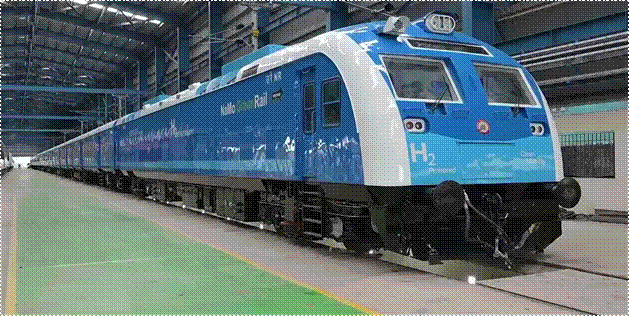
Unlike conventional electric trains that rely on overhead power lines, the hydrogen fuel cell train generates electricity onboard through a chemical reaction between hydrogen and oxygen. The process produces water vapour as its only direct by-product, eliminating tailpipe carbon emissions and significantly reducing environmental impact. The project represents the next phase of Indian Railways’ transition from fossil fuels to sustainable energy after achieving electrification of more than 99% of the Broad Gauge network.
The train has been designed to operate initially on the Jind–Sonipat section of Northern Railway in Haryana. It will have an operational speed of 75 km/h and a design speed of 110 km/h, serving multiple stations between Jind and Sonipat. Supporting the operation is India’s first integrated hydrogen railway ecosystem at Jind, featuring on-site hydrogen production through electrolysis, high-pressure storage, compression facilities, and refuelling infrastructure capable of simultaneously servicing both driving power cars. The facility can store nearly 3,000 kilograms of hydrogen and has received approval from the Petroleum and Explosives Safety Organisation (PESO).
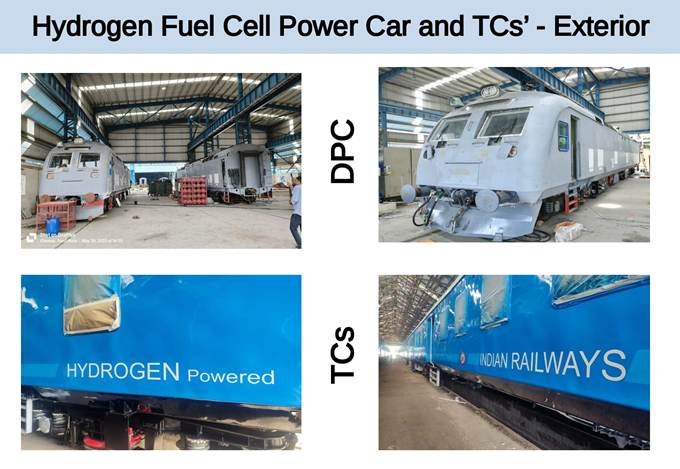
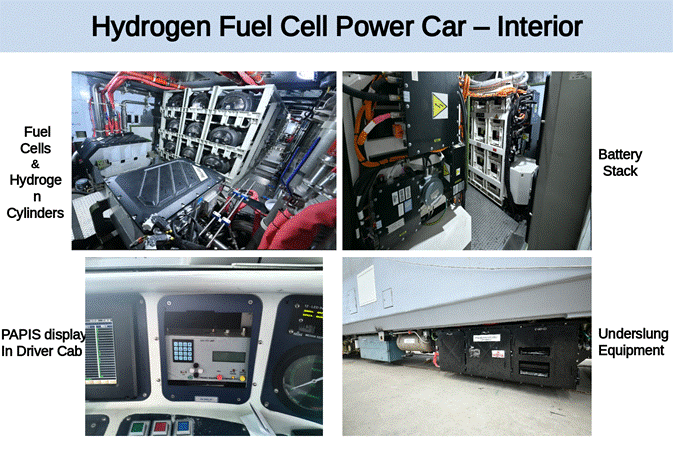
The train consists of two Hydrogen Driving Power Cars and eight trailer coaches. Each power car houses Proton Exchange Membrane (PEM) fuel cells, lithium iron phosphate (LFP) batteries, and hydrogen storage cylinders that together generate 1,200 kW (1,600 hp) of power, providing sufficient traction for the complete trainset.
Given hydrogen’s highly flammable nature, Indian Railways has incorporated multiple layers of safety into the project. The train and refuelling infrastructure are equipped with continuous hydrogen leak detectors, heat, flame and smoke sensors, automatic hydrogen shut-off systems, advanced ventilation mechanisms, and emergency monitoring systems. The hydrogen ecosystem has been developed in compliance with international standards such as NFPA-2 and the ISO 19880 Series, while an independent safety assessment was conducted by TÜV SÜD, Germany, before operational clearance.
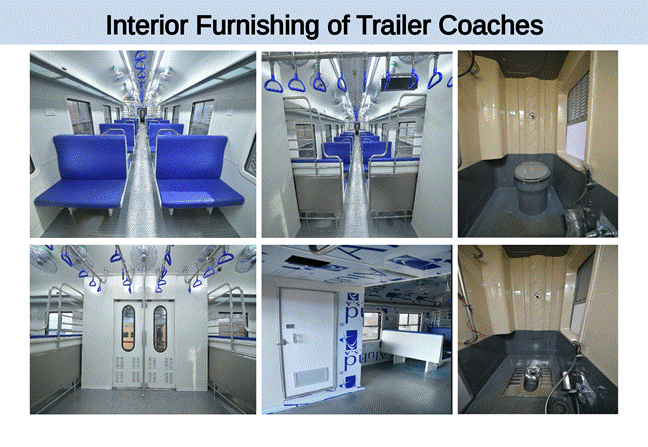
According to the Ministry of Railways, the project has been developed using indigenous capabilities under the leadership of Indian Railways. The Research Designs and Standards Organisation (RDSO) led the technical specifications and design approval process, Medha Servo Drives integrated the trainset, and the Integral Coach Factory (ICF) contributed to its exterior design.
Globally, hydrogen-powered passenger trains are still in the early stages of deployment, with countries such as Germany, France, Italy, China and Japan operating relatively smaller trainsets, generally comprising two to four coaches. Indian Railways believes its larger-capacity hydrogen train demonstrates the potential of hydrogen technology for mainstream passenger transportation and supports the objectives of the National Green Hydrogen Mission and India’s long-term Net Zero commitments. The experience gained from the Jind–Sonipat project is also expected to support future deployment of hydrogen-powered trains on heritage routes, including the Kalka–Shimla Railway.
Join our WhatsApp Channel for fastest updates: Join now