

In the world of skyscrapers, height has long been the ultimate symbol of ambition. Cities compete to rise taller, sharper, and faster toward the sky. But in the mountainous megacity of Chongqing, China, architects challenged this very idea — not by building higher, but by building sideways in the sky.
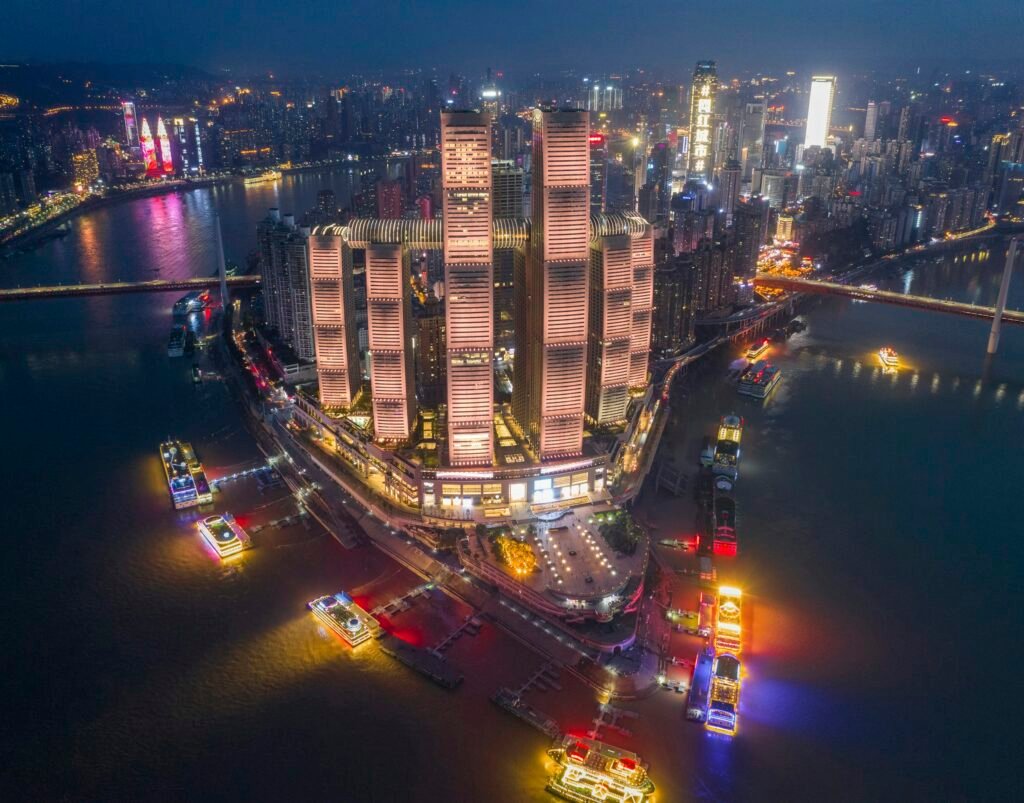
Project Facts
- Project: Raffles City Chongqing – The Crystal
- Location: Chongqing
- Architect: Moshe Safdie / Safdie Architects
- Developer: CapitaLand
- Structural Engineer: Arup
- Height of Skybridge: Approx. 250 metres
- Length of The Crystal: Approx. 300 metres
- Completion: 2019
- Project Type: Mixed-use Mega Development
- Notable Feature: One of the world’s highest multi-tower skybridges
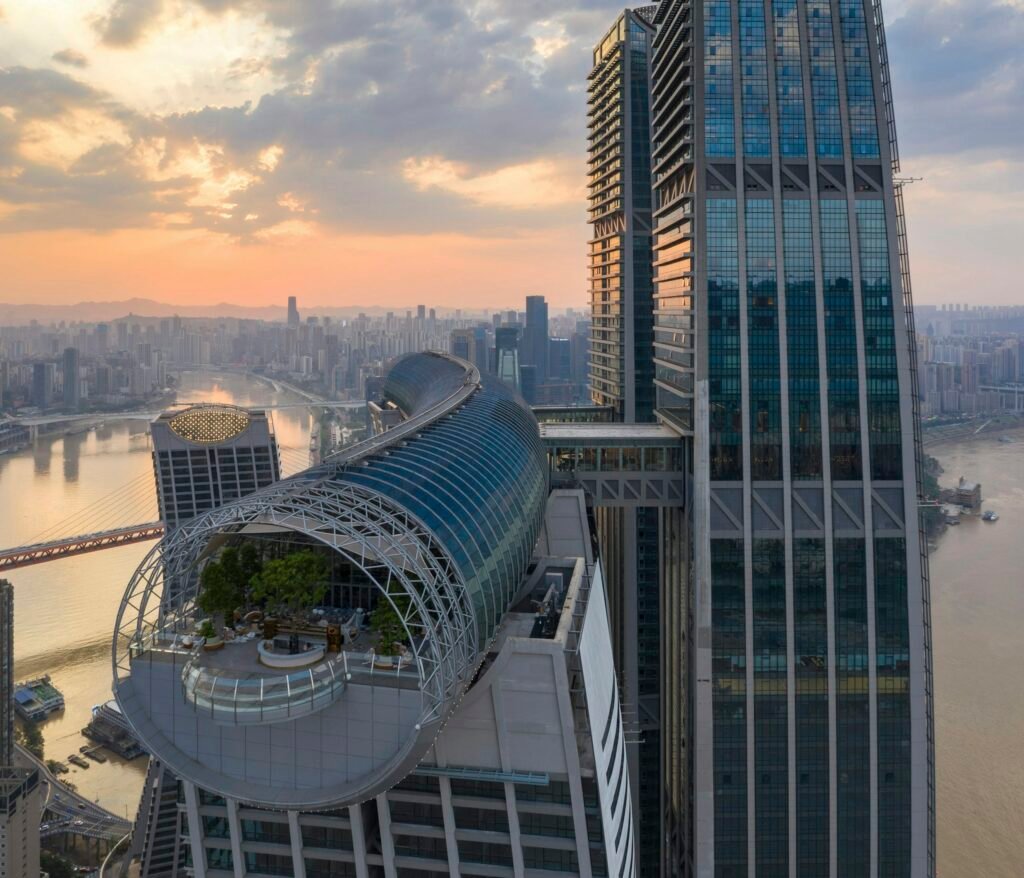
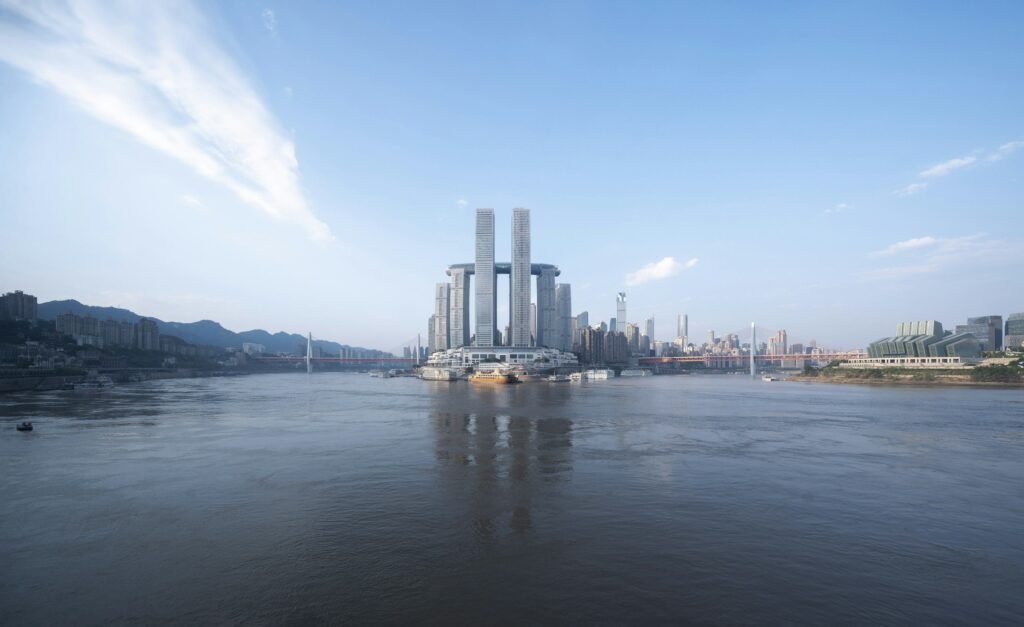
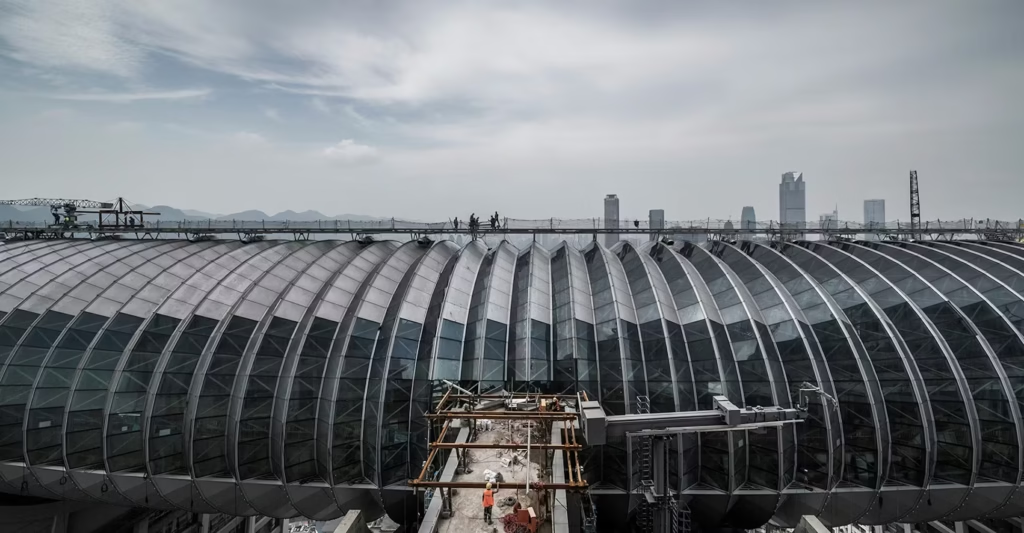
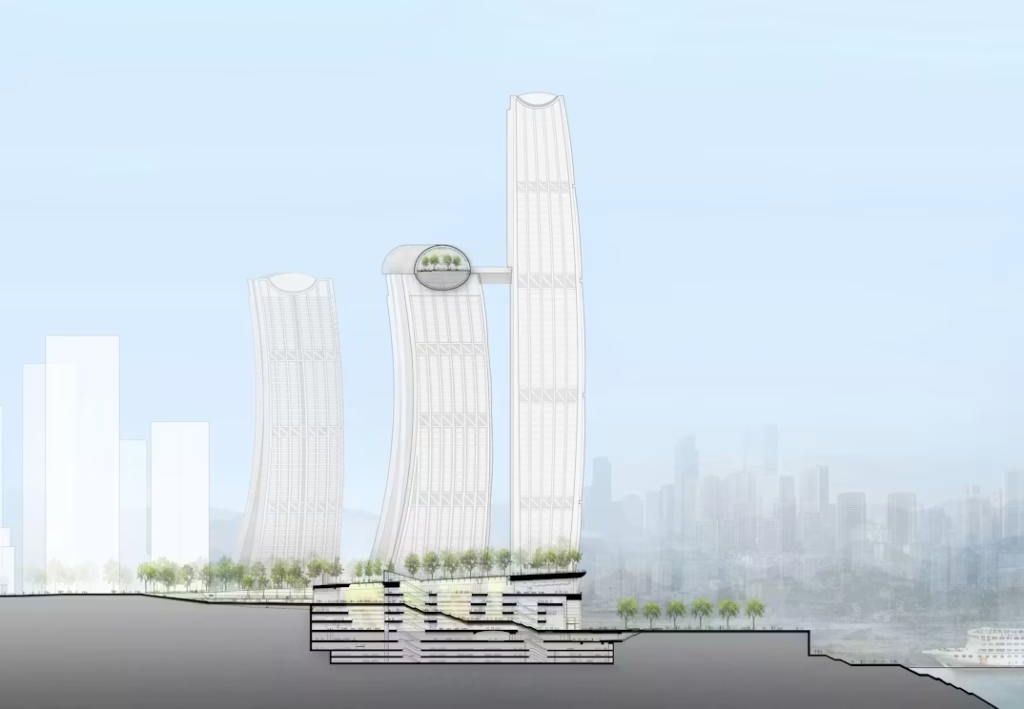
Hovering nearly 250 metres above the ground, The Crystal at Raffles City Chongqing has emerged as one of the most extraordinary engineering achievements of the 21st century. Often described as the world’s “horizontal skyscraper,” the structure stretches approximately 300 metres across the tops of multiple towers, creating an entirely new interpretation of vertical urbanism.
Designed by globally renowned architect Moshe Safdie and developed by CapitaLand, the project stands at the meeting point of the Yangtze and Jialing rivers — a historic commercial gateway that shaped Chongqing’s identity for centuries.
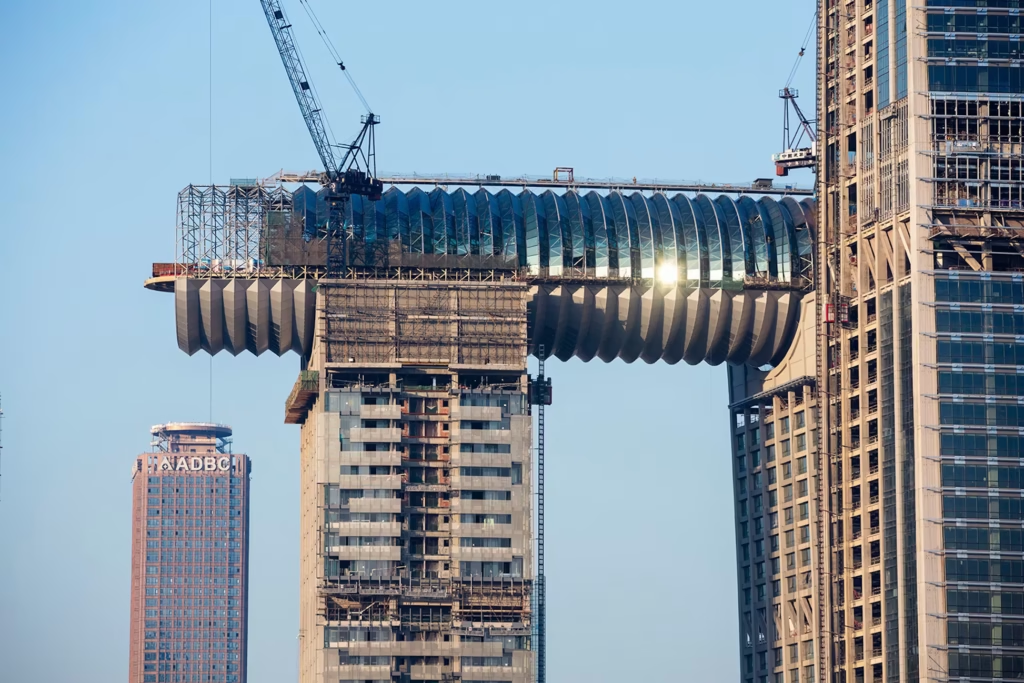
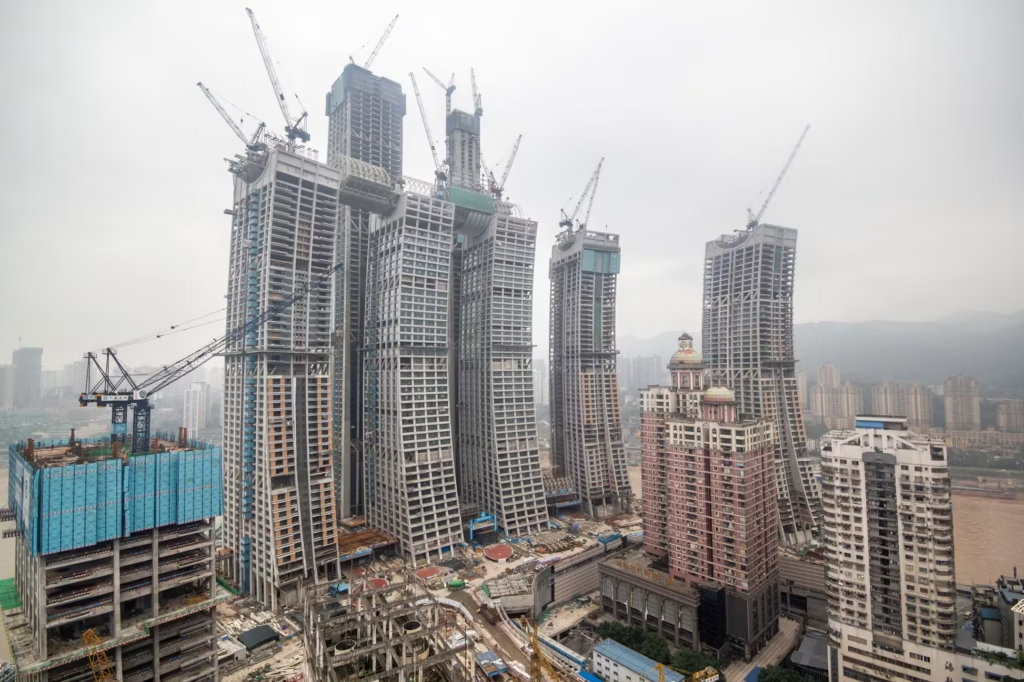
Unlike conventional skyscrapers that function as isolated towers, The Crystal acts as an elevated urban connector. Suspended across four 250-metre-tall towers and linked to two additional skyscrapers through cantilevered bridges, the structure transforms the skyline into a three-dimensional city network.
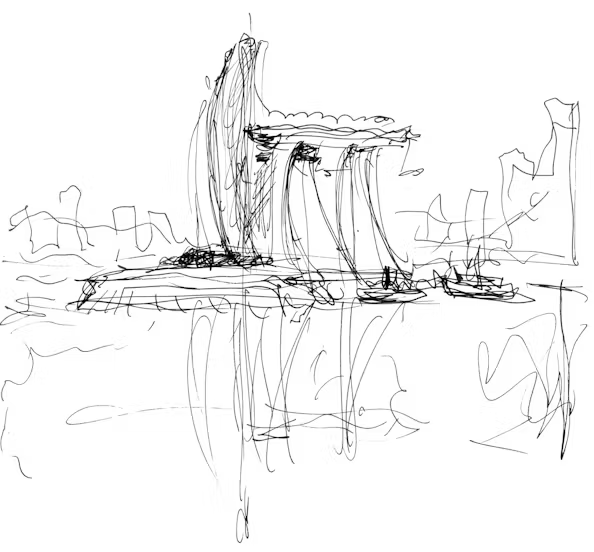
The architectural inspiration reportedly came from traditional Chinese sailing ships, symbolising Chongqing’s historic river trade culture. The result is not merely a skybridge, but a fully programmed urban space in the air containing observation decks, restaurants, gardens, lounges, event spaces, and recreational facilities.
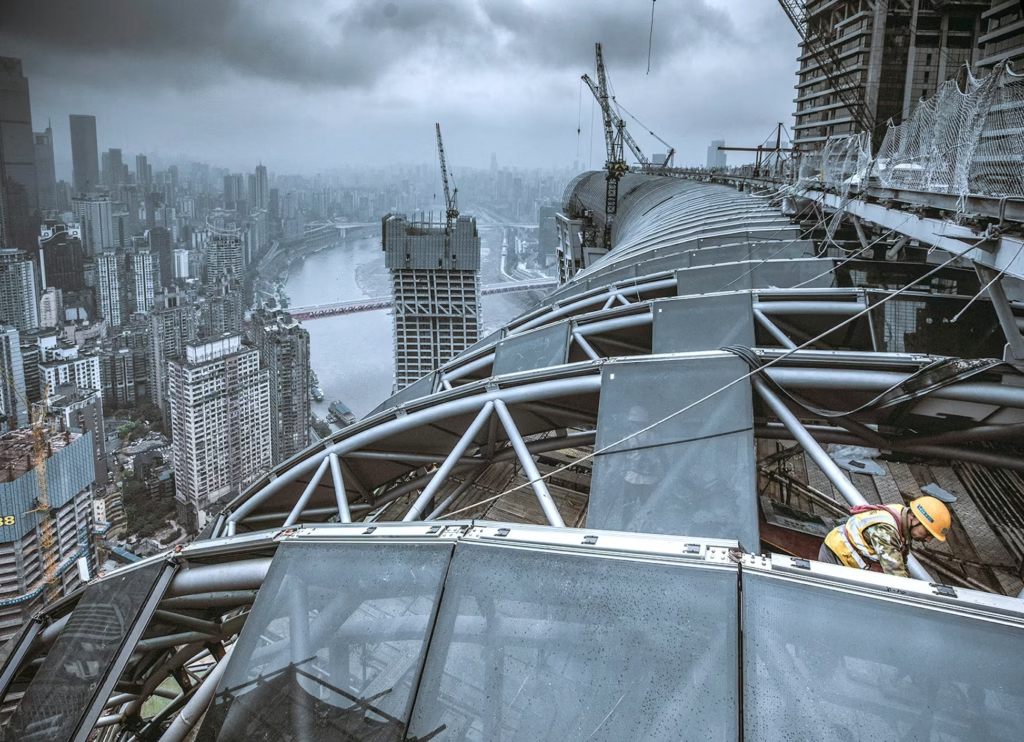
What makes the project truly remarkable is the engineering behind it. The steel structure weighs nearly 12,000 tonnes — comparable to the weight of the Eiffel Tower. Instead of assembling everything at extreme heights, engineers prefabricated several massive sections on the ground before lifting them hundreds of metres into the air using advanced hydraulic strand jack systems. Some segments weighed more than a million kilograms each.
The exterior of The Crystal is enclosed with approximately 3,000 glass panels and nearly 5,000 aluminium panels, creating its distinctive faceted appearance. Inside, visitors experience panoramic views of Chongqing through glass observation decks suspended high above the riverfront skyline.
The wider Raffles City Chongqing development consists of eight towers integrating residences, offices, hotels, retail spaces, and public infrastructure. Spanning more than 1.1 million square metres, the project represents a growing architectural movement where buildings are envisioned as interconnected vertical neighbourhoods rather than standalone structures.
More importantly, The Crystal reflects how contemporary architecture is evolving in dense urban environments. In cities where land is increasingly limited, architects are beginning to rethink how public life, connectivity, recreation, and movement can exist above ground level.
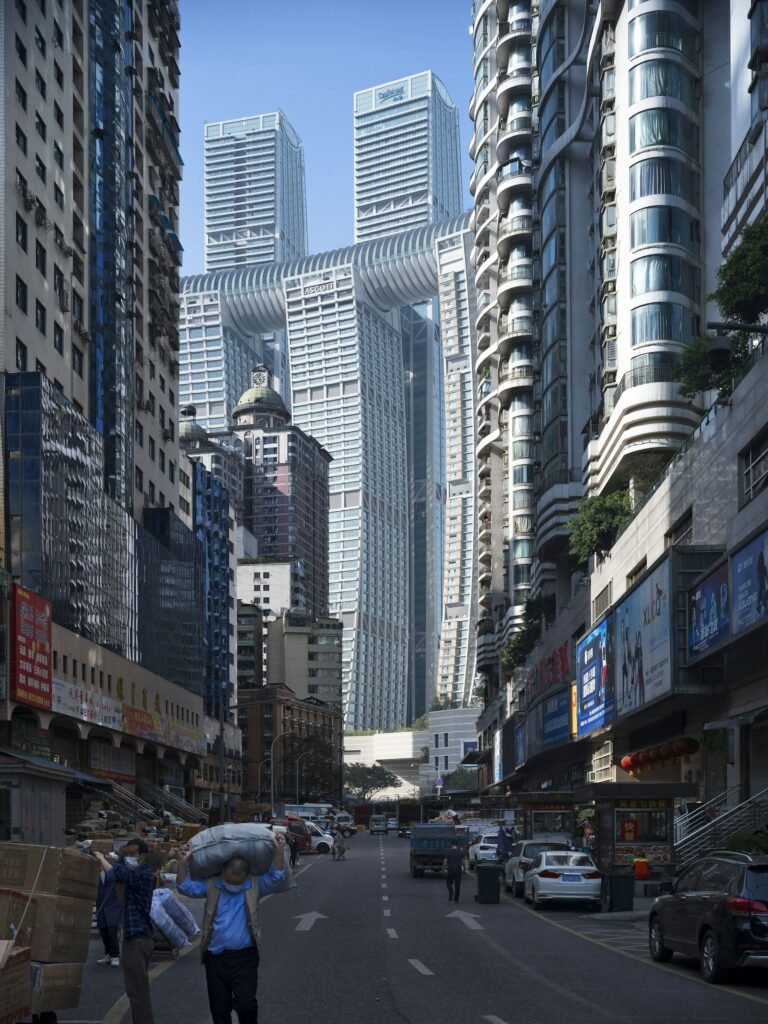
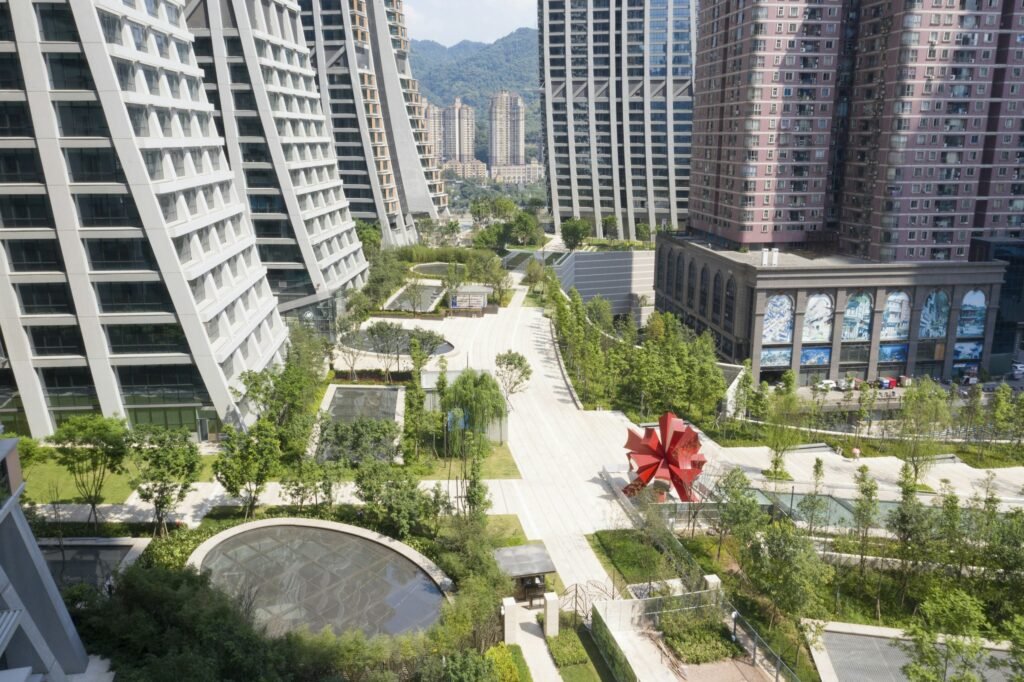
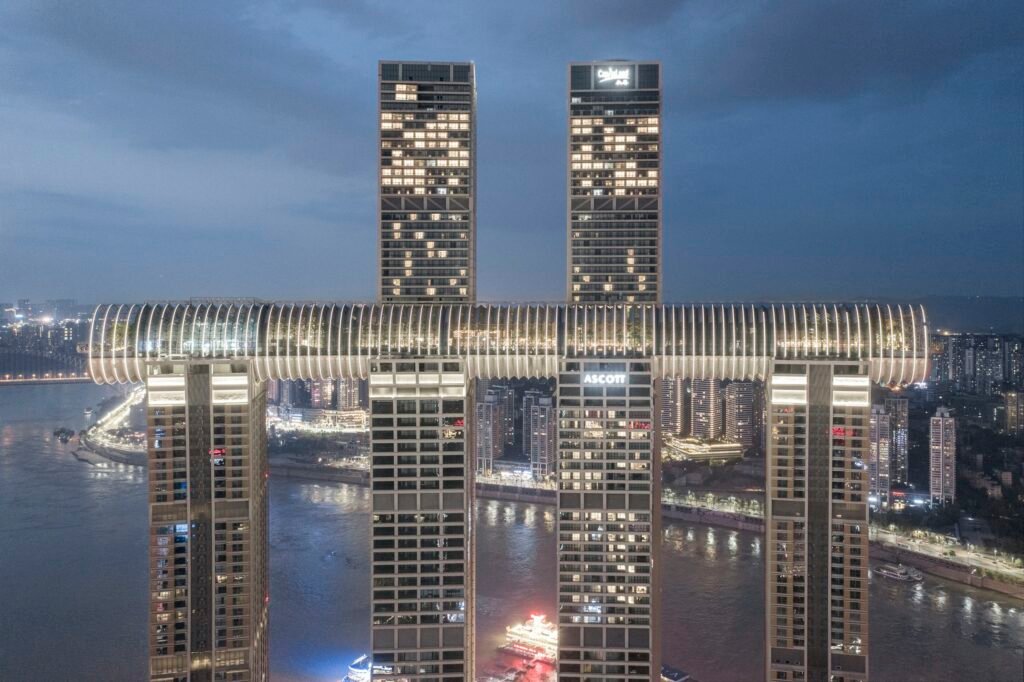
Today, The Crystal is more than an engineering spectacle. It is a symbol of how architecture can merge infrastructure, urbanism, and public experience into a single visionary form — redefining not only the skyline of Chongqing, but also the future possibilities of high-rise design.
Sources/ Image Source
- Safdie Architects – Raffles City Chongqing
- CapitaLand Official Project Information
- Arup Project Overview
- CTBUH / Tall Building References
Also Read: THE WOODEN SKYSCRAPER THAT SHOULDN’T EXIST — AND YET, IT RISES- THE ATLASSIAN CENTRAL
Join our WhatsApp Channel for fastest updates: Join now