

At a time when cities across the globe are struggling with rising housing shortages, climate risks, and widening urban inequality, the thirteenth session of the World Urban Forum (WUF13) is set to convene in Baku, Azerbaijan, from May 17–22, 2026. Organized by UN-Habitat in collaboration with the Government of Azerbaijan, the forum will revolve around the theme “Housing the World: Safe and Resilient Cities and Communities.
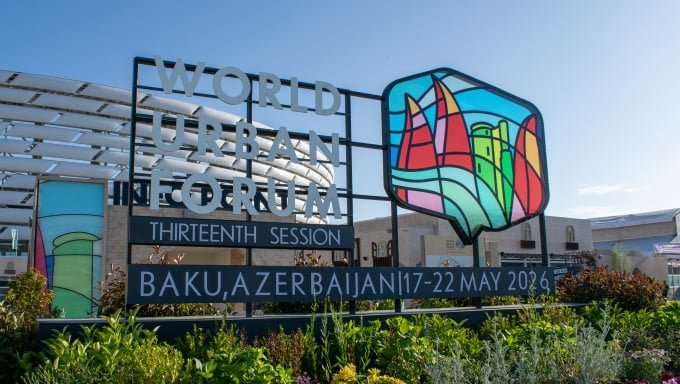
Recognized as the world’s premier platform on sustainable urbanization, WUF13 is expected to bring together policymakers, urban planners, architects, researchers, investors, civil society organizations, and community leaders from across continents to address one of the most pressing global concerns — access to adequate and resilient housing.
The Forum’s opening ministerial meeting will review global progress on the New Urban Agenda midway through its 20-year implementation timeline, while setting the stage for the 2026 midterm review process. The official opening ceremony will feature high-level representatives from the United Nations and international development agencies emphasizing housing as a foundation for social inclusion, climate resilience, and sustainable urban development.
One of the key attractions of WUF13 will be the high-level dialogue titled “The Global Housing Crisis: What is the Plan?” featuring prominent international voices including Jeffrey Sachs, Habitat for Humanity International CEO Jonathan Reckford, and urban governance leaders from Europe and Latin America. Discussions will focus on escalating housing costs, informal settlements, land policy reforms, and community-led housing solutions.
Climate adaptation and resilient housing systems will also dominate the agenda through sessions such as “Stories from the Climate Frontlines,” highlighting vulnerable communities and cities facing environmental risks. Representatives from Kiribati, Peru, and global climate research institutions are expected to present local strategies connecting climate finance with urban resilience.
The Forum will further spotlight social inclusion through a dedicated Women’s Roundtable addressing women’s access to housing, land rights, finance, and protection from gender-based violence. Another special session, “Pulse of Healthy Homes,” will examine the relationship between housing conditions, public health, and urban well-being.
A major addition this year is the expanded Urban Expo, introducing the Business & Innovation Hub, WUF Academy, and Practices Hub — interactive spaces designed to connect governments, startups, universities, housing practitioners, and investors around scalable urban solutions.
The Forum will conclude with the presentation of the Baku Call to Action, a stakeholder-led outcome document outlining shared global priorities for advancing adequate housing and sustainable urban development.
As rapid urbanization continues to reshape cities worldwide, WUF13 is expected to reinforce international cooperation and generate actionable strategies to ensure safer, more inclusive, and climate-resilient urban futures.
Architect Rajendra Kumar on Why WUF13 Matters
Architect and urbanist Ar. Rajendra Kumar, attending WUF13 represents not merely participation in a global conference, but an opportunity to engage with some of the most urgent urban questions shaping the future of humanity. Having previously experienced earlier editions of the forum in Katowice, Poland and Abu Dhabi, UAE, he believes the Baku edition carries exceptional global significance due to Azerbaijan’s emerging leadership in sustainability and urban transformation.
“Global forums like WUF create important spaces for exchanging ideas, learning from diverse housing models, and understanding how cities can become more humane, resilient, and environmentally responsive,” Rajendra Kumar observes while reflecting on the importance of international collaboration in urban planning and architecture.
The forum’s agenda will focus extensively on equitable housing, climate adaptation, resilient infrastructure, inclusive public spaces, and sustainable mobility. High-level dialogues are expected to address the widening global housing crisis, informal settlements, community-led development, and integrated land-use planning. Experts and city leaders from Asia, Europe, Africa, and Latin America will present innovative approaches aimed at strengthening urban resilience while improving quality of life.
A major highlight of WUF13 is expected to be its emphasis on climate-responsive urbanism. Special sessions will examine how vulnerable cities and communities are adapting housing systems and public infrastructure to growing environmental risks, particularly in regions already facing the severe impacts of climate change. Discussions linking climate finance, urban governance, and local implementation are likely to shape future international urban policies.
The forum also offers an important opportunity to understand Baku itself — a rapidly evolving city where heritage, modern architecture, and large-scale urban redevelopment coexist within a dynamic metropolitan landscape. From the historic fabric of the Old City to contemporary landmarks such as the Heydar Aliyev Center and Flame Towers, Baku reflects the complexities of balancing modernization with cultural identity and heritage conservation.
Rajendra Kumar notes that Azerbaijan’s successful hosting of COP29 followed by WUF13 demonstrates the country’s growing commitment toward international dialogue on sustainability, climate action, architecture, and future-ready urban development. The Presidential declaration recognizing 2026 as the “Year of Urban Planning and Architecture” further underlines the nation’s effort to strengthen its architectural legacy while advancing resilient and inclusive urban growth.
The initiative also highlights Azerbaijan’s historic urban traditions shaped by the Silk Road and reflected in heritage sites such as Icherisheher, the Palace of the Shirvanshahs, and the historic center of Shaki — all recognized for their architectural and cultural significance. Simultaneously, contemporary developments such as White City and major reconstruction projects in Shusha represent the country’s ambition to create sustainable and resilient urban environments for the future.
For Indian cities, the conversations emerging from WUF13 are especially relevant. As India continues to urbanize rapidly, challenges related to affordable housing, informal settlements, environmental vulnerability, mobility, and public infrastructure demand integrated and people-centric planning approaches. Global forums like WUF13 offer valuable lessons on how cities can balance growth with sustainability while preserving cultural identity and improving social equity.
Beyond policy discussions, the forum is expected to strengthen international collaboration between governments, universities, design institutions, researchers, and creative professionals. Such exchanges can lead to future partnerships, academic initiatives, exhibitions, publications, and cross-cultural cooperation in architecture and urban development.
As the world searches for practical solutions to the growing urban crisis, WUF13 in Baku stands as a timely reminder that the future of cities will depend not only on infrastructure and technology, but also on inclusivity, resilience, cultural continuity, and collective global action.
Join our WhatsApp Channel for fastest updates: Join now