

Indian Railways has sanctioned 100 new railway projects for the financial year 2025–26, with a total investment of ₹1.53 lakh crore. The initiative, announced by the Ministry of Railways under the PM Gati Shakti National Master Plan, aims to enhance last-mile connectivity, especially in underserved and remote regions, while building a high-capacity, future-ready railway network.
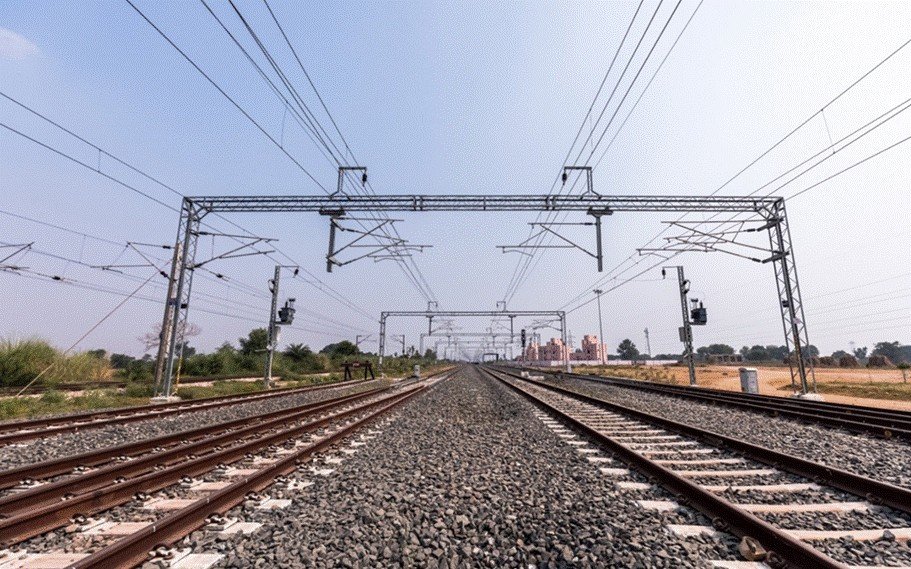
The sanctioned projects collectively span over 6,000 kilometres of railway network and include new lines, doubling, and multi-tracking works, along with bypass lines, flyovers, and chord lines. This marks a significant increase compared to FY 2024–25, where 64 projects covering around 2,800 kilometres were approved. The latest approvals represent a 56% rise in project count, a 114% increase in route coverage, and more than a 110% surge in financial commitment.
These infrastructure upgrades are strategically designed to decongest heavily saturated routes, improve punctuality, and enhance the overall passenger experience. At the same time, they aim to boost operational efficiency and reduce travel time across key corridors, thereby strengthening both passenger and freight movement nationwide.
The projects are distributed across nearly all major states, ensuring balanced regional development. Maharashtra leads with 17 projects, followed by Bihar (11), Jharkhand (10), and Madhya Pradesh (9). These states play a critical role in India’s logistics and industrial ecosystem, and enhanced rail connectivity is expected to significantly improve freight corridors and passenger mobility.
A strong emphasis has also been placed on expanding rail infrastructure in tribal and remote regions. Key projects such as the Rowghat–Jagdalpur line in Chhattisgarh and multiple corridors in Jharkhand and Odisha are expected to improve access to essential services such as healthcare, education, and employment, thereby integrating underserved populations into mainstream development.
From an investment perspective, over 35 projects exceed ₹1,000 crore, highlighting a shift towards large-scale infrastructure development. Major projects include the Kasara–Manmad third and fourth line, the Kharsia–Naya Raipur–Parmalkasa fifth and sixth line, the Itarsi–Nagpur fourth line, and the Secunderabad–Wadi multi-tracking project. Together, these high-value projects account for more than ₹28,000 crore and focus on strengthening high-density trunk routes.
Aligned with the Mission 3000 MT initiative, the projects are expected to significantly enhance cargo capacity and logistics efficiency. Energy corridors facilitating coal and mineral transport, high-density network upgrades, and improved port connectivity under the Rail Sagar Corridor are key highlights of the plan.
The large-scale investment is also expected to generate substantial employment opportunities and stimulate demand in core sectors such as steel and cement. As these projects progress, they are set to reduce logistics costs, improve service delivery, and act as a catalyst for India’s next phase of economic growth.