

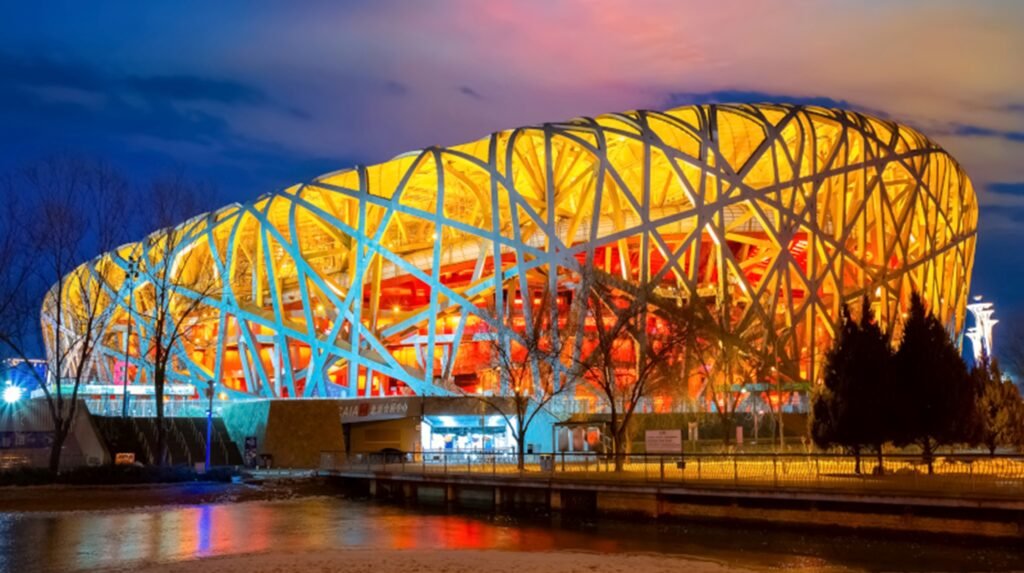

In the early years of the twenty-first century, China set out to create a building that would symbolize its arrival on the global stage. The opportunity came with the 2008 Summer Olympics, when Beijing was chosen as the host city. Among the monumental projects developed for the games, one structure stood above all others—both literally and symbolically: the Beijing National Stadium, popularly known as the Bird’s Nest.
More than just a sports arena, the stadium represents a remarkable collaboration between architecture, engineering, art, and national ambition. Designed by the Swiss architectural firm Herzog & de Meuron, founded by architects Jacques Herzog and Pierre de Meuron, the project also involved Chinese artist Ai Weiwei and structural engineers from Arup. Together, they created one of the most recognizable buildings of the modern era—a structure where art, engineering, and symbolism intertwine like the steel branches that form its shell.
But the story of the Bird’s Nest is not just about a visually striking stadium. It is about how architecture can redefine structural logic, transform urban identity, and challenge the boundaries between engineering and sculpture.
The Vision: Rethinking the Stadium
Traditional stadiums are usually designed as large bowls enclosed by facades that conceal the structural system. The architects of the Bird’s Nest rejected this convention entirely. Instead of hiding the structure, they made it the building’s defining architectural element.
The idea was simple yet radical: what if the structure itself became the architecture?
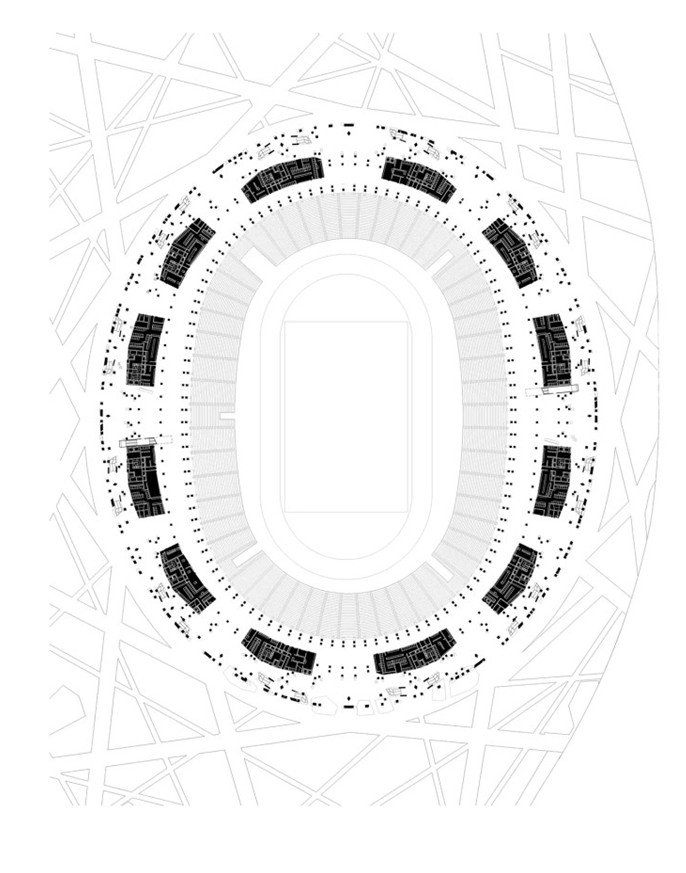
The result is a massive lattice of steel beams that wraps around the stadium in an apparently random pattern. At first glance, the building looks chaotic—like a bundle of twigs woven together by nature. This resemblance inspired the name Bird’s Nest, though the architects did not originally design it with that metaphor in mind.
In reality, the pattern is carefully engineered. Each beam is positioned through complex structural analysis to distribute loads across the network. What appears irregular is actually an intricately organized system of structural forces.
This approach blurred the boundary between structural engineering and architectural expression. The stadium became both a structural framework and a sculptural form, challenging conventional architectural logic.
Structure as Sculpture
One of the most extraordinary aspects of the Bird’s Nest is the scale of its steel structure. The stadium uses approximately 42,000 tonnes of steel, forming one of the largest steel frameworks ever constructed for a single building.
The steel members intersect and twist across the façade, creating a lattice that acts simultaneously as:
- the primary structural system
- the external façade
- the roof support structure
In conventional stadiums, these elements would exist as separate systems. Here, they merge into a single unified structure.
The structural network contains nearly 26 kilometers of steel sections, forming a massive three-dimensional grid. Yet despite its weight and complexity, the building appears surprisingly light and porous. Sunlight filters through the gaps between beams, creating shifting patterns of light and shadow across the surfaces below.
From an engineering perspective, this lattice performs a critical role: it distributes the immense loads generated by the stadium’s seating tiers and roof while resisting seismic forces.
Because Beijing lies in a seismically active region, the structure had to be capable of withstanding earthquakes as strong as magnitude 8. The interwoven steel members allow the building to absorb and redistribute forces rather than resisting them through rigid structural walls.
Also Read: Sydney Fish Market Reimagined: A Living Market, a Civic Stage, and a New Harbour Icon
Construction Challenges
Turning such a complex design into reality required unprecedented construction techniques. Each steel member had to be fabricated and assembled with extreme precision to ensure the structural system functioned as intended.
Construction began in 2003, and the structural frame quickly became one of the most technically demanding aspects of the project.
Several challenges emerged during construction:
1. Welding and Temperature Conditions
Steel welding requires controlled temperatures to prevent structural weaknesses. Because Beijing’s daytime temperatures could interfere with the welding process, many operations were conducted at night when conditions were more stable.
2. Complex Geometry
Unlike conventional buildings with repetitive structural elements, the Bird’s Nest contains many uniquely shaped beams and joints. This meant each connection required careful fabrication and positioning.
3. Temporary Support Structures
During construction, the steel lattice could not support itself until the entire network was completed. Engineers therefore constructed a massive temporary scaffolding system that held the beams in place until the final structure was stable.
Once the final connections were made, the temporary supports were gradually removed—revealing the stadium’s iconic form.
Spatial Experience: Architecture for Spectators
While the exterior structure attracts global attention, the interior design focuses on the experience of spectators.
The stadium was originally designed to accommodate approximately 91,000 people during the Olympic Games, though its permanent capacity later stabilized around 80,000 seats.
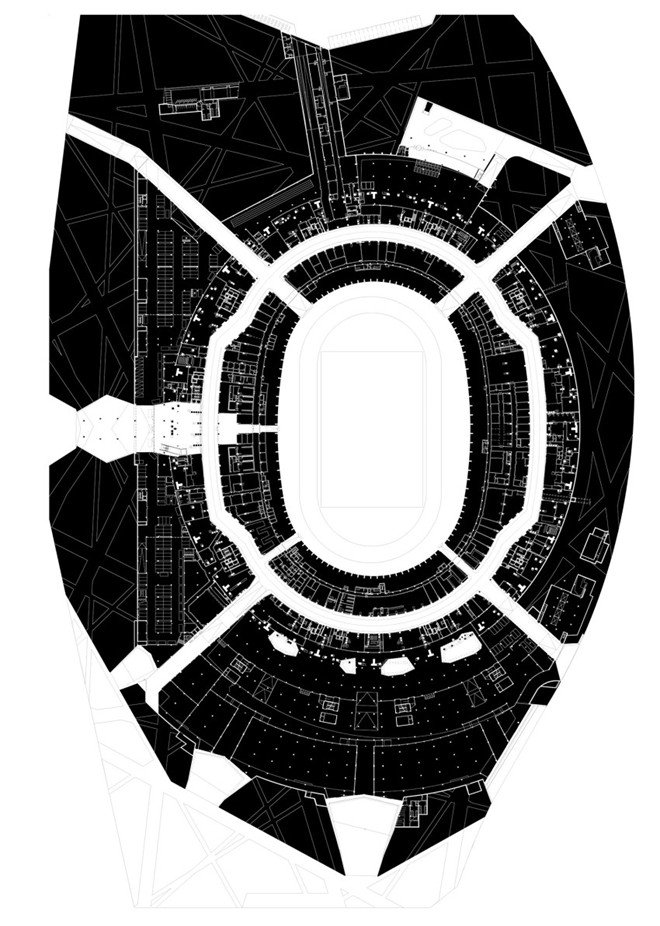
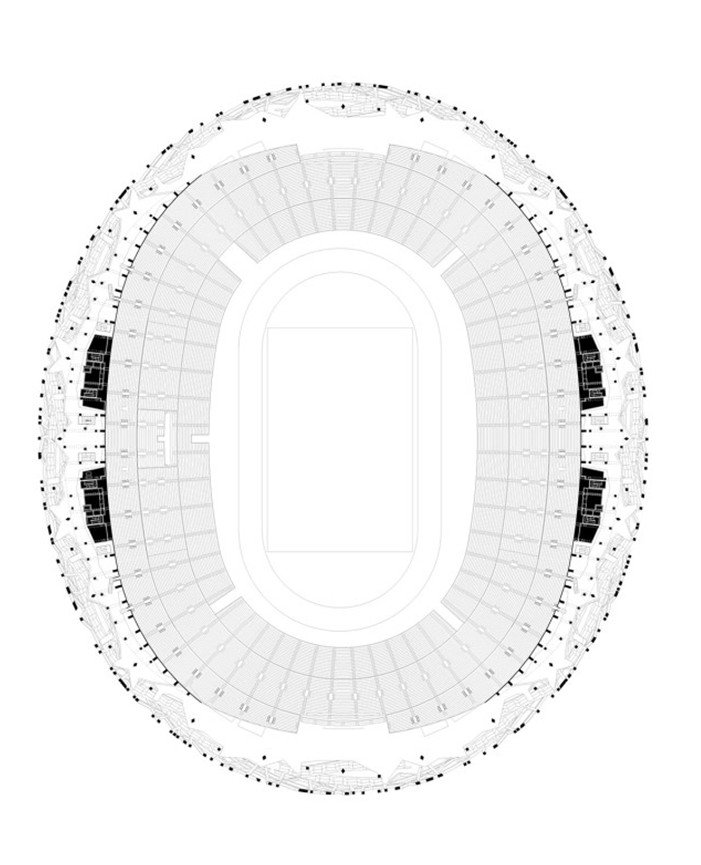
The seating bowl forms a continuous ring around the athletics field, ensuring clear sightlines from every seat. The architects carefully shaped the tiers so that spectators feel close to the action, even in a massive arena.
Another key design goal was to enhance the collective energy of the crowd. The geometry of the stadium helps amplify sound, directing cheers and chants toward the field.
In this sense, the building becomes an instrument for collective emotion. Architecture does not dominate the event—it intensifies it.
Environmental and Climatic Strategies
Despite its monumental scale, the Bird’s Nest integrates several passive environmental strategies.
Natural Ventilation
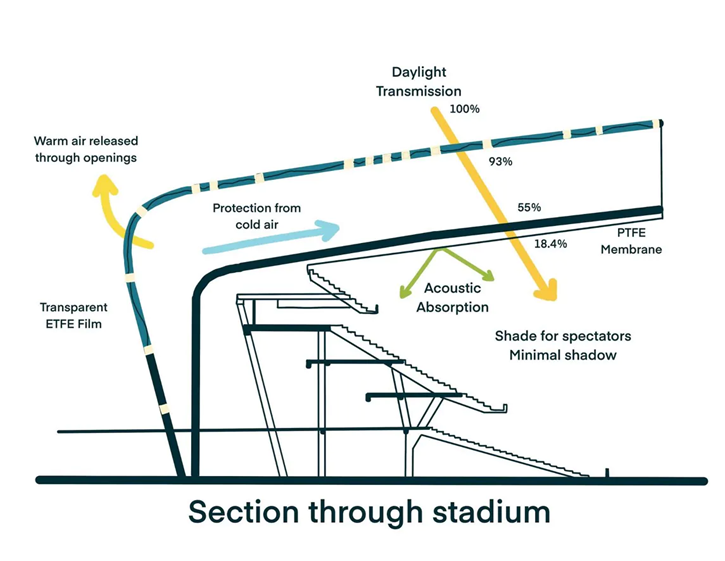
The open lattice structure allows air to circulate freely through the building. Instead of enclosing the stadium completely, the design creates a semi-open envelope that promotes natural airflow.
This reduces reliance on mechanical cooling systems.
Roof Membrane
The roof is covered with ETFE (ethylene tetrafluoroethylene) panels—a lightweight and transparent material often used in contemporary stadium design.
ETFE provides several advantages:
- It is significantly lighter than glass.
- It allows natural daylight to enter the stadium.
- It provides weather protection without creating a heavy roof structure.
Also Read: Guwahati Airport Terminal 2: A Nature-Themed Architectural Marvel in India’s North‑East
Rainwater Collection
Rainwater collected from the roof can be reused for irrigation and maintenance within the Olympic complex.
Together, these strategies demonstrate how large public structures can incorporate environmental considerations without compromising architectural expression.
Cultural Meaning and Symbolism
The Bird’s Nest is not just a technological achievement—it also reflects cultural symbolism.
In traditional Chinese cosmology, the circle represents heaven, while the square represents earth. The circular form of the stadium echoes this symbolic association with the heavens.
Nearby, the Beijing National Aquatics Center—known as the Water Cube—was designed as a square structure. Together, the two buildings represent the ancient Chinese concept of “round heaven and square earth.”
The stadium’s interwoven steel pattern has also been compared to the crackle patterns found in traditional Chinese ceramics, creating a subtle connection between contemporary architecture and historical craft traditions.
From Olympic Venue to Cultural Landmark
Olympic architecture often faces a difficult question: what happens after the games end?
Many Olympic stadiums around the world struggle to find meaningful uses once the global spotlight fades. The Bird’s Nest initially faced similar concerns due to its massive scale and maintenance costs.
However, over time the stadium has evolved into a multifunctional venue.
Today, it hosts:
- sporting events
- concerts and cultural festivals
- exhibitions and tourism activities
The stadium has also become one of Beijing’s most visited landmarks, attracting millions of tourists each year.
Its transformation demonstrates that Olympic architecture can transcend its original purpose and become a lasting urban symbol.
A Turning Point in Global Architecture
The Bird’s Nest marked an important moment in architectural history. It showed that large public buildings could combine structural experimentation, cultural symbolism, and urban spectacle.
More importantly, it represented a shift in how architecture communicates identity.
For China, the stadium symbolized technological capability, cultural confidence, and participation in global architectural discourse. For architects worldwide, it demonstrated how structural logic could produce forms that appear organic and unpredictable.
In many ways, the Bird’s Nest belongs to a lineage of iconic structures—such as the Eiffel Tower in Paris or the Sydney Opera House in Sydney—that transformed their cities into global symbols.
The Question It Leaves Behind
The Bird’s Nest proves that architecture can transcend function and become an emblem of cultural ambition.
Yet it also raises an important question for the future of cities.
If a stadium built for a two-week global event can become one of the most recognizable structures on earth, then what should be the true role of monumental architecture in contemporary cities?
Should it simply serve its function?
Or should it strive to shape identity, culture, and imagination for generations to come?
The answer may determine what the next great architectural icon will look like—and what it will mean for the cities that build it.
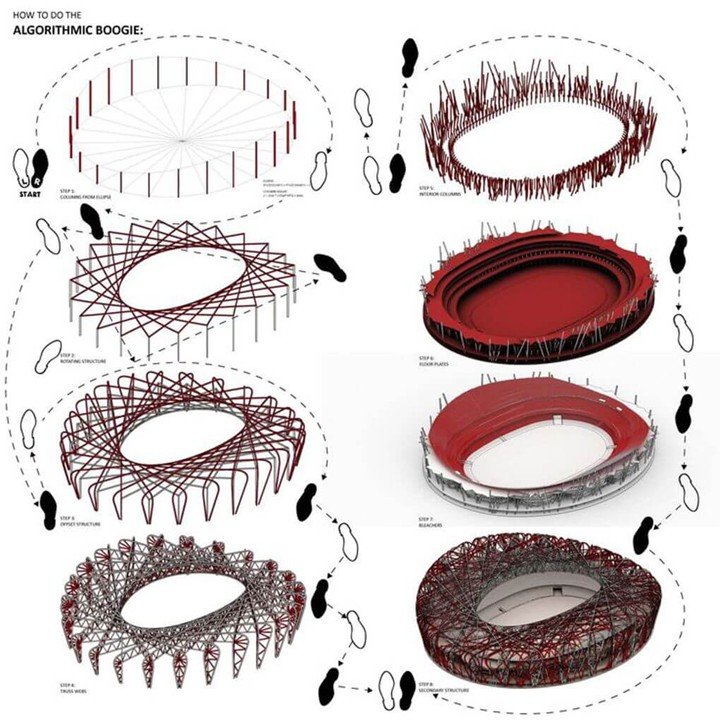
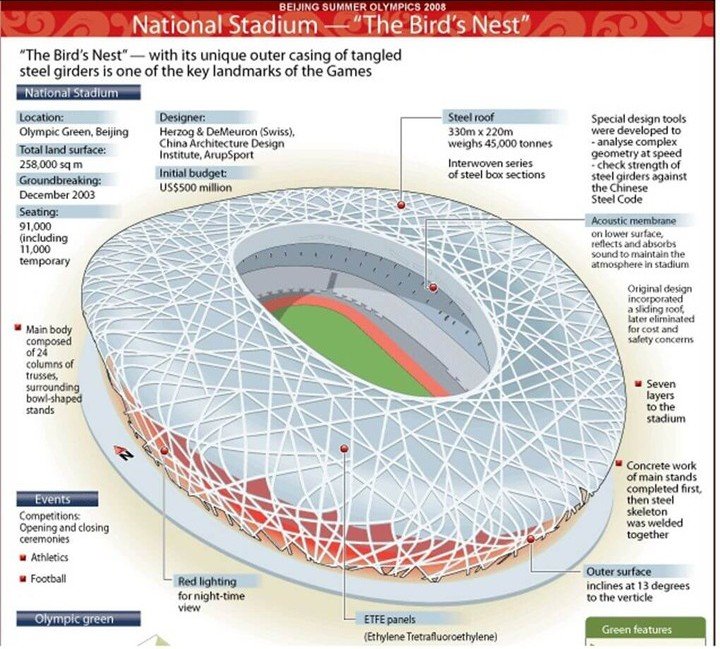
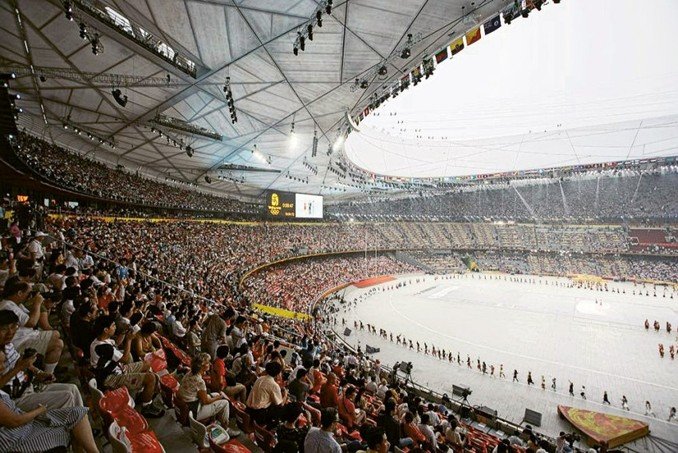
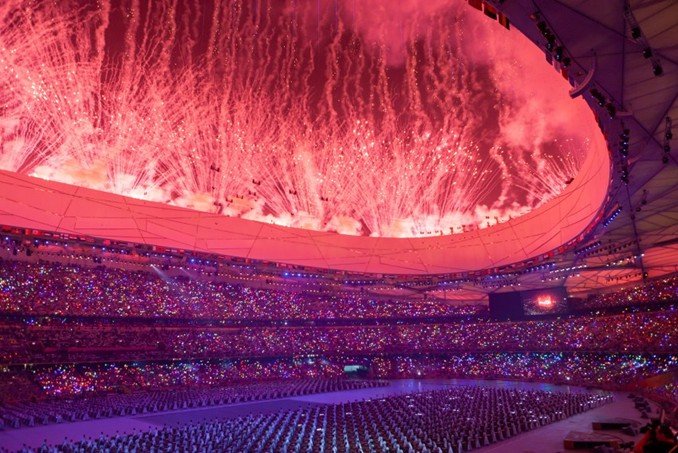
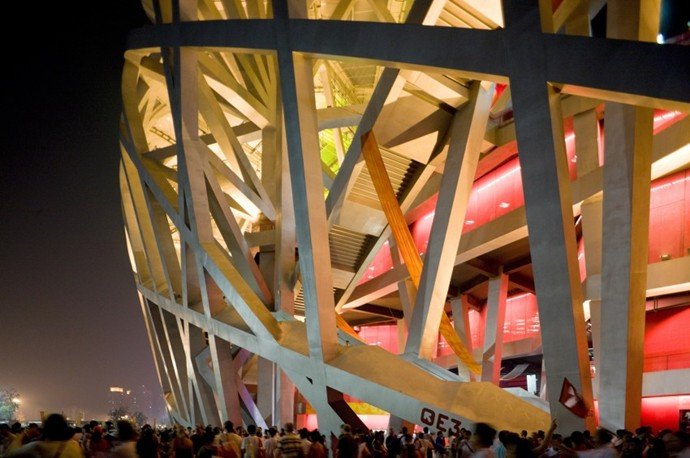
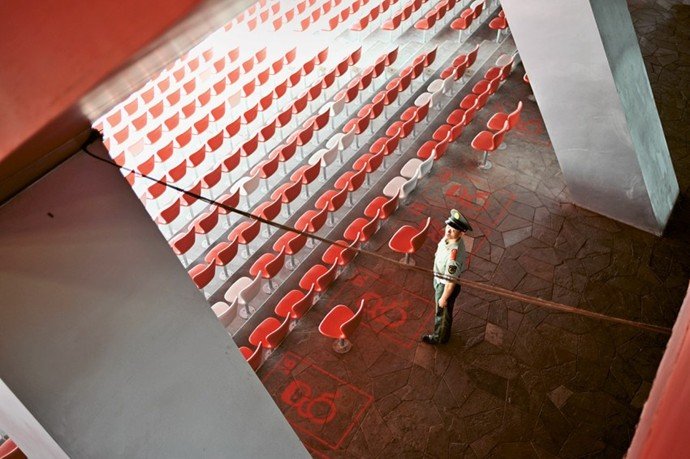
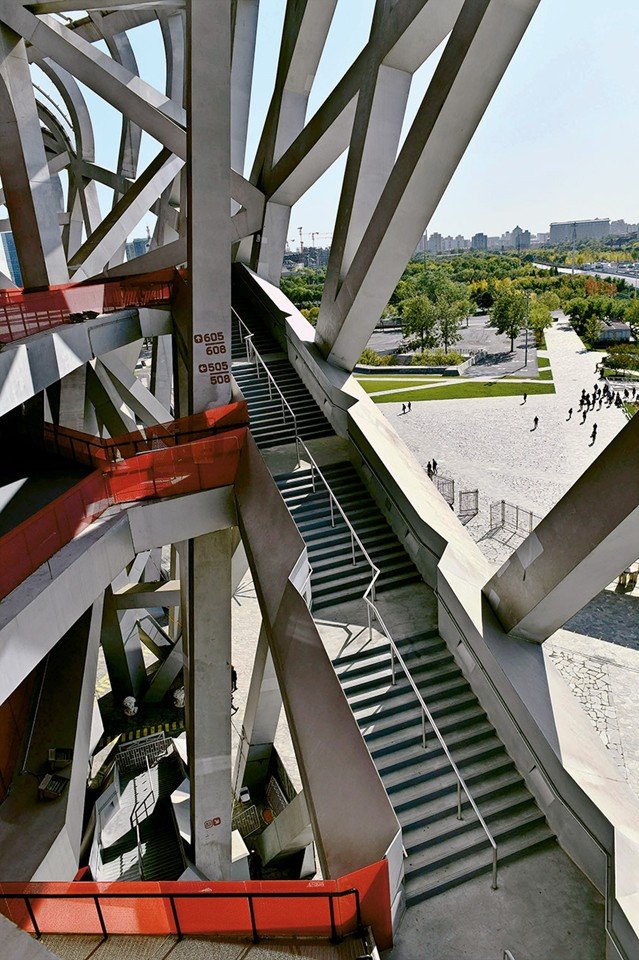
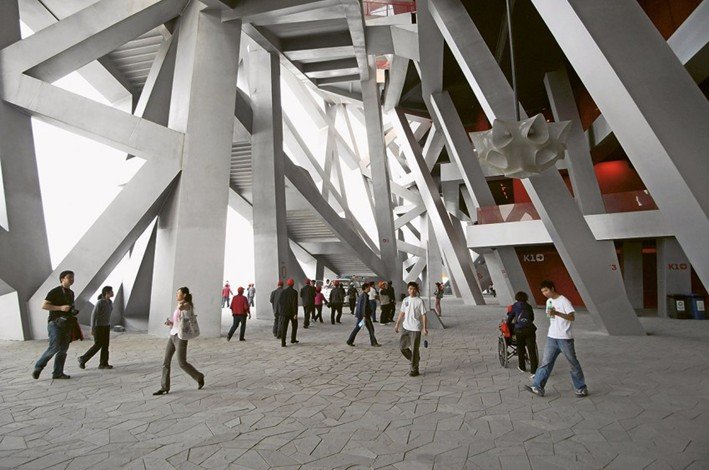
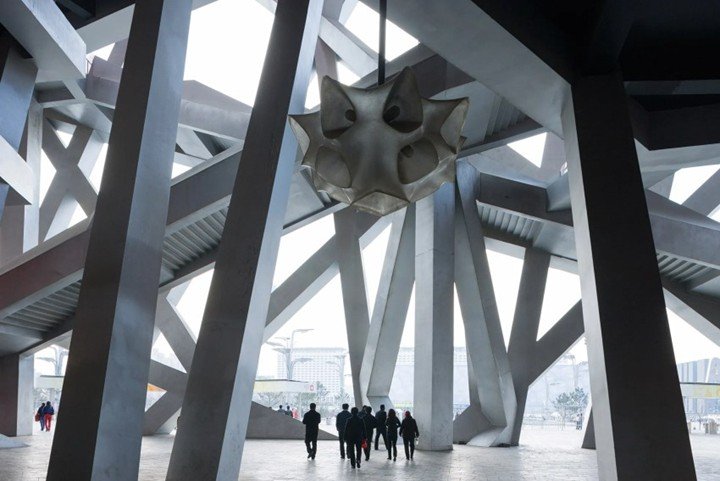
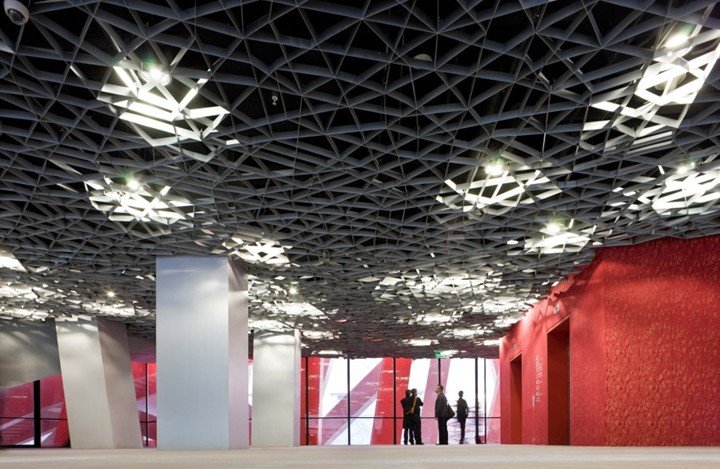
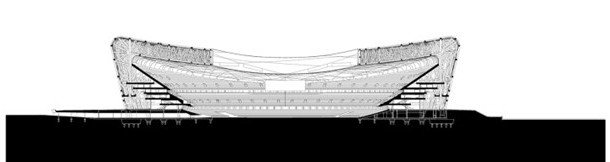
Interior and Exterior Views of the stadium (Source: Archeyes)
REFERENCES
- Arup. (n.d.). Chinese National Stadium (Bird’s Nest). Arup.
- Archeyes. (n.d.). China’s iconic Bird’s Nest: The National Stadium by Herzog & de Meuron. Archeyes.
- Herzog & de Meuron. (n.d.). National Stadium (Beijing). Herzog & de Meuron.
- International Research Journal of Engineering and Technology (IRJET). (2019). Study on the structural design of Beijing National Stadium (Bird’s Nest). International Research Journal of Engineering and Technology.
- Parametric House. (n.d.). The Bird’s Nest Stadium. Parametric House.
- Re-thinking the Future. (n.d.). 10 things you did not know about Bird’s Nest China. Re-thinking the Future.