

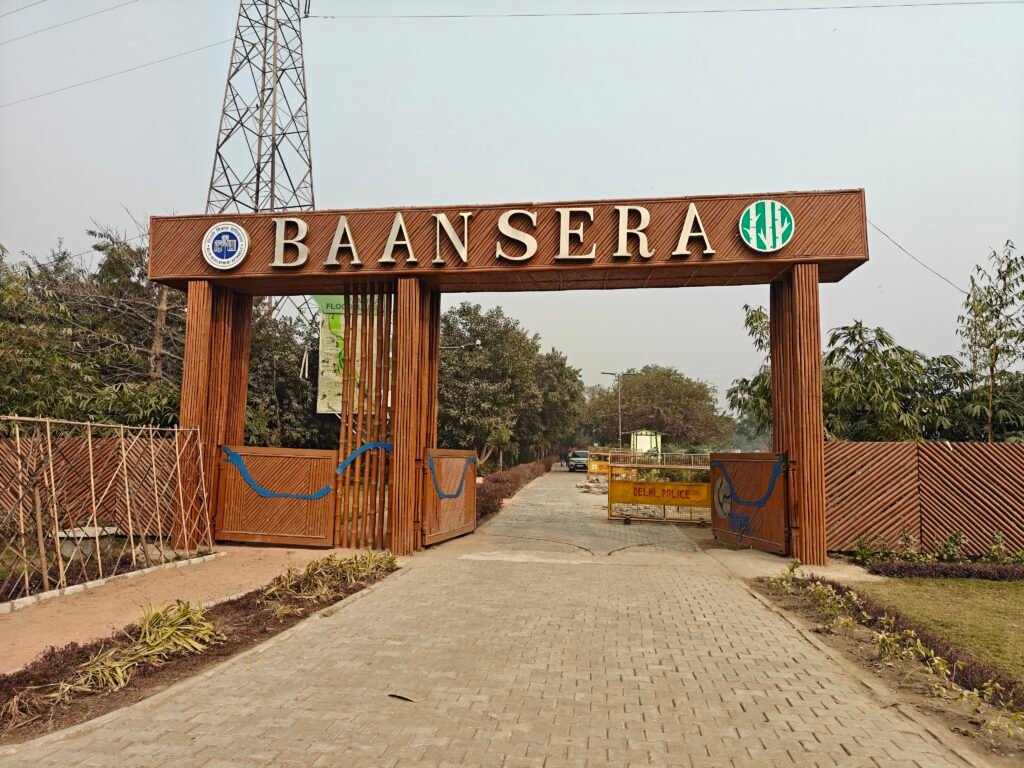
Delhi’s relationship with the Yamuna has long oscillated between neglect and overreach. In this uneasy landscape, Baansera has emerged as a visible symbol of reclamation — a 37-acre stretch near Sarai Kale Khan transformed from a construction and demolition waste dump into a bamboo-themed public park.
The question before us, however, is not whether Baansera looks better than the landfill it replaced. It certainly does. The real question is whether it represents a durable ecological intervention — or an aestheticized episode in Delhi’s long history of riverfront symbolism.
The Promise: Reclaiming the Floodplain
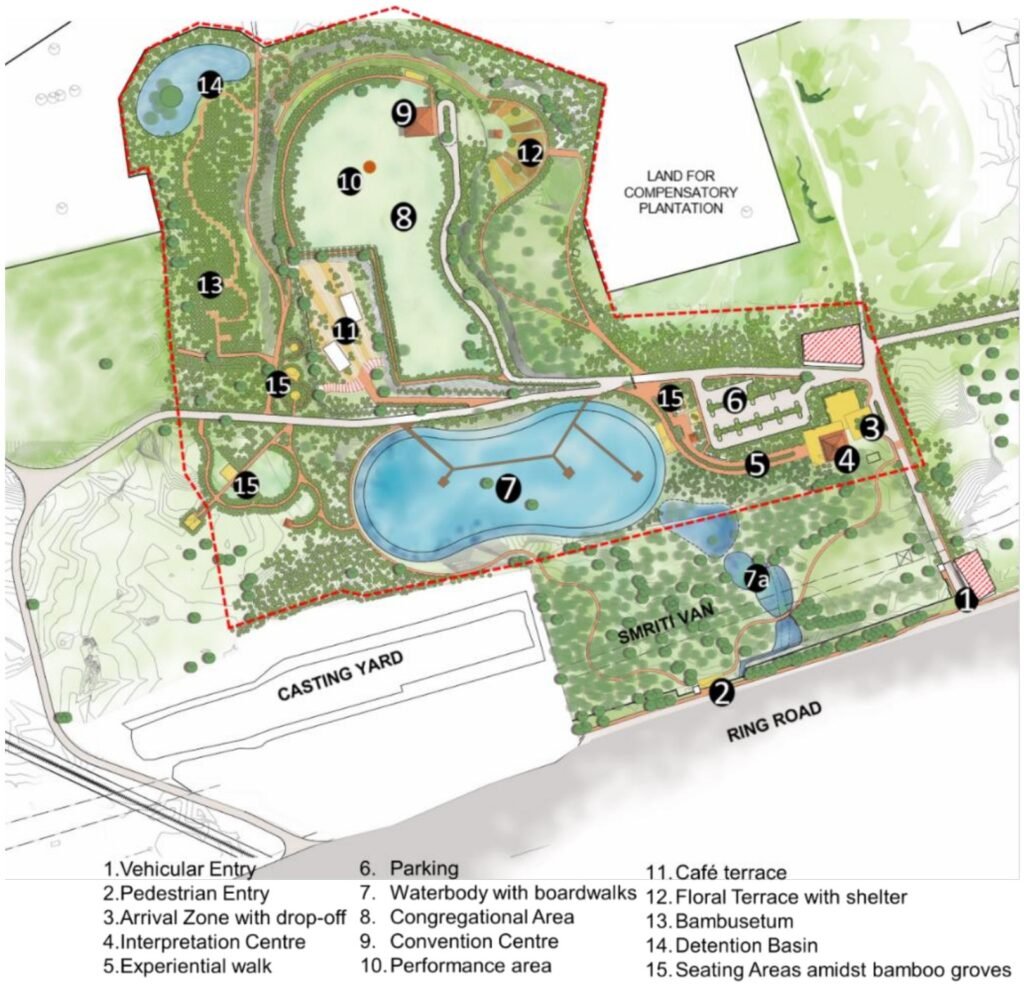
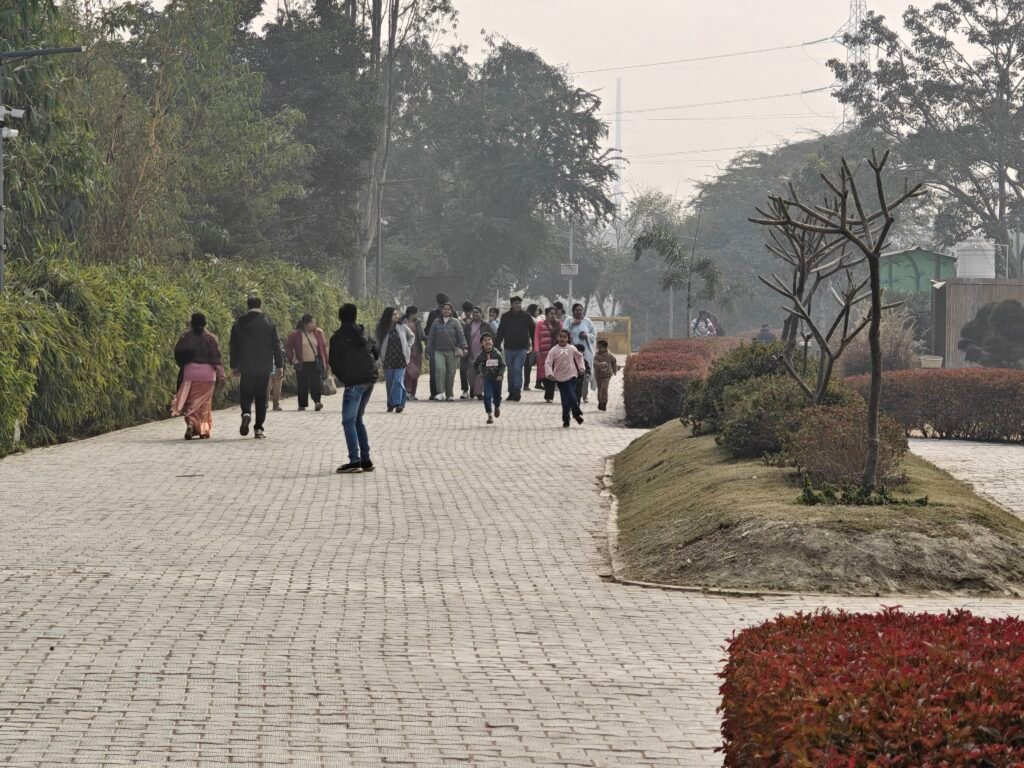
Baansera was conceived as a bamboo-centric green space aimed at restoring a degraded floodplain while providing citizens access to open, breathable landscapes . Nearly 30,000 bamboo plants across 15 species were introduced, along with water bodies, walking paths, and congregational lawns. The site has since become an active public destination, drawing an estimated 2,000–3,000 visitors on weekends and around 1,000 on working days.
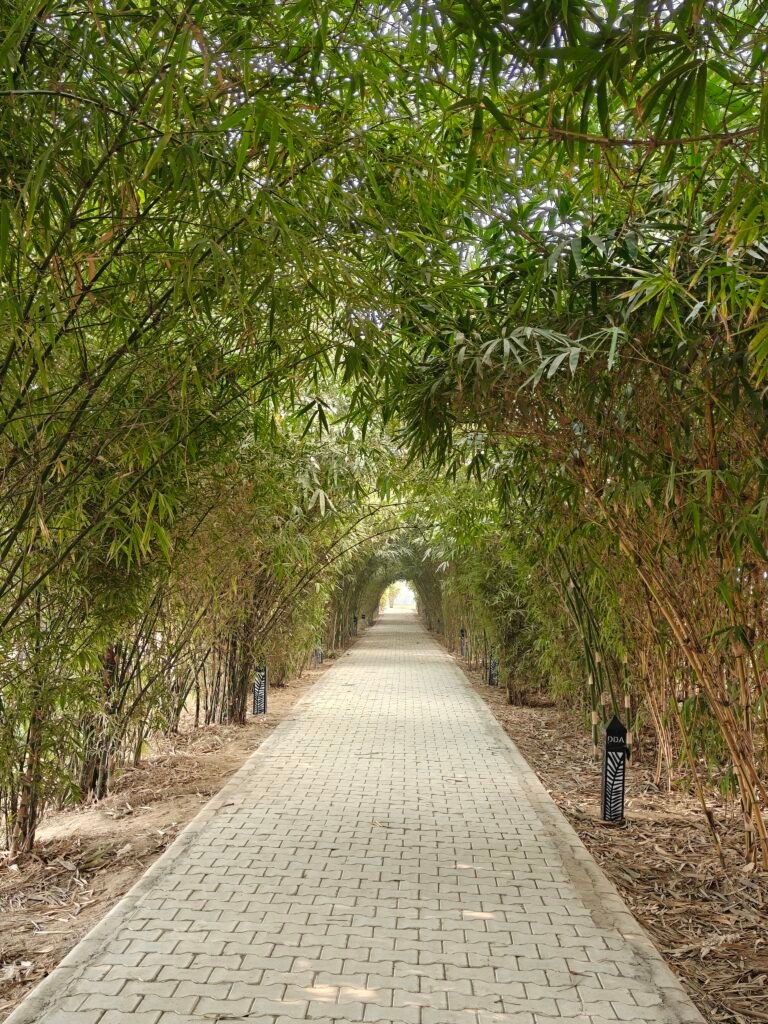
In a city chronically short of accessible green space, such a transformation is undeniably significant. The floodplain — often treated as a dumping ground or encroachment zone — is here positioned as public ecological infrastructure.
This aligns with broader governmental efforts to rejuvenate the Yamuna through multiple floodplain projects spanning 1,600 hectares . Initiatives such as Asita East, Amrut Biodiversity Park, and Mayur Nature Park are part of a larger attempt to reimagine the river’s edge as a network of biodiversity zones and recreational landscapes.
But scale and ambition do not automatically guarantee ecological prudence.
The Ecological Question: Restoration or Landscaping?
Floodplains are not ornamental parks; they are dynamic hydrological systems. The National Green Tribunal has repeatedly emphasized the need for accurate mapping and demarcation of the one-in-100-year floodplain to prevent inappropriate development . Even as restoration projects progress, the scientific delineation of flood boundaries remains under review.
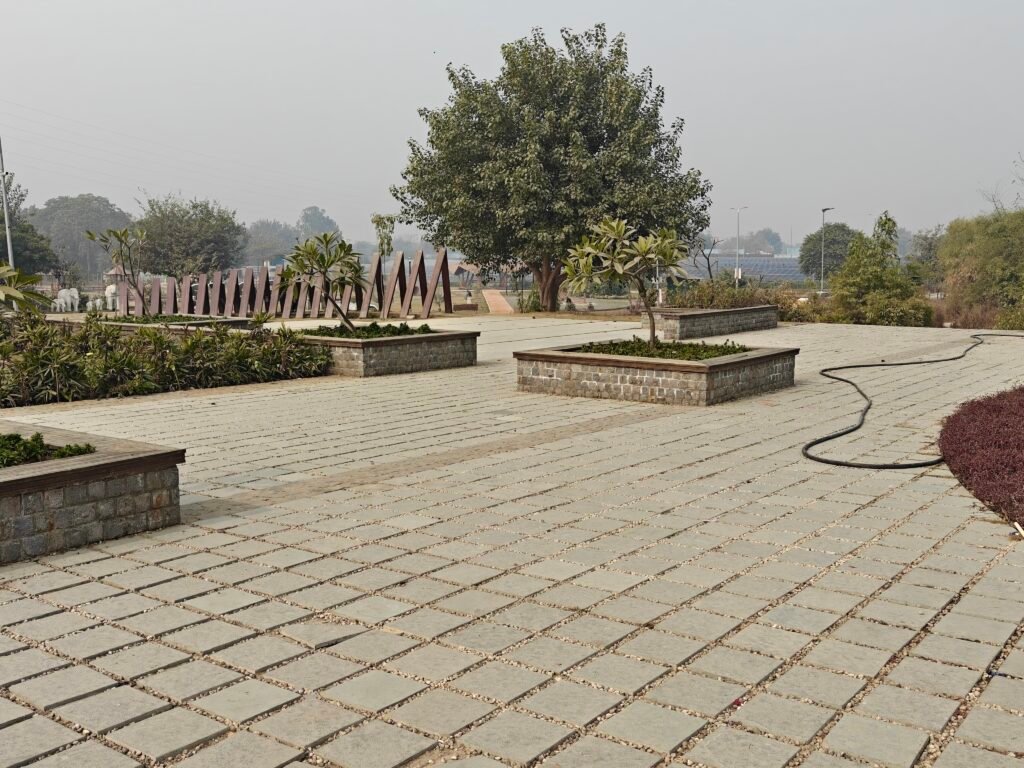
Simultaneously, the National Mission for Clean Ganga has approved a conservation framework for Yamuna floodplain wetlands and an Urban River Management Plan for Delhi . These frameworks underline a critical principle: floodplains must be managed as ecological systems first, recreational spaces second.
Viewed through this lens, Baansera raises legitimate concerns:
- Are its paved pathways and structured terraces sufficiently reversible in the event of major flooding?
- How resilient are bamboo groves to prolonged inundation cycles?
- Will cultural events and programmed gatherings gradually intensify infrastructural hardening?
The line between “restoration” and “landscaped riverfront” is thin — and historically, Delhi has not always respected it.
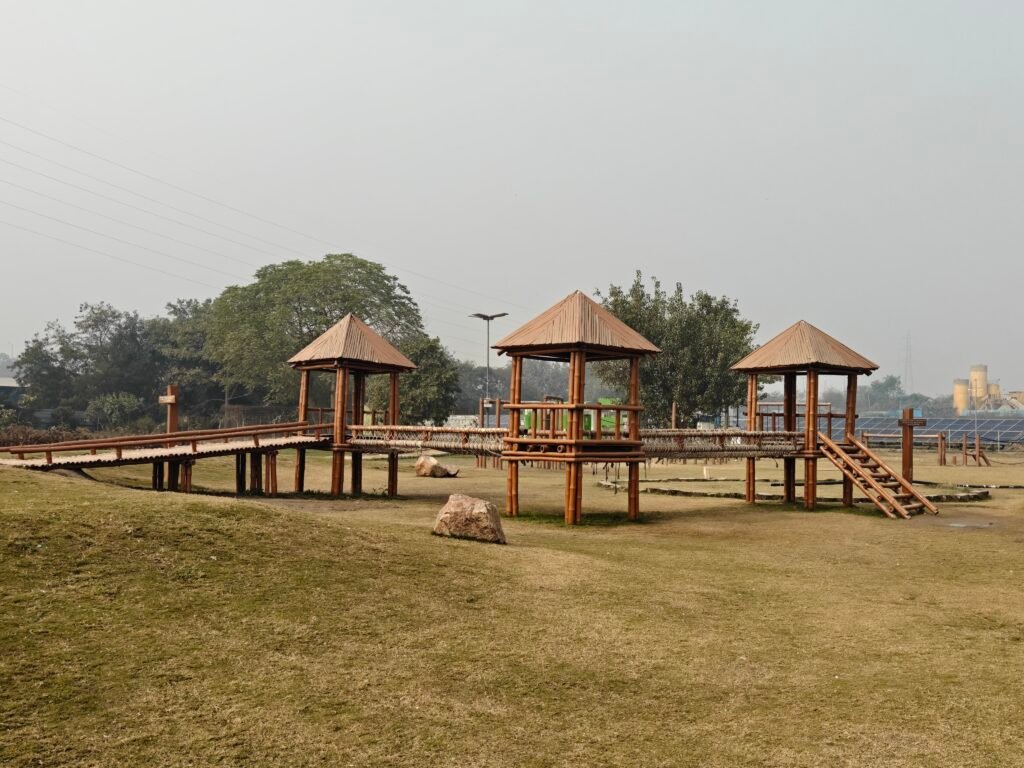
The Urban Design Reality: Public Space with Basic Gaps
On the ground, Baansera functions well as a social landscape. Its material palette — bamboo railings, wooden kiosks, and interlocking pathways — reflects a conscious attempt to avoid heavy construction. The children’s play area, built with eco-friendly elements, encourages tactile engagement rather than plastic modularity.
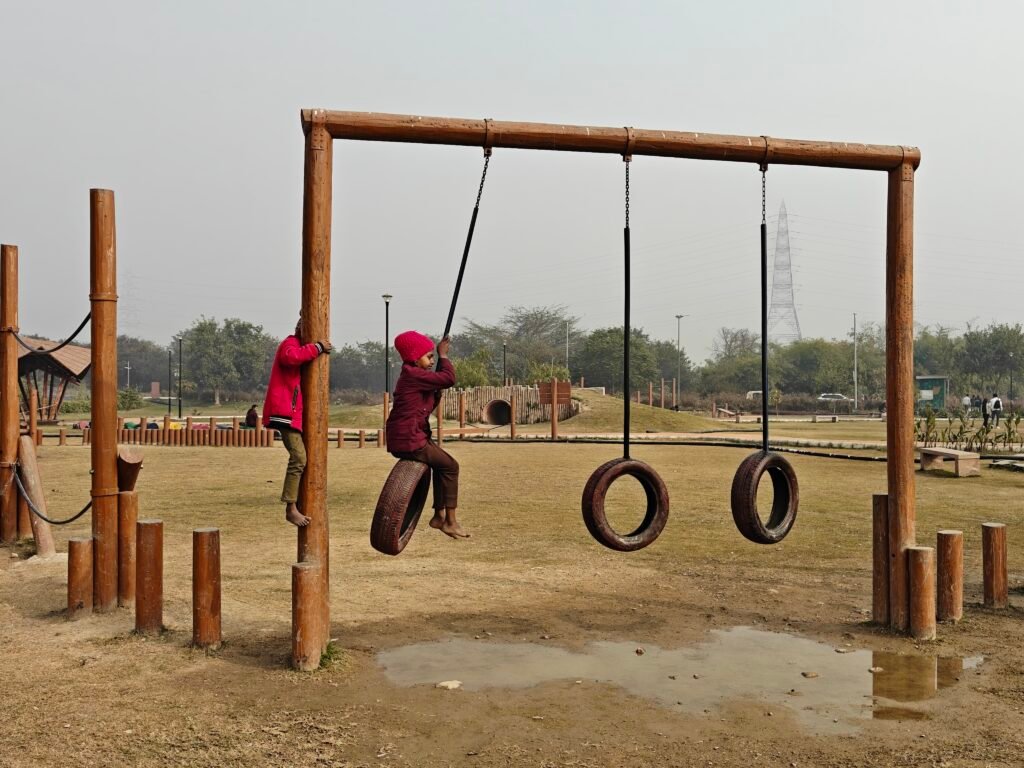
Yet basic infrastructure deficiencies undermine this promise. With only two toilet facilities across the site — one reportedly without water — and no visible drinking water provision, the park struggles at the level of essential civic service.
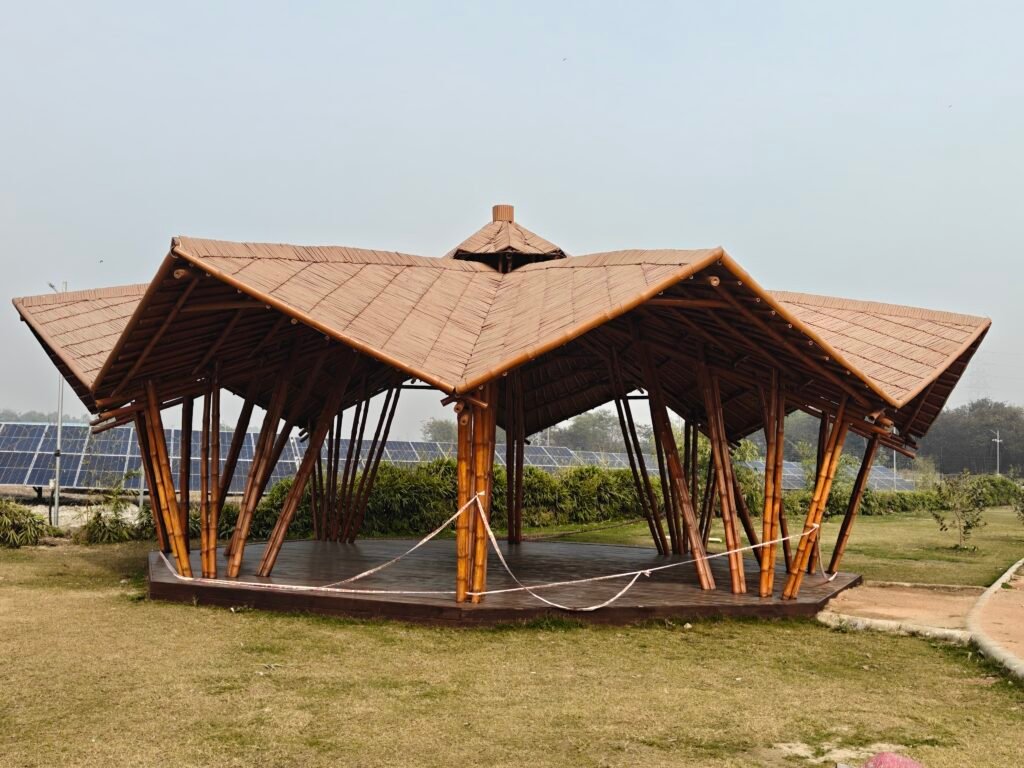
For a space drawing thousands daily and charging ₹50 entry (free for children under 13), such omissions are not minor oversights. They indicate a recurring pattern in Indian urban projects: investment in spectacle, underinvestment in maintenance.
The Politics of Symbolism
The installation of a 20-foot statue of Birsa Munda at the entrance situates Baansera within a broader political narrative . Government events such as DDA Sthapna Diwas and planned dance and music competitions further embed the site within ceremonial urbanism.
There is nothing inherently wrong with symbolic gestures or public programming. Indeed, activated spaces are safer and more democratic. But the floodplain must not become an event ground first and an ecological buffer second.
History teaches us that once riverfronts acquire cultural and political centrality, incremental hardscaping follows — often at the cost of natural absorption capacity and ecological resilience.
Between Vision and Vigilance
Baansera is not a failure. On the contrary, it demonstrates that degraded urban edges can be reclaimed with relative speed and design sensitivity. It offers Delhiites something they desperately need: open sky, shaded walks, and a momentary reconciliation with the Yamuna.
But it must now withstand a more rigorous test — that of ecological integrity over time.
As Delhi advances multiple Yamuna rejuvenation projects and prepares comprehensive river management frameworks , Baansera should serve not merely as a showcase park but as a monitored experiment.
Floodplain landscapes demand humility. They require adaptive planning, hydrological discipline, and continuous scientific oversight — not only ribbon-cuttings and cultural programming.
If Baansera remains light on its feet, resilient in its materials, and serious about maintenance and ecological data, it could become a template for river-sensitive urbanism in India.
If not, it risks becoming yet another chapter in Delhi’s long tradition of building on land that belongs, ultimately, to the river.
Also Read: Tamsa River Rejuvenation in Azamgarh Becomes Model for Tributary Conservation under Namami Gange