

The Indian National Trust for Art and Cultural Heritage (INTACH) launched Gaja-Lok: Elephant Lands and their Cultural Symbolism in Asia, an initiative aimed at documenting and exploring the transnational cultural, historical, and ecological connections of the Asian elephant. The programme highlighted how elephants have shaped traditions, belief systems, ancient trade routes, and climate-resilient practices across Asia .
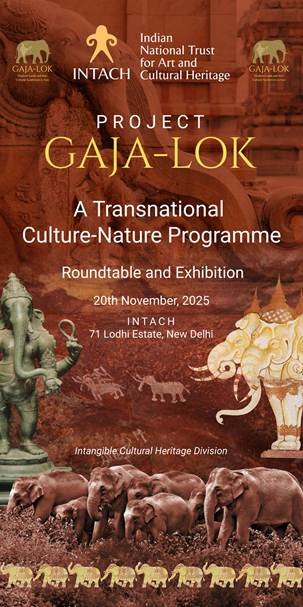
The Gaja-Lok Exhibition and Roundtable brought together academicians, cultural researchers, historians, and conservation experts, marking the beginning of a multi-country dialogue on elephant heritage. The exhibition featured six thematic panels illustrating the long-standing human–elephant relationship—from prehistoric art to sacred rituals and modern innovations such as Kerala’s robotic temple elephants .
The project was inaugurated by Shri Vivek Agarwal, I.A.S., Secretary, Ministry of Culture, in the presence of INTACH leadership, including Shri Ashok Jairaj Singh, Shri Ravindra Singh (Retd.), and Ms. Nerupama Y. Modwel .
The Gaja-Lok Roundtable also hosted leading experts such as Prof. Raman Sukumar, Mr. Vivek Menon, Dr. Vinod Mathur, Dr. Khalid Pasha, Mr. Ravi Singh, and several cultural and environmental scholars from India and abroad. Their discussions covered historical, ecological, and conservation dimensions of the Asian elephant, contributing key insights to the upcoming Gaja-Lok Dossier—a multidisciplinary documentation effort designed to promote transnational recognition of elephant-related heritage .
Through this initiative, INTACH strengthened global awareness about the enduring human–elephant bond and encouraged collaborative efforts toward conservation, cultural preservation, and ecological stewardship across Asia .
Also Read: INTACH Launches ‘Project Gaja-Lok’ to Explore Asia’s Cultural and Ecological Bond with Elephants