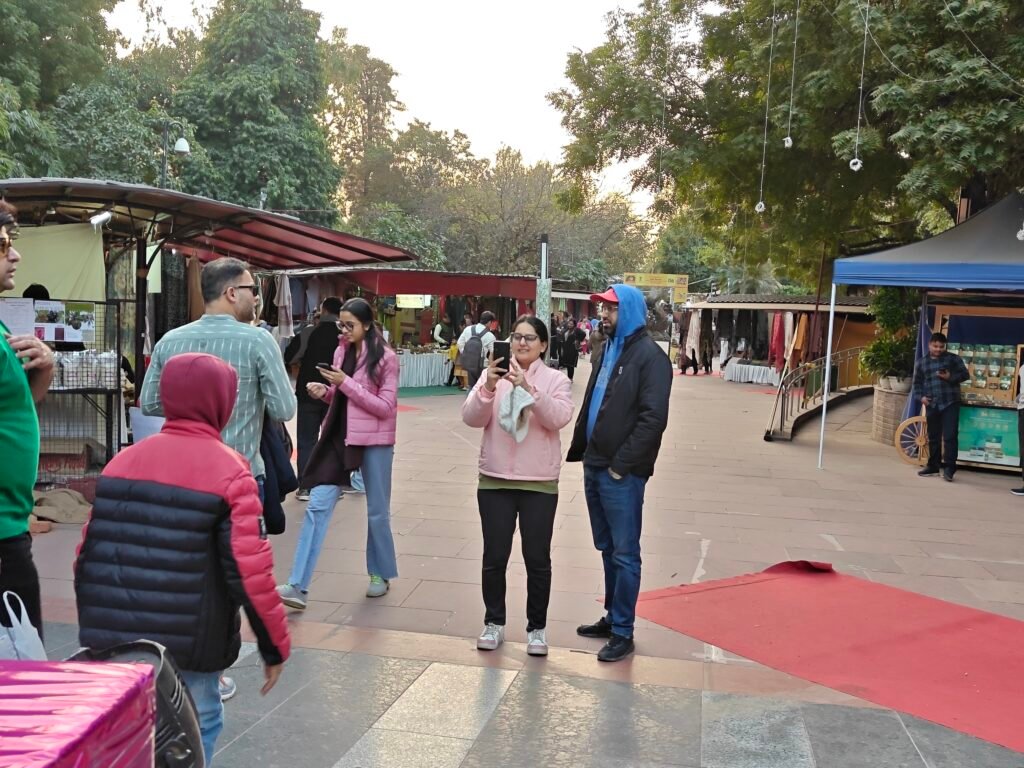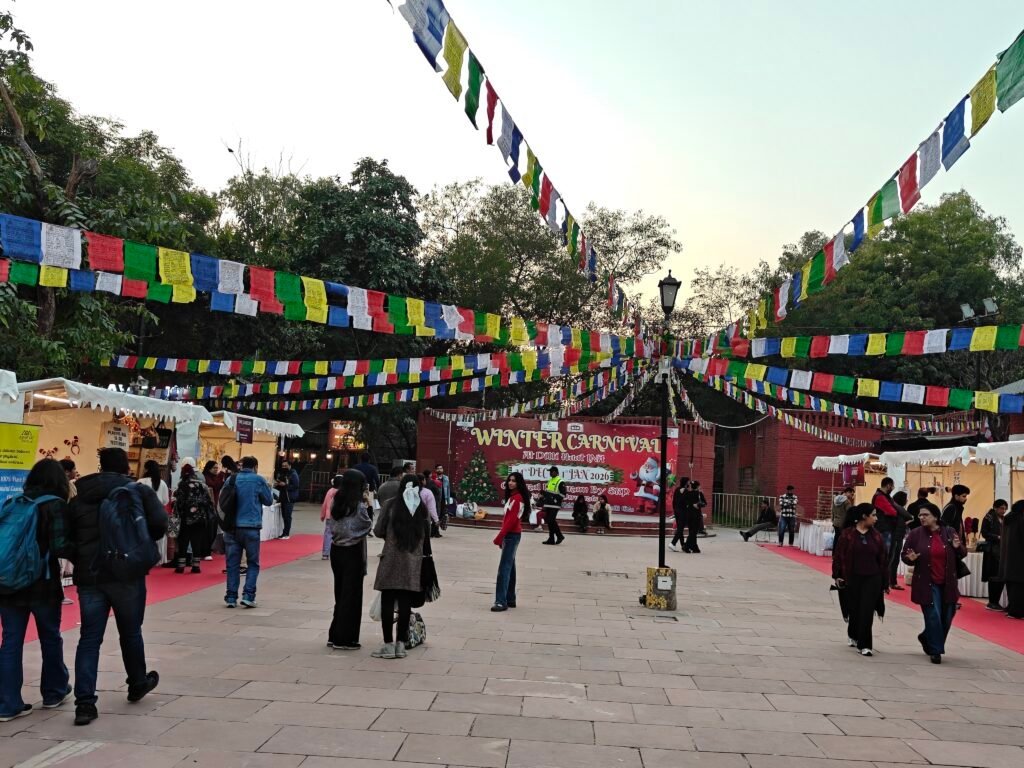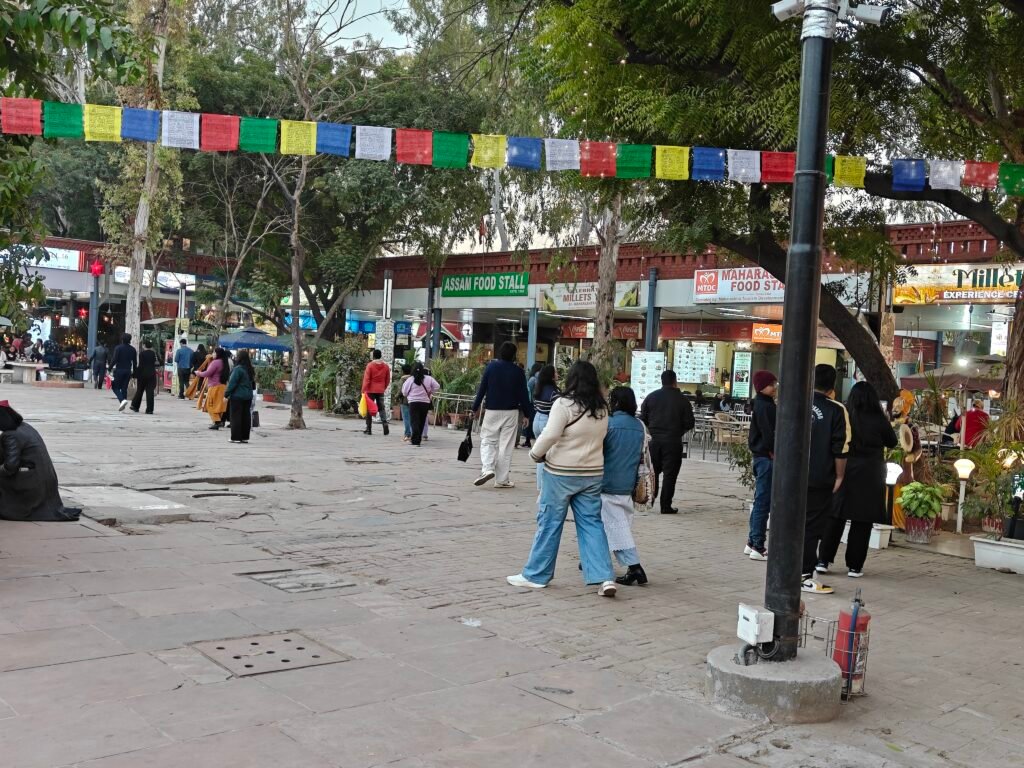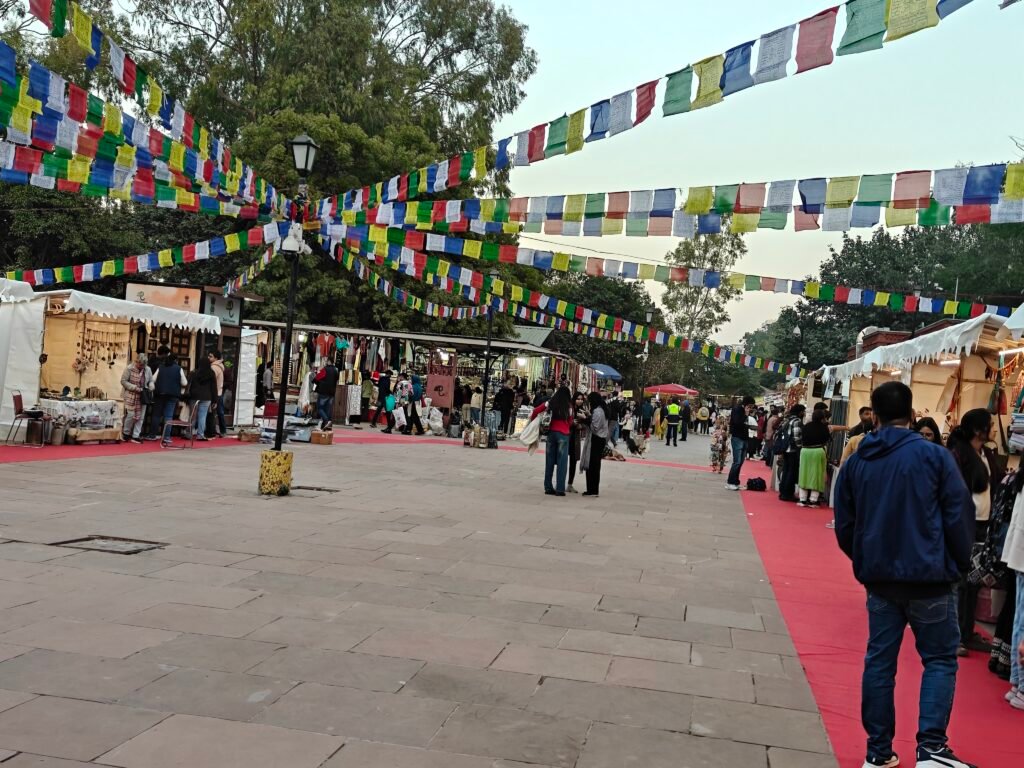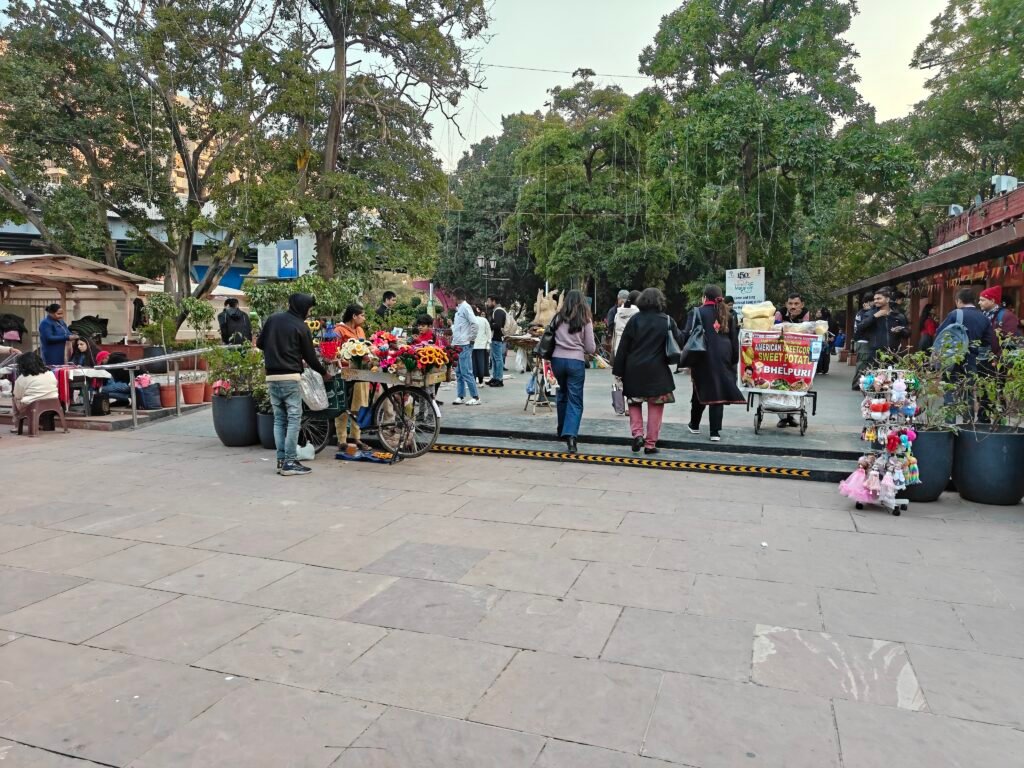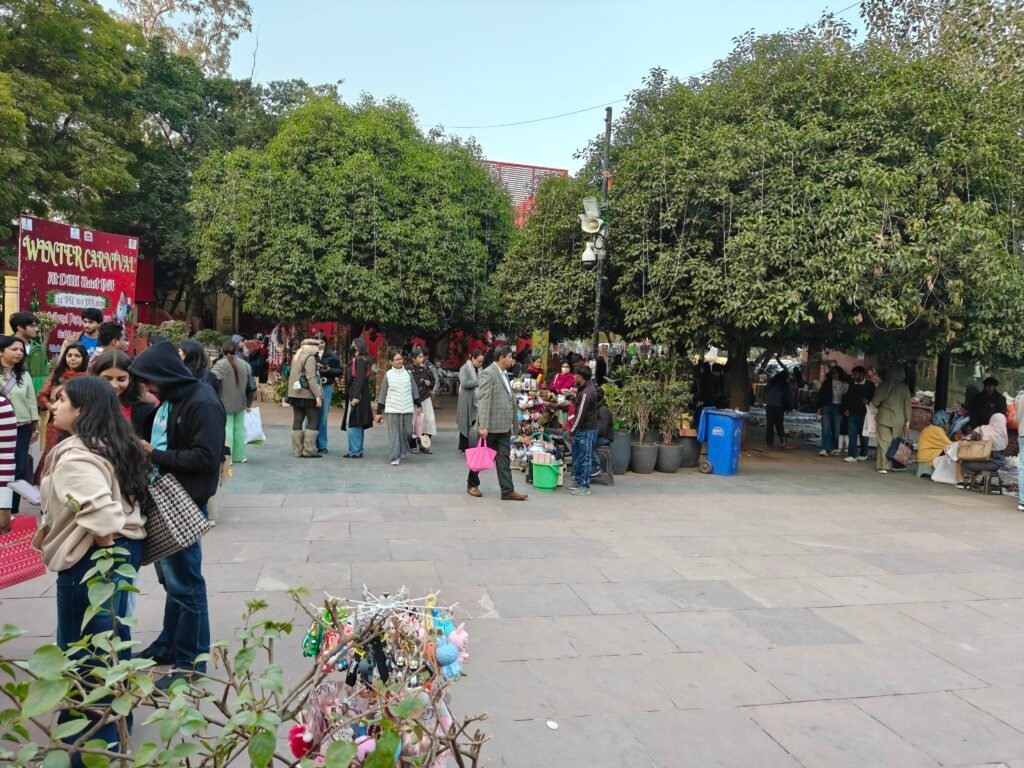

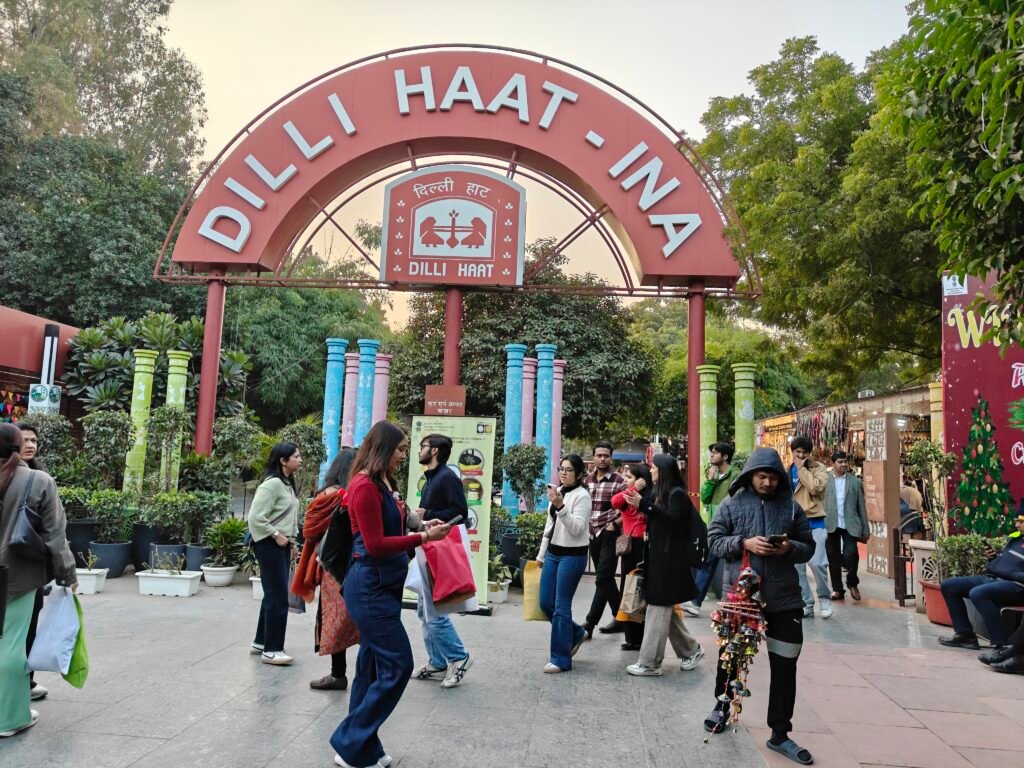
In a city like Delhi—where flyovers, malls, and gated developments increasingly dominate the landscape—Dilli Haat INA appears as a rare urban pause. Neither a traditional bazaar nor a modern shopping mall, it functions as a curated cultural marketplace where craft, cuisine, and performance converge within a carefully designed open-air environment. Entering the complex from the busy Sri Aurobindo Marg immediately shifts the atmosphere from traffic chaos to a pedestrian-friendly landscape of brick pathways, shaded courtyards, and compact stalls.
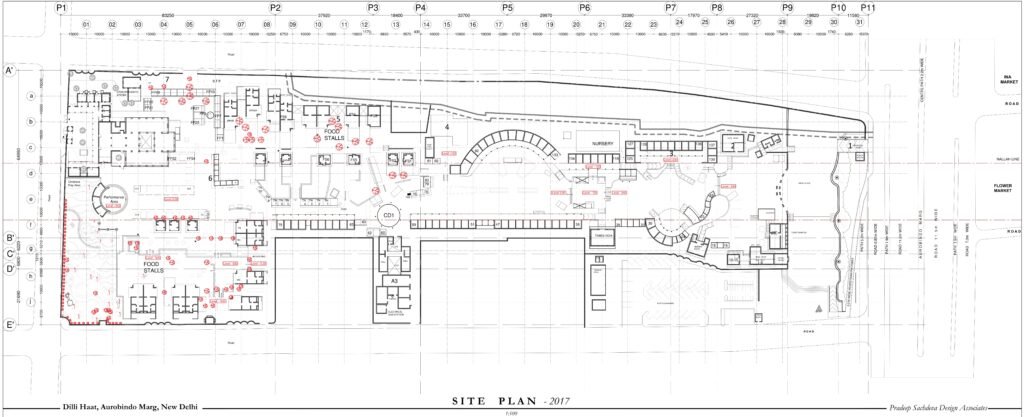
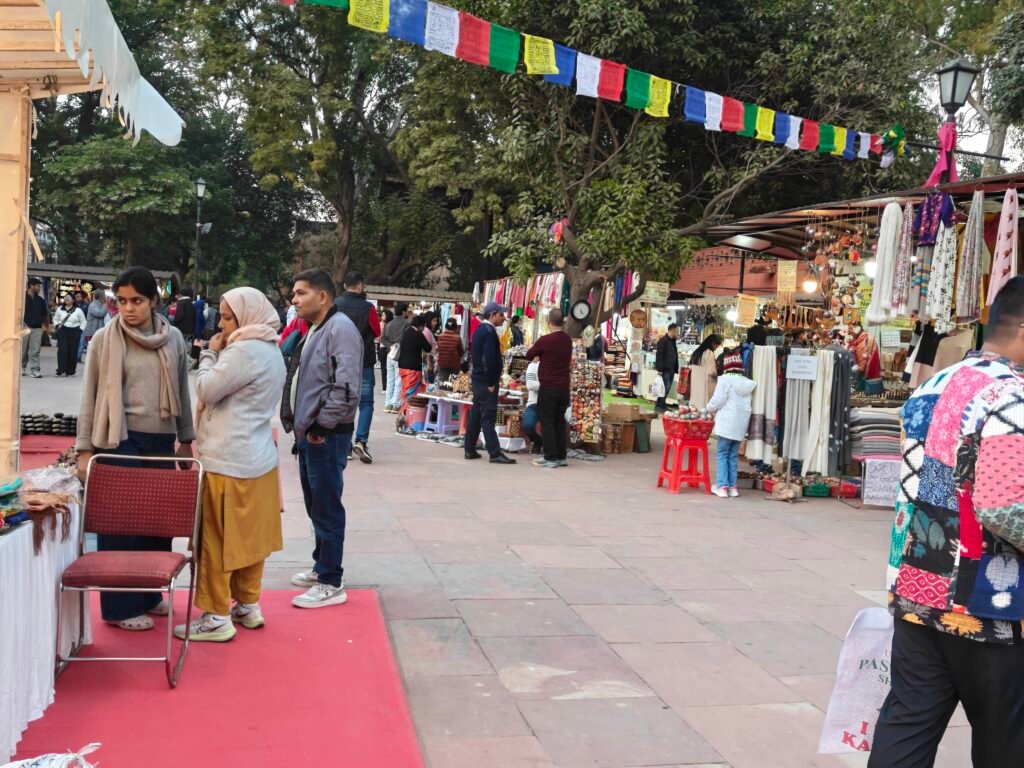
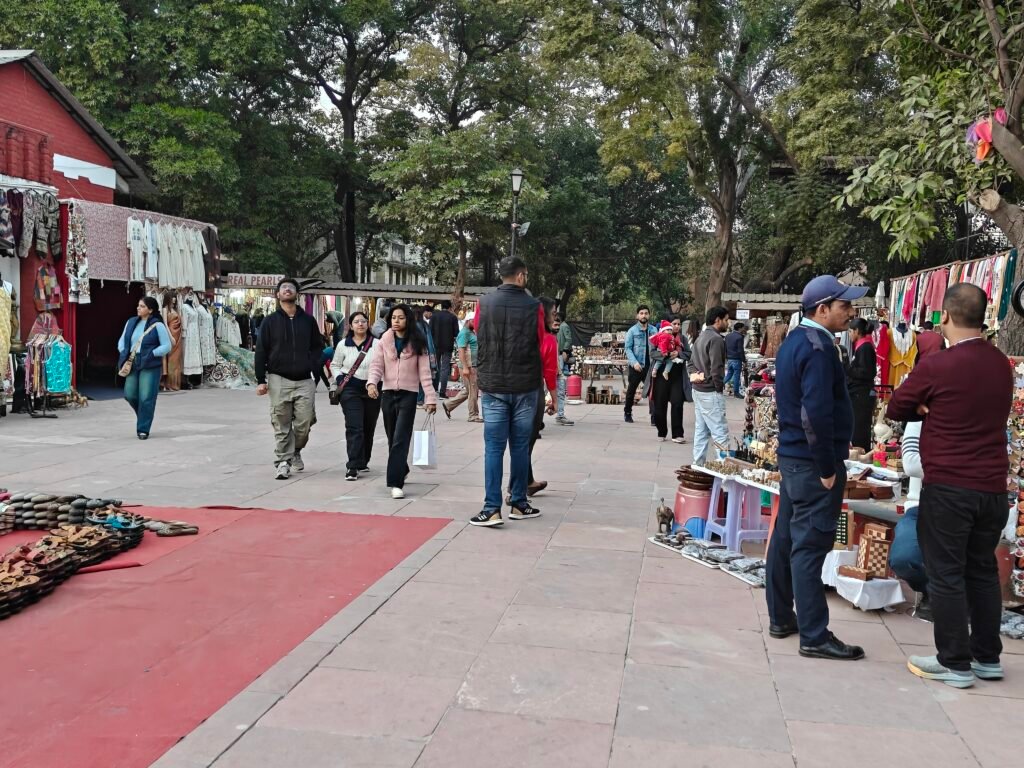
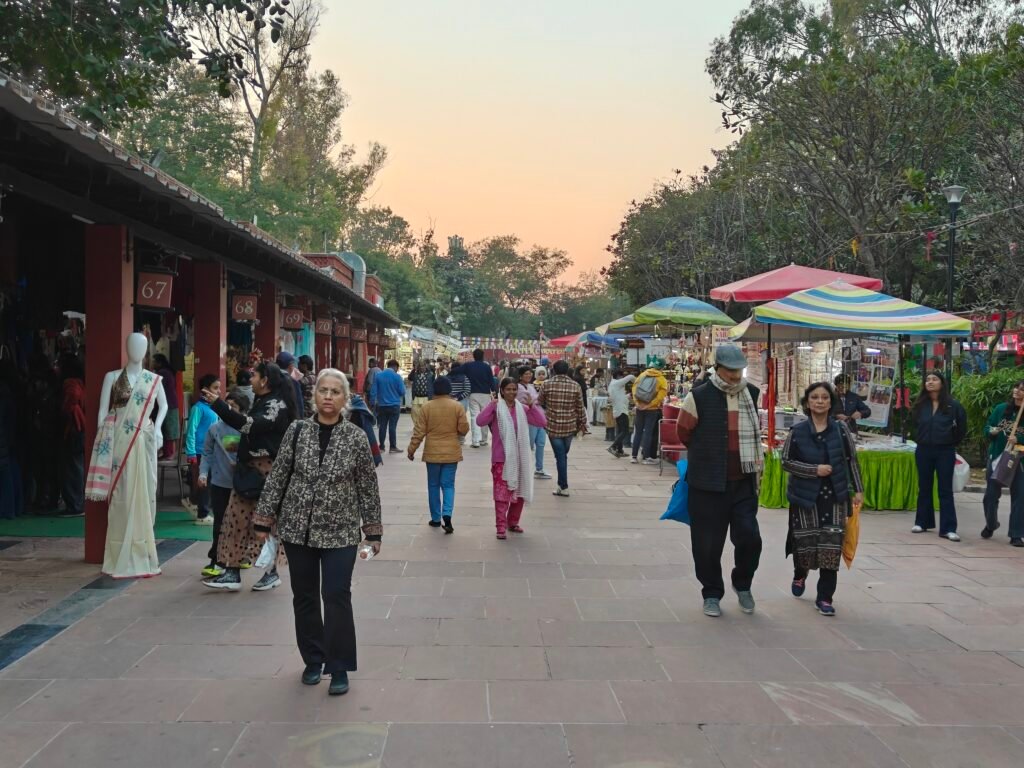
The spatial character of Dilli Haat is defined by modest structures, earthy materials, and open circulation. Exposed brick, tiled roofs, bamboo elements, and handcrafted details evoke the visual language of traditional Indian markets. Narrow pathways weave through clusters of stalls where visitors browse textiles, handicrafts, and regional artefacts while food courts offer cuisines from across the country. The human scale of the place encourages people to slow down, linger, and interact—something rarely experienced in the controlled interiors of contemporary malls.
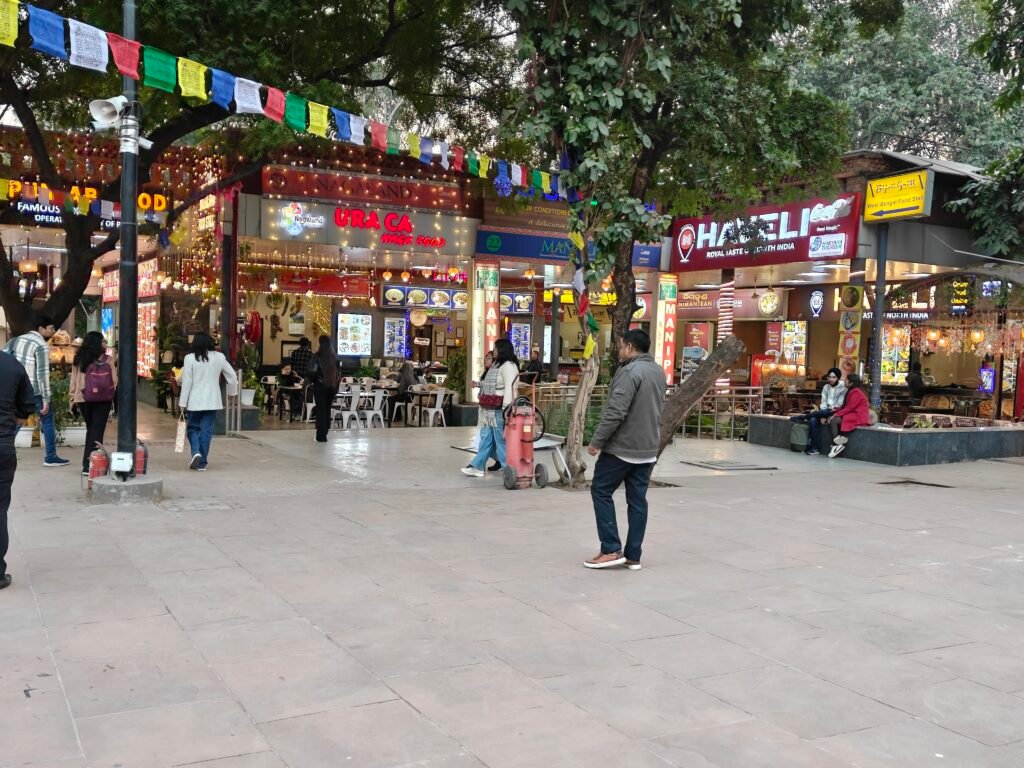
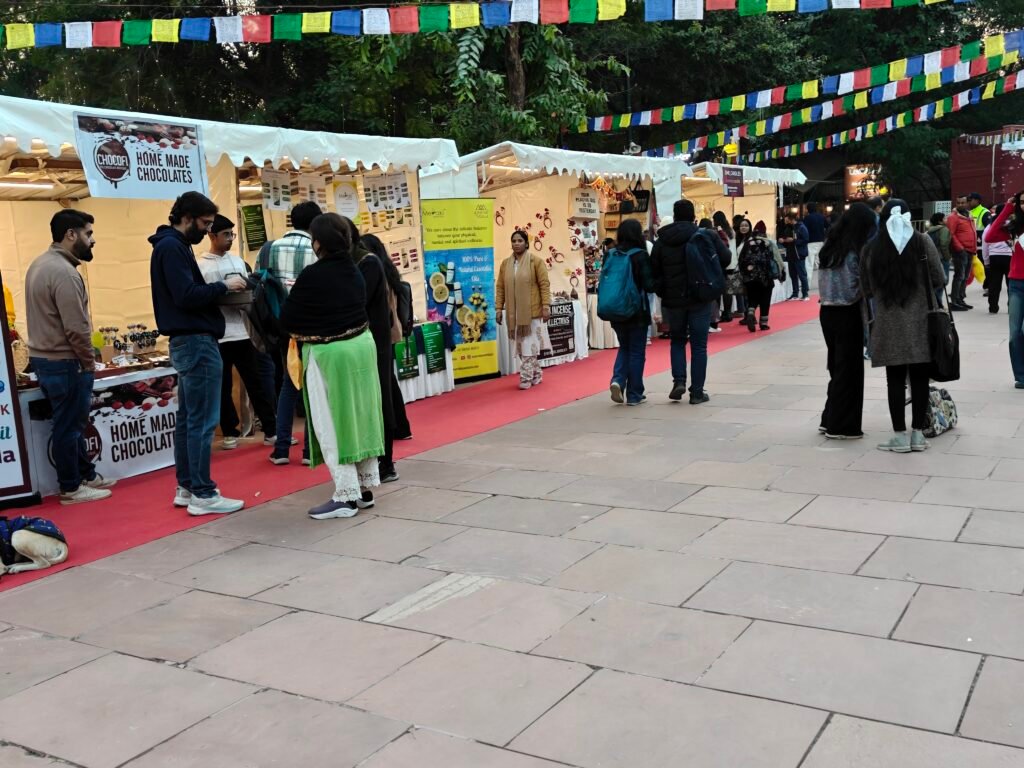
Despite its resemblance to traditional haats, the space operates very differently. Rural markets usually evolve organically, responding to local rhythms and informal trading practices. Dilli Haat, however, presents a curated version of that experience. Stalls are systematically allocated and artisans rotate through organized programs, creating a lively yet regulated marketplace. In effect, the space functions as both a market and a cultural exhibition.
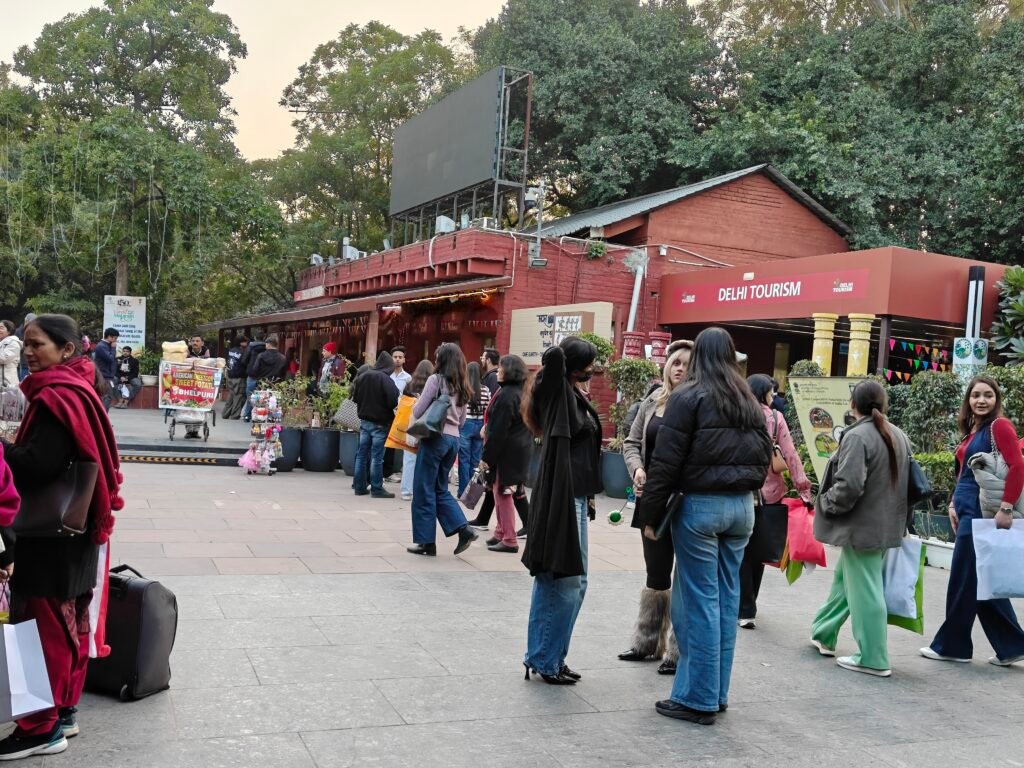
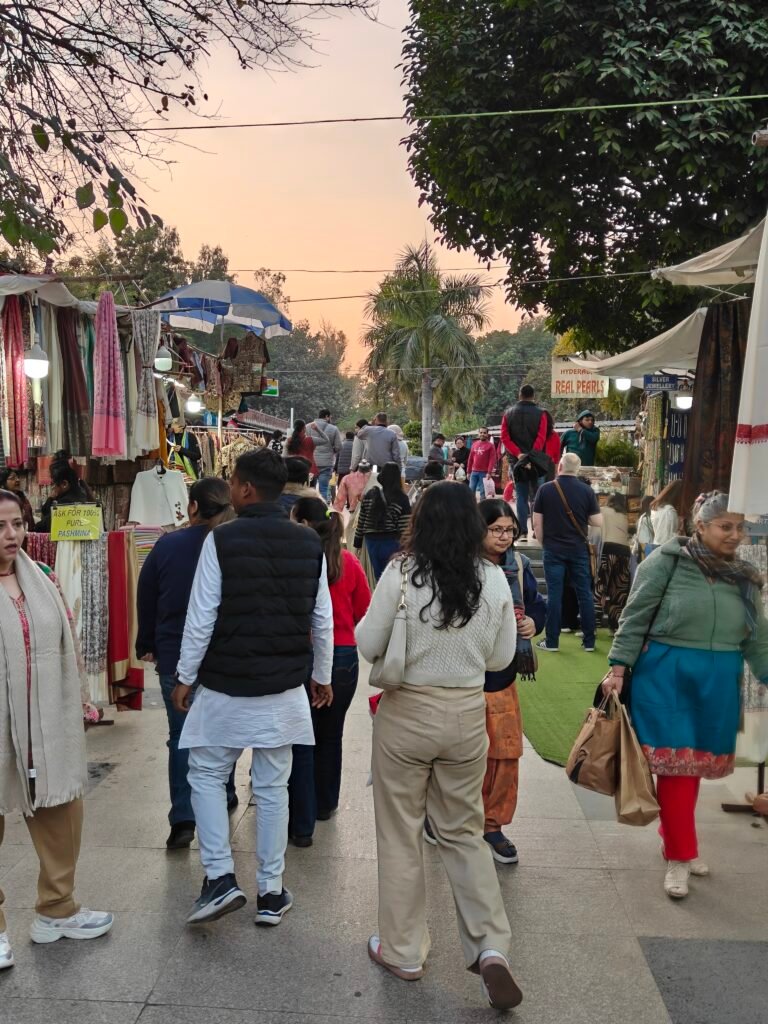
One of its most distinctive qualities is the way it compresses the diversity of India into a small urban footprint. Within a short walk, visitors encounter Kashmiri shawls, Rajasthani textiles, Northeastern bamboo crafts, Odisha’s filigree work, and regional cuisines from across the country. This concentration of cultures creates a vibrant collage that allows the visitor to experience multiple traditions in a single setting.
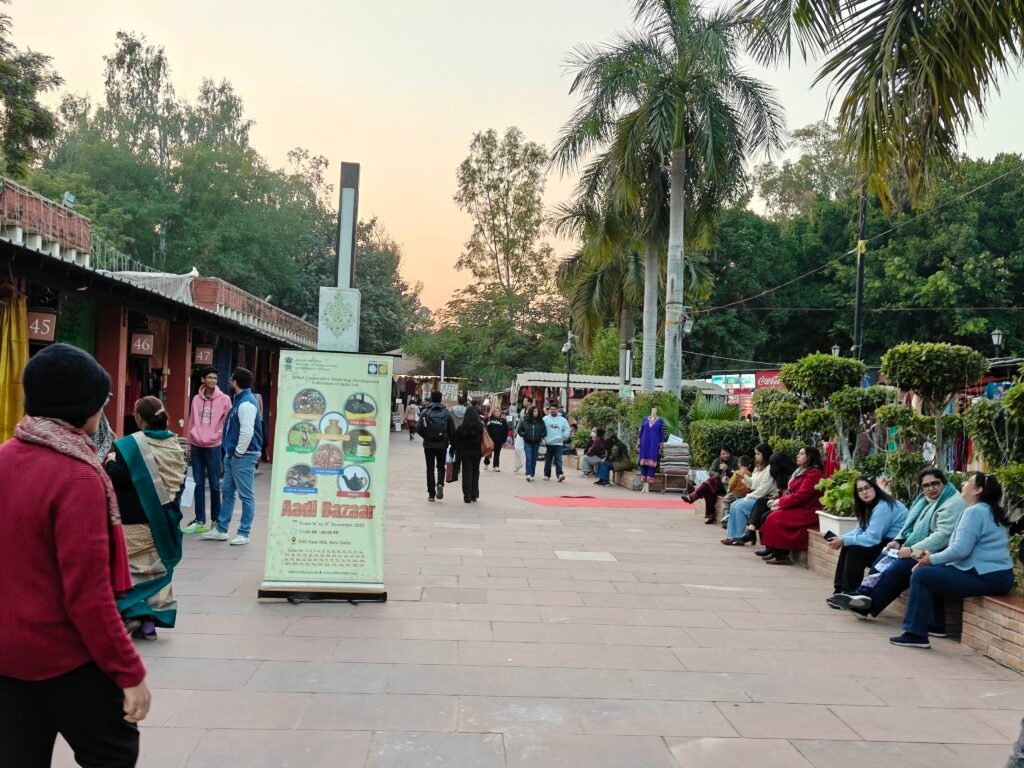
The success of Dilli Haat lies less in architecture and more in experience. The space unfolds through courtyards, shaded passages, food clusters, and small performance areas rather than iconic buildings. However, increasing popularity and commercial activity have gradually altered the balance of the place. Crowds, dense stalls, and commercial signage sometimes disrupt the spatial rhythm, turning parts of the complex into something closer to a tourist fair than a relaxed cultural plaza.
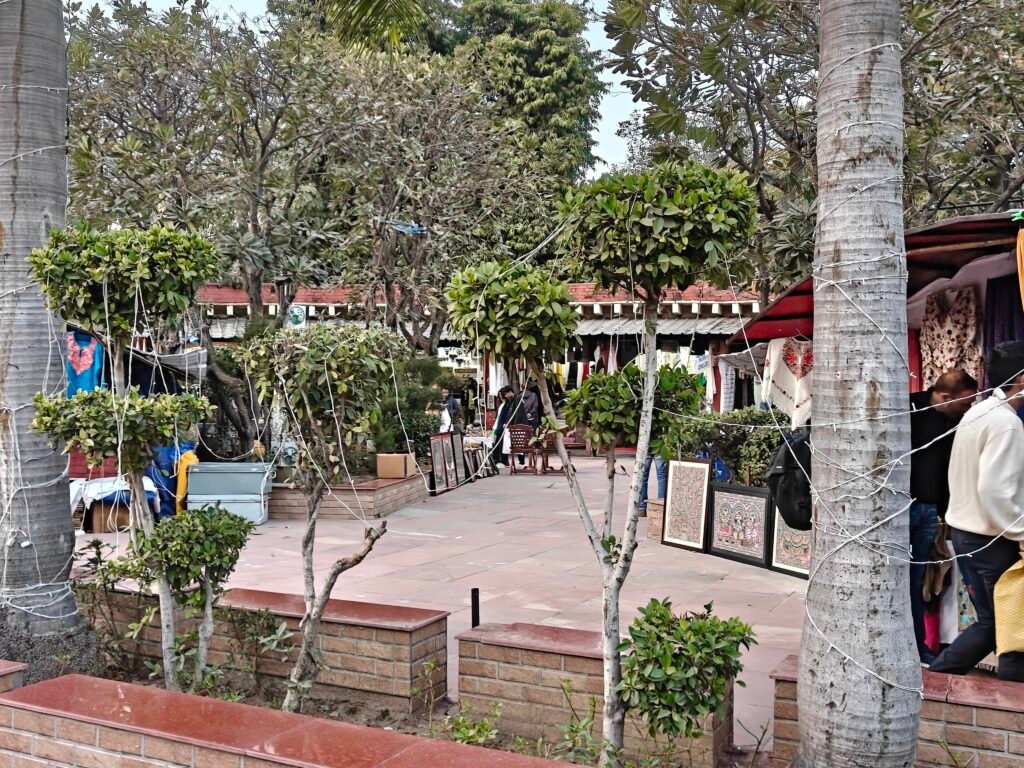
Another subtle shift comes from the nature of access. Traditional bazaars function as open public spaces integrated with daily urban life. Dilli Haat, by contrast, operates as a ticketed and controlled precinct. This condition transforms it from an everyday market into a cultural destination, primarily visited for leisure and tourism.
Yet the space continues to hold significance within Delhi’s urban landscape. It demonstrates how a relatively small site can become a vibrant cultural hub through thoughtful spatial organization and programming. At the same time, it reflects a broader urban condition: the desire to preserve traditional market culture while presenting it within a curated and managed environment. Dilli Haat INA therefore exists in a productive tension between authenticity and performance. It is not a spontaneous bazaar, yet it successfully evokes the memory of one. In doing so, it reveals how contemporary cities reinterpret tradition—transforming it into an experience designed for modern urban life.