

As cities struggle with pollution, congestion, and disconnection, architect and urban designer Saran Bhatia proposes a simple yet powerful idea—bring life back to streets. Through Lifeline Raah, he advocates for walkable, inclusive, and sustainable urban environments.
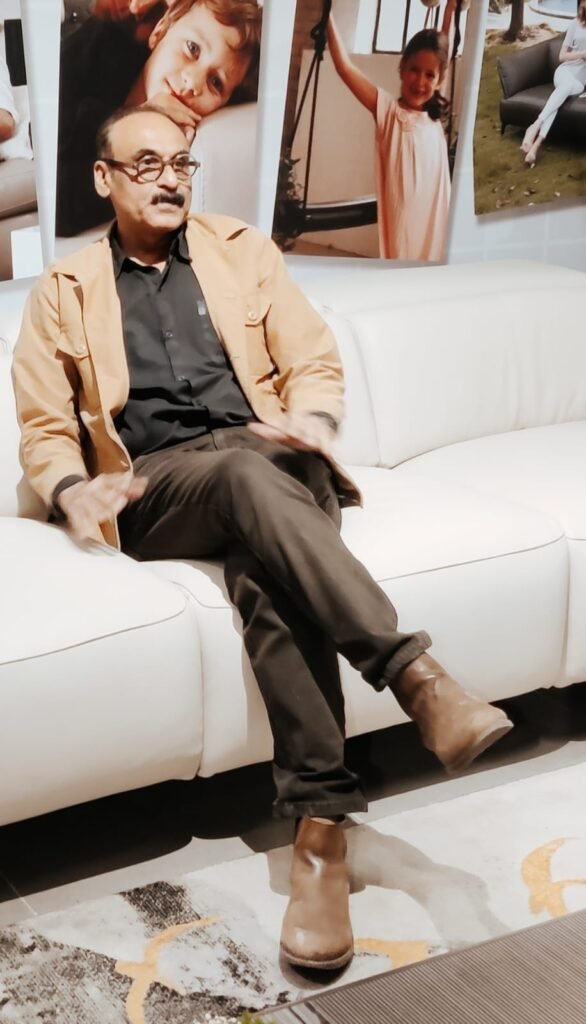
First, can you please briefly introduce yourself and your journey?
Yes. So, my name is Saran Bhatia. Actually, my full name is Sadgur Saran Bhatia. Over the years, I’ve been called by different names. When I was in school, I was called Sadgur more. When I went to college for my bachelor’s from School of Planning and Architecture, I was known as SS, the first two initials. And then when I went in for my master’s in Urban Design, people used to call me Saran.
And when I was a child, I was called Kaku and Ashu. These are some interesting things I still cherish. After graduation from SPA, I went on to work with renowned architect Raj Rewal. I had only two people in mind I wanted to work with—Charles Correa in Mumbai or Raj Rewal. This was around 1983 when I passed out from SPA.
And when did you do your Urban Design?
I did my Urban Design after working with Mr. Raj Rewal for about two to two-and-a-half years. I completed it in 1987. I started around 1985–86, again from School of Planning and Architecture through an entrance exam which I cleared.
Fortunately, one of the good things was that I was the topper from the university. My thesis was on Jodhpur City, which was selected by INTACH. I had the privilege of visiting Jodhpur with faculty members, and my work was displayed in a public exhibition. They even wanted to implement some of my concepts for Nai Sadak, which connects the Clock Tower area.
The whole experience—seeing the visual vista, the connection to Mehrangarh Fort—was very memorable for me.
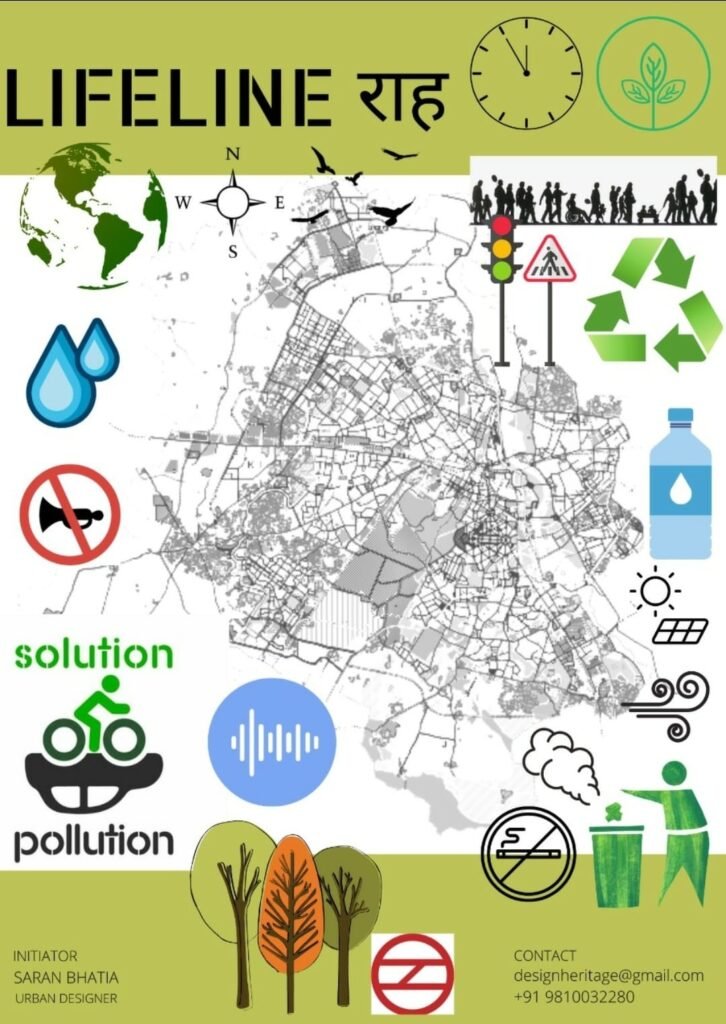
What is Lifeline Raah? Tell me a little about it.
Yes, this is a very interesting question. Normally people think of “lifeline” differently, but here it means life which is not online and for which we require “Raah,” meaning the right direction or path.
This idea came during COVID, when everything was shut and we suddenly saw clear skies instead of pollution. I felt it was a signal that something was wrong and needed change. That is how Lifeline Raah was born.
I started the campaign and connected with media. I went to Marwah Studios in Noida and met Sandeep Marwah, who encouraged me to speak on TV and radio. I was featured in a TV program and also on Radio Noida and Akashvani. Later, I was also invited to events like the inauguration of Kartavya Path, where I spoke about walkability and the importance of sidewalks.
Which year did you start Lifeline Raah?
About four years back, during COVID—immediately at that time.
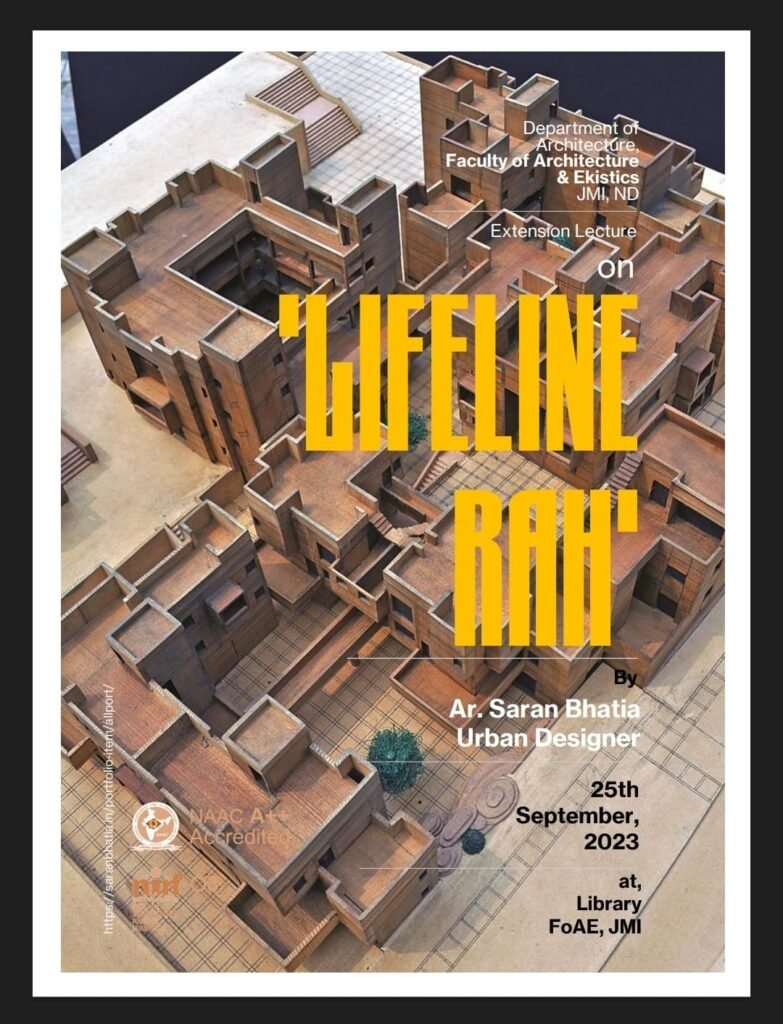
What are the key services or programs that Lifeline Raah offers?
So far, it has been about advocacy and generating awareness. The idea is to connect with youth, as they are the future.
I have given talks in universities like SPA, Jamia, IIT, and others. The aim is to build awareness first. I also started appointing brand ambassadors in different cities and regions.
Eventually, the idea expanded from Delhi to India and then globally. Today, I connect with people worldwide, especially through LinkedIn.
How do you see the role of students in contributing to your mission?
Students can contribute significantly. Age is not a factor. Anyone can come up with a bright idea.
We have WhatsApp groups and a growing network where people share ideas. Some students are already brand ambassadors and are contributing actively.
They can participate through workshops, creative ideas, street theatre, poetry, design interventions—anything that contributes to sustainable and meaningful development.
How do you engage with communities?
I engage with several communities. One example is Dayalbagh in Agra, which is a model eco-village. People there rely less on cars and more on walking, cycling, and shared mobility.
The idea is to bring people together. Today, we don’t even know our neighbors. We are living in silos. I want to break that and create meaningful, connected communities.
What makes Lifeline Raah different from other initiatives?
Lifeline Raah offers solutions that are new and not implemented elsewhere. For example, providing shared umbrella stations for pedestrians during sudden weather changes.
These small ideas add comfort and show care for people. There are many such ideas that can improve walkability and urban life.
What type of approach are you focusing on—community, student, or organizational?
It should be a community-based approach. Communities should bring small changes, and gradually entire cities can transform.
The idea is to reduce unnecessary travel and make cities more self-sufficient, saving energy and reducing environmental impact.
Can you elaborate on your pilot project?
We have proposed a pilot project in Jodhpur, specifically Nai Sadak. The idea is to widen sidewalks, restrict polluting vehicles, and allow only non-polluting mobility.
We plan to create spaces for interaction, street performances, and tourism. Even elements like signage, facades, and street furniture will be designed to match the character of Jodhpur.
What challenges have you faced?
Initially, people doubted whether this would work. Some discouraged me. But over time, the network grew.
Now, we have over 13,000 followers on LinkedIn and a global presence.
What advice would you give to young individuals?
Follow your intuition and do what is right. Always choose actions that bring people together and create positive impact.
Lifeline Raah is a platform for such meaningful contributions.
Where can people learn more or get involved?
People can connect with me directly through social media, especially LinkedIn, or contact me personally. They can also connect with our brand ambassadors.
Any final message?
Life is a journey with ups and downs—enjoy it. Stay positive, stay connected, and share happiness with others.
Also, adopt simple habits like walking and cycling in daily life. Small actions can bring big change.